
Event security supervisor work is often reduced to a simple question: how many guards will stand at the entrance? That's the wrong starting point. A safe event depends on whether one accountable supervisor can turn live crowd intelligence into coordinated decisions involving security, medical responders, police, venue staff and event control.
The most effective teams don't treat security as a row of uniforms. They build a state-compliant operating system that protects access points, manages crowd movement, identifies welfare concerns early and keeps emergency routes usable. The supervisor's job is to make that system work under pressure, without creating unnecessary friction for guests.
Redefining the Event Security Supervisor Role
More visible guards don't automatically produce a safer event. A large team can still leave a gate unattended, miss a developing medical issue or push people into a congested exit if nobody is coordinating the whole site.
The operational difference is command quality. An event security supervisor watches the crowd, receives reports from fixed posts and roving staff, checks information with venue management and decides where coverage matters most at that moment. If pressure builds near an entrance, moving staff from a quiet internal patrol to the queue may be sensible. Moving the same staff without replacing an access post can create a new vulnerability.
The 2026 Alice Springs Show police update illustrates why static guard counts aren't enough. Police recorded 32 disturbance-related incidents, removed 60 people for antisocial behaviour, completed 360 wand searches and seized knives, modified scissors and fireworks. Those figures don't prove that more guards would have prevented every incident. They show that supervisors need a live picture of behaviour, screening outcomes, crowd mood and changing deployment needs.
What the supervisor actually controls
A capable supervisor manages four outcomes:
- Coverage: Every critical entrance, exit, high-density area and emergency route has an assigned function.
- Response time: The nearest suitable resource can reach an incident without stripping another high-risk post.
- De-escalation: Staff use communication, welfare support and proportionate intervention before a minor issue becomes a confrontation.
- Safe dispersal: The team remains operational while patrons leave, not only while the headline act is running.
That last point is routinely missed. The end of an event can combine fatigue, alcohol, transport congestion and competing streams of people. A supervisor who closes posts too early may turn a well-managed event into an unmanaged departure.
Practical rule: Redeploy personnel because the risk picture has changed, not because a post looks quiet for a few minutes.
The Australian Institute of Criminology's review of private security history explains why this position carries accountability beyond ordinary guarding. Australia developed a large private-security workforce, with approximately twice as many private-security operatives as police, and the sector expanded into crowd control and venue safety. NSW introduced selective licensing for crowd controllers in 1985, followed by Victoria and Queensland in the early 1990s, while Victorian licensed security firms and guards almost doubled between 1980 and 1990. The Australian Institute of Criminology review places today's supervisor within that regulated history.
A supervisor should therefore be judged by the quality of decisions made across the site. Counting guards matters, but coverage, escalation, coordination and dispersal matter more.
Navigating Australian Security Licensing and Compliance
A licence check isn't an administrative detail to complete after the roster is written. It determines who may perform a task, under what supervision and with what authority.
The Australian private-security sector developed in response to crowd-control risks, public incidents and the need for accountable personnel at venues and gatherings. That history still affects modern operations. An event security supervisor in NSW, Victoria, Queensland or the ACT must understand the jurisdiction where the work occurs, not assume that a worker's credential transfers neatly across borders.
A state-by-state verification workflow
Before deployment, check each person against the event's actual duties:
- Confirm the state and licence type. A person assigned to crowd control must hold the credential required for that jurisdiction and role.
- Check current status and expiry. Keep evidence available to the supervisor and event manager rather than relying on a subcontractor's verbal assurance.
- Match permission to the post. Entry screening, behaviour monitoring, removal duties and supervision may carry different operational implications.
- Record the employing or contracting arrangement. Mobile workforces and subcontractors need clear responsibility for induction, reporting and supervision.
- Verify training and venue competence. A current licence doesn't prove that a worker understands the site, radio procedure, accessibility needs, intoxication-related risks or evacuation plan.
- Document supervision arrangements. If a worker's status limits independent duties, roster a qualified person to provide the required oversight.
Queensland provides a clear example of why assumptions create risk. Queensland guidance says a restricted crowd-controller licence permits training while working only under supervision by a fully licensed security provider, lasts six months and can't be extended. A crowd-controller licence is also required for security work at licensed premises and public events, including hotels, clubs, sporting events, restaurants and shopping centres. The role includes screening entry, monitoring or controlling behaviour and removing people for bad behaviour.
The legal boundary is equally important. A Queensland crowd-controller licence doesn't authorise the holder to carry firearms, handcuffs or batons, so a supervisor mustn't brief staff as though a licence grants those powers. The Queensland Government explanation of crowd-controller duties sets out that distinction.
Victoria's licensing environment also requires attention to change. The state's 2025–2026 changes introduce a single licensing system, new requirements affecting independent contractors and refresher-training obligations for crowd controllers, guards and bodyguards. Organisers using staff across NSW, Victoria, Queensland and the ACT should review current state requirements before each event rather than copying a previous roster.
The supervisor's compliance file should contain licence evidence, expiry checks, role permissions, induction records and the ownership of incident reports. That file supports lawful deployment, but it shouldn't replace practical competence. A legally authorised worker still needs a clear post order and direct supervision.
Calculating Guard Ratios and Shift Deployment
A generic guard count can look reassuring while leaving the wrong locations uncovered. Start with attendance, then convert the forecast into posts, zones, response capacity and end-of-event coverage.
Sutherland Shire Council recommends two security personnel for the first 50 patrons and one additional person for every further 50 patrons. Volunteers and general support staff don't count toward that ratio. Under this local recommendation, a 500-person event requires a baseline of 11 security personnel. The Sutherland Shire Council event guidance makes clear that this is a planning baseline, not a universal Australian legal ratio.
Turn the baseline into a deployment map
Use the ratio as the first calculation, not the final answer. Then allocate personnel according to the site:
- Entry and screening: Cover each open access route, queue and screening function.
- Crowd zones: Place staff near stage-front areas, bars, narrow circulation points and other locations where density may change.
- Roving coverage: Keep personnel available to observe behaviour, welfare concerns and hazards away from fixed posts.
- Response capacity: Avoid using every person on a static position. The supervisor needs a mobile option for emerging incidents.
- Egress: Keep suitable coverage in place until the final patron leaves and transport areas have settled.
Alcohol service, venue layout, stage-front density and transport interfaces can all justify an adjustment above the baseline. A large open perimeter needs a different plan from a venue with one controlled entrance. A standing crowd needs closer observation than a seated audience. The written plan should show why each position exists.
For events in NSW with 100 or more people, Wollongong City Council guidance says the crowd-management plan should address marked and adequately lit entrances and exits, stage and barricade design, movement around stages, water, accessible facilities, licensed crowd-control guards, participant communication and risks such as overheating, crushing and fire. The Wollongong City Council event-management guidance gives supervisors a practical inspection list.
Build the roster around risk windows
Don't roster everyone to finish when the entertainment ends. Stagger breaks, retain experienced staff through peak egress and brief the team on who can authorise redeployment. Personnel working around alcohol must be appropriately briefed, and where alcohol is served, staff should hold the relevant RSA training.
A 500-person event might meet the local baseline on paper but still fail if all 11 people cluster at the main gate while the stage-front area, medical access lane and final exit remain thinly covered. The better question is, “Where must a trained person be present at each stage of the event?”
Integrating Medical and Emergency Response Teams
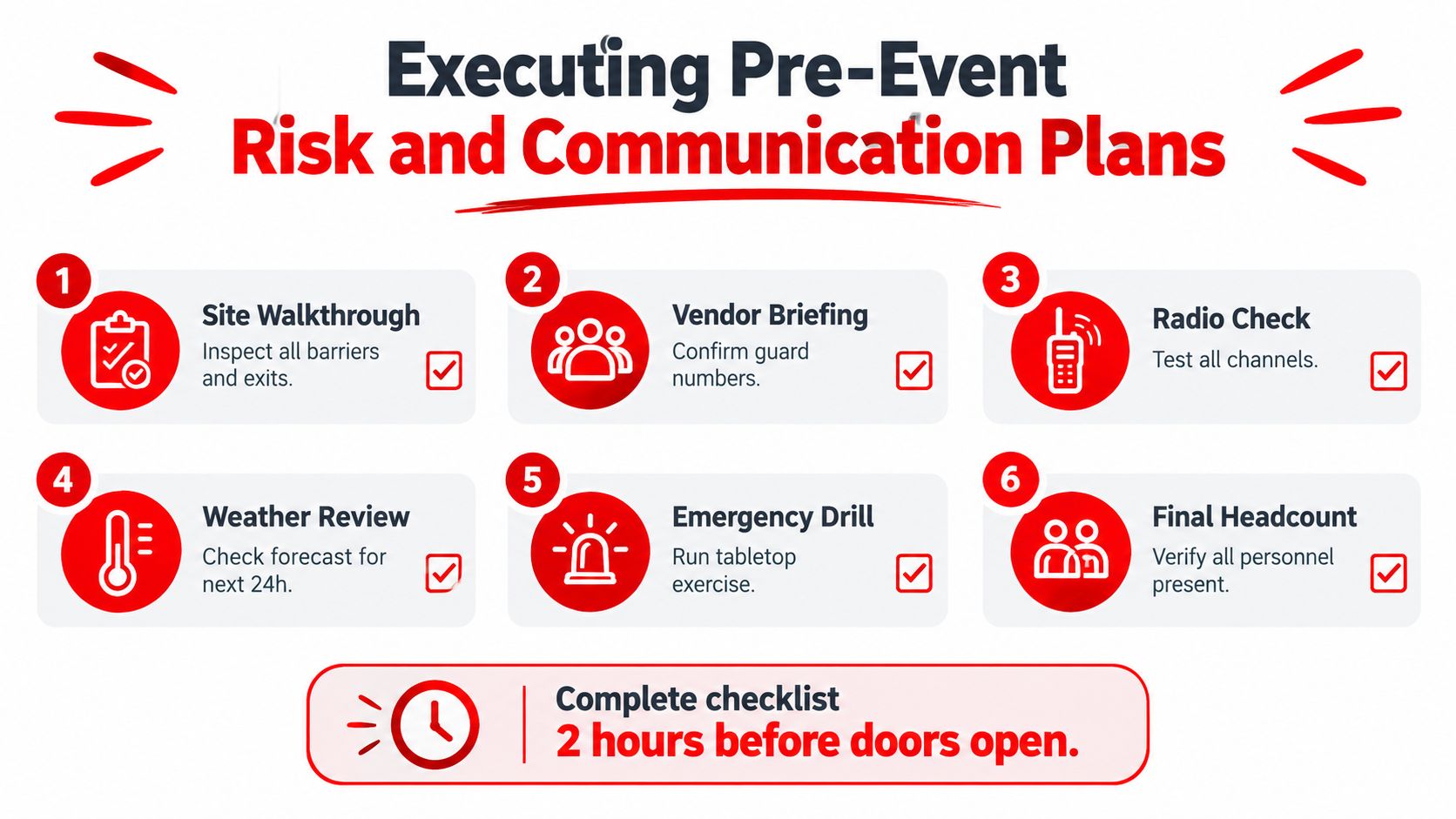
Security teams often notice the first signs of a medical problem, but they shouldn't become a substitute for medical responders. The supervisor must create a clean handover from observation to care, while keeping the surrounding crowd calm and emergency access open.
Australian public-event guidance estimates that 1% to 2% of a crowd may require first aid or medical care, with about 10% of those people needing ongoing on-site care and approximately 1% requiring hospital transport. Safe Work Australia also reported 29 fatalities connected with events between 2003 and 2016, and noted an Australian music-festival fatality in 1990. These figures cover major events broadly, not only security incidents, but they show why medical readiness belongs in the security command structure. The Safe Work Australia major-events material supports that planning approach.
Security, medical and venue duties
| Function | Primary responsibility | Supervisor's coordination task |
|---|---|---|
| Security | Protect the area, manage access and control unsafe behaviour | Clear space without obstructing treatment |
| Medical team | Assess, treat and decide on further care | Receive accurate location and access information |
| Venue staff | Manage facilities, announcements and site systems | Connect operational decisions to venue control |
| Police and emergency services | Handle policing, serious threats and emergency response | Provide a clear route, information and handover |
A guard who sees someone collapse should report the exact location, describe the immediate concern and request medical support through the agreed channel. The supervisor can send a staff member to guide responders, another to manage crowd movement and another to preserve an access lane. The first priority is care, not a dramatic security response.
For a festival, the site plan should identify medical points, ambulance access, alternative routes and areas where queues could block responders. The supervisor should inspect those routes before opening and keep checking them as barriers, vendors and patrons change the layout.
A practical emergency plan should also define who makes announcements, who communicates with event control and when police or emergency services are contacted. Organisers developing that documentation may find the Safety Space emergency planning guide useful for structuring response roles and escalation details.
Compare jurisdictional duties carefully
NSW, Victoria, Queensland and the ACT don't offer a single national operating rulebook for event security. Queensland's crowd-controller restrictions are a direct example. Victoria requires structured risk planning and briefings, while NSW event guidance places emphasis on crowd-management arrangements for larger gatherings. The ACT also requires organisers to account for local authority and venue conditions.
The supervisor should therefore keep a jurisdiction-specific compliance sheet beside the operational plan. It should identify who may supervise, who may work independently, what evidence must be retained and which authority receives reports. That approach is safer than treating a licence as proof of universal event readiness.
Executing Pre-Event Risk and Communication Plans
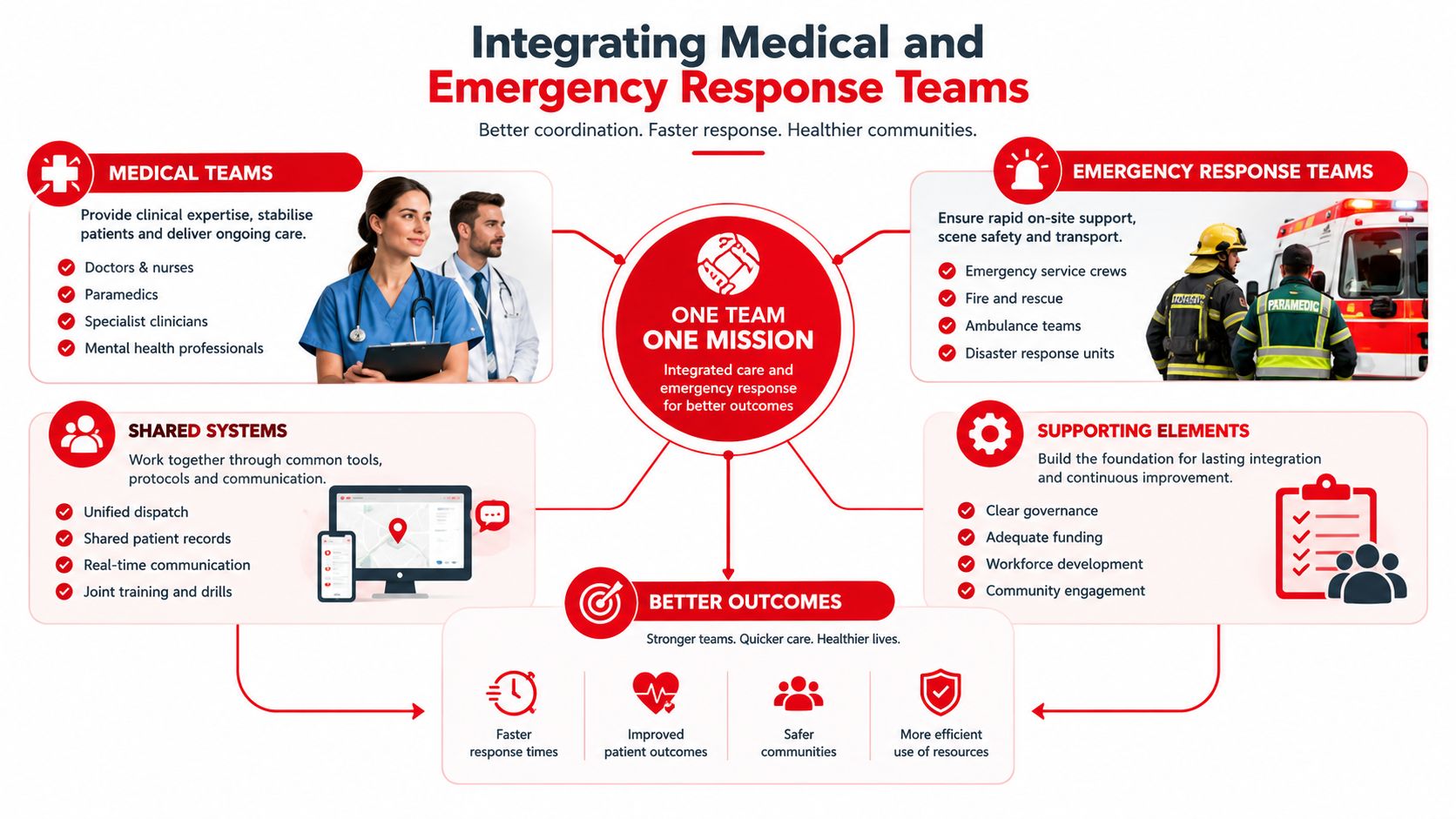
The strongest event security supervisor starts working before the first guest arrives. A marked site plan, a shared radio language and clear escalation thresholds prevent guards from making isolated decisions with incomplete information.
Victoria's festival guidance requires a structured process that identifies hazards, assesses likelihood and severity, prioritises risks with a matrix and applies reasonably practicable controls. It also requires briefings to cover the site layout, entrances and exits, first-aid points, hazards, unacceptable behaviour, evacuation arrangements and direct communication with event managers. The Victorian festival safety guidance provides the basis for that briefing standard.
Build one operating picture
The supervisor should issue a site plan showing:
- Access routes: Ingress, egress, screening points and restricted areas.
- Crowd-pressure locations: Choke points, queues, stage-front areas and narrow circulation paths.
- Emergency assets: First-aid locations, ambulance approaches, evacuation routes and assembly areas.
- Communications: Radio channels, call signs, command location and escalation contacts.
- Post assignments: Fixed positions, patrol boundaries and the person responsible for each zone.
A pre-shift briefing should walk the team through the map rather than just handing it out. Guards need to understand what “unacceptable behaviour” means at that event, when to call a supervisor, how to request medical support and when an issue moves from routine management to emergency escalation.
Briefing standard: If a guard can't describe the nearest exit, medical point and supervisor call sign, the briefing hasn't finished.
Set thresholds before the crowd tests them
Write down observable triggers. Examples include a queue expanding into an emergency route, crowd movement pressing against a barrier, repeated refusals at screening, a welfare concern involving intoxication or a physical confrontation. The response should match the trigger. A queue may need a lane change and venue announcement, while a fight may require separation, backup and police notification.
A supervisor should also maintain an incident log with the time, location, trigger, action, escalation and handover. This makes the next decision easier because the team can see patterns rather than relying on memory.
For venues that need a broader perspective on protective controls, the security for Melbourne retail spaces resource offers useful context on access control, monitoring and site-specific security thinking. Those principles transfer to event environments when they're adapted to temporary layouts and moving crowds.
The plan must stay live. Weather, transport delays, a change in performer schedule or a growing queue can alter risk. The supervisor should update the event manager and redeploy carefully, preserving essential posts while assigning the closest suitable resource.
Managing Live Incidents and Post-Event Reporting
A good incident response is controlled, proportionate and traceable. The supervisor doesn't need to make every event feel like an emergency. They need to identify what's happening, place the right people around it and leave a reliable record for the next decision.
Consider a hospitality event where a guard reports a heated argument near a bar. The first radio message should state the location, the behaviour observed and the support needed. The supervisor acknowledges the call, sends an appropriate response and tells the bar or venue contact to pause service if that's necessary for safety.
A practical incident sequence
- Receive and clarify the call. Confirm who is reporting, where the incident is and whether anyone is injured or at immediate risk.
- Protect people and space. Keep uninvolved patrons away, preserve access for medical responders and avoid crowding the intervention.
- Use proportionate communication. A calm instruction and separation may resolve a minor dispute more safely than immediate physical enforcement.
- Escalate when the threshold is met. Serious violence, weapons, injury, refusal to leave or evidence of a broader threat may require police or emergency services.
- Preserve information. Note witnesses, relevant CCTV, staff observations and the condition of the area. Don't disturb potential evidence unnecessarily.
- Complete the handover. Tell police, medical staff or venue management what happened, what action was taken and what remains unresolved.
At the Alice Springs Show, the recorded disturbances, searches and weapon seizures demonstrate why a supervisor must convert intelligence into changing decisions. A report of a prohibited item at an entrance may justify extra screening support, but stripping every other post could create a worse risk elsewhere. The decision must account for the whole site.
Record facts, not impressions
An incident log should capture the time, exact location, people involved or descriptions, factual sequence, actions taken, escalation path, handover and available evidence. Avoid labels such as “aggressive person” without describing the observable conduct. “Raised voice, refused repeated directions and moved towards another patron” gives a future reviewer something useful to assess.
After the event, compare the log with the deployment plan:
- Were the right posts covered when pressure developed?
- Did the radio message contain enough location and action information?
- Did medical, venue and security teams reach the same operating picture?
- Did staff remain until safe dispersal was complete?
- Which control should change at the next event?
A supplier such as GM GROUP Services can support this model through event security, risk assessments, crowd control, supervision and reporting across NSW, Victoria, Queensland and the ACT. The important test isn't the size of the roster. It's whether the provider can match licensed personnel to the venue, maintain communication and produce useful operational records.
The best event security supervisor protects the atmosphere as well as the people. Firm action has its place, but early welfare support, clear communication and disciplined documentation often prevent a small concern from becoming a major incident.
GM GROUP Services provides licensed event security for concerts, festivals, conferences, sporting events, venues and private functions, including risk assessment, crowd control and on-site supervision. Visit GM GROUP Services to discuss a deployment plan that integrates security, medical coordination, venue operations and state-specific compliance.
Discover more from GM Group Services
Subscribe to get the latest posts sent to your email.