
Service Level Agreement SLA failures usually show up at the worst possible moment. Gates open, the queue stretches past the barricades, a patron pushes through the wrong entry lane, and suddenly the venue team realises the security provider and the client had very different ideas about staffing, response priorities, and escalation authority.
That problem rarely starts on event day. It starts much earlier, when expectations stay verbal, duties stay broad, and nobody writes down what “adequate security coverage” means.
In physical security, a Service Level Agreement SLA isn't paperwork for its own sake. It's the operating document that tells everyone what must happen, who is responsible, how performance is measured, and what the provider must do if service falls short. For venues, festivals, construction sites, retail centres, and corporate premises, that clarity prevents the most common failures: under-resourcing, slow responses, patchy reporting, and disputes after an incident.
What Is a Service Level Agreement SLA in Security
A Service Level Agreement SLA in security is the document you want in place before the first guard signs on, not after the first complaint lands.
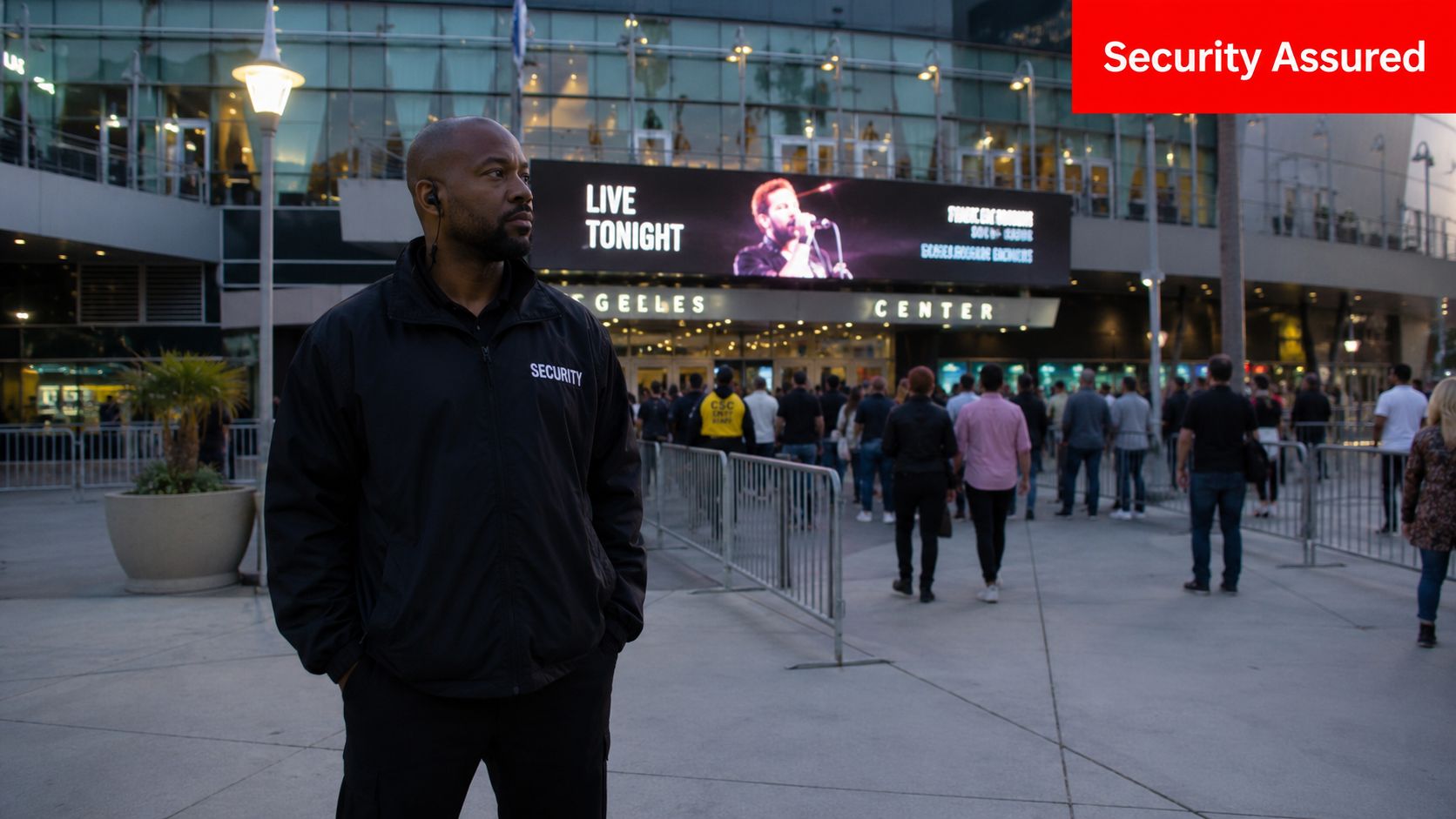
At a venue level, the gap is usually simple. The client expects visible guard presence at all public entries, active roaming patrols, bag checks, incident logs, and immediate supervisor escalation. The provider may think the brief only requires static coverage at the main gate and general observation elsewhere. Both sides think they're aligned until a crowd surge, intoxicated patron, or after-hours access issue proves they aren't.
According to Icertis on what an SLA is, an SLA is best understood as a formal, legally binding contract that defines service scope, performance measures, responsibilities, and remedies if targets are missed, and these agreements are typically built around measurable KPIs such as uptime, response time, and resolution time rather than vague promises. In security, that same logic applies directly to guard deployment, incident response, patrol completion, reporting timeliness, and supervisory oversight.
What that means on the ground
A strong security SLA answers practical questions such as:
- Coverage expectations: Which entrances, loading docks, bars, plant rooms, fire exits, and perimeter zones must be covered.
- Guard duties: Whether guards are screening entrants, checking IDs, managing queues, escorting contractors, patrolling assets, or handling lock-up.
- Incident handling: Who responds first, when the supervisor is called, and when police or emergency services are contacted.
- Evidence and reporting: What gets logged, how quickly reports are submitted, and who receives them.
Practical rule: If a duty matters during an incident review, it belongs in the SLA.
That's why a Service Level Agreement SLA is more than a legal document. In a security setting, it's the written version of your operating expectations. When it's drafted properly, it protects patrons, staff, contractors, assets, and the client's brand at the same time.
Why a Security Service Level Agreement Is Not Optional
Physical security breaks down quickly when the contract relies on assumptions.
A verbal brief might sound workable. “We need a few guards, someone on the gate, and patrols through the night.” That's fine until the gate team gets tied up with aggressive patrons, the patrol route is never defined, and no one can prove whether the rear loading area was checked at all. Without a written Service Level Agreement SLA, there's no clean way to test performance against expectations.
Vague promises create avoidable risk
Modern SLA practice moved away from broad vendor promises and towards quantified targets such as uptime percentages, service credits, and enforceable response and resolution windows. Contemporary agreements commonly use targets like 99.5%, 99.9%, or 99.999% uptime, with those measures written into the contract, as noted by TermScout's overview of SLA metrics and fair performance standards. The important lesson for security isn't the specific IT-style metric. It's the shift from subjective promises to measurable obligations.
That matters because physical security is full of grey areas unless you remove them. “Fast response” means nothing if the contract never defines what fast is. “Visible patrols” means nothing if patrol frequency, route coverage, and proof of attendance aren't documented.
Where clients usually get caught
The biggest failures I see tend to come from the same patterns:
- Ambiguous staffing: The client expects experienced crowd controllers. The provider sends guards suited to low-traffic static work.
- Unclear command authority: Floor staff report issues, but no one knows whether the venue manager, duty manager, or security supervisor makes the call.
- Poor escalation pathways: Minor incidents sit too long because there's no trigger point for supervisor attendance or emergency response.
- Weak documentation: An incident occurs, but the report lacks time stamps, witness notes, CCTV references, or action history.
A weak SLA doesn't just create service disputes. It creates operational blind spots during the exact moments when control matters most.
Why this protects the business, not just the contract
For event organisers and venue operators, the damage isn't limited to one missed patrol or one late response. The consequences spread across safety, compliance, public perception, and internal trust. Your operations team starts questioning the provider. Your managers spend time reconstructing facts instead of running the site. If the matter escalates, every undocumented expectation becomes a point of friction.
A solid Service Level Agreement SLA prevents that by making accountability visible before the job begins. It tells both parties what success looks like, how it will be checked, and what happens if the service slips.
The 7 Essential Components of a Security Service Level Agreement
A usable security SLA has to work at gate level, patrol level, supervisor level, and management review level. If any of those layers are missing, the document may look complete but still fail during operations.
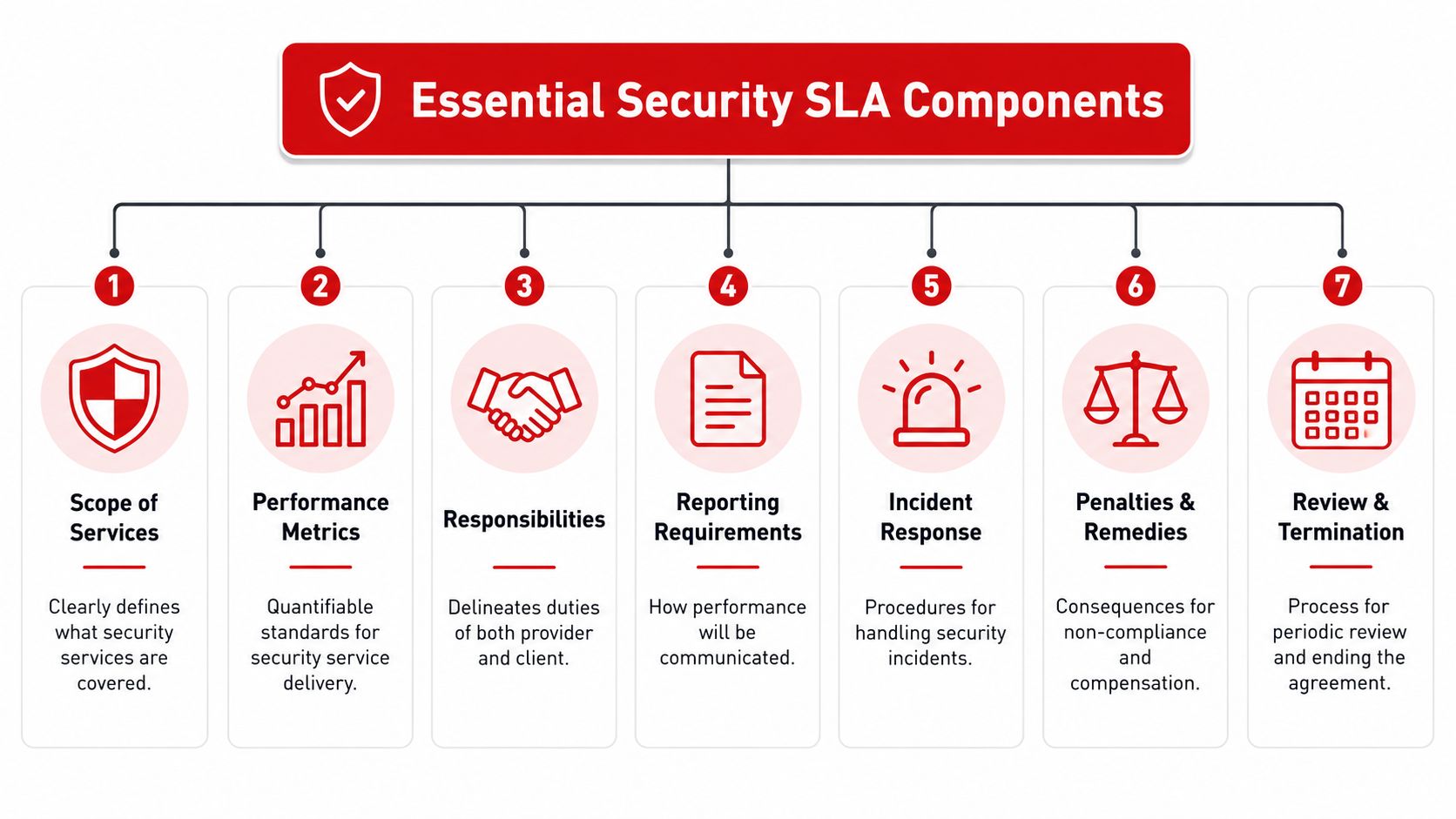
Essential Security SLA Components
| Component | Purpose in a Security Context |
|---|---|
| Scope of Services | Defines the exact security services covered, locations, shifts, duties, and exclusions |
| Performance Metrics | Sets measurable standards for guard attendance, patrol completion, incident response, and reporting |
| Responsibilities | Clarifies what the provider must do and what the client must provide or approve |
| Reporting Requirements | States what reports are required, when they're due, and who receives them |
| Incident Response | Documents escalation steps for disturbances, medical events, unauthorised access, and emergencies |
| Penalties and Remedies | Explains what happens if staffing, response, or reporting standards are missed |
| Review and Termination | Sets review cycles, amendment rules, and the process for ending or changing the agreement |
Scope of services
Many security contracts stay too broad. “Provide guards for event security” isn't enough.
The scope should specify posts, hours, duties, patrol zones, screening requirements, access control procedures, lock-up routines, alarm responses, supervisor attendance, and whether the service includes items such as radios, wands, body-worn cameras, or guard tour devices. It should also state what isn't included, such as cash handling, traffic control, or RSA enforcement if those sit with another contractor or internal team.
Performance metrics
If you can't measure it, you can't manage it. In physical security, useful metrics usually relate to attendance, deployment, patrol verification, response handling, incident documentation, and supervisor checks.
Avoid metrics that look impressive but don't help operations. “Professional presentation” matters, but it's not enough on its own. Pair it with measurable checks such as sign-on compliance, uniform inspections, and documented post handovers.
Responsibilities
An SLA should separate provider duties from client duties cleanly. The provider may supply licensed guards, supervision, training records, patrol logs, and incident reports. The client may need to provide site maps, emergency contacts, access credentials, induction material, and authority for exclusions or patron refusals.
Security failures often originate in the hand-off process. A guard can't secure a restricted area if the client hasn't issued access credentials or updated the venue access list.
Reporting requirements
Good reporting turns security from a black box into a managed service.
Include requirements for:
- Shift reports: Summary of attendance, patrol activity, incidents, and handover notes.
- Incident reports: Clear time line, people involved, actions taken, evidence available, and escalation details.
- Supervisor reports: Post inspections, coaching notes, resourcing issues, and compliance observations.
- Review reports: Periodic service summaries that compare performance against agreed KPIs.
Incident response
This clause should read like an operating playbook, not a generic legal paragraph.
Define incident categories, response ownership, escalation paths, communication methods, evacuation authority, police contact thresholds, and reporting deadlines. A festival crowd crush risk, a construction site trespass issue, and a corporate office threat call don't need the same workflow.
Operational advice: Write incident clauses by scenario. One general paragraph won't cover intoxication, aggression, first aid support, unauthorised entry, and after-hours alarm response properly.
Penalties and remedies
If the provider misses staffing levels, response obligations, or reporting standards, the agreement needs a remedy mechanism. That could involve service rectification, replacement personnel, immediate supervisor intervention, formal review, or contractual relief defined by the parties.
The point isn't to punish for minor errors. The point is to stop recurring underperformance from becoming normal.
Review and termination
A good SLA gets reviewed because operations change. Venues add new entry points. Construction programs move through phases. Retail centres extend trading hours. Events scale up or tighten risk controls after prior incidents.
Review clauses should cover scheduled reviews, urgent revisions after incidents, change approvals, and how either party can end the arrangement if service or site conditions materially change.
Real-World Security SLA Clauses and KPI Examples
The best way to test a Service Level Agreement SLA is to picture a real site and ask whether the wording would help the team act correctly under pressure.
Music festival example
A music festival has moving risks. Entry queues swell, artist movements change, and alcohol service affects the crowd profile across the day.
A clause might read like this:
“The security provider will maintain staffed screening positions at all public entry lanes during advertised gate opening hours and deploy roaming crowd controllers to monitor congestion, queue behaviour, and barrier pressure in high-traffic areas. The supervisor will escalate to event control where crowd conditions require lane reconfiguration, temporary hold, or additional support.”
Useful KPIs in this context could include:
- Entry coverage compliance: All planned screening positions are staffed before gates open.
- Crowd monitoring compliance: Roaming officers complete scheduled checks of identified pressure points.
- Incident logging quality: Patron removals, refusals, and safety interventions are documented clearly and submitted within the agreed reporting window.
Construction site example
Construction security is less about crowd management and more about perimeter discipline, contractor access, asset protection, and after-hours response.
A practical clause could be:
“The provider will conduct scheduled perimeter checks, verify gate integrity, challenge unauthorised persons, and report signs of tampering, theft risk, unsafe access, or damage to fencing, locks, or storage areas to the nominated site contact without delay.”
Relevant KPIs might focus on patrol proof, access log completion, alarm response workflow, and shift handover quality. If plant, copper, tools, or fuel are sensitive assets, the SLA should state exactly how checks are documented and who approves exceptions.
Corporate office example
Corporate sites often need a quieter but tighter standard. Visitor management, contractor control, reception support, and emergency procedures matter more than visible deterrence alone.
A clause may say:
“Security personnel will verify all after-hours visitors against the approved access list, maintain a complete visitor and contractor record, and escalate any discrepancy, failed verification, or attempted unauthorised access to the building manager or nominated contact immediately.”
What good clause wording looks like
Strong clauses usually share a few habits:
- They name the action: patrol, verify, report, escalate, isolate, escort.
- They define the trigger: aggressive behaviour, forced entry signs, queue congestion, missing credential, alarm activation.
- They identify the recipient: supervisor, event control, venue manager, emergency services.
- They require evidence: patrol log, incident report, CCTV reference, witness notes, handover summary.
Weak clauses use language like “as needed” or “where appropriate” without defining who decides what's appropriate. That wording causes arguments later because it leaves too much room for interpretation.
How to Draft and Negotiate a Strong Service Level Agreement
Drafting a Service Level Agreement SLA works best when both sides treat it as an operating framework, not a contest. The goal isn't to trap the other party. The goal is to define a service that can be delivered on a live site.
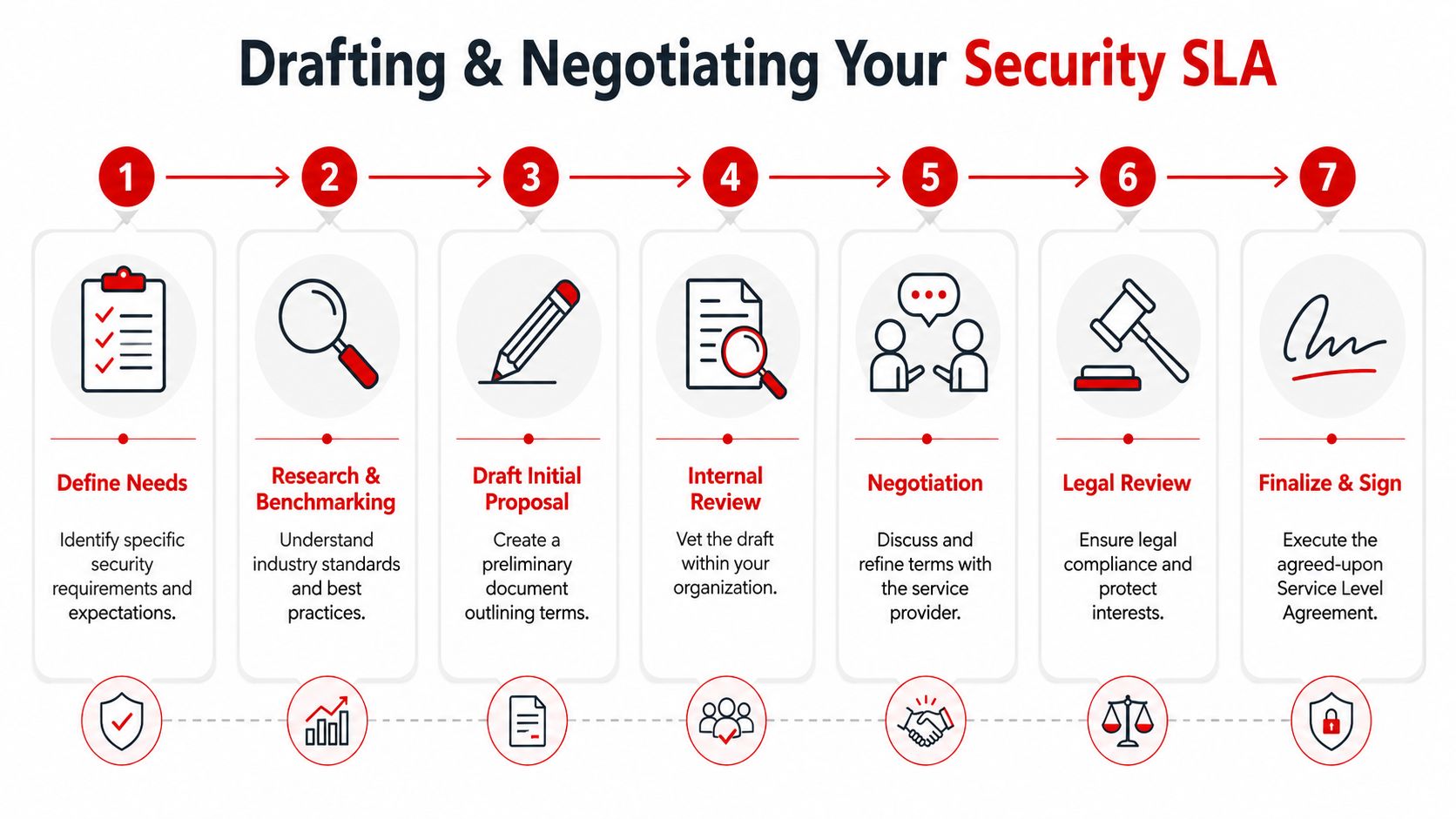
Start with the site, not the template
Too many clients begin with a generic SLA document and try to force their venue or event into it. That usually produces vague language and missed risks.
Start by listing what the site needs:
- Operating environment: festival, pub, hotel, retail centre, office, warehouse, or construction project.
- Risk profile: public access, alcohol service, cash movement, contractor traffic, after-hours exposure, asset theft, VIP presence.
- Critical outcomes: safe entry, reduced disorder, controlled access, clean lock-up, documented incidents, reliable escalation.
If your security program also touches digital systems, access control software, alarm integrations, or cyber-exposed platforms, it helps to understand adjacent supplier due diligence as well. A useful reference is how to choose a trusted pentest partner, because the same procurement discipline applies. Clear scope, measurable outcomes, and evidence of capability matter in both physical and technical risk management.
Ask the provider hard operational questions
Don't stop at price and headcount. Ask how the provider handles supervision, fatigue, relief coverage, incident escalation, report quality control, and site familiarisation.
Use questions like these:
- Who checks guard performance on shift?
- How are missed patrols identified and corrected?
- What does your incident report include by default?
- How do you replace a no-show or unsuitable officer?
- Who has authority to escalate resourcing concerns during a live event?
Negotiate for clarity, not maximum length
Longer doesn't always mean stronger. Some of the worst SLAs are packed with generic legal text and short on operational detail.
Focus negotiations on a few points that make the contract usable:
- Define the service area clearly: Include maps, post orders, or zone lists where possible.
- Separate critical and non-critical standards: Staffing and incident escalation deserve tighter controls than minor admin issues.
- Write practical exceptions: If weather, police directions, or client-caused delays affect delivery, the document should say how that gets handled.
- Agree change control: For events and construction, requirements often shift. The SLA should support approved changes without confusion.
“The best SLA is one your duty manager and security supervisor can both use at 10 pm on a busy Saturday.”
Finish with legal review and operational sign-off
Legal review matters, but operations review matters just as much. A lawyer can confirm enforceability. Your venue manager, event controller, or site manager confirms whether the wording reflects reality.
Before anyone signs, test the draft against likely scenarios. Lost child. Aggressive patron. Tailgating at a staff entrance. Contractor arriving after hours. Fire alarm activation. If the actions, authority, and reporting path still feel unclear, the SLA isn't ready.
Monitoring Reporting and Enforcing Your Security SLA
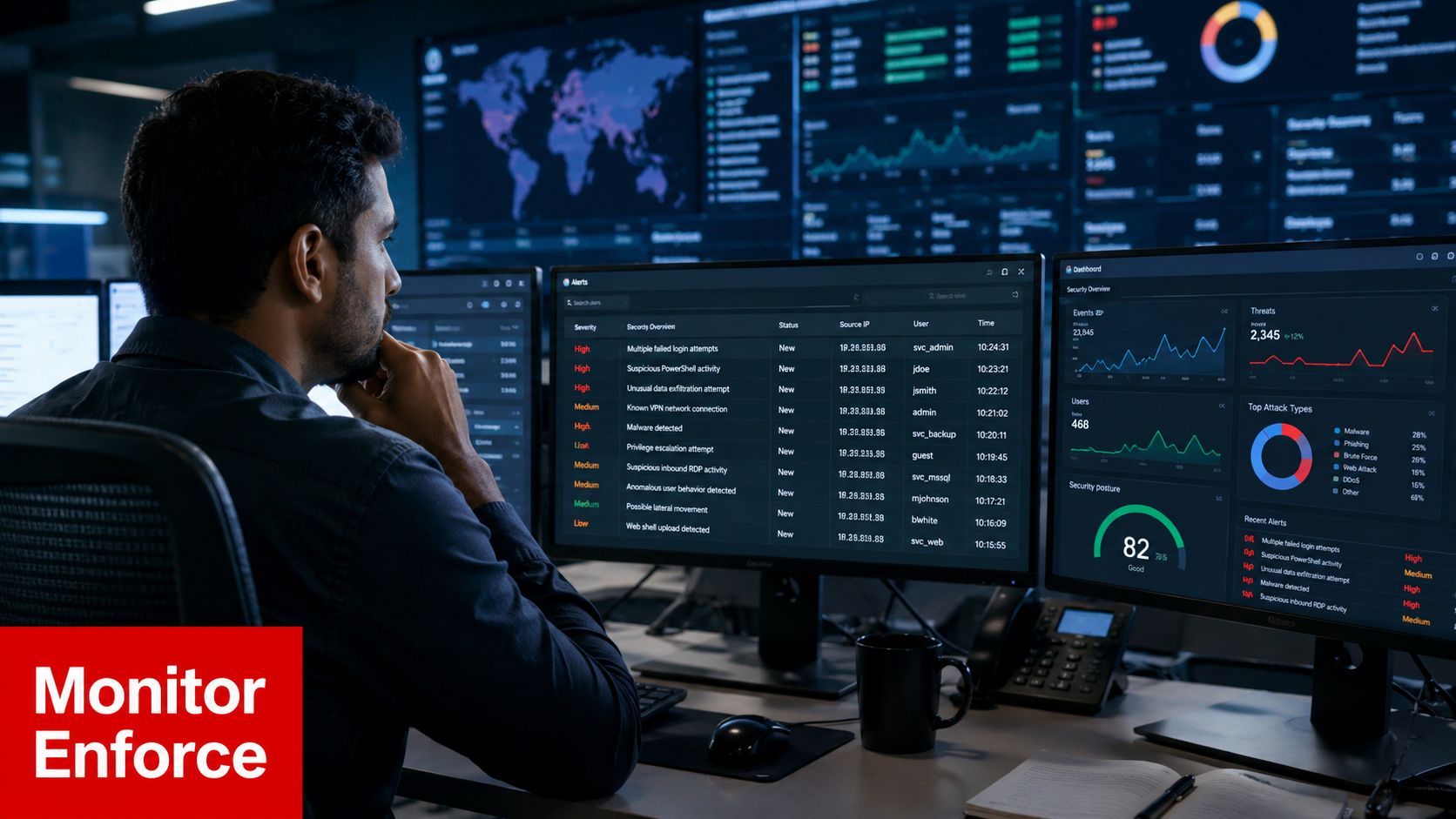
A signed Service Level Agreement SLA doesn't improve security by itself. Performance only becomes visible when the client and provider monitor it the same way.
Build a measurement model before the first review meeting
The most technically important decision in SLA design is the measurement model. Service levels need to define exactly what is counted, when the clock starts and stops, and how pauses such as outside business hours, holidays, or customer-caused delays are handled, because those rules directly affect breach rates and reporting accuracy, as explained by InvGate's guide to service level agreements.
That principle applies directly to physical security. If your SLA says the provider must respond rapidly to an alarm, you need to define when the timer begins. Is it when the alarm triggers, when the monitoring centre verifies it, or when the guard is dispatched? If your incident report is due after the event, does the clock start at incident close, shift end, or manager notification?
What to review day to day and month to month
Daily and weekly monitoring should stay practical. Look at post attendance, patrol confirmations, incident volumes, report quality, and any deviations from the agreed staffing plan.
A monthly or periodic review should go wider:
- Trend review: Repeated access issues, common patrol gaps, recurring behavioural hotspots.
- Quality review: Whether reports are complete, factual, and useful for management decisions.
- Corrective actions: What was promised after a service miss, and whether it was completed.
- Contract fit: Whether the SLA still matches the site's real operating conditions.
For technology-backed monitoring, many teams use guard tour systems, access control logs, incident reporting software, and monitoring dashboards. If part of your wider service environment includes online systems or client-facing platforms, a reference point like Fivenines for website uptime is useful because it shows how disciplined monitoring frameworks are built around clearly defined availability and alerting standards.
Enforce the SLA without turning every issue into a dispute
Most SLA enforcement should start with evidence and correction, not confrontation.
A practical escalation path often looks like this:
- Verify the issue: Confirm the missed post, incomplete patrol, late report, or response failure.
- Document the variance: Record what happened, when, and what clause or KPI it affected.
- Request corrective action: Ask for root cause, immediate fix, and prevention steps.
- Review recurrence: If the same issue repeats, move to formal performance review or contractual remedy.
Manager's note: Enforce consistently. If the client ignores small misses for months, the provider learns those standards aren't real.
The best review meetings are short, evidence-based, and specific. They don't rely on general dissatisfaction. They compare actual performance to the agreed service standard and decide what changes next.
Frequently Asked Questions About Security SLAs
Does a small event really need a Service Level Agreement SLA
Yes. It can be shorter, but it still needs to exist. A one-day event may only require clear staffing, entry duties, incident escalation, and reporting requirements. The scale changes. The need for clarity doesn't.
Who usually carries liability in a security SLA
Liability depends on the contract wording and the facts of the incident. In practice, the SLA should clearly allocate responsibilities, define what the provider controls, and document what the client must supply, approve, or disclose. Ambiguity creates conflict later, especially after an injury, theft, or access breach.
Should the SLA include guard qualifications
Absolutely. If the site requires crowd control capability, concierge-style presentation, gatehouse experience, or familiarity with hospitality environments, put that in writing. The right number of guards won't help if they aren't matched to the job.
How flexible should a security SLA be for festivals or changing sites
Flexible, but controlled. Build in a process for approved post changes, additional shifts, weather responses, site expansion, or revised risk settings. Flexibility without written approval rules usually creates confusion on event day.
What's the most common mistake in a security SLA
Leaving key duties implied. If patrol frequency, reporting deadlines, supervisor attendance, or escalation authority matter, write them down. The busiest sites are the least forgiving of assumptions.
How often should the agreement be reviewed
Review it whenever operations materially change, after major incidents, and at regular intervals agreed by both parties. Security risk doesn't stay still, so the document shouldn't either.
If you need a security partner that can turn SLA requirements into workable on-site operations across events, venues, hospitality, retail, construction, and corporate environments, GM GROUP Services is worth speaking with. Their team works across NSW, VIC, QLD and the ACT, with a practical focus on fit-for-purpose deployment, supervision, reporting, and licensed protection that supports both safety and customer experience.
Discover more from GM Group Services
Subscribe to get the latest posts sent to your email.