
Effective security on patrol is about so much more than just having guards walk a beat. It’s a strategic defence system, and the entire structure rests on one critical foundation: a thorough, proactive risk assessment. Honestly, this is where the real work happens. Get this part right, and every other decision—from how many guards you need to the routes they walk—falls into place. This guide provides actionable insights to improve your security posture.
Building the Foundation for Effective Security on Patrol
Before any boots hit the ground, a smart patrol strategy begins with a deep dive into your specific environment. This isn't about running through a generic checklist. It's about building a strategic blueprint that directs your security resources exactly where they're needed most, tackling the threats you actually face.
Think about it this way: the risks at a sprawling, multi-day music festival are worlds apart from those at a quiet, after-hours construction site. One is all about crowd dynamics and managing access points, while the other is focused on stopping the theft of expensive gear and materials. Your security on patrol plan has to reflect that reality.
Identifying and Mapping Vulnerabilities
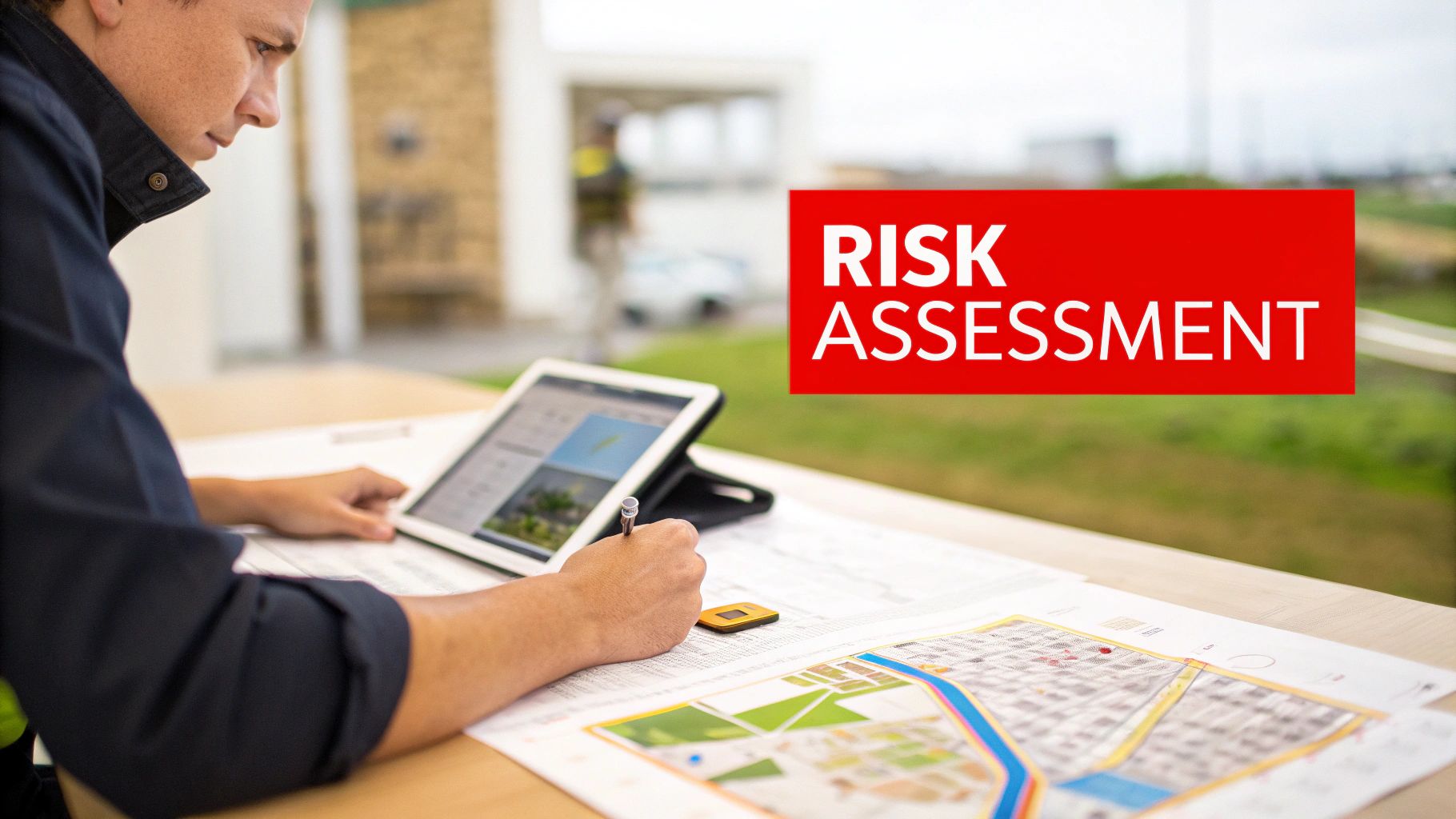
First things first, you need to walk the site and think like someone trying to get in or cause trouble. Where are the blind spots? Which doors are the easiest targets? You have to physically map out these vulnerable areas—the poorly lit car park, the rear service entrance nobody watches, or that section of fence hidden by overgrown trees.
It's also about understanding the natural flow of your site. In a retail centre, that means knowing customer traffic patterns, delivery times, and how cash is handled. On an industrial site, you’re tracking vehicle movements, where valuable machinery is stored, and who has contractor access.
- Access Points: Take note of every single gate, door, and potential way in. How secure are they right now? Look at locks, alarms, and existing camera coverage. Actionable Insight: Use a simple colour-coded map. Red for high-risk points (e.g., main entrance after hours), yellow for medium-risk (e.g., secondary doors), and green for low-risk.
- Perimeter Integrity: Walk the entire fence line. A small gap or a weak spot is a glaring invitation for trouble. Check natural barriers, too.
- High-Value Zones: Pinpoint the areas that absolutely cannot be compromised. We're talking server rooms, inventory stockrooms, or executive suites. These become your high-priority patrol zones.
This hands-on mapping gives you a clear, visual guide to your property’s security weak points. It shows your security on patrol team precisely where their attention is needed most.
The whole process can be broken down into a few core steps, moving from broad ideas to concrete priorities.
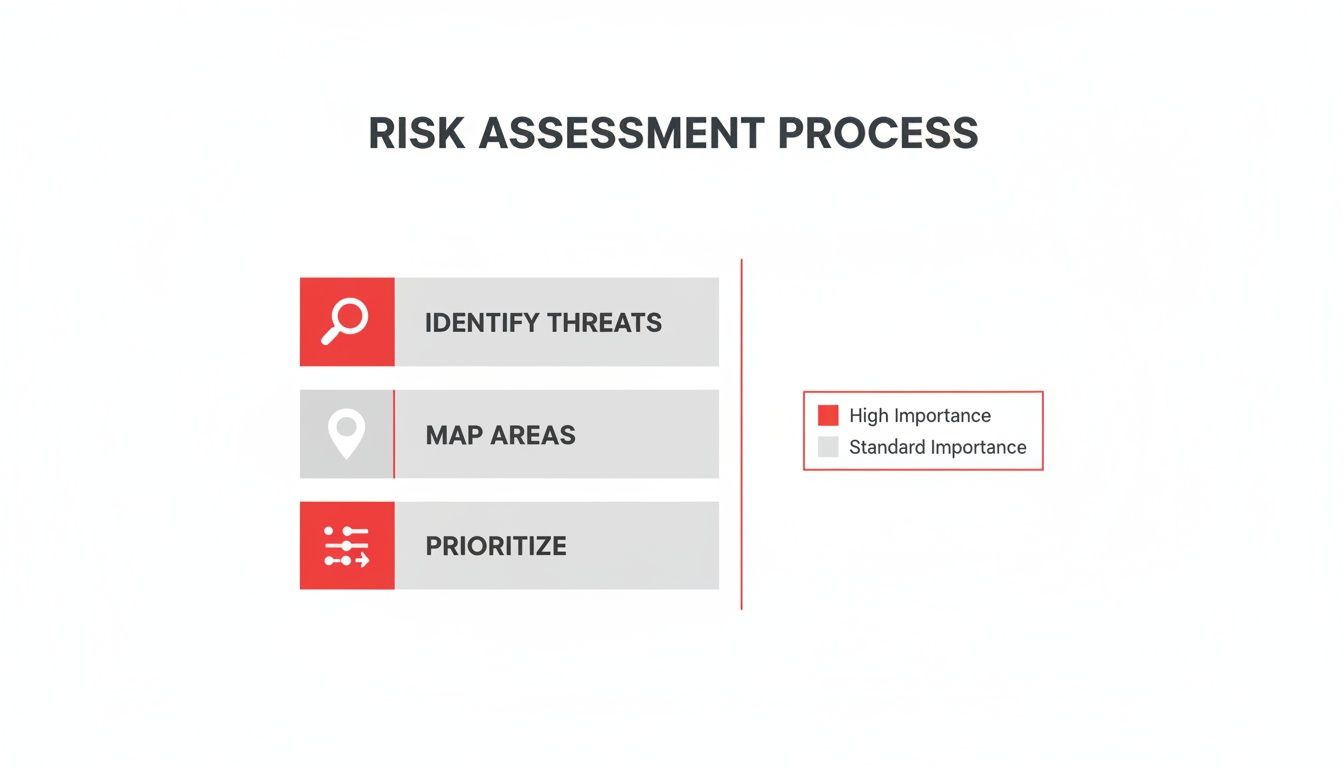
Following a structured approach like this ensures you don't miss anything critical.
Prioritising Threats with a Risk Matrix
Once you’ve got a list of vulnerabilities, you need to figure out what to tackle first. After all, not all risks carry the same weight. This is where a simple risk matrix becomes your best friend. It helps you sort threats by how likely they are to happen and the kind of damage they could do.
For example, petty graffiti might be a high-likelihood event, but its impact is relatively low. On the other hand, the theft of a half-million-dollar excavator from a construction site is probably less likely, but the financial and operational hit would be catastrophic.
Practical Example: A retail store might identify "internal theft by staff" as high-likelihood but medium-impact, while "armed robbery" is low-likelihood but catastrophic-impact. This helps focus patrol strategies on cash handling procedures and emergency response training.
This analysis is what separates a truly effective security on patrol strategy from a purely observational one. It allows you to be smart about where you put your resources, making sure your guards are spending their time protecting what matters most and are prepared for the most likely incidents. This groundwork is what turns security from a simple cost into a proactive asset protection machine.
Designing Patrols for Your Specific Environment
Effective security on patrol is never a one-size-fits-all solution. What works for a sprawling, after-hours industrial park is completely wrong for a packed music festival. Simply throwing guards at a problem isn't just inefficient—it’s a recipe for failure. The real key is designing a deployment plan that matches the right patrol type to your specific environment.
This means getting granular. We need to move beyond just "having a guard on-site" and think strategically about how that guard operates. Will their presence be most effective on foot, in a vehicle, or from a fixed position? Let's break it down.
Matching Patrol Type to Your Site Needs
Choosing the right kind of patrol is the cornerstone of any successful operational plan. Each method has a distinct purpose, and understanding their strengths is how you build a layered, effective defence.
A common mistake I see is people assuming that more patrols automatically equal better security. In reality, the type of patrol almost always matters more than the sheer number.
Common Patrol Types and Their Best-Fit Applications:
- Foot Patrols: These are perfect for any environment needing a visible, approachable security presence. Think of a retail centre where guards can interact with shoppers, or a corporate lobby where they greet employees. Foot patrols are also excellent for detailed building inspections and engaging with people, which is invaluable for gathering ground-level intelligence and making everyone feel safer.
- Vehicle Patrols: When you need to cover a lot of ground quickly, nothing beats a vehicle patrol. They're tailor-made for sprawling construction sites, large industrial estates, or multi-venue event precincts. The marked vehicle itself is a powerful deterrent, and its speed allows for a rapid response to incidents anywhere on a large property.
- Static Guard Posts: A static guard positioned at a key access point—like a main gate, reception desk, or loading dock—gives you focused control. This type of deployment is absolutely essential for managing who comes and goes, verifying credentials, and keeping a close watch on a specific high-risk zone.
In my experience, the most robust security on patrol strategies use a hybrid model, combining different patrol types to cover all the bases.
Actionable Insight: For a large festival, this layered approach is non-negotiable. You’d use static guards at entry gates for thorough bag checks, foot patrols to move through dense crowds and manage behaviour, and vehicle patrols to secure the vast perimeter and car parks. This creates a multi-layered system that addresses diverse risks all at once.
Considering Specialised Patrol Units
Beyond the standard deployments, some situations demand specialised units to add another layer of detection and deterrence. These aren't just a precaution; they're deployed as a direct countermeasure to specific, identified risks.
For instance, high-end retail environments often struggle with sophisticated, organised shoplifting rings. A standard uniformed guard might deter an opportunistic thief, but they often do little to stop a coordinated group.
When to Deploy Covert and K9 Patrols
This is where more specialised patrols become incredibly valuable. A strategic mix can make your security presence far more dynamic and, crucially, unpredictable for would-be offenders.
- Covert Patrols (Loss Prevention): Plain-clothes officers are unbelievably effective for retail loss prevention. They can observe suspicious behaviour without alerting the person, allowing them to gather evidence and intervene at just the right moment. Their low-key nature is perfect for environments where a constant uniformed presence might feel intimidating to genuine customers.
- K9 Units: A K9 unit brings a unique set of skills that neither technology nor human guards can replicate. A dog’s heightened sense of smell and hearing makes them exceptional for detecting contraband at event entrances or tracking an intruder on a large, dark property. On top of that, the psychological impact of a trained security dog is a massive deterrent. A K9 team patrolling an event space adds a powerful layer of both detection and visible deterrence.
By carefully analysing your environment and the specific threats you face, you can create a truly tailored patrol plan. This ensures your security on patrol is not just present, but purposeful and highly effective.
Building Your A-Team: Staffing and Training for Patrols
Let's be blunt: your security plan is only as good as the people on the ground. A detailed plan is useless without a team of professionals who are more than just a uniform—they need to be proactive, skilled, and the right fit for your specific site. This is where a basic security presence becomes a truly effective operational asset.
Sourcing the right people is more than just checking licences. It's about matching personalities and skill sets to the job at hand. Think about it: a guard at a black-tie corporate event needs impeccable interpersonal skills to be welcoming yet authoritative. On the other hand, an officer doing covert loss prevention in a busy retail store needs to be a ghost, with sharp observational skills and total discretion.
More Than a Licence: Training That Actually Works
A security licence is just the starting point. Real-world effectiveness comes from tough, ongoing training that prepares your team for what they’ll actually face day-to-day. This goes way beyond standard procedures and builds the skills needed to protect people, property, and your reputation.
A cornerstone of building a top-tier team is consistent training. A comprehensive security awareness and training program is non-negotiable for keeping officers ready for constantly changing threats. It's how you ensure every team member can handle the pressure of the job.
Key training modules we always insist on include:
- Conflict De-escalation: Giving guards the tools to talk down tense situations calmly and professionally is paramount. It’s about preventing a physical incident before it even starts.
- Customer Service Excellence: Every interaction, even a simple bag check, reflects on your business. Officers must be respectful and positive.
- Site-Specific Compliance: This is crucial. It could mean Responsible Service of Alcohol (RSA) rules for a pub, or specific safety protocols for a construction site.
- Emergency Response Drills: You don't want the first time your team handles a medical emergency or a fire evacuation to be the real thing. Practice makes the response smooth and effective.
On a much larger scale, even international bodies like the African Union know that structured support and training are vital. They've set up specific groups to maintain professional standards across massive patrol and enforcement operations.
This kind of commitment to continuous improvement keeps your patrol security sharp, compliant, and ready for whatever comes their way.
The Smart Way to Schedule and Design Patrol Routes
So, you've got a great team. Now, how you deploy them is the next piece of the puzzle. The whole point is to create a security presence that feels constant but is also unpredictable. This is how you close the gaps that opportunistic thieves and vandals look for.
A predictable patrol route is a gift to a criminal. If they know a guard walks past a certain door every hour, on the hour, they have a clear window of opportunity. The trick is to design routes that cover all your critical points systematically, but in a way that keeps offenders on their toes.
Here’s how you do it:
- Vary Your Timings: Ditch the clockwork schedule. Patrols should happen at slightly different times each day.
- Switch Directions: Don't let guards walk the same loop in the same direction every single time. Have them reverse it.
- Mix in Random Checks: Along with scheduled checks of high-risk areas, throw in random visits to places that are usually considered low-priority.
This strategic mindset turns a simple patrol plan into a dynamic deterrent. Your coverage is always there, but your patterns are never obvious. That’s how you maximise your team's effectiveness and keep your site truly secure.
Integrating Technology for Smarter Security on Patrol Operations
Effective security patrols today rely on more than just keen observation and a solid pair of boots. Modern operations are supercharged by smart technology, turning a standard patrol into a highly efficient, accountable, and responsive security force. When you integrate the right tools, you don't just make the job easier; you get verifiable data, better situational awareness, and a much stronger deterrent.
This blend of human intelligence and tech support is where patrol security truly shines. It takes the guesswork out of the equation and replaces it with real-time, actionable information. This allows your team to stop just reacting to problems and start preventing them.
Ditching the Clipboard: GPS and Patrol Management Apps
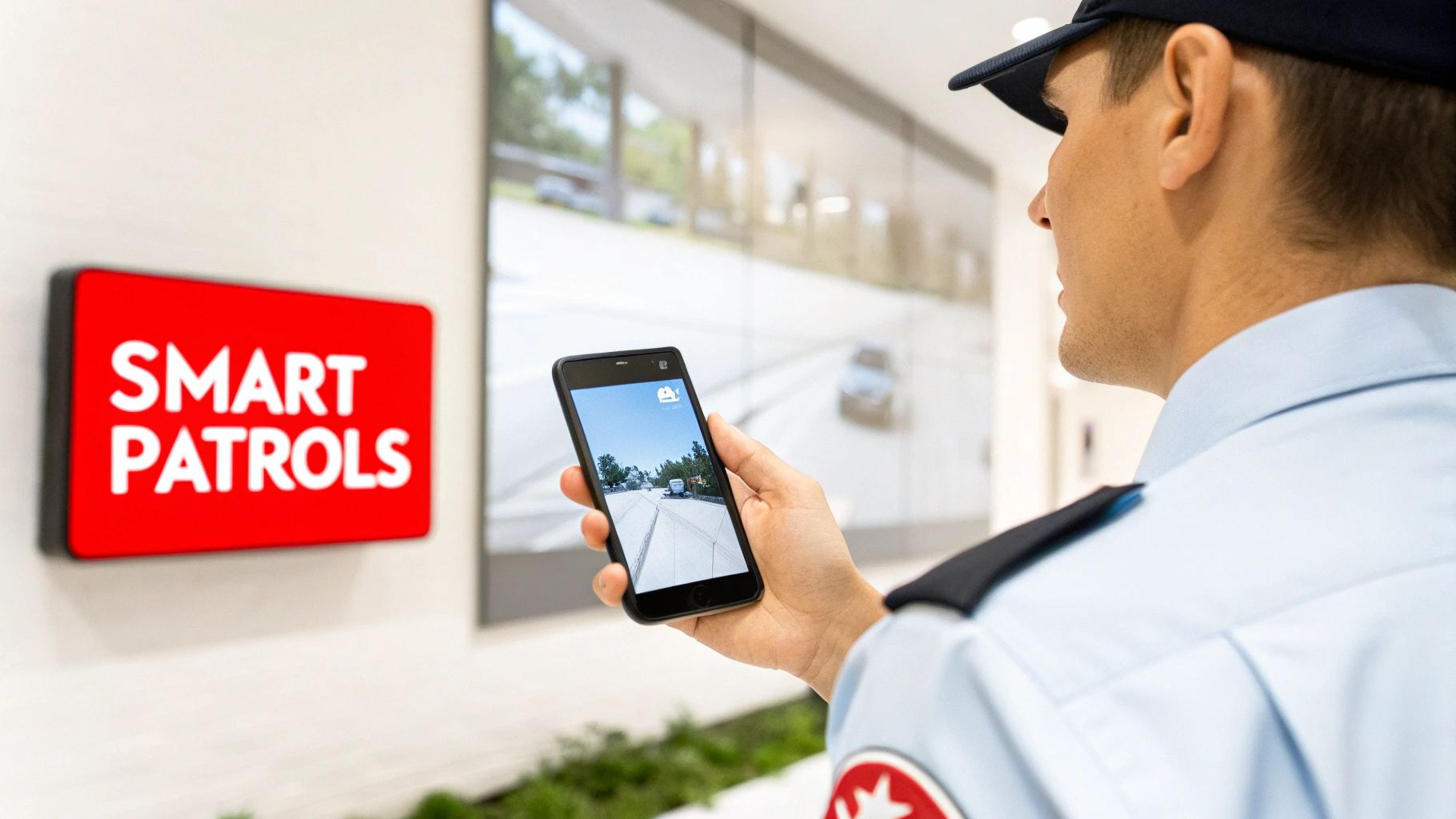
One of the biggest game-changers for patrols has been the shift from paper-based logs to digital systems. Patrol management apps, usually running on a smartphone or rugged tablet, are at the heart of this transformation. They give guards the ability to log incidents, complete digital reports, and scan checkpoints instantly.
What this creates is a completely transparent digital trail. Supervisors and clients can see that patrols are being done on schedule, which keeps everyone honest. For example, by placing simple NFC tags or QR codes at key locations, a guard's scan creates a timestamped record of their presence. This data is gold for verifying service and, over time, for optimising patrol routes.
Beyond that, GPS tracking for patrol vehicles or personnel provides a live map of your security resources. This is absolutely critical for a few reasons:
- Real-Time Location Data: You can instantly see where every guard is, which is vital for dispatching the closest unit to an unfolding incident.
- Smarter Routes: By analysing historical patrol data, you can spot inefficiencies and make sure all your high-risk areas are getting the right amount of attention.
- Officer Safety: Most of these apps include a lone worker or 'man down' feature, adding a crucial layer of safety for officers on patrol by themselves.
Eyes in the Sky, Boots on the Ground: Integrated CCTV
The real magic happens when you start integrating these technologies. Combining your live CCTV monitoring with your on-the-ground patrol team creates a powerful, unified force. Instead of just being a passive recording system, your CCTV becomes an active detection and response tool.
Picture this: a remote operator is monitoring cameras at a massive outdoor festival. They spot a potential issue brewing in a crowd, far from the nearest static guard post. With an integrated system, they can instantly ping the closest roving patrol unit with the exact location and a description of the threat.
Practical Example: A guard on patrol receives an alert on their device: "Suspicious individual, male, red jacket, near stage B entrance." They can now move directly to the location, fully briefed, instead of stumbling upon the situation by chance. This dramatically cuts down response times.
This synergy between remote surveillance and immediate ground response is a proven strategy for effectively managing large or complex venues.
Key Technology for Modern Patrols
Choosing the right tech stack is essential if you want to build a smarter, more effective patrol operation. Each piece of equipment serves a specific purpose, and when they work together, they create a comprehensive security ecosystem.
Here’s a look at the core components and what they bring to the table.
| Technology | Primary Benefit | Best Use Case |
|---|---|---|
| GPS Vehicle Tracking | Real-time location monitoring and route optimisation. | Large sites, industrial parks, multi-venue events. |
| Patrol Management Apps | Digital reporting, incident logging, and guard accountability. | All patrol types for streamlined operations. |
| Integrated CCTV | Combines on-the-ground response with remote surveillance. | High-traffic venues, retail centres, corporate buildings. |
| Two-Way Radio Comms | Instant, reliable communication between team members. | Crowded events, areas with poor mobile signal. |
By thoughtfully bringing these tools into your operation, you elevate your security patrol from a simple human presence to a data-driven, highly coordinated force. This approach doesn't just deliver better security outcomes—it also provides the clear, verifiable reporting that clients now expect as standard.

Getting Communication and Incident Response Right
You can have the best-trained guards and the most advanced gear, but if your team can’t communicate effectively, you're operating at a fraction of your potential. When something goes wrong, seamless communication is what separates a controlled, professional response from outright chaos. It's the backbone of any solid security operation.
Building a robust communication protocol is all about one thing: getting the right information to the right people, fast. It means establishing a crystal-clear chain of command so there’s zero confusion when the pressure is on. Every guard needs to know precisely who to call and what to say, whether they're dealing with a minor noise complaint or a major emergency.
The Central Communication Hub: Your Nerve Centre
Every effective operation needs a nerve centre—a single point of truth. This is usually a 24/7 control room or a designated shift supervisor who acts as the central point of contact. All information flows in, and all directives flow out. This simple structure stops guards from acting in isolation and ensures every action is part of a coordinated strategy.
This hub is the linchpin, responsible for:
- Receiving and logging all reports from officers on patrol.
- Dispatching backup or calling emergency services when necessary.
- Keeping a live, real-time log of all patrol activities and communications.
- Acting as the primary go-between for the security team and the client.
A centralised system means nothing gets missed. Every piece of information is captured, logged, and actioned, creating a solid, unbroken chain of accountability.
Clear Rules for Incident Escalation
Let’s be honest, not every incident needs a full-scale, lights-and-sirens response. This is where a clear escalation matrix becomes your best friend. This framework defines what makes an incident minor, moderate, or major and lays out the specific steps for each level. It removes the guesswork.
When sensitive information is being shared, especially during an active incident, it's also vital to have protocols on how to encrypt phone calls. This protects operational details and client privacy, a crucial step when discussing threats or personnel movements over public networks.
Let's walk through a real-world scenario: A guard patrolling a construction site spots an unauthorised person near a locked shipping container.
- Level 1 (Observe & Report): The guard keeps a safe distance, avoids direct engagement, and immediately radios the hub with the person’s location, description, and what they're doing.
- Level 2 (Escalate & Monitor): The hub operator dispatches a second patrol unit for backup and tells the first guard to keep watching from a concealed position.
- Level 3 (Intervene & Resolve): Once backup arrives, the guards approach the individual together, identify themselves, and ask them to leave. If the person refuses or becomes hostile, the hub is immediately updated to contact local law enforcement.
This tiered approach ensures the response is always proportional to the risk, keeping both your guards and the client's property safe. In a world where threats can escalate in a heartbeat, this kind of structured response isn’t just a good idea—it’s non-negotiable. An AU Commission report highlighted that terrorist attacks in Africa surged by 95% in the first nine months of 2023, a sobering reminder of why robust security protocols are so critical. You can learn more about these global security challenges on the Octopus Intelligence website.
The Importance of Objective Reporting
After the incident is wrapped up, the paperwork starts. This isn't just bureaucracy; detailed, objective reporting is vital for legal compliance, client transparency, and sharpening your future risk assessments. Every security on patrol team must be drilled to document events using facts, not feelings.
An effective incident report always nails the basics:
- The 5 Ws: Who was involved, What happened, Where, When, and Why.
- Actions Taken: A clear, chronological rundown of every step taken by the security team.
- Objective Observations: Describe what you saw and heard, not what you thought. For example, write "The individual was shouting profanities," not "The individual was angry."
- Witness Information: Full names and contact details for anyone who saw what happened.
This disciplined approach to communication and reporting is what builds and maintains client trust. It provides a transparent, verifiable record of your team’s professionalism and turns your security service from a mere presence into a truly dependable operational partner.
Answering Your Questions About Security Patrols
When you're looking to bring in a security patrol service, it's completely normal to have a lot of questions. As a business owner, site manager, or event organiser, you need to know exactly what you're investing in. It's not just about putting a uniform on the ground; it's about building a smart, effective security shield for your assets.
Let's walk through some of the most common questions we hear from clients. Getting these answers right is the first step toward building a patrol strategy you can have real confidence in.
How Do You Figure Out the Right Number of Guards for a Site?
There’s no magic number here. The right staffing level comes directly from a thorough risk assessment of your specific site. We dig into the details: the size and layout, how many people are usually there, what kind of business you run, and if there's been any trouble in the past.
For example, a sprawling music festival needs a high guard-to-guest ratio. You'd have static guards at every entry point, plus roving foot patrols weaving through the crowds to keep an eye on things. On the flip side, a large construction site might only need one or two guards after hours. Their value comes from making frequent, unpredictable vehicle patrols around the entire perimeter, creating a powerful deterrent. The whole point is to design a plan that gives you maximum coverage without blowing the budget.
The right number isn't just a headcount; it's about strategic placement. One well-positioned guard at a critical chokepoint is often more valuable than three guards wandering aimlessly. It’s about maximising impact, not just presence.
What Really Makes a Security Patrol Service Effective?
True effectiveness comes down to one thing: a 'fit-for-purpose' approach. It’s about going beyond a generic uniformed presence and matching the right guard with the right skills to your unique environment. A guard at a five-star hotel needs impeccable customer service skills, while an officer at an industrial site needs sharp observational skills focused on asset protection. They're two completely different jobs.
This is all backed by smart technology. Patrol management systems, like those from GuardTek or TrackTik, provide real accountability through digital reporting and GPS tracking. You know where your guards are and what they're doing.
Finally, consistent, unannounced supervisor visits and ongoing training are non-negotiable. This combination ensures standards stay high, which ultimately protects your property and your brand.
What an effective service looks like:
- The Right People for the Job: Guards are hand-picked based on the specific skills your site demands.
- Tech-Driven Accountability: Using apps and systems for transparent, real-time reporting.
- Active Supervision: Management is on-site regularly, making sure the job is done right.
- Constant Learning: Ongoing training in everything from de-escalation to your site's specific protocols.
How Are Security Incidents Handled and Reported?
A rock-solid, streamlined protocol for handling incidents is absolutely crucial. For minor issues, like a noise complaint, the guard on patrol should be able to log it instantly on a digital reporting app. All the details go straight to the shift supervisor and are permanently logged in the system, creating a clear, verifiable record.
More serious incidents require immediate escalation. That means a call to a 24/7 control room and to your designated contact. The team on-site must be trained to secure the scene, give first aid if necessary, and act as a calm, professional point of contact for any emergency services that arrive. Afterwards, a detailed incident report is written up and sent to you within a specific timeframe, usually 24 hours. This process guarantees a quick, professional response and gives you all the documentation you need.
Should Patrol Routes Be Fixed or Random?
This is a great question, and the answer is both. The best patrol strategies are a smart mix of systematic routes and unpredictable timing.
You need a structured route to guarantee that every single critical area—like server rooms, cash offices, or key access points—is physically checked every single shift. No exceptions. But, and this is the important part, the timing and direction of those patrols must be random enough to stop anyone from learning your team's patterns.
Here’s how we achieve that balance:
- Varying patrol times: The check on the rear fence might happen at 2:15 AM one night and 3:40 AM the next.
- Changing the route direction: Guards should never walk the same loop in the same clockwise or anti-clockwise direction every time.
- Adding in random spot checks: On top of the scheduled checks of high-risk zones, guards will perform random checks on lower-priority areas throughout their shift.
This approach keeps would-be offenders guessing. They know your site is patrolled, but they can never be sure when or where a guard will appear next. That uncertainty is one of the most powerful deterrents you can have.
Frequently Asked Questions (FAQ)
What is the single most important communication tool for a security on patrol team?
While modern tech like patrol apps is fantastic, the humble two-way radio is still the most reliable tool for instant, team-wide communication. It works even in areas with spotty mobile reception, ensuring everyone is on the same page when it counts.
How often should incident response protocols be reviewed?
You should review them at least once a year, or immediately after any significant incident. This gives you a chance to incorporate lessons learned and adapt your strategy to new or evolving threats specific to the site.
Why is objective language in reports so critical?
Objective reports create a factual, unbiased record that stands up in legal proceedings or for insurance claims. Subjective language and personal opinions can be easily challenged, potentially undermining the credibility of the report and your entire team.
How do you match the right guard to a specific site?
It all starts with the risk assessment we talked about earlier. We figure out exactly what skills are needed for that environment—is it great communication for a front-of-house role, or extreme vigilance for asset protection? Then we handpick officers from our team whose experience and temperament are the perfect match.
What's the most important ongoing training for a patrol team?
After the initial licencing, the training that matters most is practical. We focus heavily on conflict de-escalation, site-specific emergency drills, and customer service skills. Regular refreshers on local rules and regulations also ensure the team stays compliant and prepared.
At GM GROUP Services, we don’t just supply guards; we build proactive security strategies designed for your unique environment. If you're looking for a dependable team to safeguard your people, property, and reputation, our experts are ready to help. Discover the difference a professional, fit-for-purpose security partner can make.
Discover more from GM Group Services
Subscribe to get the latest posts sent to your email.