
When planning the security for events, it’s crucial to look beyond the simple image of a guard at a door. True event security is a comprehensive, invisible architecture designed to ensure every guest feels safe and can enjoy the experience without a second thought. Robust security is what separates a brilliant, memorable occasion from a logistical mess marred by entirely preventable incidents. A proactive, well-thought-out security plan isn't just a good idea; it's an absolute must for protecting your attendees, property, and hard-earned reputation.
Why Proactive Security for Events Is Non-Negotiable
Security should never be a last-minute addition to your event checklist. It needs to be woven into the very fabric of your planning from day one. Too often, organisers get caught in a reactive trap—hiring a few guards and just hoping everything goes smoothly. This approach is a gamble, leaving huge gaps that put your guests, staff, and expensive equipment at risk.
Proactive security flips the script. It’s all about anticipating problems before they even have a chance to happen. Think about it like building a house. You wouldn't pour the concrete without a solid blueprint mapping out every single detail. A robust security plan is your event's blueprint for safety, based on a deep understanding of your venue, your crowd, and any potential threats.
Moving from Reactive to Strategic Security
When you adopt a strategic mindset, security stops being a line-item expense and becomes a powerful tool for enhancing the entire guest experience. It means looking at the big picture, integrating security measures so smoothly that they feel like a natural part of the event—keeping people safe without making the atmosphere feel heavy or restrictive.
Making that shift means focusing on a few key areas:
- Early Risk Identification: This is about spotting vulnerabilities during the planning phase. Actionable Insight: Walk the entire guest path, from the car park to their seat, noting unlit areas or potential bottlenecks.
- Customised Planning: A corporate awards night and a music festival are worlds apart. A one-size-fits-all approach just doesn't work; your plan needs to be built around your specific event.
- Brand Protection: In today's world, a single security lapse can explode on social media, causing damage to your brand that can be incredibly difficult to repair.
A well-executed security plan is the ultimate form of customer service. It tells your guests that their well-being is your top priority, fostering trust and ensuring they can relax and enjoy the experience you've worked so hard to create.
Ultimately, investing in professional, forward-thinking security for events is about taking control. Instead of putting out fires, you’re creating a secure environment where potential issues are dealt with before they can ever escalate. This not only protects everyone on-site but also cements your reputation as a capable, responsible event organiser. By being proactive, you make sure your event is remembered for all the right reasons.
Building Your Event Security Blueprint
Great security for events doesn't happen by chance. It’s the direct result of careful planning that starts long before your first guest even thinks about arriving. This is where you lay the foundation, creating a security blueprint that will act as the backbone for the entire operation. Nail this part, and everything else falls into place.
The very first job is a thorough venue assessment. This isn’t just a quick walkthrough; it's about looking at your space with a critical eye, actively searching for vulnerabilities. You need to think like someone trying to find a weak spot. Are there service entrances left unsecured? Car parks with poor lighting? Perimeter fences that could be easily climbed? These are the exact gaps a solid plan needs to fill.
Know Your Venue and Your Audience
Every location comes with its own set of challenges. A massive outdoor festival field has entirely different security demands compared to a contained, indoor conference centre. Your assessment has to pinpoint every single potential access point, every blind spot, and any area where a crowd could get dangerously congested. We're not just talking about the main doors and gates—think loading docks, staff entrances, and even low-level windows.
Just as important is getting a handle on who’s coming. The security you’d plan for a high-end corporate gala is worlds away from what’s needed for a high-energy rock concert. At the gala, the focus might be on discreet VIP protection and strict access control, while the concert requires serious crowd management skills and de-escalation tactics.
- Corporate Gala Example: Security here is all about seamless guest verification and making sure no one gets into areas they shouldn't. The team is often in suits, blending into the background to maintain that sophisticated, exclusive feel.
- Music Festival Example: The game changes completely. Priorities shift to managing huge numbers of people, stopping contraband at the gates, and having emergency evacuation routes that everyone understands. Security is highly visible, serving as both a deterrent and a helpful presence for festival-goers.
Crafting a Comprehensive Security Brief
After you've picked apart the venue and profiled your audience, it's time to create a detailed security brief. This is your master plan. It takes all that analysis and turns it into clear, actionable instructions for your security team. This isn't just a list of where to post guards; it's a strategic document that gets everyone on the same page.
A really effective security brief lays out:
- Objectives: What are we actually trying to achieve? Is the main goal to prevent theft, keep crowds moving safely, or protect specific people?
- Roles and Responsibilities: Who’s in charge of what? This needs to be crystal clear for everyone involved, from the event manager right down to the individual guards and first aid responders.
- Chain of Command: When something goes wrong, who makes the call? A clear command structure cuts through the chaos and allows for a fast, decisive response when every second counts.
Think of this brief as the single source of truth for your entire security operation. It ensures your team, your security provider, and even local authorities are all working from the same playbook. There’s no room for guesswork.
This is exactly why bringing in a professional security partner like GM GROUP Services early is so crucial. An experienced team can help you spot risks you might have completely missed and develop a budget that’s both realistic and effective. They have the on-the-ground knowledge to transform your blueprint from a piece of paper into a living, breathing security operation that keeps your event safe from start to finish.
Conducting a Thorough Risk Assessment for Event Security
Great event security isn't about guesswork. It’s a deliberate, intelligent process built on a solid foundation: a rigorous risk assessment. Think of it as the crucial diagnostic phase—you can't prescribe the right solution until you fully understand the problem. A proper assessment systematically uncovers potential threats, figures out how likely they are to happen and how bad they could be, and then lays the groundwork for a smart, strategic response.
This process means looking beyond the obvious. While you're absolutely right to focus on physical threats, a truly comprehensive assessment casts a much wider net, considering everything from operational hiccups and reputational damage to financial risks. From overcrowding and medical emergencies to tech failures and theft, every single possibility needs to be on the table.
This initial deep dive—assessing the risks, defining a concrete plan, and then partnering with experts—is the core of what we call a professional security blueprint.
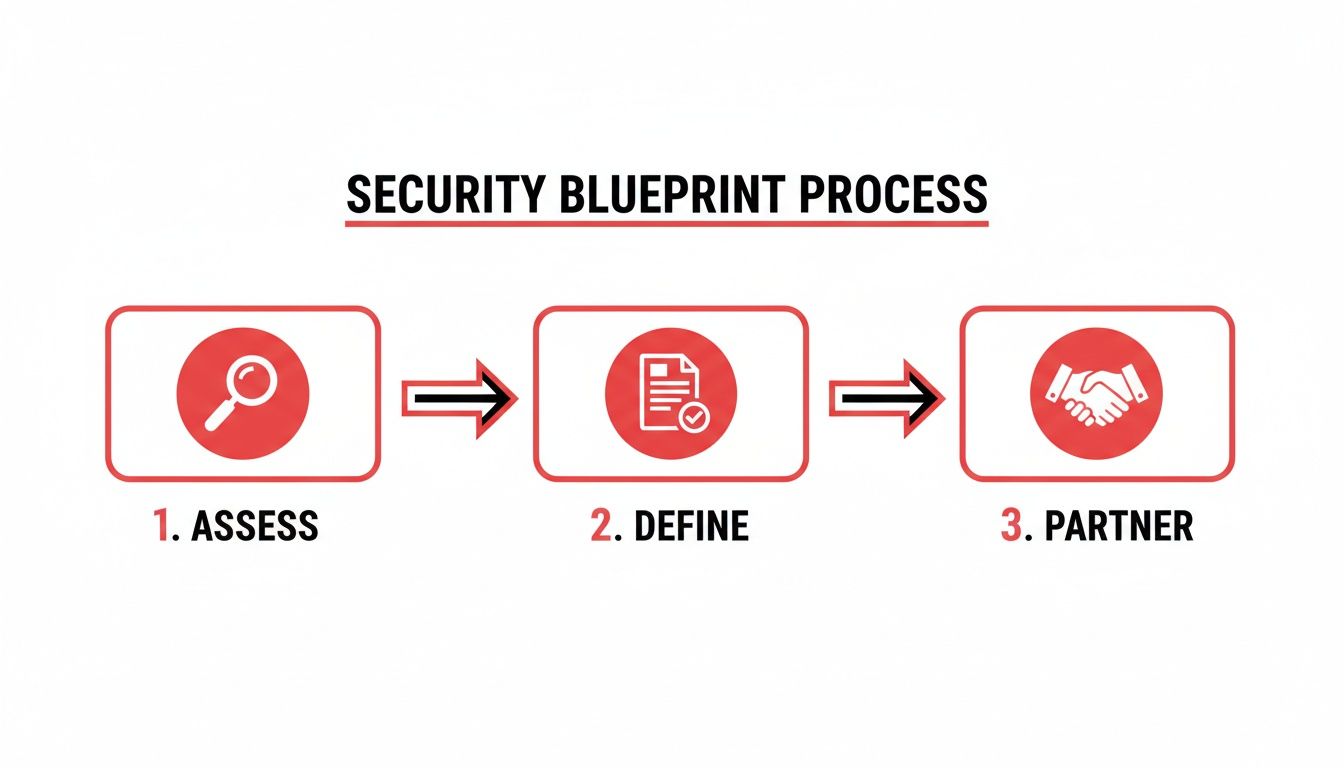
As you can see, a successful security strategy always starts with deep analysis. This leads directly to a clear, actionable plan that can be executed by the right team.
Identifying and Analysing Potential Threats
First things first, you need to brainstorm and investigate every conceivable risk that’s specific to your event. This isn't about ticking boxes on a generic checklist; it demands a custom approach tailored to your unique circumstances.
Get started by considering these factors:
- Venue Specifics: Are there back doors that don't lock properly? What about poor lighting in the car park? Are there narrow hallways or entry points that could create dangerous bottlenecks?
- Audience Demographics: Is your crowd likely to be young and high-energy, or is it a more reserved corporate gathering? The potential for unruly behaviour or specific medical issues can change dramatically depending on who is attending.
- Event Type: A high-profile concert faces a completely different set of threats than a local community fair. Think about the value of any equipment on-site, whether you have VIPs attending, and how much media attention you're likely to get.
- External Factors: What’s the local crime rate like? Are there public transport hubs nearby that might affect how crowds arrive and depart? Is there any risk of protests or other targeted disruptions?
Once you've got a list, it's time to analyse each risk. This is where a risk matrix becomes an incredibly useful tool. It helps you prioritise threats by mapping them out based on their likelihood of occurring and the potential impact if they do. For example, a low-likelihood, low-impact risk (like a brief power flicker) needs far less attention than a high-likelihood, high-impact risk (like a medical emergency in a dense crowd). Properly evaluating these factors is a key part of vendor management best practices, including risk assessment.
To help visualise this, here is a simple matrix you can adapt to start prioritising your own event risks.
Event Security Risk Assessment Matrix
| Risk Type | Likelihood (Low/Med/High) | Impact (Low/Med/High) | Mitigation Strategy Example |
|---|---|---|---|
| Crowd Crush/Surge | Medium | High | Install barrier systems; deploy crowd control staff at key points. |
| Medical Emergency | High | High | On-site first aid stations; clear access routes for paramedics. |
| Unauthorised Access | Medium | Medium | Staffed entry points; wristbands/credentials; perimeter patrols. |
| Theft/Pickpocketing | High | Low | Visible security presence; public announcements; CCTV monitoring. |
| Technical Failure | Low | Medium | Backup generators; on-site tech support; pre-event checks. |
This matrix isn't just a paper exercise. It's a practical tool that forces you to think critically and channel your resources effectively.
Prioritising Risks for Effective Security for Events
The consequences of getting this wrong can be incredibly serious. Just look at Sydney's New Year’s Eve celebrations, which draw a massive crowd of 1 million revellers. Even with a festive atmosphere, authorities reported 180 arrests for everything from public disorder to drug possession.
This isn't an isolated issue. Between 2010 and 2015, the Australian Institute of Criminology documented a shocking 12 fatalities and over 100 injuries at music festivals, many linked directly to safety and security breaches. For any organiser in NSW, Victoria, Queensland, or the ACT, those numbers are a sobering reminder to make robust security a top priority.
By prioritising risks with a clear matrix, you ensure that your budget and resources are allocated where they will have the most significant effect. This data-driven approach transforms your security plan from a list of expenses into a strategic investment in safety and success.
Ultimately, this methodical assessment directly informs every single decision you make from here on out. Your analysis will determine staffing levels, dictate where to place security guards and first aid stations, and shape your emergency evacuation plans. It’s the critical intelligence that ensures your security for events is not just present, but purposeful.
Deploying the Right Security Team for Your Event
An event security plan is only as good as the people bringing it to life. Your security team is the face of your safety strategy, the people on the ground making critical decisions. But deploying the right team isn't just about hitting a headcount; it's about carefully matching specific skills to the unique personality of your event. The goal is to create a 'fit-for-purpose' force that genuinely enhances the guest experience, rather than feeling like an intrusion.
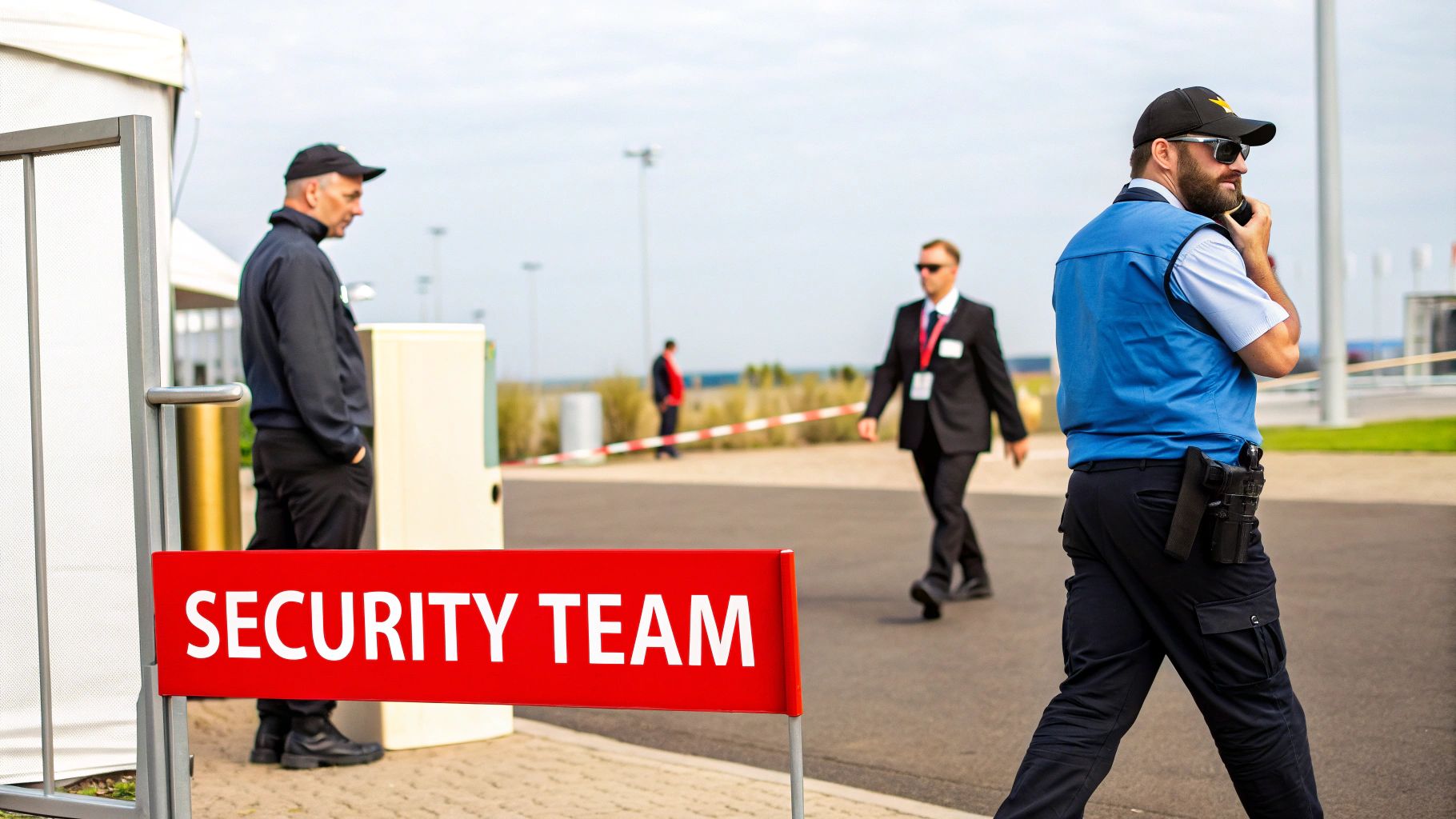
Think of it like casting for a movie. You wouldn’t put a dramatic actor in a slapstick comedy role. In the same way, the guard who shines at a formal corporate summit might not be the best choice for a high-energy music festival. Each environment demands a completely different skill set and demeanour.
Matching Security Skills to Your Event's Needs
The secret to effective deployment is specialisation. A corporate summit, for instance, calls for personnel with impeccable customer service and communication skills. They need to be discreet and professional, able to blend into a sophisticated atmosphere while maintaining a quiet, watchful presence.
A music festival is a different world entirely. Here, you need a team fluent in crowd dynamics, conflict de-escalation, and rapid response. These officers have to be comfortable managing large, energetic crowds, spotting early signs of trouble, and stepping in calmly but decisively. Their presence is more visible, acting as both a deterrent and a reassuring point of contact for anyone who needs help.
"The best security teams feel like a natural part of the event staff. They provide peace of mind without creating an oppressive atmosphere, and that balance is achieved by carefully selecting individuals whose skills and temperament align perfectly with the event's tone."
This tailored thinking extends to the specific roles within your security detail, creating a comprehensive safety net.
Differentiating Key Security Roles
A well-rounded team is a strategic mix of different types of personnel, each with a clear function. Understanding these roles helps you build a more effective and efficient security operation.
- Static Guards: These are your most visible security assets, positioned at critical points like entrances, exits, VIP areas, and anywhere valuable assets are stored. Their main job is access control and deterrence—making sure only authorised people get into restricted areas.
- Mobile Patrols: Unlike static guards, mobile patrols are always on the move. They cover wider areas like car parks, perimeter fences, and backstage corridors. Their constant movement makes them incredibly effective at spotting and disrupting potential issues before they can escalate.
- Covert Operatives: For events that need a lighter touch, plain-clothes operatives are invaluable. They mingle with the crowd to monitor for things like theft or illicit activity, dealing with problems without drawing unwanted attention.
Using this multi-layered approach ensures your security coverage is both deep and wide, protecting fixed weak points while remaining flexible enough to handle dynamic threats.
The Non-Negotiables: Training and Compliance
Beyond their specific roles, every single member of your security team must have the right qualifications. This is not up for debate. Proper licensing is the bare minimum, confirming they meet the legal standards to work as a security professional in your state (be it NSW, VIC, QLD, or the ACT).
What’s more, for any event serving alcohol, certifications like the Responsible Service of Alcohol (RSA) are crucial. Guards with RSA training can spot and manage intoxicated patrons, preventing situations from getting out of hand and keeping your venue compliant with liquor laws. It’s the ongoing training in first aid, emergency response, and conflict resolution that truly separates a good guard from a great one.
The growing demand for qualified professionals is clear. Australia's investigation and security services market is tipped to hit $13.9 billion by 2025, a reflection of the increasing need for reliable protection at events and venues. This growth highlights just how important it is to partner with a provider that invests in compliant, highly-trained staff. You can read more about the Australian security industry's market trends to get the full picture.
Ultimately, deploying the right team transforms your security for events from a necessary expense into a powerful asset. It builds trust with your guests, protects your brand, and makes sure your event is remembered for all the right reasons.
Establishing Clear Communication and Response Plans
Great security for events isn't just about stopping things from happening; it’s about how quickly and confidently you act when they do. When a situation kicks off, the one thing that separates a controlled, professional response from escalating chaos is communication. A well-thought-out communication strategy and a properly rehearsed incident response plan are the central nervous system of your entire security operation.
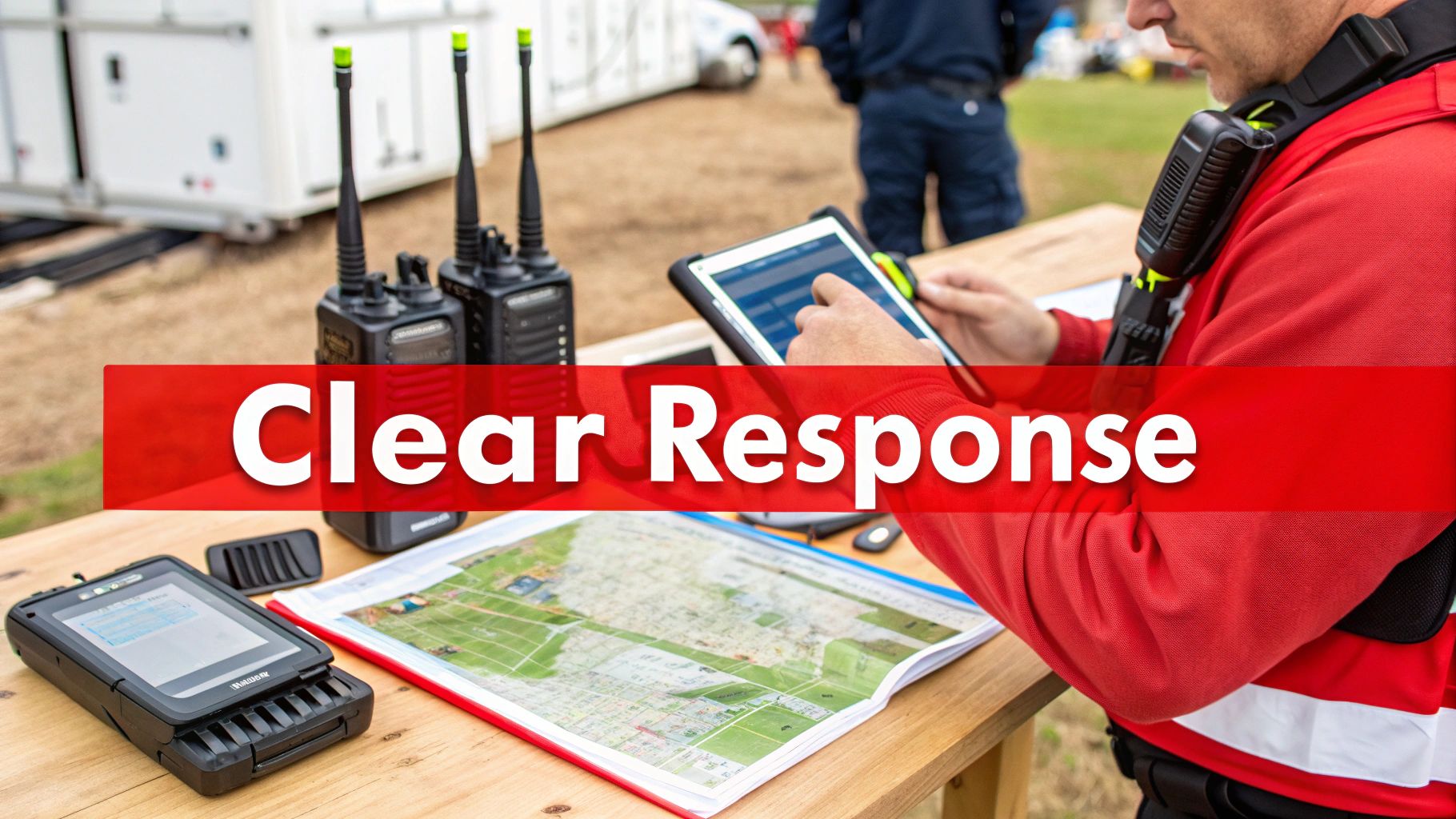
When every second counts, your team can't afford to be fumbling around, wondering who to call or what their next move should be. This is where the right tech comes in. While everyone has a smartphone, they’re no replacement for dedicated tools like two-way radios. Radios give you reliable, instant contact that doesn't depend on mobile networks, which can get hopelessly congested during a major event. This simple tool keeps every guard, steward, and manager connected to a central command post.
Think of this command post as mission control for your event. It’s the single hub where all information flows in and all major decisions flow out. From here, a designated commander can coordinate the whole team, dispatching staff and liaising with external emergency services without any crossed wires.
Developing Your Incident Response Protocols
A truly effective incident response plan isn't just a document full of theories. It’s a practical playbook with clear, step-by-step instructions for handling specific scenarios. You need to be ready for anything, from minor medical issues to serious security breaches, so your team’s reaction becomes second nature.
Your plan should spell out exactly how to handle common event incidents:
- Medical Emergencies: Who is the go-to first aid contact? Is there a code word to report a medical issue over the radio without causing a panic? How will you create a clear path for paramedics to get to the patient?
- Lost Children: What’s the immediate protocol? You need a secure, designated meeting point and a clear communication chain to alert all staff at once.
- Security Breaches: How do you handle someone getting into a restricted area? Define the escalation process, from initial containment by on-site guards right through to calling in law enforcement.
A great incident response plan is a living document, not a file that gathers dust. It should be drilled and rehearsed with your team, so that when a real incident happens, everyone acts on instinct, not improvisation.
Creating a Clear Chain of Command
At the heart of any response plan is an iron-clad chain of command. Every single person on your team needs to know who they report to and who has the authority to make the big calls. This structure stops conflicting orders in their tracks and ensures a single, coordinated strategy is put into action.
Your plan absolutely must document:
- Key Contacts: A full list of all essential personnel—event managers, security supervisors, medical leads—plus external contacts for police, fire, and ambulance services.
- Escalation Tiers: Clearly define what triggers an escalation. A minor scuffle might be handled by local guards (Tier 1), but the presence of a weapon would immediately escalate to the security supervisor and police (Tier 3).
- Evacuation Routes: You need mapped-out primary and secondary evacuation routes, assembly points, and staff assigned to guide attendees. Making sure your venue has clear pathways and compliant emergency routes is non-negotiable. You can find detailed guides covering local emergency exit signage requirements to ensure you're up to code.
Having this framework documented makes working with local emergency services a smooth process. When you can hand them a clear plan with established contacts and pre-determined rendezvous points, their ability to respond effectively skyrockets—and that keeps everyone at your event safe.
Improving Your Next Event with Post-Event Analysis
When the lights go out and the last guest heads home, it’s easy to think the job is done. But for professional event organisers, this is when one of the most important phases of security begins. A proper post-event analysis is what truly separates the pros from the amateurs, turning every single event into a masterclass for the next one.
This isn't just about a quick chat over coffee. It's about creating a powerful feedback loop. By digging into what happened—the good, the bad, and the unexpected—you can systematically figure out what worked, what didn't, and crucially, why. This is how you refine your security strategies over time, making each event safer and smoother than the last. It's the secret to building a rock-solid reputation for running safe, excellent events.
Gathering and Reviewing Crucial Data
A great debrief is built on solid information, not just feelings. The first place to look is your incident reports. Dive into the details and search for patterns. Were most issues happening in one particular area? Did problems spike at a certain time of day? These logs give you the hard facts that memory alone can’t provide.
Next up, it’s time to talk to people. Your security staff are your eyes and ears on the ground, and their firsthand observations are pure gold. But don't stop there. Get feedback from venue staff, key event partners, and even your attendees if you have a channel for it.
- Security Staff Feedback: Were the communication channels clear? How effective were their response protocols? What curveballs did they face that no one saw coming?
- Stakeholder Input: What was their take on the security presence? Did it feel reassuring and professional without being overbearing?
- Incident Report Analysis: Look at the types and frequency of incidents. Spotting recurring issues is the first step to solving them for good.
Piecing all this together gives you the full story, not just a single point of view.
Measuring What Matters with KPIs
To get past guesswork, you need to measure what happened. This is where Key Performance Indicators (KPIs) come in, giving you concrete numbers to prove how effective your security plan really was.
A data-driven debrief transforms security from a perceived cost into a measurable investment. Tracking KPIs shows precisely how your security plan protects assets, enhances guest experience, and strengthens your brand.
Think about tracking these security KPIs for your events:
- Incident Response Time: How long did it take for your team to respond once an incident was logged? Measure from the initial report right through to resolution.
- Incident Count and Type: What was the total number of security incidents? Break them down into categories like medical issues, unauthorised access, or crowd disputes.
- Ejection Rate: How many people were removed from the venue and why? This can tell you a lot about how well your entry screening and on-site patrols are working.
- Guard-to-Guest Ratio Effectiveness: Based on the incident data and staff feedback, did your staffing levels feel right for the crowd’s size and energy?
Looking at these numbers gives you the evidence you need to make smart, informed decisions, ensuring your security for events is always getting better.
Frequently Asked Questions About Security for Events
Pulling off a great event means sweating the details, and security is one detail you can't afford to get wrong. It's completely normal to have questions as you start planning. To give you some clarity, we’ve put together answers to the most common queries we get from event organisers.
How Far in Advance Should I Book Event Security?
The simple answer? As soon as you've locked in your venue and date. For most big events, that means getting your security partner involved 3-6 months beforehand.
This isn't just about ticking a box. That lead time gives us the space to conduct a proper risk assessment, assemble the right team for your specific crowd and venue, and weave security into the very fabric of your event plan. Leaving it to the last minute almost always leads to compromises—think rushed planning, a mismatched team, and a security plan that’s reactive instead of proactive.
What’s the Difference Between Security Guards and Stewards?
It’s easy to think they’re interchangeable, but their roles are quite distinct. Knowing the difference is crucial for putting the right people in the right places.
- Licensed Security Guards: These are your specialists. Their world revolves around safety, protecting assets, and responding when things go wrong. They’re professionally trained and licensed to handle conflict, manage emergencies, and enforce the rules.
- Event Stewards: Think of stewards as the customer service face of your event's smooth operation. They’re the ones scanning tickets, guiding guests, managing queues, and generally making sure everyone has a great, hassle-free experience.
The best security setups almost always use a smart mix of both. Guards manage the critical safety and security tasks, while stewards keep the event flowing and the guests happy. It's a combination that creates a secure and welcoming atmosphere.
How Do I Figure Out How Many Guards I Need?
There isn’t a one-size-fits-all ratio or a simple calculator for this. The right number of security personnel comes from a professional risk assessment, not guesswork. This assessment is the absolute foundation of any responsible event security plan.
Several key things will determine your staffing levels, including:
- The nature of your event (a corporate conference is a world away from a music festival).
- The venue's size, layout, and number of entry/exit points.
- Your expected crowd size and the general vibe of the attendees.
- Whether you’re serving alcohol (which brings RSA-certified staff into the mix).
A professional security partner won’t just pluck a number out of the air. They’ll dig into these details to recommend a staffing plan that’s not only compliant and cost-effective but is built specifically for your event’s unique risk profile.
What Are My Basic Legal Responsibilities for Event Security?
Your legal duties can change depending on your state (NSW, VIC, QLD, ACT) and the type of event you're running, but a few core responsibilities apply everywhere. You’ll generally need to comply with Work Health and Safety (WHS) laws, make sure your security provider and their guards hold the correct licences, and follow Responsible Service of Alcohol (RSA) rules if booze is on the menu.
On top of that, many larger events need permits from the local council or police, and these permits often come with their own specific security requirements. This is why working with a provider who knows the local laws inside and out is so important—it protects your event from legal headaches and keeps everyone safe.
What is the most important outcome of a post-event analysis?
The single most valuable takeaway should be a list of actionable improvements. It’s not enough to just talk about what happened. The real goal is to walk away with a clear, concrete plan to build on your successes and fix what went wrong for the next event. For example, if multiple incidents occurred near a poorly lit exit, an actionable insight is to add floodlighting to that area for the next event.
Ready to make sure your next event is remembered for all the right reasons? The expert team at GM GROUP Services creates security solutions that protect your people, property, and reputation. Contact us today to build a security plan that delivers complete peace of mind.
Discover more from GM Group Services
Subscribe to get the latest posts sent to your email.