
SEO Title: 10 Positive Risk Mitigation Strategies for 2026
SEO Meta Description: Discover risk mitigation strategies for Australian businesses in events, venues, hospitality, retail, and construction, with practical implementation steps from GM GROUP Services.
URL: /risk-mitigation-strategies-2026
Image: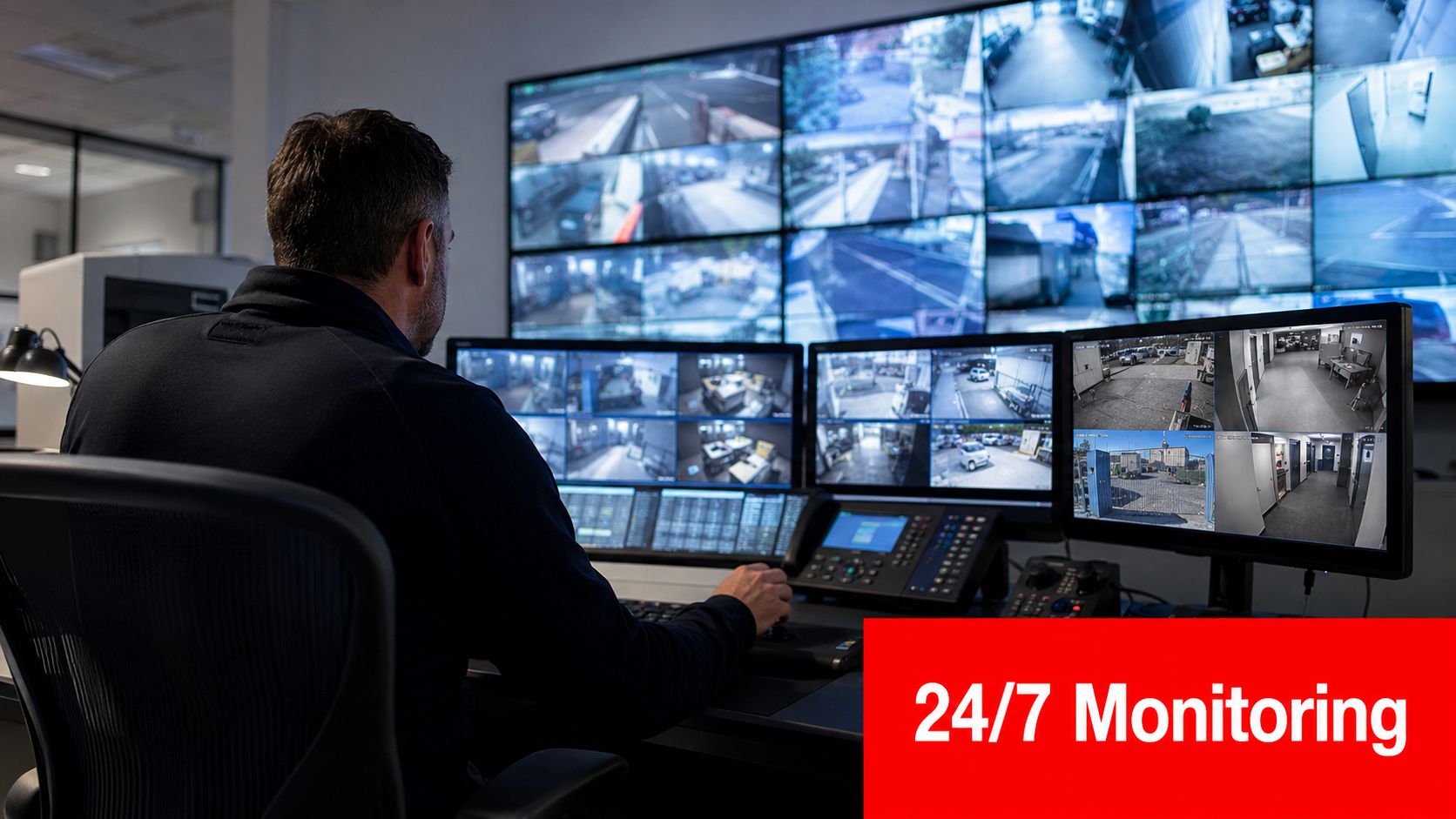
Risk mitigation strategies are what keep a busy venue, festival, store, or construction site from turning a manageable issue into a costly incident. If you're juggling staff gaps, after-hours access, crowd pressure, theft, or cyber risk, you already know the problem isn't the absence of threats, it's how quickly small failures cascade. In Australia, that pressure is real. Safe Work Australia reported 195 worker fatalities in 2023 and 104,100 serious claims in 2021–22, which is why the WHS model centres on eliminating or minimising risks where reasonably practicable (Safe Work Australia and the WHS framework context). Cyber risk is just as operational, with the ACSC receiving 94,000 cybercrime reports in 2022–23, about one report every 6 minutes, and small businesses facing a median self-reported cost of A$46,000 per cybercrime (Australian cyber-risk context).
The strongest organisations don't rely on one control. They use layered protection, assess, verify, test, and review. That's the same practical logic behind WHS duties, cyber resilience, and good site security, and it's why GM GROUP Services builds security plans around the actual environment, not a generic template. If you run events in NSW or VIC, manage a hotel or club, oversee a retail centre, or protect a construction site, the right risk mitigation strategies need people, process, and technology working together.
1. Comprehensive Risk Assessment and Threat Evaluation
Every strong security plan starts with a clear-eyed assessment of what can go wrong. That means looking at site layout, crowd movement, weather exposure, after-hours access, vulnerable assets, and the operational habits that create blind spots. In practice, a pre-festival assessment for a major music event in NSW or VIC should map entry lanes, queue pinch points, alcohol service areas, back-of-house access, and emergency vehicle routes before the first patron arrives.
For retail centres and hotels, the same logic applies. After-hours blind spots, delivery access, poorly lit car parks, and guest movement patterns all change the risk profile. Construction sites need a different lens again, with perimeter gaps, material storage, plant movement, and contractor access all feeding into the assessment.
Make the assessment usable, not decorative
A risk register only helps if it tells the site team what to do next. Document each hazard, assign a mitigation owner, and set a review date. That gives operations managers a live working document, not a file that sits untouched until something goes wrong.
Practical rule: if the assessment doesn't change staffing, barriers, surveillance, or access rules, it hasn't done its job.
Experienced security professionals matter here because they recognise venue-specific failure points quickly. GM GROUP Services applies that kind of operational reading across festivals, hospitality, retail, and construction, which is exactly where generic risk mitigation strategies tend to fall short. Review the assessment annually, and update it immediately after near-misses, incidents, or major operational changes.
A useful checkpoint is simple. Ask whether each top risk has an assigned control, a person responsible, and a method for checking if the control still works. If one of those three pieces is missing, the plan is incomplete.
2. Professional Security Personnel Deployment
Security personnel remain one of the most direct ways to reduce risk because trained people can observe, intervene, de-escalate, and report in real time. The key is placement. A licensed guard at the wrong point in a venue can look busy while missing the actual pressure point, while a guard positioned with natural sight lines can prevent escalation before it spreads.
At a major festival, for example, GM GROUP-style deployment might place guards at entry lanes, stage perimeters, liquor service points, and welfare areas, with mobile patrols covering the edges. In nightlife, entry-door staff, bar security, and VIP-area oversight serve different functions and shouldn't be treated as interchangeable. Construction sites benefit from gatehouse control and patrol coverage, while shopping centres need visible foot patrols that deter theft and reassure customers.
Match the guard type to the job
Static guards are useful where a fixed post needs constant presence. Mobile patrols suit broad sites with changing activity. Plainclothes security can be appropriate for corporate functions where overt presence would create friction, and K9 units can support certain high-risk environments where search and deterrence matter. The point is to align posture with threat, not to overstaff by habit.
Well-placed security is cheaper than late intervention.
Good deployment also depends on training, supervision, and clear instructions. Guards need to know the venue culture, the rules of engagement, and the escalation threshold. In Australian venues, that means current RSA and crowd management competency where relevant, plus practical briefings on the specific site.
A workable checkpoint is whether the team can answer three questions without hesitation, where are we most exposed, who has authority to intervene, and what happens if the first response doesn't work. If the answers aren't clear, the deployment plan needs tightening.
3. Technology Integration and Back-to-Base Monitoring
Technology works best when it speeds up a person's response. CCTV, access control, alarm systems, and back-to-base monitoring add layers of detection and coordination, but trained staff remain essential alongside these systems. Strong risk mitigation strategies use technology to extend human awareness and give supervisors better control over what is happening on site.
Shopping centres often use CCTV to watch high-theft zones and track busy periods. Hotels use access control to limit back-of-house areas and staff-only corridors. Festivals benefit from back-to-base monitoring because operators can coordinate live responses across entry points, patron movement, and welfare issues. Construction sites rely on perimeter surveillance to detect after-hours intrusion and theft.
Poor setup creates false confidence. A camera that is dirty, misaligned, or not tested regularly misses the moment that matters. A monitoring centre that receives alerts but has no clear escalation path adds delay instead of control.
Build the system around response, not equipment
A CCTV system that records useful footage still fails if nobody can retrieve it quickly during an incident. Access logs that are never reviewed leave unusual movement patterns hidden. Alarms that trigger repeatedly without follow-up teach staff to ignore them.
A workable setup includes visible coverage of entry and exit points, maintained cameras, documented testing, and staff who know how to report an issue. For Australian businesses, privacy notices also need to be in place where required by law, because compliance gaps create avoidable exposure.
Practical rule: every alert needs an owner, a response time, and a fallback if no one answers.
Teams that manage wireless access control should also understand wireless access control through the right operational lens, because device placement, connectivity, and override procedures affect how quickly staff can act in a live event. That same layered logic applies physically. When human observation, monitoring, and escalation work together, controls do their job instead of sitting there on paper.
The ACSC recommends layered controls such as MFA, patching, backups, and tested incident response plans for cyber mitigation (ACSC guidance on layered controls). That layered thinking translates well on the ground, where monitoring, supervision, and response procedures have to support each other under pressure.
4. Crowd Management and Flow Control Planning
Crowd management is one of the most visible risk mitigation strategies in events, nightlife, hospitality, and public venues. A crowd does not need to be large to turn dangerous. Bottlenecks, poor signage, conflicting flows, and weak supervision can create pressure long before staff recognise the pattern. In practice, the pressure builds at entry points, stairs, corridors, queuing areas, and exits, where small delays quickly become safety issues.
Music festivals handle this well when they stagger entry times and spread arrivals across multiple gates. Nightclubs control it by tracking capacity and managing door queues before the venue feels crowded. Retail centres benefit from one-way flows during peak periods, while hotels need clear assembly points and evacuation routes that staff can use under pressure. Australian venues that work with GM GROUP Services usually see the best results when crowd plans match the venue type, the expected foot traffic, and the staff on hand.
Design the movement, then supervise it
The site layout should make the safe path the easiest path. Barriers, stanchions, clear signage, and enough staff at chokepoints help keep movement predictable. Experienced crowd managers should be positioned at entry gates, stairs, corridors, and any point where people naturally slow down or change direction. That role is not decorative. It is there to read pressure early and correct it before people start pushing.
The practical target is smoother movement, fewer conflicts, and lower stress for patrons and staff. For corporate events, assigned seating can help control density. For concerts, barrier systems help create safer audience zones and reduce uncontrolled surges. In retail, a clear queue line can stop shoppers from spilling into walkways and blocking emergency access. For construction or outdoor events, it also helps to align the flow plan with site access, delivery movement, and the realities of temporary fencing.
Queue design changes behaviour fast. If people cannot see where they are going, they bunch up. If they cannot understand where to wait, they push forward. Good communication lowers friction, especially when staff explain entry rules before the line becomes chaotic. Clear directions, visible staff, and a simple fallback route make the difference between orderly movement and crowd compression.
Clear exits matter more than impressive entrances.
A strong checkpoint is whether the venue can absorb a sudden change, rain, delayed doors, a transport delay, or a capacity spike without losing control of the queue. If the answer is no, the plan needs a fallback lane, extra staff, or a different entry sequence. Teams that manage wireless access control should also understand wireless access control through the right operational lens, because the same discipline applies when you are coordinating people, access points, and override procedures during a live event.
5. Access Control and Credential Management Systems
Access control is one of the most practical ways to reduce exposure because it limits movement to people who need it. Cash handling zones, server rooms, storage areas, VIP spaces, maintenance corridors, and loading docks all become safer when access is intentional rather than casual. The best systems are simple enough that staff use them properly and strict enough that unauthorised movement gets caught early.
Hotels use credentials to separate guest areas from maintenance and administration. Retail centres control back-of-house storage and cash handling spaces. Restaurants restrict kitchen access to trained staff, while construction sites rely on temporary credentials to track contractor movement. Corporate venues and nightclubs use access rules to protect VIP areas, DJ booths, and secure storage.
Keep the privilege narrow
Least-privilege access is the standard worth following. A person should only enter the spaces required for their role, and nothing more. That means regular audits, immediate revocation when staff leave, and review of time-based restrictions where access only makes sense during certain shifts.
Manual backup procedures also matter. If a card system fails, the site still needs a safe way to control entry without creating a security gap. Access logs should be checked for unusual times or patterns, because those logs often tell you more than a rushed incident report.
When done well, credential management reduces both theft risk and operational confusion. It also improves accountability, which matters during incident investigations and compliance checks.
The Australian ABS found that 67% of businesses used multi-factor authentication, 63% used backup and recovery, and 62% used anti-virus/anti-malware software, but only 34% had an incident response plan and 32% conducted cyber-risk assessments (ABS 2024 Business Characteristics survey summary). That gap shows why tools alone aren't enough. Access control works best when process discipline is strong enough to support it.
6. Staff Training and Emergency Response Procedures
Training is where risk mitigation strategies become real. A venue can buy the right equipment and still fail badly if staff don't know how to use it under pressure. The most effective teams rehearse crowd management, first aid, de-escalation, evacuation, and reporting until the response feels normal.
Hospitality venues need RSA training for bar and service staff so that intoxication risks are managed early. Security teams need de-escalation practice for aggressive patrons. Event venues should run evacuation drills with all staff. Retail staff should know how to spot and report suspicious behaviour. Construction teams need daily safety briefings so the crew understands the day's hazards before work starts.
Train for the job people actually do
Generic lecture-style training rarely sticks. Scenario-based sessions work better because they force people to make decisions, communicate, and escalate. A bartender, a duty manager, and a guard each need different cues and different thresholds for calling support.
Document every induction and refresher. If someone has not completed the relevant training, they shouldn't be placed in a role that depends on it. Quarterly drills are useful where the site footprint or crowd profile changes often, because the response plan has to stay current.
A good drill exposes confusion before an incident does.
This is also where feedback matters. Staff on the floor often know which messages are unclear, which exits get blocked, and which procedures slow them down. If managers ignore that feedback, the training becomes theatre instead of preparation.
The practical checkpoint is simple. Can the team explain who calls emergency services, who secures evidence, who manages patrons, and who documents the incident? If the answer varies from shift to shift, the training programme needs work.
7. Environmental Design and Physical Security Measures
A site can create risk before a person even reaches the door. Lighting, sight lines, barrier placement, and visible staff positions all shape behaviour in ways that security teams feel immediately on the ground. That is why environmental design sits at the centre of strong risk mitigation strategies for car parks, venues, retail centres, construction sites, and outdoor events.
Poor layout gives people places to hide and slows down response. Better lighting and clear visibility reduce concealment in parking areas, while landscaping that forms blind spots should be removed or redesigned. Perimeter fencing helps define boundaries clearly, and mirrors in blind corners improve natural surveillance. Stairwells, corridors, and public areas are easier to manage when people can see who is approaching and where movement is happening.
Make the space easier to supervise
Crime Prevention Through Environmental Design works because it reduces ambiguity. Staff can see more, patrons can move more easily, and potential offenders lose cover. The goal is to make the safe path obvious and the risky path inconvenient, without making the site feel harsh.
Maintenance has a direct security impact. Broken lights, damaged windows, and cluttered back-of-house spaces signal neglect and create avoidable vulnerabilities, because people start treating that neglect as normal. A site that looks unmanaged also makes staff less confident about reporting minor issues early.
Barriers also need to respect accessibility requirements. A site that is hard to use can create safety problems of its own, especially for patrons with disability or mobility needs. Good physical security should improve protection while still allowing lawful movement without friction.
For Australian operators, practical planning matters most. A retail centre cannot rely on staff visibility alone if the loading dock is hidden by poor layout. A hotel cannot assume guest safety if stairwells feel isolated. A construction site cannot treat fencing as a decorative boundary if the perimeter is easy to bypass. For perimeter planning, a commercial security fencing guide is a useful reference point for owners who need to compare fence types, gates, and layout choices before they commit to a design.
The right design reduces pressure on staff because the environment itself helps control risk. That is what good risk mitigation strategies should deliver.
8. Incident Management and Response Protocols
A crowded venue can turn from routine to high-pressure in seconds. When that happens, staff need a clear response path, because hesitation creates confusion and confusion creates risk. Strong incident management gives people simple steps for medical emergencies, threats, theft, violence, and cyber incidents, so the first actions are consistent even when the situation is not.
A medical event at a venue calls for first aid response and ambulance coordination. Suspicious behaviour should trigger escalation before the issue becomes a confrontation. Theft or break-in responses need evidence preservation and police coordination. Assaults need victim support, witness statements, and proper reporting. Data breaches need their own playbook, because digital incidents can spread faster than physical ones.
Keep the response tree short
A three-level classification system, low, medium, high, is usually more usable than a complex matrix. Every staff member should know where to report, what counts as urgent, and who has authority to escalate. Decision trees should be easy to access during a shift, kept in a location staff use.
Templates also make the process easier under pressure. Incident reports are cleaner when staff are not inventing their own format in the middle of a response. Tabletop exercises expose weak spots before a real incident does, especially where multiple teams need to coordinate across shifts, departments, or sites.
If the response path is hard to remember, it is too complicated.
The ACSC Annual Cyber Threat Report guidance links strong incident response with layered controls such as MFA, patching, backups, and tested plans. That matters for Australian businesses because response planning has a direct operational and financial impact once an incident starts affecting customers, systems, or staff.
Good protocols also improve post-incident analysis. When every event is documented in the same way, managers can spot patterns, identify weak controls, and refine the next response with more confidence.
9. Visitor Screening and Pre-Event Vetting
Screening is one of the first control points in any public-facing environment. Done well, it filters risk without making the experience feel hostile. Done badly, it creates queues, frustration, and inconsistency, which means staff end up dealing with both complaints and threats at the same time.
Festival entry gates often use bag checks and metal detection where the risk level justifies it. Nightclub door staff use ID checks and behavioural assessment to manage intoxication or violence risk. Corporate events may require pre-registration and credential verification, while VIP events sometimes add background screening. Retail centres may adopt bag checks during high-risk periods or specific promotions.
Keep the process calm and consistent
Screening works when it feels fair. Staff should use objective criteria, clear communication, and courteous interaction, because heavy-handed screening can damage the customer experience and still miss the actual risk. If the procedure takes too long, attendees start looking for ways around it.
Separate express lanes can help when the site expects different attendee types, such as VIPs or season pass holders. Preserving screening records also helps later if an incident needs investigation. The point is not to turn every entry point into a fortress. It's to stop predictable threats from entering in the first place.
For Australian operators, the trade-off is friction versus protection. A higher-risk event can justify more visible screening, while a lower-risk corporate function may need lighter controls with stronger credential verification. The decision should follow the threat, not habit.
A useful checkpoint is whether screening staff can explain why a person was stopped, not just that they were stopped. That standard improves consistency and reduces discrimination risk.
10. Continuous Improvement and Post-Incident Analysis
The best risk mitigation strategies improve because teams treat every incident and near-miss as data, not embarrassment. A festival debrief, a venue assault review, a retail theft pattern analysis, or a construction near-miss investigation can all reveal where the plan is too weak, too slow, or too difficult to follow.
Hotels should conduct annual safety audits against current standards. Construction teams need formal investigation of near-misses before they turn into injuries. Corporate event organisers can use attendee feedback to refine entry, security, and movement controls. The point is to keep learning after the event ends.
Turn lessons into operational change
Root cause analysis matters because it pushes teams beyond the immediate symptom. If the same type of incident keeps happening, the issue is usually design, supervision, training, or communication, not a single bad actor. Near-miss reporting should feel safe, because staff won't report small failures if they think they'll be blamed.
Benchmarking against industry standards helps too. So does a third-party audit, especially when internal teams have become used to the same blind spots. Measure what matters, track the trend, and verify whether the fix changed outcomes.
What gets reviewed gets better. What gets ignored gets repeated.
Mature security providers stand out. GM GROUP Services builds improvement into its service model through ongoing training, supervision, reporting, and fit-for-purpose deployment, which is the only way risk mitigation strategies stay effective as conditions change. If the site, crowd, contractor mix, or trading pattern shifts, the plan has to shift with it.
10-Point Risk Mitigation Strategies Comparison
| Item | Complexity 🔄 | Resources & Cost ⚡ | Expected Outcomes ⭐ | Ideal Use Cases 💡 | Key Advantages 📊 |
|---|---|---|---|---|---|
| 1. Comprehensive Risk Assessment & Threat Evaluation | High 🔄 (2–8 weeks) | Medium–High; specialist analysts, site surveys | ⭐⭐⭐⭐, targeted, proactive mitigation & compliance evidence | Pre-event planning, complex venues, festivals, construction sites | Identifies hidden vulnerabilities; enables cost‑effective targeting; duty of care |
| 2. Professional Security Personnel Deployment | Medium 🔄 (Immediate–2 weeks) | High (ongoing); recruitment, training, supervision | ⭐⭐⭐⭐, visible deterrent and rapid on‑site response | Festivals, nightclubs, corporate events, 24/7 sites | Immediate response; de‑escalation capability; improves customer confidence |
| 3. Technology Integration & Back‑to‑Base Monitoring | High 🔄 (4–12 weeks) | High (capital), Medium (ongoing); cameras, servers, monitoring | ⭐⭐⭐⭐⭐, 24/7 detection, evidence collection, scalable monitoring | Malls, hotels, multi‑site operations, large events | Scalable surveillance; evidence for investigations; reduces blind spots |
| 4. Crowd Management & Flow Control Planning | Medium 🔄 (2–6 weeks) | Medium; design, barriers, trained staff, signage | ⭐⭐⭐⭐, prevents crushes, improves flow and evacuation | Concerts, festivals, busy retail periods, nightclubs | Prevents stampedes; improves patron experience; regulatory compliance |
| 5. Access Control & Credential Management Systems | High 🔄 (6–12 weeks) | High (capital), Low–Med (ongoing); credentials, biometrics | ⭐⭐⭐⭐, prevents unauthorized access; provides audit trails | Hotels, corporate venues, server rooms, construction access | Auditability; time‑based restrictions; reduces insider threats |
| 6. Staff Training & Emergency Response Procedures | Low–Medium 🔄 (Ongoing) | Medium (ongoing); trainers, time, scenario exercises | ⭐⭐⭐⭐, faster, more effective incident response; safety culture | All venues, hospitality, retail, event teams | Empowers staff; improves response speed; supports compliance |
| 7. Environmental Design & Physical Security Measures | High 🔄 (3–6 months major; immediate minor) | High (capital), Low (maintenance); construction, lighting | ⭐⭐⭐⭐⭐, passive 24/7 deterrent; long‑lasting risk reduction | Parking areas, public spaces, venue redesigns, perimeters | Passive protection; one‑time investment yields lasting benefit |
| 8. Incident Management & Response Protocols | Medium 🔄 (2–4 weeks) | Low–Medium; documentation, training, coordination plans | ⭐⭐⭐⭐, consistent, coordinated responses; evidence preservation | All organisations, high‑risk events, corporate incidents | Reduces response time; clear chain of command; supports investigations |
| 9. Visitor Screening & Pre‑Event Vetting | Medium 🔄 (1–3 weeks) | Medium; checkpoints, metal detectors, trained screeners | ⭐⭐⭐, prevents contraband and known offenders but may slow entry | Festivals, VIP/corporate events, nightclubs, high‑risk shopping periods | Prevents weapons/contraband entry; creates entry records; deterrent effect |
| 10. Continuous Improvement & Post‑Incident Analysis | Low–Medium 🔄 (Ongoing) | Low–Medium; audits, analysis, reporting tools | ⭐⭐⭐⭐, reduces repeat incidents; improves ROI and procedures | Recurring events, multi‑site operations, all organisations | Identifies systemic issues; drives improvements; strengthens defences |
Your Partner in Proactive Protection
Implementing these risk mitigation strategies gives your organisation a layered defence that's much stronger than any single control. The pattern is consistent across events, venues, retail, hospitality, and construction, assess the actual threat, match the control to the environment, train the people who will use it, and review what happens after each shift, event, or incident. That approach fits Australian WHS duties, it fits cyber resilience, and it fits the reality that risk changes fast when people, property, and public access are involved.
The organisations that do this well don't wait for a crisis to force the conversation. They build risk awareness into daily operations, so security, management, and frontline staff all know what good looks like. That's also where the practical value of professional support shows up, because an outside team can spot blind spots that in-house staff stop noticing over time.
GM GROUP Services works across NSW, Victoria, Queensland, and the ACT to deliver security, risk assessments, guards, K9 support, back-to-base monitoring, gatehouse control, emergency response, and site-specific deployment for events, venues, retail, hospitality, and construction. If you want a security plan that's built around your actual operating risk, visit GM GROUP Services and speak with a team that can help you put the right controls in place.
GM GROUP Services can help you strengthen your security posture with practical risk mitigation strategies for your site, crowd profile, and operational risks. From risk assessments and guard deployment to monitoring, emergency response, and ongoing supervision, the team builds protection that works in practice. Visit GM GROUP Services to start a conversation about a safer, more resilient operation.
Discover more from GM Group Services
Subscribe to get the latest posts sent to your email.