
Retail security guards are your first line of defence in today's challenging retail world. Far more than just a uniform at the door, they act as a powerful visual deterrent to crime while providing a sense of safety for both your customers and staff. At its core, their job is to protect people, property, and assets, but it's a role that goes much deeper than just watching for trouble. It's about proactively shaping a secure environment where your business can thrive.
7 Alarming Threats That Make Retail Security Guards Essential
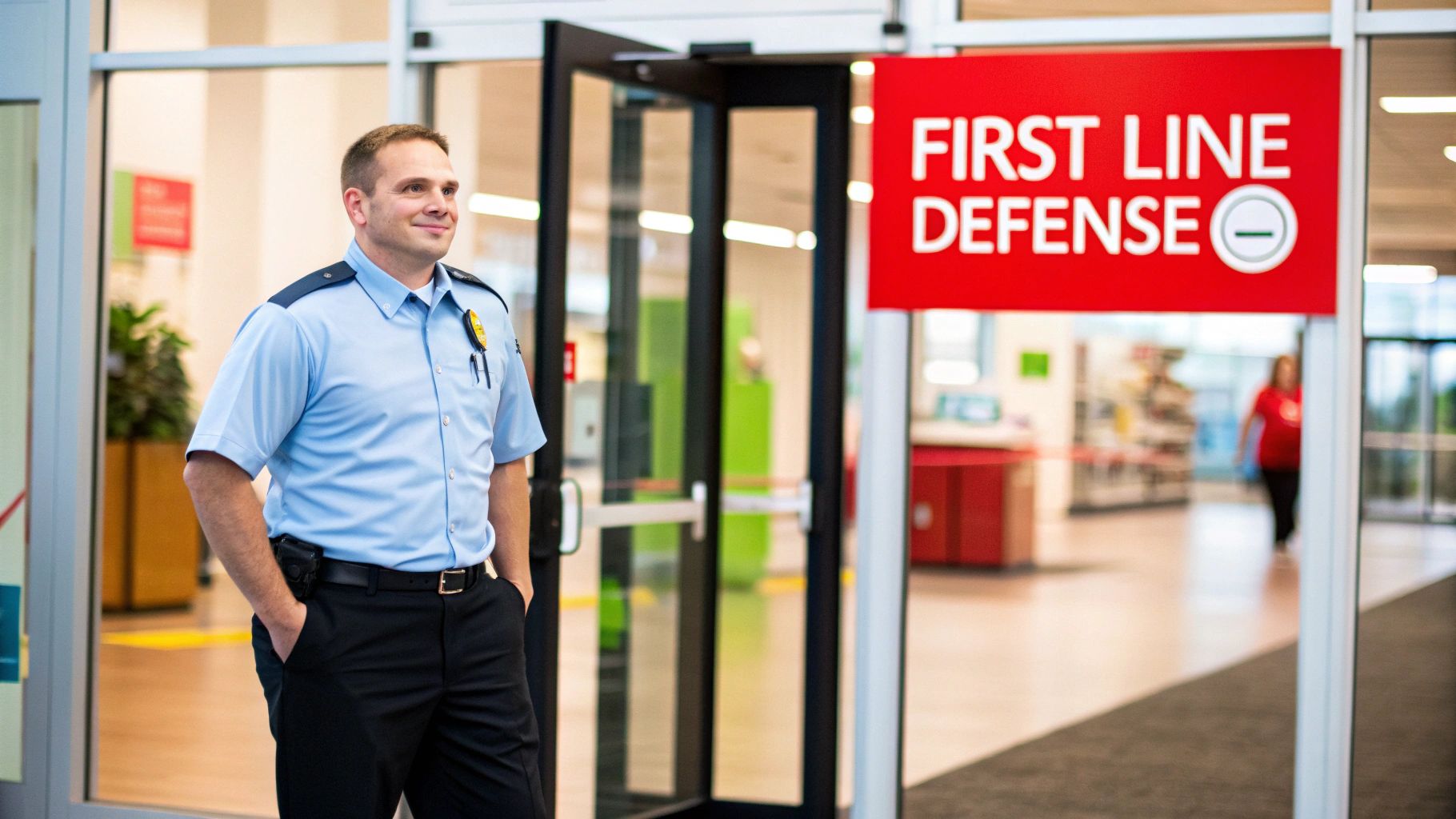
Let’s be honest, the environment for Australian retailers has gotten tougher. The threats have moved beyond petty shoplifting to organised, and sometimes violent, criminal activity. In this climate, a professional security presence isn't just a "nice-to-have"—it's a critical part of doing business. Leaving your store unprotected is an open invitation for significant financial loss and serious damage to your reputation.
The numbers paint a pretty stark picture. Retail crime in Australia has skyrocketed, with the Crime Statistics Agency reporting that store thefts nearly doubled from 19,700 incidents to a staggering 37,800 in recent years. Even more concerning, retailers across the country saw a 66% jump in retail crime involving weapons in just one year, with incidents involving knives and blades up by over 40%. You can dig deeper into these shoplifting trends and their impact on retailers.
More Than Just Loss Prevention
It's easy to think of retail security guards as just being there to stop theft, but that’s only a small part of the story. Their presence has a ripple effect that directly contributes to a safer, more positive shopping atmosphere—something that's absolutely vital for keeping customers coming back. When people feel safe, they relax. They browse longer. And ultimately, they spend more.
A visible security presence does more than just deter theft; it actively shapes a positive customer experience. It signals that a business cares about the well-being of its patrons and staff, building a foundation of trust that is invaluable for long-term success.
Protecting Your Most Valuable Assets: Your People
At the end of the day, your employees are your most important asset, and their safety should be non-negotiable. Having a trained security professional on-site gives your team incredible peace of mind. It allows them to focus on serving customers instead of worrying about potential conflicts or threats. This fosters a healthier workplace, which often translates to lower staff turnover and better performance all around.
Here’s a quick look at how a dedicated guard makes the workplace safer:
- De-escalation: They are trained to handle aggressive individuals and arguments professionally, stopping tense situations from boiling over into something much worse.
- Incident Response: Whether it's a medical emergency or a security breach, they are the first on the scene, trained to take control and manage the situation until emergency services can arrive.
- Deterrence of Violence: The simple presence of a uniformed guard dramatically lowers the chances of physical altercations, keeping both staff and shoppers out of harm's way.
Ultimately, bringing in professional retail security guards isn't just another cost. It's a strategic investment in the stability and future of your business. It’s a proactive move to protect your stock, your people, and the reputation you’ve worked so hard to build.
Decoding the Threats Your Modern Store Faces
When you think of retail security, the first thing that probably comes to mind is a teenager trying to pocket a chocolate bar. But in reality, the threats facing modern stores are far more complex and coordinated than most people realise. To properly protect your business, you need to understand this new landscape. A generic security plan just doesn't cut it anymore.
The game has changed, and so have the risks. We can generally break these threats down into two camps: external dangers, like organised crime rings and aggressive customers, and internal problems, such as staff theft. Each one demands a very different approach from a professional security team.
Organised Retail Crime: The Major Threat
By far, the biggest external threat today is Organised Retail Crime (ORC). This isn't your average shoplifter. We're talking about sophisticated criminal groups who hit stores to steal high-value goods in bulk, purely for resale. It’s less like random theft and more like a hostile business takeover of your stock.
Practical Example: A team walks into your electronics store. One person creates a diversion to pull staff away, another keeps watch at the door, while two others sweep an entire shelf of new smartphones into a foil-lined bag to defeat security tags. Before you know it, those phones are listed on an online marketplace, turning your inventory into their untaxed profit.
It's a serious and sophisticated problem. Data shows that just 10% of people of interest were responsible for a staggering 62% of stolen value. In one case, a single repeat offender was linked to $296,000 in losses across 175 separate incidents, many involving aggressive behaviour. This highlights the massive impact these organised groups can have. You can learn more about the huge spike in Australian retail crime.
This level of planning is what makes ORC so damaging. It requires a security presence that’s trained to spot these patterns and shut them down before your stock walks out the door.
Internal Threats and Customer Volatility
Sadly, the dangers aren't just external. Internal theft—when employees steal—is a stubborn and expensive issue for any business. It can be as simple as someone pocketing a small item from the storeroom, or as complex as a staff member running a scam with fraudulent returns and voided sales to skim cash from the till.
This is where a covert loss prevention officer, a specialist type of retail security guard, can be invaluable. They can identify these internal weak spots without creating a "big brother" atmosphere that sours morale for your honest team members.
On top of that, customer aggression is on the rise. We've all seen it. High-stress situations like a Boxing Day sale, long checkout queues, or a disagreement over a return policy can flare up in an instant. A trained guard is essential for stepping in and de-escalating these situations, making sure they don't turn into a physical fight that puts staff, customers, and your brand's good name at risk.
Having a guard on site is just one piece of the puzzle. The best results come from combining a physical presence with solid strategies to prevent retail theft that cover all your bases.
Why a Tailored Approach from Retail Security Guards is Non-Negotiable
Looking at these different threats—ORC, employee theft, and customer aggression—it becomes crystal clear why a one-size-fits-all security plan is doomed to fail. Your security strategy has to be built around your specific risk profile.
- A luxury boutique? You’re a magnet for ORC groups looking for high-end, easily resold fashion items.
- An electronics shop? You’re a prime target for coordinated raids on small, high-value gadgets.
- A large concert venue or pop-up event? Your main challenges will be managing large crowds and defusing potential conflicts during peak hours.
Actionable Insight: Conduct a simple risk assessment. Walk through your store and identify high-value, easy-to-conceal items. Note areas with poor visibility or blind spots from your CCTV. This simple exercise will help you articulate your exact needs to a potential security provider, ensuring you get a truly tailored solution.
A truly professional security provider won’t just put a person in a uniform at your door. They’ll first analyse these vulnerabilities and then deploy the right kind of retail security guards for the job—whether that’s a highly visible uniformed deterrent, a plain-clothed officer blending in on the sales floor, or a combination of both. That strategic thinking is what really protects your assets and creates an environment where everyone feels safe.
Finding the Right Security Model for Your Needs
Choosing the right security for your business isn't a simple off-the-shelf purchase. The type of retail security guards you bring in needs to be a direct answer to the specific threats you're facing every day. It's all about being strategic so you get the most effective protection without blowing the budget on services you just don't need.
Think of it like this: a doctor has to diagnose an illness before they can prescribe the right medicine. A security professional works the same way, assessing your unique risks before recommending a solution. A high-end jewellery store on a quiet street has entirely different needs from a merchandise tent at a massive outdoor music festival. One needs subtle, almost invisible protection, while the other demands visible crowd control.
Comparing Retail Security Guard Service Models
To make sense of the options, it helps to see them side-by-side. This table breaks down the main security models, what they do best, and where they fit, helping you match the service to your specific retail environment.
| Service Model | Primary Function | Best Suited For | Key Benefit |
|---|---|---|---|
| Static Guard | Visible Deterrence & Access Control | Store entrances, high-value displays, single-point-of-entry venues. | Creates a powerful, constant "we are watching" message. |
| Covert Loss Prevention | Observation & Internal Theft Detection | High-shrinkage environments, busy sales floors, fitting rooms. | Catches offenders who are wise to uniformed security. |
| Mobile Patrols | Randomised Presence & Wide Coverage | Shopping centres, retail parks, large event grounds, car parks. | Provides cost-effective coverage over a large area. |
| K9 Units | Crowd Control & Enhanced Deterrence | Major sales events, product launches, large venues with big crowds. | Offers an unparalleled psychological deterrent and threat detection. |
Ultimately, the best strategy often involves layering these services. A static guard at the door, a covert officer roaming the aisles, and a mobile patrol keeping an eye on the car park all work together to create a watertight security plan.
The Steadfast Sentinel: Static Guards
Imagine a static guard as the steadfast sentinel at your front door. Positioned at a fixed point—like the main entrance or near a display of expensive watches—their most important job is simply being seen. That constant, uniformed presence sends a clear, unspoken message to potential troublemakers: this place is protected.
This model is a perfect fit for any business that needs a consistent, reliable security presence in a specific spot. They don't just stand there; they control access, monitor the flow of people, and become the go-to person for any security concerns, giving both staff and customers real peace of mind.
The Undercover Detective: Covert Loss Prevention
A uniform is a great deterrent, but some shoplifters are smart enough to simply wait until the guard is looking the other way. That's where covert loss prevention officers come into their own. Dressed like any other customer, they blend seamlessly into the shopping environment.
Their whole mission is to watch and identify suspicious behaviour without tipping off the person they're observing. It's an incredibly effective way to catch not just opportunistic thieves but also to uncover organised internal theft rings that a uniformed guard would likely never spot. For any retailer battling high stock shrinkage, they are an essential part of the solution.
This flowchart helps to visualise how different threats often demand different responses.
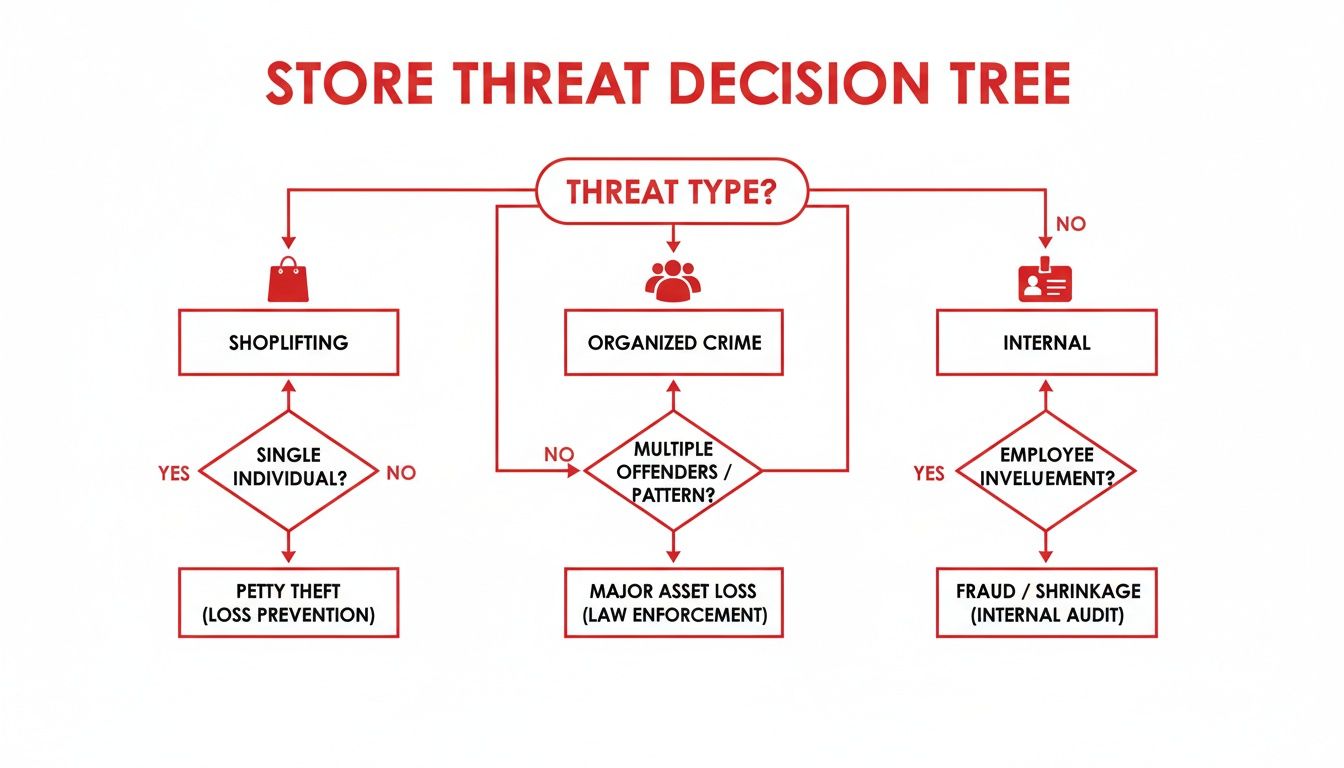
As you can see, the approach for dealing with casual shoplifting is worlds away from tackling organised retail crime, and your security strategy needs to reflect that.
The Roaming Shield: Mobile Patrols
For big spaces like shopping centres, retail parks, or event grounds, posting a static guard at every corner would be impractical and wildly expensive. This is where mobile patrols shine. They act as a roaming shield, providing a visible security presence that covers a huge amount of ground.
The real genius of mobile patrols is their unpredictability. Their routes are deliberately randomised, so a criminal can never guess when or where a guard will pop up. This makes them a powerful deterrent and a very efficient way to secure a large area. They're also often the first to respond when an alarm is triggered.
The right security model is about creating layers of protection. A visible guard at the front door, a covert officer on the floor, and randomised patrols in the car park work together to create a comprehensive security blanket.
Of course, security isn't just about people. It’s also about having strong physical measures in place. Simple things like knowing how to change combination on safe are fundamental to protecting your most valuable assets when the doors are locked.
The Specialist: K9 Units
Every now and then, a situation demands a more specialised tool. That’s when you call in a K9 unit. A highly trained dog and its handler are far more than just a visual deterrent; they are a sensory detection team that can't be matched. Their very presence is incredibly effective for managing large crowds at festivals, blockbuster sales events, or store openings.
A trained K9 can de-escalate a tense situation just by being there and is invaluable for securing perimeters and sniffing out threats in high-risk environments. Deploying a K9 unit shows you are absolutely serious about safety and maintaining control.
The Skills That Define an Elite Security Professional
When you think of a retail security guard, what comes to mind? For many, it’s a uniform standing by the door. But that’s only a tiny part of the picture. The best security professionals are so much more than a visual deterrent; they're a blend of keen-eyed observer, skilled communicator, and calm conflict manager.
Getting the state security licence is just the ticket to the game. What truly separates a standard guard from a genuine asset to your business is a sophisticated mix of technical know-how and, crucially, exceptional people skills. It’s this combination that turns a security presence into a true partner in protecting your property, your people, and your brand's reputation.
Beyond the Badge: The Importance of Soft Skills
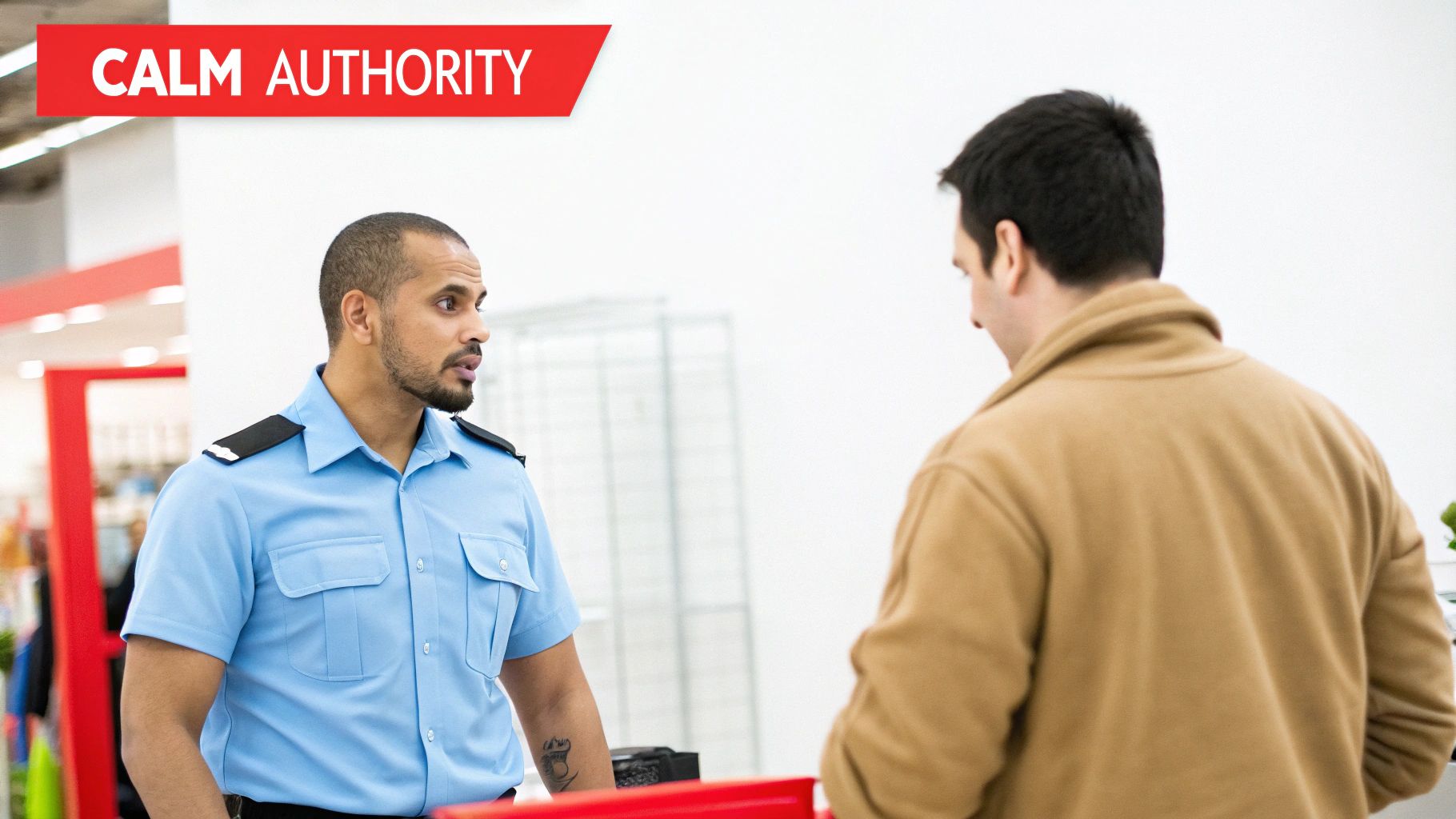
The most effective retail security guards are absolute masters of communication and de-escalation. These aren’t just trendy buzzwords; they are the core skills put to the test every single day on the shop floor. A guard’s ability to navigate a tense situation with quiet professionalism is what stops a minor tiff from blowing up into a major incident.
Think about it. Great communication allows a guard to act as an extension of your customer service team. They can give directions, answer a simple question, or offer a bit of help. This creates a welcoming atmosphere where customers feel both safe and looked after, which is fantastic for building confidence and loyalty.
Practical Example: A customer is getting loud and aggressive at the returns counter over a refund. An untrained person might meet that aggression with more of the same, making everything worse. A properly trained guard, on the other hand, approaches calmly, speaks in a low and steady voice, and acknowledges the customer’s frustration ("I can see you're upset, let's see how we can sort this out"). They then gently guide the person away from the main counter to sort the issue out privately. This one action protects staff, keeps other shoppers from feeling unsafe, and usually resolves the whole thing without anyone needing to call the police.
Essential Training for Today's Retail Security Guards
To build these skills, professional retail security guards go through ongoing training that covers a whole host of disciplines. This is what prepares them to handle the dynamic and often unpredictable nature of a retail environment.
Here are a few non-negotiable training areas:
- Conflict Resolution and De-escalation: This is probably the most critical skill of all. Guards learn verbal techniques to defuse tense situations, manage aggressive people, and bring a sense of calm before things get physical.
- Observation and Reporting: A top-tier guard is trained to be an incredible observer, spotting subtle signs of suspicious activity that most of us would miss. They also need to know how to document incidents clearly and accurately for your records and, if needed, for the police.
- Emergency Response Procedures: From a medical issue like a customer fainting to a fire alarm or an active threat, guards are your first responders. They must know the exact protocols to keep everyone safe until professional help arrives.
- Customer Service Excellence: Modern security training isn't just about spotting trouble. It includes modules on positive customer interaction, ensuring the guard is seen as an approachable, helpful figure, not an intimidating one.
Actionable Insight: Turning Security into a Service
So, how do you make sure your security team is adding this kind of value? When you're looking for a security provider, ask them specifically about their approach to soft skills training. A reputable company won't just tick the legal boxes; they'll be heavily invested in the ongoing development of their people.
This focus on people skills directly protects your bottom line. Retailers with dedicated, well-trained security personnel have reported up to 50% fewer incidents of violence. A safer environment means happier staff, more confident customers, and a stronger business. The best retail security guards don't just stop bad things from happening; they actively help make good things happen.
Measuring the True ROI of Your Security Investment
It’s easy to look at retail security guards as just another expense on the P&L statement. That's a common view, but frankly, it’s a costly mistake. A professional security presence isn’t a cost centre; it's a strategic investment that pays for itself in ways that aren't always obvious at first glance.
To understand the real value, you have to look beyond the upfront cost and measure the broader financial and operational benefits. It’s about tracking the right numbers—the key performance indicators (KPIs)—that show how a safer environment translates directly to a healthier bottom line. This simple shift in thinking turns security from a perceived liability into a proven profit protector.
Key Metrics Beyond Theft Prevention
While stopping theft is a big part of the job, it’s just one piece of the puzzle. A truly effective security strategy ripples through your entire business, boosting everything from staff morale to customer loyalty. Tracking these wider impacts gives you a much clearer picture of its worth.
Here are the key performance indicators you should be watching:
- Shrinkage Rate Reduction: This is the most direct measure. You need to know your shrinkage rate—the percentage of stock lost to theft, damage, or administrative errors—before and after bringing in a professional team. We’ve seen retailers with on-site guards cut their shrinkage by as much as 30%.
- Staff Turnover: A safe workplace is a happy workplace. It's that simple. When your team feels protected, morale goes up, and they're far less likely to look for another job. Lower turnover saves you a small fortune in recruitment and training costs.
- Incident Frequency: Keep a detailed log of every security incident, from aggressive customers to vandalism or break-in attempts. A visible, well-trained security team can slash the number of violent or disruptive incidents by up to 50%.
- Customer Satisfaction Scores: Shoppers who feel safe tend to relax, browse longer, and ultimately spend more. Try adding a question or two about their sense of safety to your customer feedback surveys. You’ll likely see a direct link between your security presence and a better shopping experience.
The Hidden Costs of a Single Incident
To really grasp the value of proactive security, just think about the true cost of one major incident. It's never just about the value of what was stolen. The financial fallout can be deep and long-lasting.
Practical Example: An aggressive shoplifter confronts one of your staff members. The immediate loss might be a few hundred dollars in merchandise. But the real cost? It could include legal fees, a spike in your insurance premiums, lost workdays from traumatised staff, and massive damage to your brand’s reputation if a video of the incident ends up online.
When you start adding up these hidden costs, the annual fee for professional retail security guards suddenly looks very reasonable compared to the financial carnage a single, preventable event can cause.
Cost vs. ROI: A Hypothetical Breakdown
Let's look at some real-world numbers. The table below offers a simplified financial breakdown for a mid-sized retail store, showing how professional security services can deliver a positive return on investment over a single year.
Cost vs. ROI Example for Retail Security Services
| Metric | Cost Without Professional Security | Cost With Professional Security | Net Annual Benefit |
|---|---|---|---|
| Annual Shrinkage Loss (2% of $2M revenue) | $40,000 | $20,000 (50% reduction) | +$20,000 |
| Incident-Related Costs (Legal, Staff Turnover) | $15,000 | $5,000 (Reduced incidents) | +$10,000 |
| Annual Security Guard Service Cost | $0 | -$24,000 | -$24,000 |
| Total Estimated ROI | +$6,000 |
As you can see, the investment in security doesn't just pay for itself—it can actively generate a positive return by slashing losses elsewhere in the business.
This makes the business case for hiring professional retail security guards incredibly clear. It’s a proactive measure that doesn’t just protect your assets and people; it protects your profitability.
A Practical Checklist for Choosing Your Security Partner
Picking the right security provider is a big decision. It’s about much more than just putting a uniform at the front door. You’re not just hiring another contractor; you’re bringing in a partner who will become a core part of your team, directly shaping how customers and staff feel about your brand's safety. The best partners just get it—they understand your values and how you operate.
This isn't a decision to rush. To help you get it right, I’ve put together a checklist of the crucial questions to ask. It’s designed to help you sift through the options and find a company that’s interested in a genuine security partnership, not just another line on their invoice.
Assessing a Potential Security Provider
A genuinely professional security company won't shy away from tough questions. In fact, they should welcome them and be ready with transparent answers. Use these points to properly vet any potential partner.
Licensing and Insurance: Let's start with the absolute basics. Ask for their Master Security Licence number and proof of current public liability insurance. This is your non-negotiable first check. If they can't provide it instantly, walk away.
Training and Development: A security licence is just the entry ticket. What really matters is what happens next. Dig into their ongoing training. Do they provide specific modules for retail security guards on de-escalation, first aid, and—critically—customer service? A firm that invests in its people is a firm that will invest in protecting your business.
Cultural and Brand Alignment: This is where nuance comes in. A high-end fashion boutique needs a guard with a polished, almost concierge-like feel. A major music festival at a venue needs a team with a more visible, crowd-management focus. Make sure the provider not only understands this but can prove they have the right people for your specific environment.
Actionable Insight: Don't be afraid to ask to meet the proposed site supervisor or even a few of the guards who might be assigned to you. A quick chat is often all it takes to gauge their professionalism, communication skills, and whether they’ll be a good fit for your team.
Verifying a True Partnership Model
The line between a simple vendor and a real partner is drawn with communication, reporting, and a shared commitment to your success.
Reporting and Transparency: How do they handle incident reports? Ask to see a sample. A professional partner will provide reports that are clear, detailed, and delivered promptly. These reports shouldn't just be a log of events; they should offer real insights you can use.
Supervision and Support: Who’s looking after the guards when they’re on your site? Find out about their field supervision. Regular, unannounced check-ins from a supervisor keep guards accountable and supported, which translates directly to better performance and peace of mind for you.
Emergency Response Plan: In a real crisis, what’s the plan? They need to be able to clearly walk you through their emergency protocols. You want to see a well-defined chain of command and a solid communication strategy that shows they’ve thought through the worst-case scenarios.
Choosing the right retail security guards is an investment in the stability and reputation of your business. With this checklist in hand, you can move forward confidently and find a partner who will truly protect your assets and help your operation succeed.
Frequently Asked Questions About Retail Security Guards
Deciding to bring in professional security is a big step for any retail business, and it's smart to have questions. Let's tackle some of the most common ones we hear from business owners weighing up their options.
How Many Retail Security Guards Does My Store Need?
This is the classic "how long is a piece of string?" question. The honest answer is: it depends entirely on your specific situation. There's no magic number. A cosy boutique on a quiet street might just need a single, sharp guard managing the entrance. On the other hand, a sprawling department store needs a coordinated team to cover the floor, watch the cameras, and monitor entry and exit points. A proper security provider won’t just give you a number; they'll perform a detailed risk assessment to recommend the right level of coverage.
What Is the Difference Between Armed and Unarmed Guards?
In Australia, the retail environment almost exclusively uses unarmed guards. The emphasis here isn’t on force, but on smart, preventative security. These professionals are highly trained in de-escalation, verbal negotiation, and using their presence alone as a powerful deterrent. An unarmed guard is a specialist in keeping a lid on situations before they boil over. Armed security is extremely rare in retail and is typically only seen in very specific, high-risk scenarios, like moving large amounts of cash.
The core skill of modern retail security guards is not confrontation but communication. Their ability to de-escalate a tense situation protects your staff, customers, and brand reputation far more effectively than force ever could.
Can Your Guards Detain a Shoplifter?
Legally, yes. A guard can make a citizen's arrest if they personally witness a theft, but it's a tool that’s used very carefully and rarely. In practice, it's almost always the last resort. Modern professional training places a huge emphasis on observation, evidence gathering, and reporting to the police. This "observe and report" approach is by far the safest and most effective strategy. It protects the guard, your team, and your customers from harm while shielding your business from messy legal problems down the line.
What Qualifications Should Retail Security Guards Have?
In Australia, every guard must hold a current security licence for the state they work in. Beyond that, you should look for providers whose teams have additional training in first aid, CPR, conflict resolution, and customer service. This ensures they are prepared for a wide range of situations beyond just theft.
Will My Insurance Premiums Go Down if I Hire Retail Security Guards?
It's very likely. Insurers love to see businesses taking proactive steps to reduce risk. By hiring professional guards, you're making your business a safer bet, which can lead to premium reductions of up to 20%. It’s always worth a conversation with your provider.
Ready to secure your retail space with a professional, reliable team? GM GROUP Services provides expert retail security guards who are trained to protect your assets and enhance your customer experience. Contact us today for a comprehensive security assessment.
Discover more from GM Group Services
Subscribe to get the latest posts sent to your email.