
Loss prevention techniques sit at the centre of a problem many operators already feel every week. Stock goes missing, a till comes up short, a subcontractor wanders into the wrong area, or an incident gets noticed only after the shift has ended. None of those losses look dramatic on their own, but together they weaken margins, distract managers, and create avoidable risk.
In Australia, that risk is large enough to treat loss prevention as a routine operating function, not a once-a-year security review. The Australian Retailers Association has repeatedly cited National Retail Association estimates that retail crime costs Australian businesses about A$9 billion a year, with around $3 billion linked to organised retail crime and more than 4,000 incidents a day reported nationally, according to SafetyCulture's summary of Australian loss prevention data. The practical lesson is simple. Single controls rarely hold up on their own.
That's why effective loss prevention techniques need to work in layers. A camera without clear procedures won't fix poor cash handling. Access control without staff training won't stop credential sharing. Stock counts without incident reporting won't tell you whether loss came from theft, error, or process failure.
This guide gets straight to the point. These are 10 practical loss prevention techniques that work across retail, hospitality, events, and construction, with implementation notes, trade-offs, compliance considerations, and the KPIs worth watching.
1. Advanced CCTV Surveillance Systems
A good CCTV system doesn't just record incidents. It changes behaviour, tightens supervision, and gives managers a reliable timeline when something goes wrong. In busy venues, retail floors, loading zones, and construction compounds, that visibility matters because loss often happens in short windows when staff are distracted.
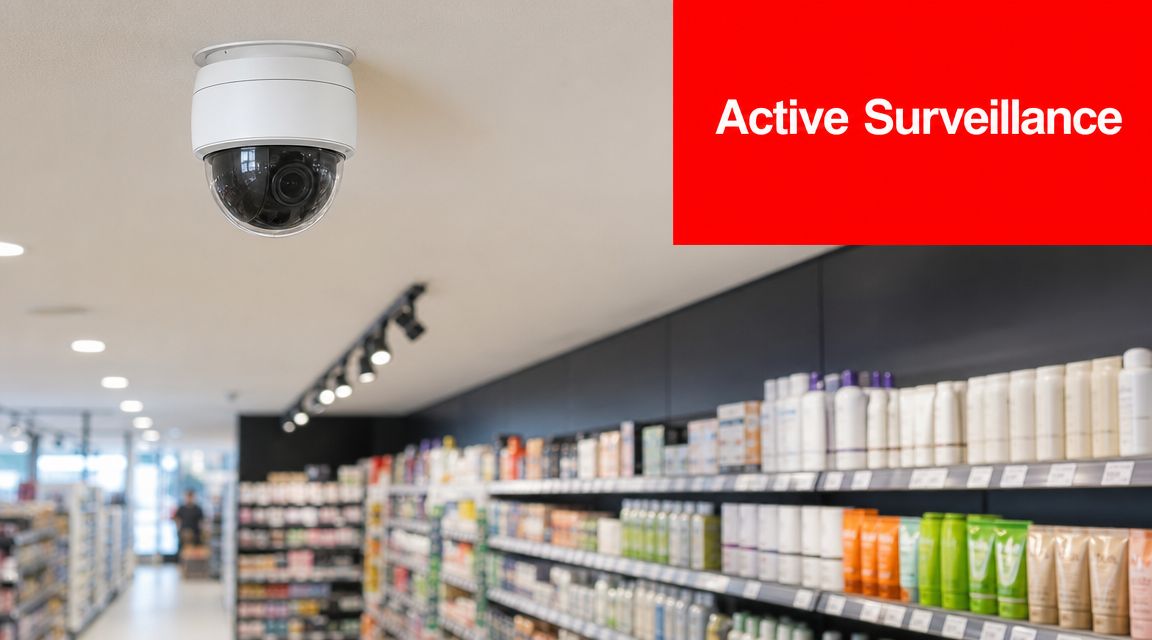
The biggest mistake is treating cameras as a box-ticking purchase. Operators install coverage at the front door and over the counter, then leave blind spots around stockrooms, side exits, cool rooms, service corridors, plant cages, or cash transfer points. That setup creates footage, but not useful control.
Where CCTV works best
In retail, place cameras over entries, high-shrink product zones, self-checkout, and back-of-house stock movement points. In hospitality, focus on tills, bottle storage, gaming or cashier areas where relevant, delivery doors, and patron pinch points. For events, cover gates, bars, accreditation desks, and cash handling areas. On construction sites, cover equipment storage, perimeter access, and material laydown areas.
A stronger setup usually includes:
- Entry and exit coverage: Capture faces, direction of travel, and carried items clearly.
- Back-of-house visibility: Monitor stockrooms, loading docks, staff-only passages, and waste disposal points.
- Night coverage: Use proper lighting or infrared where after-hours movement is a risk.
- Secure retention: Store footage so authorised managers can retrieve it quickly after an incident.
Practical rule: If you can't clearly answer who entered, what they handled, and which direction they left, the camera plan needs work.
Implementation and trade-offs
Modern programs increasingly combine CCTV with analytics and frontline alerts rather than relying on passive review. That shift aligns with broader industry guidance on real-time detection and anomaly spotting in hybrid environments such as venues, festivals, and mixed-use sites, as outlined in Avigilon's loss prevention guide.
That said, more cameras don't automatically mean better results. Poor placement creates false confidence. Excessive surveillance without clear purpose can also create privacy and staff-relations issues. Set a viewing policy, limit access to footage, define retention periods, and make sure signage and use are lawful for your state and workplace context.
For operators planning upgrades, these easy PoE camera installation tips are useful for understanding practical cabling and deployment considerations.
2. Robust Access Control and Entry Management
Many losses start with access that was too broad, too informal, or never reviewed. A missing key, a shared swipe card, a contractor waved through a side gate, or a former employee whose credentials still work can all create the same outcome. Unauthorised access leads to theft, tampering, stock movement, and safety exposure.
The fix is role-based access. People should only enter the areas they need for their job, and that access should be easy to audit.
What strong access control looks like
Retailers usually need tighter separation between customer areas, stockrooms, cash offices, and delivery zones. Hotels and licensed venues need clear control over cellar rooms, manager offices, plant areas, and guest-sensitive spaces. Event organisers need tiered credentials for security, vendors, production, artists, and management. Construction sites need a clean split between public interface, active works, plant storage, and site amenities.
The most reliable access control setups use a mix of physical barriers and electronic records:
- Role-based permissions: Limit access by task, shift, and responsibility.
- Time-based credentials: Set automatic expiry for visitors, contractors, and temporary event staff.
- Escalated controls for critical zones: Add PINs or second-factor approval for cash rooms, data rooms, and high-value storage.
- Visible verification: Don't rely only on a card read. Supervisors still need to challenge unfamiliar people.
Staffing and compliance notes
Access systems work only if someone owns the permission review process. In practice, that means one manager approves access, one function updates records, and one regular audit removes unnecessary permissions. If no one owns it, access expands over time and nobody notices.
For organisations handling customer, employee, or payment data, access control also needs to align with digital controls. Microsoft's guidance on data loss prevention recommends enforcing policy across data in motion, at rest, and in use, with regular policy reviews, employee training, and incident-response protocols, as described in Microsoft's DLP overview. The same discipline applies physically. Define what's sensitive, decide who can reach it, and log exceptions.
A useful KPI set here includes unauthorised entry attempts, access exceptions approved outside process, lost credential reports, and the time it takes to disable credentials when staff or contractors leave.
3. Strict Cash Handling and Point-of-Sale Controls
Cash loss rarely comes from one dramatic theft. More often, it comes from weak routines. Shared tills, rushed closeouts, undocumented refunds, open cash drawers, and inconsistent supervisor approvals create an environment where theft and error become hard to separate.
That's why cash controls need to be boring, repetitive, and enforced every shift. In bars, pubs, clubs, quick-service counters, pop-up event stalls, and retail registers, consistency matters more than complexity.
Procedures that actually reduce loss
Separate till ownership is the first control to tighten. If multiple staff use the same float without a proper handover, variance analysis becomes almost useless. Every till should have a named operator, a defined float, and a documented handover if the shift changes.
Then build in friction where it belongs:
- Manager approvals: Require them for voids, refunds, high-value tabs, and unusual discounts.
- Till limits: Move excess cash out of active drawers during trading.
- Segregated duties: The person taking payment shouldn't also control reconciliation and deposit preparation.
- Surprise checks: Unannounced counts expose process drift quickly.
A practical hospitality example is a busy late-night venue where the bar manager reviews refunds in real time while a supervisor handles safe drops. In retail, the same logic applies to refund abuse and no-sale drawer openings. At events, separate bar, food, merchandise, and gate revenue streams instead of combining them into one messy reporting trail.
Tight POS control isn't only about catching theft. It also shows whether your team is making preventable process errors under pressure.
What to measure
Watch for recurring variances by till, by shift, by transaction type, and by staff member. A single shortage may be random. A pattern usually isn't. Also review refund reasons, discount patterns, no-sale activity, and cash drop timing.
Don't over-engineer the dashboard. Managers need a shortlist of exceptions they can act on the same day. If the report arrives a week later, the value is gone.
4. Systematic Inventory Management and Stock Control
If your stock records are unreliable, every other loss prevention measure gets weaker. You can't tell whether goods were stolen, misplaced, damaged, incorrectly received, or written off badly. Inventory discipline is where many businesses either gain control or keep guessing.
The most effective stock control programs focus first on the items most likely to hurt you. That usually means high-value, high-demand, easy-to-conceal, or easy-to-resell items. In retail, think cosmetics, liquor, electronics, premium apparel, and small accessories. In hospitality, it may be premium spirits, packaged takeaway stock, or guest consumables. On construction sites, it's often tools, fuel, copper, and compact plant.
A practical stock control framework
Cycle counting beats waiting for one large stocktake to reveal a problem that began months earlier. Count your highest-risk categories more often, and count them in a way that can identify where the breakdown happened.
Good practice usually includes:
- Focused spot checks: Count high-risk lines weekly or by trading cycle.
- Tight receiving controls: Match delivered goods to orders before they disappear into stock.
- Movement logging: Record transfers between stores, bars, compounds, or event zones.
- Authorised write-offs: Don't let any staff member mark stock as damaged or wasted without review.
Construction managers should apply the same discipline to equipment issue and return. If one team signs tools out informally and another uses a controlled register, you'll quickly see which area carries unexplained loss.
What modern programs are prioritising
For organisations dealing with both physical and digital asset risk, stronger policy-led controls are becoming more common across cloud, endpoint, and storage environments. In the Asia Pacific region, the data loss prevention market is projected to grow at a 24.72% CAGR, ahead of the global DLP market's 21.67% forecast, while the cloud-based DLP segment held 58% of the market in 2025 and endpoint DLP is projected to grow at 23.84% CAGR, according to Precedence Research's DLP market analysis. The physical lesson is similar. Don't rely on perimeter control alone. Track movement where stock is stored, accessed, and used.
KPIs worth tracking include stock variance by category, write-off reasons, receiving discrepancies, transfer mismatches, and repeat loss by location or shift.
5. Thorough Staff Screening and Background Checks
Not every role carries the same level of risk. A casual floor hand with no access to cash or restricted areas doesn't need the same screening as a night manager with keys, alarm codes, and deposit responsibility. Problems start when businesses apply either no screening or the same shallow screening to everyone.
Background checks should match the role. Cash handlers, key holders, patrol staff, event accreditation teams, supervisors, and anyone with access to sensitive stock, guest areas, or payment data need closer review than low-access roles.
How to use screening properly
A sound screening process usually combines identity verification, employment history checks, reference checks, and any legally appropriate police or licence validation for the role and jurisdiction. That process should be documented and consistent. Ad hoc screening creates gaps and can create fairness issues.
In practice:
- Verify identity early: Don't wait until onboarding day to test whether records match the applicant.
- Check employment history: Gaps aren't automatically a problem, but unexplained contradictions should be resolved.
- Use role-appropriate references: Speak to referees who supervised the candidate in relevant duties.
- Secure the records: Screening documents contain sensitive information and need controlled storage.
The trade-offs and compliance issue
Over-screening can create privacy and legal risk if the process isn't relevant to the job. Under-screening can create obvious exposure. The right balance is role-based, documented, and compliant with the laws that apply in your state and sector.
This becomes more important when screening volunteers or event-adjacent personnel where compliance obligations differ from standard employment practice. For broader context on process design, this guide to volunteer background check compliance is a useful reference point on why background checking needs clear rules, disclosure, and record handling.
The operational KPI isn't “how many checks you completed”. It's whether screened staff were assigned to the right level of access, and whether any incidents later exposed a gap in the screening model.
6. Fostering an Employee Security Culture and Training
Most losses happen in front of people who don't recognise what they're seeing, don't know what to do next, or assume security is someone else's job. That's why staff training isn't a soft extra. It's one of the most effective loss prevention techniques in any operation.

Culture starts with what leaders tolerate. If managers ignore tailgating into restricted areas, skip till reconciliations when it's busy, or fail to review incident reports, staff learn quickly that procedures are optional. Once that happens, losses rise.
What effective training includes
Generic annual training doesn't hold. People remember scenarios that look like their workplace. A bartender needs to recognise distraction theft, refund misuse, and till handover failures. A retail associate needs to spot suspicious returns, concealment behaviour, and stockroom access issues. Event crews need to identify counterfeit passes, zone breaches, and opportunistic theft during bump-in and bump-out. Construction teams need practical accountability for tools, deliveries, and gate movements.
A useful training program covers:
- Role-specific risks: Teach the issues staff will face on shift.
- Simple reporting steps: Staff should know exactly who to call and what to record.
- Refresher sessions: Repeat the essentials often enough that they become habit.
- Supervisor participation: Line managers should teach, not just HR or security.
Staff usually won't follow a policy they've only seen in a handbook. They'll follow what supervisors reinforce during live operations.
What works and what doesn't
Short briefings tied to recent incidents work well. So do toolbox talks, pre-event security briefings, and practical role-play for front-of-house teams. What usually fails is a long slide deck with no examples, no local context, and no follow-up.
Training also needs a safe reporting culture. If staff think raising concerns will create conflict or blame, they'll keep quiet. Independent guidance on loss prevention stresses that programs need legal and ethical guardrails, including privacy-compliant surveillance, fair employee-search policies, whistleblower protection, and data-protection safeguards, as discussed in GardaWorld's overview of loss prevention strategies.
Track completion, yes, but also track reporting quality, procedure compliance during spot checks, and whether repeated incidents drop after targeted retraining.
7. Utilising Merchandise Security Tags and Anti-Theft Devices
Tags, locks, and anti-theft hardware work best when they're applied selectively and supported by staff behaviour. Used badly, they create friction for customers and extra work for the team without reducing loss where it matters.
The key is to protect the right stock in the right way. High-value electronics, premium liquor, designer apparel, over-the-counter pharmacy items, and easy-to-resell accessories are typical candidates. On event sites, this can include merchandise stock, radios, tablets, and temporary equipment. In hospitality, anti-theft devices can also support back-of-house security for premium product storage.
Choosing the right device for the risk
Visible EAS tags deter opportunistic theft because they increase the effort and the chance of detection. Locked displays slow grab-and-run theft and force staff interaction. Cable restraints suit display stock such as handheld tech or compact equipment. RFID or connected tagging can strengthen tracking where stock movement speed matters.
Use devices based on actual loss patterns:
- Visible tags: Best where deterrence is the main goal.
- Locked cases: Best for high-value, high-risk, low-frequency items.
- Cable restraints: Best for display items customers still need to handle.
- Layered protection: Use tagging plus monitored exits for premium stock.
The real-world trade-off
Over-tagging hurts the customer experience and can slow service. Under-tagging leaves your most attractive items exposed. The answer is not to secure everything. It's to review shrink by category and apply controls where the risk justifies the friction.
Retailers often get this wrong by protecting expensive stock while ignoring frequently stolen mid-range stock that moves faster. Hospitality operators make the same mistake when they lock away premium spirits but leave receiving and internal transfer processes loose. Construction stores or site depots can also misjudge risk by caging major plant while leaving smaller power tools easy to remove.
A useful KPI set here includes alarm activations, false alarm rates, tag deactivation errors at checkout, and shrink movement in tagged versus untagged categories.
8. Formal Incident Reporting and Investigation Procedures
If incidents are handled informally, patterns stay hidden. One staff member reports a suspicious refund to a supervisor. Another mentions missing stock in passing. Someone notices a contractor in the wrong zone but doesn't write it down. Weeks later, management has fragments instead of evidence.
Formal reporting fixes that. It turns isolated observations into usable intelligence and gives the business a record of what happened, who responded, and what changed afterward.
Build a reporting system people will actually use
The report form doesn't need to be long. It needs to be clear. Staff should be able to record the basic facts quickly, attach supporting details if available, and submit it without chasing multiple approvals.
A useful report usually captures:
- Time and location: Where and when the issue occurred.
- People involved: Staff, customers, patrons, contractors, or unknown persons.
- What was observed: Facts first, assumptions second.
- Action taken: Who responded and what happened next.
The investigation process then needs ownership. A manager or designated investigator should review the report, secure footage or records, check stock or transaction data, and decide whether the matter indicates theft, error, misconduct, or a control failure.
A report that doesn't trigger follow-up teaches staff that reporting isn't worth the effort.
What to review after the incident
The strongest operators don't stop at “case closed”. They ask whether the event exposed a procedural weakness. Did the CCTV angle fail? Was access too broad? Did the till workflow allow a shortcut? Did staff know how to escalate the issue?
The aim isn't just to record incidents; it's to remove the conditions that made them possible. Reporting should consequently connect directly to stock variance review, CCTV retrieval, staff feedback, and policy updates.
Keep records securely and restrict access to those who need it. Reports often contain personal information, allegations, or sensitive operational detail. Poor record handling can create a second problem after the first one.
9. CPTED and Physical Layout Optimisation
Physical layout changes often deliver faster gains than expensive technology because they remove opportunity at the source. Crime Prevention Through Environmental Design, or CPTED, is about making theft, concealment, and unauthorised movement harder through visibility, flow, and control.
In practice, this means asking simple questions. Where can someone hide product? Where can they move without being seen? Which areas let staff supervise naturally without abandoning service? Where does the site accidentally invite shortcuts?
Layout changes that improve control
Retailers should examine blind corners, over-height displays, hidden alcoves, and checkout lines that block staff sightlines. Hospitality venues should review whether tills can be reached by unauthorised people, whether storage areas sit out of view, and whether patron flow creates unmanaged congestion. Event sites should design clear traffic separation between public, staff, vendor, and restricted zones. Construction sites should place valuable materials and plant where gatehouse staff, patrols, or supervisors can see activity easily.
Simple layout improvements include:
- Clear sightlines: Lower display heights where concealment is likely.
- Natural surveillance: Put service points where staff can watch high-risk areas while doing their normal work.
- Lighting upgrades: Remove dark or low-visibility areas inside and outside.
- Controlled exits: Reduce easy walk-off routes where practical.
What doesn't work
Many operators add mirrors, bollards, cages, or signage without reviewing whether the overall flow still makes sense. If customers, patrons, workers, or contractors constantly move around the intended route, layout control is failing.
One of the strongest CPTED results usually comes from repositioning risk, not just adding hardware. Moving high-risk stock closer to active supervision, relocating a receiving area, or changing where visitors sign in can do more than another standalone device.
This technique also works well on a budget. If a smaller operator can't deploy a major technology stack immediately, layout optimisation gives them a practical starting point with visible operational impact.
10. Strict Vendor and Contractor Management Controls
External parties create a common blind spot. Businesses often screen employees carefully, then give broad access to cleaners, delivery drivers, maintenance teams, labour-hire workers, AV crews, builders, and short-term event contractors with minimal oversight. That gap causes theft, access breaches, stock loss, and poor accountability when something goes missing.
Contractors don't need to be treated as suspects. They do need to be managed as a distinct risk group. Their access is temporary, task-based, and often spread across multiple locations or high-traffic periods.
How to control third-party risk
Start with pre-approval. Approved vendors should have nominated contacts, documented scope, agreed arrival procedures, and clear rules for site access. Unscheduled attendance should trigger verification, not a casual sign-in.
Then tighten site controls:
- Time-limited badges: Issue credentials that expire automatically.
- Defined work zones: Keep vendors to the area needed for the task.
- Escort rules for sensitive areas: Don't allow unsupervised work where cash, stock, data, or guest access is involved.
- Exit checks: Confirm what equipment, tools, waste, and materials leave site.
A hotel can apply this to room access for maintenance contractors. A retail operator can apply it to after-hours refrigeration repair. An event organiser can apply it to staging crews and vendor deliveries during setup. A construction manager can apply it to subcontractors entering plant compounds or storage containers.
The control point many sites miss
Departure control is often weaker than entry control. Staff check who came in, but not what left with them. If tools, packaging, stock, scrap, or mixed materials move offsite without verification, you leave a large hole in the system.
Approved third parties should also be reviewed over time. If a vendor repeatedly breaches sign-in procedures, works outside authorised hours, or creates unresolved stock or access discrepancies, that relationship needs escalation or replacement.
For operators dealing with container storage or temporary compounds, this guide to container protection from Quickfit offers useful practical ideas for strengthening physical security around stored assets.
Top 10 Loss Prevention Techniques Comparison
| Security Measure | Implementation Complexity 🔄 | Resource Requirements ⚡ | Expected Outcomes & Quality 📊⭐ | Ideal Use Cases & Key Advantages 💡 |
|---|---|---|---|---|
| 1. Advanced CCTV Surveillance Systems | Moderate–High, wiring, integration, placement | High, cameras, storage, bandwidth, monitoring | Strong deterrent and evidentiary value; ⭐⭐⭐⭐ | Retail, events, hospitality, construction, remote monitoring, scalable evidence capture |
| 2. Robust Access Control & Entry Management | High, integration, credential systems, policies | High, readers, locks, software, admin | Prevents unauthorized access; strong audit trails; ⭐⭐⭐⭐ | Restricted areas, stockrooms, staff-only zones, precise access control, revocable credentials |
| 3. Strict Cash Handling & POS Controls | Low–Moderate, procedures + POS config | Low–Medium, training, audits, supervisor time | Detects till variances and reduces internal loss; ⭐⭐⭐ | Hospitality, retail, events, accountability, faster reconciliation |
| 4. Systematic Inventory Management & Stock Control | Moderate–High, tagging, systems integration | High, RFID/barcode, software, scanners, staff | Accurate tracking and targeted shrink reduction; ⭐⭐⭐⭐ | Supermarkets, retail, construction supplies, focus on high-value items, better purchasing data |
| 5. Thorough Staff Screening & Background Checks | Low–Moderate, policies, legal compliance | Medium, screening services, HR time, record management | Reduces insider risk and liability; preventative; ⭐⭐⭐⭐ | Cash roles, security positions, contractors, vetting prevents hiring known offenders |
| 6. Fostering Employee Security Culture & Training | Moderate, program design, ongoing delivery | Low–Medium, training materials, time, leadership input | Widely improves detection and reporting; cost-effective; ⭐⭐⭐⭐ | All sectors, multiplies effectiveness of technical controls, encourages reporting |
| 7. Merchandise Security Tags & Anti-Theft Devices | Low–Moderate, tag systems, checkout integration | Medium, tags, exit gates, maintenance | Reduces casual shoplifting; measurable shrink reduction; ⭐⭐⭐ | Retail (electronics, liquor, apparel), visible deterrent, low per-item cost |
| 8. Formal Incident Reporting & Investigation Procedures | Low–Moderate, templates, protocols, training | Low–Medium, admin time, training, recordkeeping | Creates accountability and trend insights; supports legal claims; ⭐⭐⭐ | All venues, enables continuous improvement and evidential records |
| 9. CPTED: Environmental Design & Layout Optimization | Moderate–High, design changes, sightline work | Medium–High, lighting, fixtures, remodeling | Long-term deterrent via visibility; decreases supervision need; ⭐⭐⭐⭐ | Retail, venues, sites, reduces blind spots, improves customer flow and security |
| 10. Strict Vendor & Contractor Management Controls | Moderate, onboarding, supervision processes | Medium, background checks, badges, supervision | Reduces external theft risk; accountability for non-employees; ⭐⭐⭐ | Construction, events, hotels, controls external access, tool/equipment tracking |
Building Your Security Fortress
Effective loss prevention techniques work best when they reinforce one another. CCTV supports investigations, but it won't stop loose till procedures. Access control reduces unauthorised movement, but it won't fix poor stock reconciliation. Staff training builds awareness, but it needs incident reporting and supervision behind it. The strongest programs use layers, not isolated fixes.
For most businesses, the right starting point is not “buy more security”. It's identifying where losses occur and deciding whether the cause is theft, error, weak process, poor layout, or inadequate supervision. A bar with cash variance problems needs different controls from a retailer losing small premium items. A festival with counterfeit credential issues needs a different response from a construction site losing tools after hours. The principle stays the same, but the execution has to match the operating environment.
That's also where many internal programs drift off course. Teams often add controls without agreeing on success measures. They install extra cameras, tighten bag checks, issue more credentials, or introduce more approval steps, yet never test whether the changes reduced loss or just moved it somewhere less visible. Good practice is to review stock variance, incident trends, staff feedback, access exceptions, and compliance implications together, not in separate silos.
A practical loss prevention program should answer five questions clearly:
- Where is loss most likely to occur
- Which controls reduce that specific risk
- Who owns each control operationally
- How the result will be measured
- Whether the control creates privacy, service, or workflow problems
That last point matters. Tighter security isn't always better security. If surveillance is excessive, search policies are poorly handled, or approvals become so cumbersome that staff routinely bypass them, the business may reduce one kind of risk while creating another. Strong programs stay defensible legally, workable operationally, and clear enough for frontline teams to follow under pressure.
For smaller operators, the path is usually straightforward. Start with the basics that close obvious gaps. Clean up cash handling. Tighten stock counts on high-risk items. Review who can access restricted areas. Train staff on what to report and how to report it. Improve sightlines and fix blind spots. Then add technology where it gives you clear operational value rather than buying systems no one actively uses.
For larger or multi-site operators, the challenge is consistency. A policy that works in one venue but isn't followed in another creates uneven exposure and unreliable reporting. Standard operating procedures, manager accountability, and regular audits matter as much as hardware. If one location investigates incidents properly and another doesn't, the portfolio view becomes distorted.
GM GROUP Services works with businesses, venues, events, and sites across NSW, VIC, QLD, and the ACT, and that kind of operational consistency is usually where external support helps most. A custom assessment can identify where controls are too loose, where they're creating friction without value, and which loss prevention techniques belong in the first phase versus later upgrades.
Frequently Asked Questions about Loss Prevention
Q1: What is the most common cause of business loss?
A1: Loss usually comes from a mix of external theft, internal theft, administrative error, and vendor-related issues. The visible incident isn't always the biggest problem. Repeated small errors and process failures can erode profit just as steadily as theft.
Q2: How can a small business implement loss prevention techniques on a budget?
A2: Start with the controls that rely more on discipline than capital. Tighten cash handling, improve stock counts for high-risk items, reduce blind spots through layout changes, and train staff on reporting and escalation. Those steps often expose obvious gaps before you invest in more technology.
Q3: Is it better to focus on technology or staff for loss prevention?
A3: Neither works well alone. Technology helps with deterrence, visibility, and evidence. Staff make the system operational by following procedures, spotting behaviour, and responding properly. The best results come from combining both.
Q4: How do I create a culture of loss prevention in my company?
A4: Make it part of normal operations. Train for real scenarios, require managers to reinforce procedures, review incidents consistently, and respond when staff raise concerns. If leaders treat security as optional, staff will too.
If you want a practical review of your current risks, GM GROUP Services can help assess your site, venue, or event operation and build a loss prevention plan that fits the way your team works.
Discover more from GM Group Services
Subscribe to get the latest posts sent to your email.