
Fire detection systems are your essential first line of defence against a blaze. At their core, these are sophisticated networks of devices designed to spot the very first signs of a fire—be it smoke, a sudden spike in heat, or visible flames—and sound the alarm, giving everyone precious time to react and evacuate safely. For any modern venue, they are non-negotiable.
Think of them as a 24/7 electronic watchdog, constantly on guard to protect people and property at your event, venue, or construction site.
Your Unseen Guardian
A proper fire detection system is much more than just a noisy box on the ceiling; it's the intelligent nerve centre of your entire safety plan. For anyone managing a space full of people, its job is simple but absolutely critical: provide the earliest possible warning of danger. In a crowded festival, a sprawling venue, or a complex construction site, that early warning is the difference between a close call and a catastrophe.
These systems are always "sniffing" the air for trouble. Different detectors are designed to pick up on different clues that a fire is starting. A smoke detector, for instance, is looking for tiny particles created by burning materials, while a heat detector is watching for an unusual and rapid rise in temperature. This constant monitoring is what makes a safety plan proactive, not just reactive.
Why Every Second Counts
The real value of a good fire detection system is speed. It’s not just about reacting to a full-blown fire; it’s about catching the problem before it escalates. This early intervention is a game-changer for a few key reasons:
- Protecting People: It buys everyone the maximum amount of time to get out safely before escape routes are compromised.
- Minimising Damage: Alerting the fire brigade sooner means they can get there faster, which can dramatically reduce the damage to your property.
- Keeping Business Going: A small, contained incident is a hassle. A major fire can shut you down for months and cause serious reputational damage.
The demand for better safety technology is booming. The Australian fire safety equipment market, which includes these vital fire detection systems, was valued at USD 939.1 million in 2023. It’s expected to more than double, hitting USD 1,920.9 million by 2033. This surge highlights just how critical reliable detection has become for dynamic environments like bars, festivals, and building sites. You can read more about the Australian fire safety market trends to see the full picture.
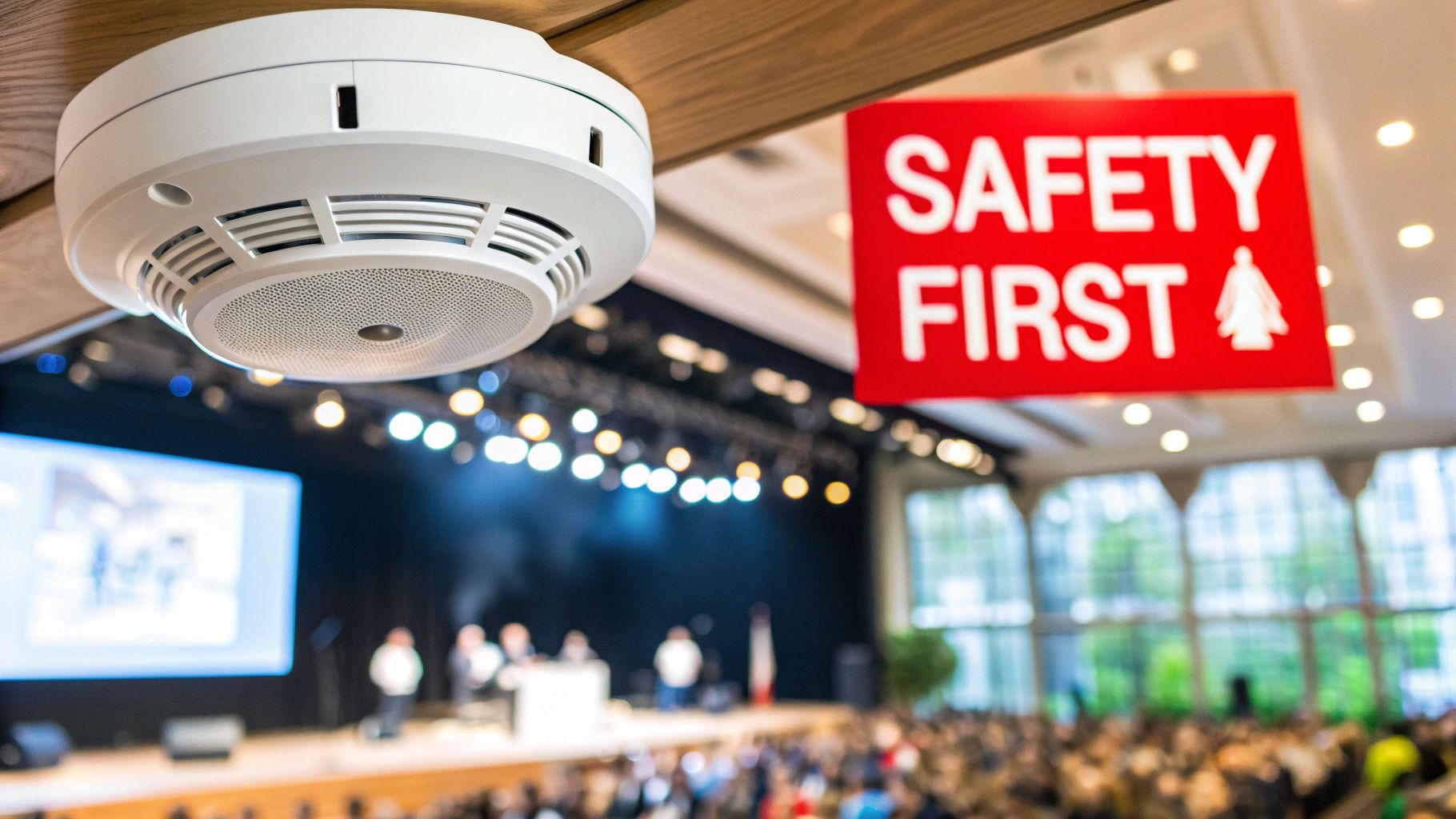
Modern systems feed all this information back to a central control panel. This interface gives your security team a real-time map of the entire building, allowing them to pinpoint the exact source of an alert instantly and direct the emergency response.
The 5 Core Types of Fire Detection Systems Explained
When it comes to fire detection, one size definitely doesn't fit all. Different fires behave in different ways, and the systems designed to catch them are just as varied. Picking the right one for your specific environment—whether it's a dusty construction site or a packed concert hall—is the key to getting reliable protection and avoiding the headache of false alarms.
Think of it like choosing the right tool for the job. Each type of detector is engineered to 'see' danger in a unique way. Let’s break down the five main types to see how they work and where they really shine. This will help you match the technology to your needs, ensuring a faster, more accurate response when it matters most.
1. Smoke Detectors: The Digital Nose
Your first line of defence, and the most common type of detector, is the humble smoke detector. It essentially acts like a digital nose, constantly 'smelling' the air for the tiny particles produced in the early, smouldering stage of a fire. It’s often the first to know something's wrong, long before you’d ever see a flame.
This makes them a fantastic all-rounder for offices, retail shops, and accommodation. They come in two main flavours:
- Ionisation Detectors: These are brilliant at picking up fast-flaming fires that produce lots of very small smoke particles. They’re highly sensitive, but that can sometimes be a drawback, as they might be set off by cooking fumes or a bit of steam.
- Photoelectric Detectors: These are the champs at spotting slow, smouldering fires—think a cigarette dropped on a couch. They look for the larger smoke particles from these types of fires and are generally less prone to nuisance alarms from kitchens or bathrooms.
2. Heat Detectors: The Temperature Sentinel
What about places where smoke detectors just aren't practical? In commercial kitchens, workshops, or grimy construction sites, a smoke detector would be triggering false alarms all day long. That's where heat detectors come in.
Instead of sniffing for smoke, they act like a vigilant temperature sentinel, keeping a constant watch for a dangerous spike in heat. They’ll sound the alarm in one of two ways: when the room hits a fixed temperature (say, 57°C), or when the temperature climbs unusually fast. This makes them a tough, reliable choice for environments where dust, fumes, or steam would easily fool a standard smoke detector.
3. Beam Detectors: The Invisible Tripwire
Protecting a massive, open space like a festival stage, an aircraft hangar, or a soaring hotel atrium presents a real challenge. You can't just dot hundreds of individual detectors across the ceiling—it would be wildly impractical and expensive. The smart solution here is a beam detector.
It works like an invisible tripwire for smoke. A transmitter sends a beam of infrared light across the space to a receiver on the opposite wall. If smoke drifts up and gets in the way of the beam, the receiver instantly notices the drop in light and triggers the alarm. It's a clever and cost-effective method for monitoring huge, high-ceilinged areas with just one device.
4. Aspirating Smoke Detectors: The Super Sniffer
In mission-critical environments like data centres, hospital clean rooms, or historical archives, even the tiniest whiff of smoke could spell disaster. These places need the earliest warning possible, and that’s a job for an Aspirating Smoke Detection (ASD) system. You might know it by the common brand name, VESDA (Very Early Smoke Detection Apparatus).
An ASD system is a true 'super-sniffer'. It actively pulls air from the room through a network of small pipes. This air is then filtered and passed through a highly sensitive laser chamber that can spot microscopic smoke particles long before they’d be visible to the naked eye or trigger a normal detector.
This gives you the ultimate head start, buying you precious time to investigate and react before any real damage is done.
5. Multi-Sensor Detectors: The Smartest Defence
Why settle for one detection method when you can combine the best of both worlds? Multi-sensor detectors are the next evolution in fire detection systems, packing two or more sensors—usually photoelectric (smoke) and thermal (heat)—into a single, intelligent unit.
The device’s built-in brain analyses the signals from both sensors. It will only sound the alarm if it gets confirmation from multiple inputs, like detecting smoke particles and a sharp rise in temperature at the same time. This dual-check approach makes multi-sensor detectors incredibly reliable and dramatically cuts down on false alarms, making them perfect for complex venues like hotels or performance spaces.
Choosing The Right Fire Detection System For Your Needs
With several types of detectors available, it can be tricky to know which one is the right fit. This table breaks down the options to help you quickly compare their strengths and see which system is best suited for common scenarios at events, venues, and construction sites.
| System Type | Detection Method | Best For… | Key Advantage |
|---|---|---|---|
| Photoelectric Smoke | Senses larger smoke particles | Offices, hallways, accommodation, general use areas | Excellent for slow, smouldering fires; low false alarm rate. |
| Ionisation Smoke | Senses smaller smoke particles | Areas with combustible materials (wood, paper) | Very fast detection of flaming fires. |
| Heat Detector | Senses rapid temperature rise or fixed temperature | Commercial kitchens, workshops, dusty construction areas | Immune to false alarms from dust, steam, or fumes. |
| Beam Detector | Senses smoke obscuring an infrared light beam | Large open spaces: warehouses, atriums, festival stages | Cost-effective coverage for high-ceilinged, expansive areas. |
| Aspirating (ASD) | Actively samples air for microscopic smoke particles | Data centres, clean rooms, critical infrastructure | Provides the earliest possible warning of a potential fire. |
| Multi-Sensor | Combines smoke and heat sensors (or more) | Hotels, hospitals, complex venues, areas prone to false alarms | High reliability and significantly reduces unwanted alarms. |
Ultimately, the best choice often involves a mix-and-match approach. A well-designed system might use heat detectors in the kitchen, multi-sensor detectors in guest rooms, and beam detectors in the main event hall to provide comprehensive and reliable coverage.
Navigating Australian Fire Safety Compliance
Getting your head around Australian fire safety regulations isn't just about ticking boxes on a form; it's a fundamental duty of care. For anyone running a venue, organising an event, or managing a construction site, compliance with fire detection systems standards is absolutely non-negotiable. It’s what protects lives, shields your business from massive fines, and makes sure your insurance actually pays out when you need it most.
The rulebook is mainly driven by two key documents: the National Construction Code (NCC) and a whole series of Australian Standards, especially AS 1670. This is the big one that details everything about designing, installing, and commissioning fire detection and alarm systems. While the NCC sets the scene nationally, each state and territory—including NSW, Victoria, Queensland, and the ACT—piles its own specific laws on top.
Core Compliance Pillars You Must Know
It can feel like a lot to take in, especially when you're managing a public space or busy worksite. But really, it all boils down to a few core principles you just have to get right. Think of these as the foundation of any fire safety strategy that's both effective and legally sound.
Choosing the Right System: The NCC sorts buildings into different classes, and the kind of fire detection systems you need changes with them. A small cafe (Class 6) has completely different requirements than a sprawling concert hall (Class 9b) or a multi-storey hotel (Class 3). This is why you need a certified professional—they’ll make sure the system you install is the right fit for your building's classification and how it’s used.
Professional Installation and Sign-Off: In Australia, installing commercial fire detection systems is definitely not a weekend DIY project. It must be done by licensed technicians who live and breathe AS 1670. This guarantees every detector is placed perfectly for maximum coverage, the wiring is solid, and the whole system is rigorously tested before it's officially switched on.
Mandatory Testing and Maintenance: Your compliance journey doesn't stop once the system is installed. Australian Standard AS 1851 lays out a strict timetable for regular inspections, tests, and maintenance. We’re talking monthly, six-monthly, and yearly checks carried out by qualified pros to ensure your system is ready to perform flawlessly at a moment's notice.
This simple map shows how the common detector types are the building blocks of a compliant system.
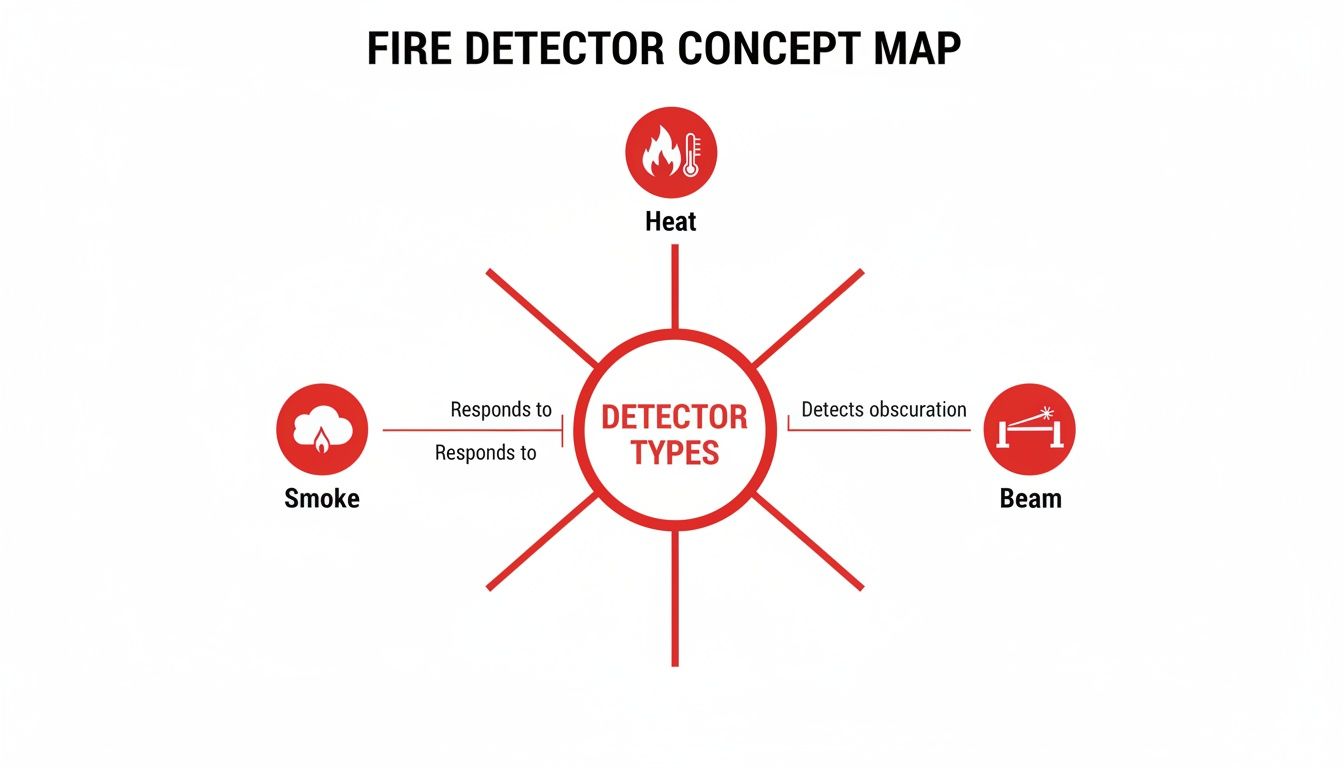
As you can see, it's all about picking the right tool for the job. Different technologies are chosen to suit specific environments, which is a core principle of designing a smart and compliant fire safety plan.
The Importance of Documentation
When regulators or emergency services show up, they need to see proof of compliance. Keeping meticulous records is every bit as important as the physical hardware on your walls and ceilings. This is where your fire safety logbook becomes an absolutely critical legal document.
A fire safety logbook is your official record of all maintenance, testing, and inspection activities. It must be kept on-site and be readily available, providing a clear history of your system's health and your commitment to compliance.
Cutting corners on paperwork can lead to serious penalties, even if your system is in perfect working order. It's the tangible proof that you're meeting your legal obligations. On top of this, a deeper look into fire door compliance and safety shows how they work hand-in-hand with detection systems to contain a fire. All your fire safety assets need proper records.
State-Specific Considerations
While Australian Standards create a national baseline, you absolutely have to know the local rules of the game. The details matter.
- New South Wales (NSW): The Environmental Planning and Assessment Regulation 2000 requires building owners to submit an Annual Fire Safety Statement (AFSS) to the local council and Fire and Rescue NSW. This certifies that all your fire safety measures are up to standard.
- Victoria (VIC): Here, the Victorian Building Authority (VBA) is the watchdog. Building owners must issue an Annual Essential Safety Measures Report (AESMR) to prove all required maintenance has been done.
- Queensland (QLD): The Queensland Building Fire Safety Regulation 2008 puts a huge emphasis on maintaining a solid fire and evacuation plan. It also demands detailed maintenance records for all fire safety gear, including your fire detection systems.
- Australian Capital Territory (ACT): Much like NSW, the ACT requires building owners to provide an Annual Fire Safety Statement, ensuring every essential fire safety measure is properly maintained and functioning correctly.
Trying to navigate this alone is tough. The smartest move is to partner with a security and safety provider who gets both the national codes and the specific state-based regulations. It's the most effective way to keep your venue or site not just safe, but 100% compliant.
Frequently Asked Questions (FAQs)
Q1: What is the most important Australian Standard for fire detection systems?
That would be AS 1670. It's the bible for the design, installation, and commissioning of fire detection, warning, and alarm systems. It's the primary document every professional in the field uses to ensure a system is compliant from the ground up.
Q2: How do I know if my service provider is qualified?
They should have no problem showing you their licences and certifications. Technicians working on fire detection systems must hold the right qualifications and be experts in AS 1670 and AS 1851. Don't ever feel awkward about asking to see their credentials.
Q3: What happens if I don't comply with maintenance requirements?
The consequences are severe. You could be hit with substantial fines from your local council or state authorities, your premises could be shut down, and your insurance policy could be voided. Worst of all, you're putting people's lives at risk.
Integrating Fire Detection Into Your Security Operations
A modern fire detection system is brilliant at catching the first whiff of smoke, but what happens next? An alarm that just blares into an empty hallway is little more than noise. To truly protect people, property, and your operations, that alarm needs to kickstart a well-oiled response.
This is where integration comes in. It’s about making sure your fire system doesn't operate in a silo. Instead, it should be the central nervous system of a wider security and emergency plan, transforming your entire safety strategy from merely reactive to actively protective.
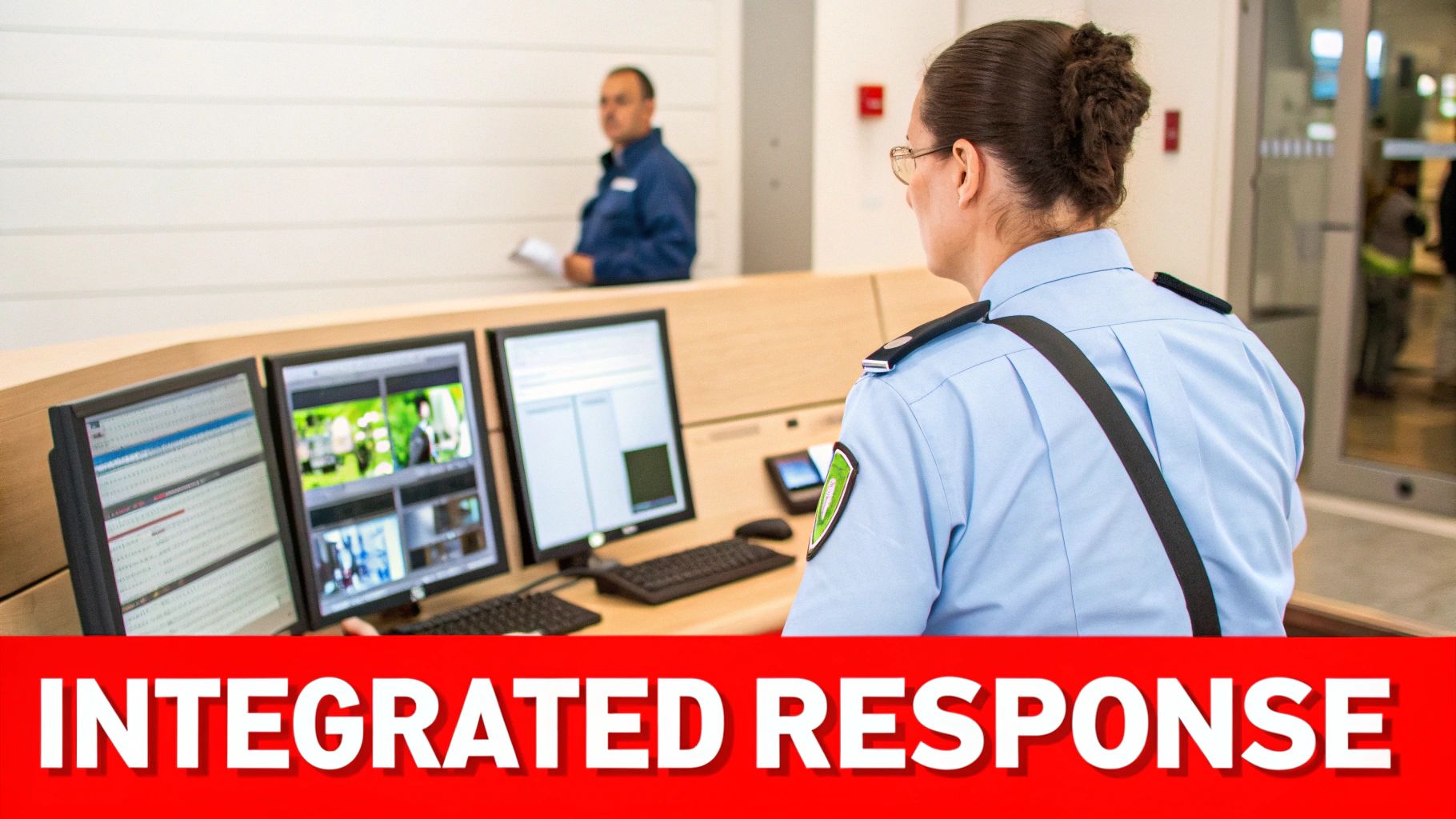
It's no surprise that this integrated approach is driving major investment. The Australian fire protection market is currently valued at around AUD 1.4 billion, with advanced fire detection systems leading the charge. This growth isn't just about new technology; it's driven by strict Australian Standards that demand early, reliable detection, especially in the kinds of high-risk, high-traffic environments GM GROUP Services specialises in securing—like events, venues, and construction sites. You can discover more about the Australian fire protection market to see these trends in detail.
Creating an Automated Response Chain
True integration means your fire detectors can "talk" to every other critical system on site. When a sensor is triggered, it doesn't just make a sound; it sets off a cascade of pre-planned actions designed to get people to safety as quickly and calmly as possible.
This automated response chain can trigger a whole host of actions in a split second:
- Back-to-Base Monitoring: The alarm signal is fired off instantly to a 24/7 monitoring centre, like the one we run at GM GROUP. Our team verifies the alarm and gets emergency services on the way, no delays.
- Access Control Integration: The system can automatically unlock all designated emergency exits and fire doors, guaranteeing clear escape routes while simultaneously locking down other areas to contain a potential threat.
- Public Address Systems: Clear, pre-recorded evacuation messages are broadcast through the venue's PA system, cutting through the confusion and guiding people calmly to safety.
- Security Team Alerts: Your on-site security crew gets an immediate alert on their devices, pinpointing the exact location of the alarm so they can head straight to the source.
A Real-World Example: The Concert Venue
Let's put this into practice. Imagine a small fire starts backstage during a sold-out concert. In a setup without integration, you'd have chaos. Sirens would wail, and staff would be scrambling to figure out what’s happening and what to do next.
Now, let’s replay that scenario with a fully integrated fire detection system:
- Instant Alert: The moment a smoke detector triggers, an alert flashes up in the security command centre, showing the precise location: "Backstage, Green Room". At the same time, every guard on-site gets that same notification on their mobile device.
- Automated Actions: The system doesn't wait for human input. It immediately unlocks the emergency exits closest to the stage, switches on emergency lighting to guide the way, and overrides the concert audio with a calm, pre-recorded evacuation announcement.
- Coordinated Human Response: While the back-to-base team is dispatching the fire brigade, the on-site security team is already moving. They know exactly where the threat is, allowing them to secure the area and help manage the crowd moving towards the clearly marked, unlocked exits. They are executing a plan, not just reacting to a crisis.
This seamless flow from automated detection to coordinated human action is the hallmark of a truly modern safety strategy. It turns a potential disaster into a managed emergency, allowing security staff to focus on crowd management and safe evacuation rather than figuring out what’s happening.
This level of operational harmony is absolutely essential for any public venue, major event, or large-scale construction site. By weaving your fire detection systems into your wider security plan, you build a smarter, faster, and far more resilient safety net that protects everyone involved.
Nailing the Installation and Upkeep of Your Fire Detection Systems
Even the most sophisticated fire detection systems are only as good as their installation and ongoing maintenance. A system that's poorly fitted or left unchecked becomes a serious liability. It gives you a false sense of security and can easily fail when you need it most. Getting this part right is absolutely critical to protect your investment and keep your site compliant.
Think of it this way: proactive care is the foundation of any solid safety plan. This isn't just about ticking a box for an annual check-up. It's about making routine inspections and professional servicing a standard part of how you operate. This is what ensures your system is always ready to go, protecting people, property, and your reputation.
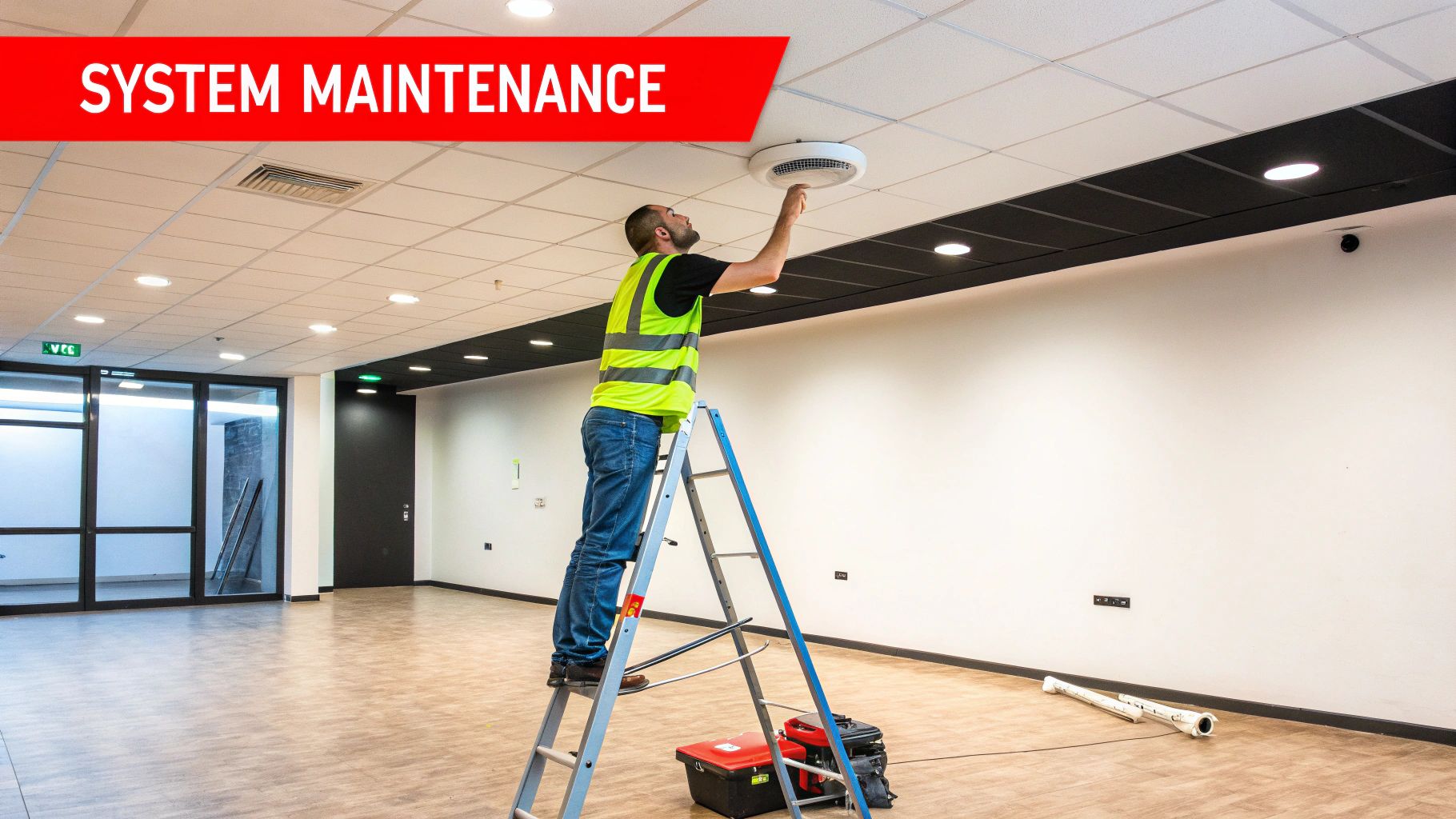
Best Practices for Fire Detection Systems
Keeping your system in top shape isn't rocket science, but it does require discipline. By following a clear, structured approach, you can dramatically extend the life of your equipment and guarantee it's ready for any emergency. The secret is to combine your own team's regular checks with scheduled visits from the pros.
A simple, consistent routine can head off the vast majority of system failures. Here are the essential tasks every venue or site manager should have on their radar:
- Scheduled Professional Testing: This one is non-negotiable. It's mandated by Australian Standard AS 1851. A qualified technician needs to run detailed system diagnostics on a monthly, six-monthly, and annual basis.
- Routine Detector Cleaning: Dust and grime are the number one culprits behind false alarms and sensor failures. A gentle clean of the detector heads, following the manufacturer's guide, will stop these disruptive and costly problems in their tracks.
- Regular Battery Checks: For any parts of your system running on backup batteries, regular checks and timely replacements are vital. This ensures your system stays active even if the power goes out.
- Visual Inspections: Your own team can—and should—do weekly walk-throughs. A quick visual check to make sure detectors aren't blocked, damaged, or have been accidentally painted over can make all the difference.
Common (and Costly) Mistakes to Avoid
Even with the best of intentions, simple mistakes during installation or maintenance can completely undermine your fire detection systems. Knowing what these common pitfalls are is the first step to avoiding them and making sure your safety measures actually work.
One of the most frequent slip-ups is poor detector placement. Stick a smoke detector right next to a kitchen or bathroom, and you're just asking for false alarms from steam and cooking fumes. On the flip side, putting a heat detector in a massive, open-plan office won't give you the fast response you need. For venues that need clear voice alarms, solutions like the latest Monacor EN54 pendant speakers also demand correct placement to be effective.
The single biggest mistake is letting the maintenance schedule slide. A system might look fine, but dirty sensors, old batteries, or tiny faults can lead to a catastrophic failure in a real fire. Proactive care isn't just a "best practice"—it's a legal and moral responsibility.
By committing to a professional installation and a strict maintenance schedule, you turn your fire detection system from a passive box on the wall into an active, reliable guardian for your business.
Frequently Asked Questions (FAQs)
Q1: How often should I clean smoke detectors?
In a commercial environment, a light clean every six months is a good rule of thumb to stop dust from building up. However, in dustier places like construction sites or workshops, you'll need to do it more often. Always check the manufacturer's specific instructions first.
Q2: Can I use any technician for maintenance?
Absolutely not. In Australia, maintenance on commercial fire detection systems must be carried out by a licensed and qualified professional who knows the AS 1851 standard inside and out. Using someone who isn't qualified can void your compliance and your insurance.
The Real Payback from Investing in Fire Detection
It’s easy to look at a modern fire detection system and see it as just another line item on a budget. That's a huge mistake. Think of it less as an expense and more as one of the smartest investments you can make for your event, venue, or site. The conversation needs to shift from the upfront cost to the powerful, long-term returns these systems provide.
This isn't just about what you save if a fire breaks out. It’s about the tangible financial benefits you start seeing from day one. A quality system is the bedrock of a resilient operation, helping you prevent catastrophic property damage, sidestep business-ending downtime, and protect the reputation you've worked so hard to build.
Putting a Number on the Benefits
The value of a solid fire detection system goes way beyond simple compliance. It has a direct, positive impact on your bottom line, making a strong financial case for choosing the best available technology.
One of the most immediate perks? Insurance. When insurers see a professionally installed and maintained fire detection system, they see a lower-risk client. This often translates directly into significantly lower annual premiums—a saving that can effectively help the system pay for itself over its lifetime.
Investing in an advanced fire detection system isn't just about ticking a compliance box; it's a strategic move that actively protects your assets, cash flow, and brand equity. The real ROI is measured in the disasters you never have and the continuity you maintain.
Then there's the staggering cost of downtime. For a festival, a major venue, or a construction site, even a small fire can shut down operations for days, if not weeks. The result is a cascade of lost revenue and potential contractual penalties. Early detection dramatically minimises the damage, letting you get back up and running far sooner. Preventing even a single day of lost operations can often justify the entire cost of the system.
Protecting What You Can't Replace
At the end of the day, the most significant return is in protecting what's truly irreplaceable: people and your reputation. A reliable fire detection system is a powerful statement about your commitment to duty of care for your staff, patrons, and the public. If an incident ever does occur, that proven commitment can be your strongest shield against legal action and reputational damage.
A business that gets a reputation for cutting corners on safety will find it incredibly difficult to win back public trust. In contrast, a swift, effective response—made possible by great technology—reinforces your brand as responsible and dependable. That kind of reputational security is a priceless asset that will support your success for years to come.
Your Top Questions About Fire Detection Systems Answered
Fire detection systems are a non-negotiable part of keeping any public space safe, but we know the details can get a bit technical. To cut through the jargon, we’ve put together some straight answers to the questions we hear most from the event organisers, venue managers, and construction supervisors we work with across Australia.
How Often Do Our Fire Detection Systems Need Testing in Australia?
In Australia, the rulebook for testing is the Australian Standard AS 1851. It’s not just a guideline; it lays out a strict schedule to make sure your system is ready to go when it counts.
Generally, you're looking at a routine that includes:
- Monthly checks performed by a competent professional.
- More comprehensive six-monthly and annual servicing and testing.
Keep in mind that the exact frequency can shift depending on the specific type of system you have installed and any extra rules that apply in your state (be it NSW, VIC, QLD, or the ACT). A crucial part of this is keeping a detailed logbook of every test – this isn't just good practice, it's a legal requirement.
What's Causing All These False Alarms, and How Do We Stop Them?
Nothing derails an event or a workday quite like a false alarm. More often than not, the culprit isn't a fault in the system but everyday things like dust, steam from a kitchen, insects, or even aerosol sprays. Placing a detector in the wrong spot is another classic mistake.
Here’s how you can get ahead of them:
- Match the detector to the environment. You wouldn't put a sensitive smoke detector in a dusty workshop or a steamy commercial kitchen. That’s a job for a heat detector.
- Keep them clean. You’d be surprised how many nuisance alarms are caused by a simple build-up of dust. A regular cleaning schedule works wonders.
- Get a pro to install it. A professional knows exactly where to place detectors to avoid common triggers, ensuring they only go off when there’s a genuine threat.
Can I Just Install a Fire Detection System Myself?
While popping a battery-powered smoke alarm on the ceiling at home is a simple DIY job, commercial-grade fire detection systems are in a completely different league. Under Australian law, these systems must be designed, installed, and commissioned by a licensed, qualified professional.
This is not just a friendly suggestion; it's a legal mandate. Professional installation is your guarantee that the system meets all the necessary Australian Standards (like AS 1670) and will perform reliably in an actual emergency. It’s about protecting lives and your property, plain and simple.
For professional advice on compliant fire detection systems that work hand-in-hand with expert security services, you can trust the team at GM GROUP Services. We protect venues, events, and sites across NSW, VIC, QLD, and the ACT. Secure your premises with our expert team today.
Discover more from GM Group Services
Subscribe to get the latest posts sent to your email.