
When we talk about construction site security, we’re not just talking about putting up a fence and calling it a day. It’s about a smart, layered strategy that pulls together physical barriers, modern tech like CCTV, and trained people on the ground. This combination is what truly protects your assets, keeps your team safe, and stops those costly delays that can kill a project’s budget. This guide provides actionable insights and practical examples to help you build a robust security plan from the ground up.
Understanding the True Cost of Poor Site Security
Leaving a construction site unsecured is a massive financial gamble. It’s a mistake to view security as just another line item on the expense sheet. Think of it instead as a core investment in your project’s success and profitability. A solid construction site security plan is your best defence against the direct and indirect costs that can quickly snowball out of control.
An unprotected site is basically an open invitation for trouble. The obvious threat is theft—high-value items like copper wiring, timber, tools, and even heavy machinery can disappear overnight. But the real cost goes much deeper, creating a ripple effect that can disrupt the entire project from start to finish. For example, a stolen excavator doesn’t just mean a $100,000 replacement cost; it means a week of lost earthmoving work, delaying the entire project schedule and potentially incurring late-completion penalties.
Top Security Risks on Australian Construction Sites
To get a clearer picture, let’s break down the most common threats and what they really mean for your project’s bottom line and timeline.
| Security Risk | Primary Consequence | Secondary Impact |
|---|---|---|
| Theft of Materials & Tools | Direct financial loss from replacing stolen goods. | Project delays waiting for new materials; increased insurance premiums. |
| Vandalism & Property Damage | Cost of repairs and extensive clean-up. | Work stoppages; damage to company reputation; potential for worker injury. |
| Unauthorised Access | Increased risk of accidents and liability claims. | WHS breaches and potential fines; public safety hazards (e.g., children entering). |
| Equipment & Machinery Theft | Loss of high-value assets; significant replacement costs. | Major project delays; rental costs for temporary equipment; insurance claim hassles. |
| Arson | Complete loss of structures and materials; catastrophic financial damage. | Project abandonment; criminal investigations; severe safety risks to first responders. |
These risks aren’t just theoretical; they happen on sites across Australia every day, highlighting just how crucial a proactive security mindset is.
The Hidden Financial Drain of Inadequate Security
Beyond the sticker price of stolen copper, weak security opens the door to a whole host of expensive problems. Vandalism can bring work to a grinding halt, forcing you to spend time and money on repairs before you can even think about moving forward. Consider a newly installed set of windows being smashed overnight. The direct cost is the replacement glass and labour, but the indirect cost is the two-day delay to the internal fit-out schedule, pushing back every subsequent trade.
Every single setback pushes your completion date further out. These delays can trigger hefty penalty clauses in your contracts and, just as importantly, seriously damage your professional reputation with clients and stakeholders.
Insurance companies are also paying close attention. A site with a history of security incidents will almost certainly be slugged with higher premiums. A single major theft could trigger a claim that jacks up your costs for years, eroding the profitability of all your future projects. The maths is simple: the upfront cost of good security is a drop in the bucket compared to the crippling expense of a breach.
WHS Compliance and Your Duty of Care
Ultimately, the most serious consequence of poor security isn’t about money—it’s about people’s lives. An unsecured site is a magnet for danger, not just for your workers but for anyone who might wander in, from opportunistic thieves to curious kids from the neighbourhood. Every gap in your perimeter fence is a direct failure of your Work Health and Safety (WHS) obligations.
Tragically, the risks are very real. In 2023, the Australian construction industry recorded 45 worker fatalities, a shocking figure that accounts for nearly a quarter of all workplace deaths in the country. Unsecured access points and poor perimeter control are contributing factors, especially when it comes to falls from height, a leading cause of death on site. You can find more detail on these critical industry safety statistics, which underscore just how vital proper site control is.
A strong construction site security plan is your first line of defence against theft, your best tool for maintaining project timelines, and your most critical commitment to meeting WHS obligations. It safeguards assets, people, and profitability.
How to Conduct a Security Risk Assessment That Actually Works
Before you even think about hiring guards or installing cameras, you need to understand exactly what you’re protecting and from what. Every single construction site is different – different layout, different neighbours, different high-value gear. A cookie-cutter security plan is a waste of money. The only way to start is with a proper security risk assessment.
Think of it as the foundation for your entire security strategy. Without it, you’re just guessing. This isn’t about ticking boxes on a form that gets lost in a filing cabinet; it’s about creating a living, breathing plan that evolves with your project from the first day on site until the final handover.
The whole point is to stop being reactive. Instead of just reacting after a break-in, you’ll be one step ahead, knowing where an incident is most likely to happen and having the right measures in place to stop it. It’s about being smart with your resources and your budget.
Think Like a Thief to Pinpoint Your Weak Spots
Honestly, the best way to kick things off is to walk your site and try to think like a criminal. Where’s the easiest way in? What looks expensive and easy to grab? When you put on that hat, you start seeing the weak points you’d normally walk past every day.
Grab a site plan and start marking up the high-risk zones. These are the spots that need your immediate attention.
- Heavy Machinery & Plant Storage: Where are the excavators, bobcats, and generators parked overnight? This is a magnet for organised thieves.
- Material Laydown Areas: Those stacks of copper wiring, timber, and steel are basically cash sitting in the open. They’re incredibly tempting targets.
- Fuel Tanks & Depots: Fuel theft is a constant headache. It’s a liquid asset that’s easy to siphon and represents a slow, costly bleed on your project’s bottom line.
- Site Offices & Tool Lockups: These don’t just hold thousands of dollars in tools; they’ve got laptops, project plans, and personal valuables inside.
- Perimeter Flaws: Look for the obvious stuff – gaps in the fencing, a busted gate, or corners of the site hidden from view where someone could slip in unnoticed.
By mapping these hotspots, you can focus your security budget where it will have the biggest impact, rather than spreading it thinly across areas that don’t really need it.
A good risk assessment isn’t about listing every crazy thing that could possibly happen. It’s about identifying the most likely threats for your site and building a focused, practical plan to shut them down.
From Walk-Through to Action Plan
Once you’ve walked the site and identified the weak spots, you need to get it all down on paper. This document becomes your roadmap. It’s what you’ll use to justify the security spend to management and prove you’ve done your due diligence.
For every risk you’ve found, your assessment needs to nail down three things:
- The Weakness: What is the actual problem? Be specific. “A 2-metre gap in the fence behind the copper cable storage.”
- The Threat: What’s the worst that could happen? “Theft of copper cabling, leading to project delays and replacement costs.”
- The Risk Level: Give it a simple rating – low, medium, or high. Base this on how likely it is to happen and how much it would hurt (financially and operationally) if it did.
This process turns your gut feelings into hard data. If you want to get more advanced, a practical bowtie risk assessment is a fantastic tool for visually mapping out threats, their causes, and the potential fallout. It makes the plan crystal clear for everyone involved.
What you end up with is a simple, prioritised to-do list that tells you exactly where to focus your efforts to get the best bang for your buck.
Building a Layered Security Defence System
The best way to think about construction site security isn’t as a single solution, but as a series of overlapping layers—much like a medieval fortress. If an intruder gets past the outer wall, they immediately hit another obstacle. This layered approach creates a security posture that’s tough, resilient, and sends a clear message to would-be thieves.
Each layer has its own job to do. When they all work together, the whole system becomes far stronger than its individual parts. Let’s break down the three essential layers you need to consider: the physical perimeter, technology-driven surveillance, and the boots on the ground. Getting the mix right is the key to creating a truly secure site.
Layer One: The Physical Perimeter
Your first line of defence is the physical boundary of your site. This is all about making it as difficult and obvious as possible for someone to get in who shouldn’t be there. A flimsy fence tells opportunists you’re an easy mark, whereas a solid perimeter is a powerful first deterrent.
But this is about more than just a chain-link fence. It’s a complete system designed to funnel traffic and discourage anyone from even trying to get in.
- Robust Fencing: Go for anti-climb mesh fencing that’s at least two metres high. Walk the fenceline regularly to make sure there are no gaps underneath or weak spots where sections have been damaged.
- Controlled Access Gates: Every entry point needs to be solid, lockable, and actively monitored. The ideal setup is a single, designated gate for all vehicles and people. This forces everyone through one controlled checkpoint.
- Strategic Lighting: A well-lit site is a criminal’s worst enemy. Install motion-activated floodlights covering high-risk areas like material laydown areas, fuel storage, and where you park the heavy machinery. Thieves love the dark, so taking it away is a simple but incredibly effective tactic.
- Clear Signage: Don’t underestimate the psychological power of a warning sign. Put up signs that clearly state “24/7 Video Surveillance,” “Authorised Personnel Only,” and “Trespassers Will Be Prosecuted.” It signals that the site is being watched and there are consequences.
This initial layer sets the tone. It makes it clear from the outset that your site is not a soft target.
This is where a proper risk assessment comes in, helping you figure out where to focus your security efforts.
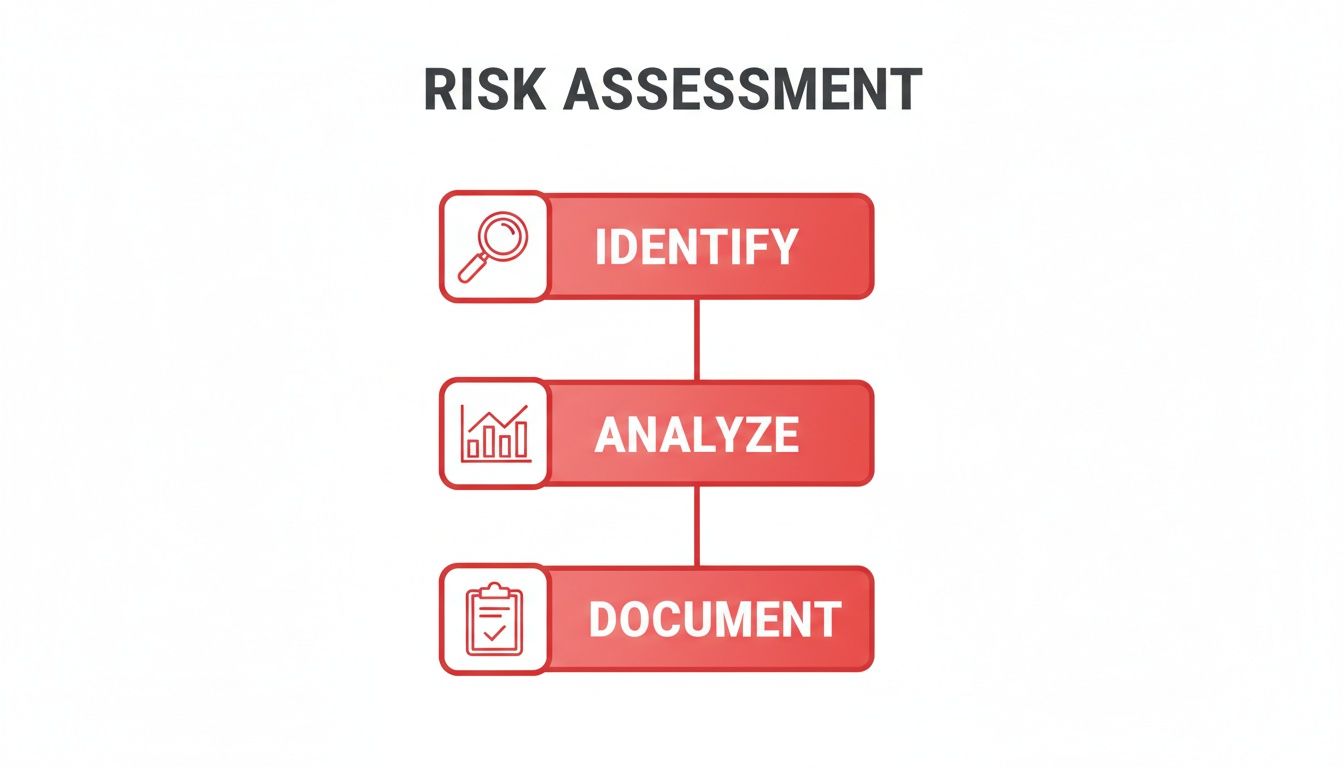
By methodically identifying, analysing, and documenting your risks, you can apply these security layers where they’ll have the biggest impact.
Layer Two: Technology and Surveillance
Once your physical perimeter is solid, the next layer is all about using technology to keep a constant eye on things. Modern surveillance has turned site security from a passive ‘set and forget’ task into an active, intelligent defence. This is how you get real-time oversight and can react to threats the moment they happen.
This tech layer has become absolutely critical. We’ve seen post-lockdown crime surges across Australia, where economic pressures and supply chain dramas are fuelling a big spike in theft. Sites are being stripped of vital materials and equipment, which doesn’t just cost money—it kills project timelines and creates safety hazards. Because of this, proper CCTV and access control are no longer nice-to-haves; they’re a fundamental part of risk management. You can learn about the impact of recent crime statistics on construction security to get more detail on this trend.
Here are the key technologies you should be looking at:
- Smart CCTV with AI Analytics: Today’s cameras are so much more than recorders. They use artificial intelligence to detect human movement, tell the difference between a person and a wandering cat, and ping an alert straight to your phone or a monitoring centre.
- Back-to-Base Monitoring: This is a game-changer. It connects your CCTV system to a 24/7 command centre staffed by security professionals. If an alarm goes off, they can instantly verify the threat, use speakers to warn off intruders (“You are being monitored and police have been dispatched!”), and send a mobile patrol or the police straight to your site.
- Modern Access Control: Forget old-school padlocks. Electronic systems using key fobs, swipe cards, or even biometrics ensure only the right people get in. More importantly, they create a digital log of who entered and when, giving you an invaluable audit trail if something goes wrong.
Think of technology as your tireless, ever-watchful sentinel. It never sleeps, never gets distracted, and gives you the hard evidence needed to protect your assets and prosecute offenders.
Layer Three: The Human Element
The final, and most dynamic, layer is your people. Technology is fantastic at detection, but it’s trained security personnel who provide the on-the-ground response, quick thinking, and physical presence that a camera just can’t match. The trick is to deploy the right type of personnel for the right job.
The choice comes down to your site’s specific risks, size, and of course, your budget.
- Static Guards: These are your best bet for controlling a single, critical point like the main gatehouse. A static guard is a highly visible deterrent who can manage sign-in logs, check credentials, and provide an immediate response to anything happening in their zone. They’re perfect for busy sites during operating hours.
- Mobile Patrols: This is a really cost-effective way to secure larger sites or for after-hours cover. A mobile patrol unit performs randomised checks at irregular times, which keeps potential thieves guessing. Just the sight of a marked security vehicle doing the rounds is often enough to send them elsewhere.
- K9 Units: For high-risk projects, nothing beats a K9 unit for threat detection. A dog’s sense of smell and hearing can pick up an intruder long before a human guard ever could, making them brilliant for patrolling large, dark perimeters or clearing buildings. Plus, the psychological impact of a barking security dog is a massive deterrent on its own.
By carefully blending these three layers—a strong physical perimeter, smart surveillance tech, and a strategic human presence—you create a formidable construction site security system that has all your bases covered.
Integrating Technology for Smarter Surveillance
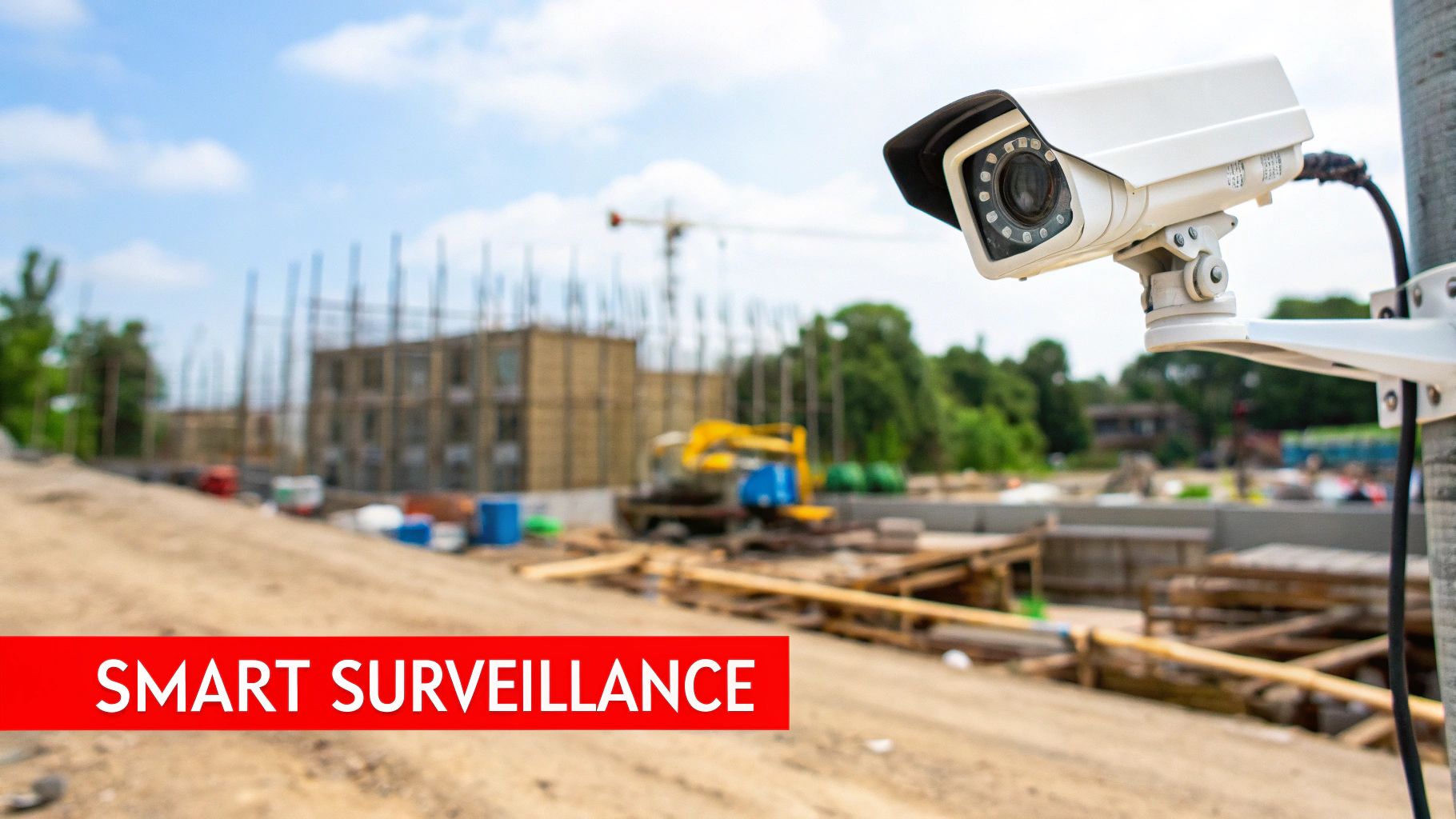
Let’s be honest, relying on old-school padlocks and a perimeter fence just doesn’t cut it anymore. A modern construction site needs a much smarter approach. Technology has completely changed the game, turning site surveillance from a passive recording tool into an active, intelligent defence system that works around the clock.
By integrating the right tech, you gain complete oversight and control. It’s the difference between reacting to a theft and preventing it from happening in the first place. At the heart of this is smart surveillance – cameras that are far more than just recording devices. Think of them as the digital eyes of your construction site security plan, equipped with powerful analytics that can think and act on their own.
The Power of AI-Driven Video Analytics
Gone are the days of sifting through hours of grainy footage after a break-in. Today’s security cameras use artificial intelligence (AI) to analyse what’s happening in real-time. This isn’t just basic motion detection; we’re talking about intelligent threat identification.
An AI-powered system can tell the difference between a person climbing a fence and a tree branch swaying in the wind, which massively cuts down on false alarms. You can program it to recognise specific threats and trigger instant alerts.
- Intrusion Detection: The system can draw virtual “tripwires” around your most sensitive areas. If anyone crosses that line after hours, it sends an immediate notification to you or your monitoring centre.
- Object Recognition: It’s smart enough to differentiate between people, vehicles, and animals, ensuring you’re only alerted to genuine security events.
- Behavioural Analysis: More advanced systems can even spot suspicious behaviour, like someone loitering near the fuel depot for too long, and flag it for a human to review.
This level of automation gives you a vigilant system that never sleeps or gets distracted. It’s a powerful layer of protection. Technology is also changing how we get a bird’s-eye view; exploring how drone use in construction is transforming project oversight shows just how valuable these tools are for surveillance.
Back-to-Base Monitoring: The Human Response
A standalone camera system is great for recording evidence, but its real power is unlocked when it’s connected to a back-to-base monitoring service. This is the crucial link between your on-site tech and a 24/7 command centre staffed by trained security professionals.
When an AI-powered camera detects a genuine threat, it doesn’t just ping your phone with a notification you might miss. Instead, it sends a live video feed directly to the monitoring station.
A back-to-base monitoring team can instantly verify the threat, use on-site speakers to warn intruders that they are being watched and that police are on their way, and dispatch a mobile patrol unit or local law enforcement immediately. This active response often stops theft or vandalism before it can even start.
Securing Access with Modern Control Systems
Controlling who comes and goes is fundamental. Traditional keys are a huge liability – they’re easily lost, stolen, or copied. Modern access control systems replace this outdated method with a much more secure and accountable solution.
These systems use electronic credentials to grant entry, creating a detailed digital log of all site activity.
- Key Fobs or Swipe Cards: Issued to all authorised personnel, they are tough to duplicate and can be deactivated instantly if someone loses one.
- Digital Logs: The system records every single entry and exit, giving you a clear audit trail of who was on-site and when. This is absolutely invaluable for investigations.
- Time-Based Access: You can set rules to restrict access to specific times, preventing subcontractors from wandering onto the site after hours without proper authorisation.
By weaving together smart cameras, professional monitoring, and robust access control, you create a seamless technological shield. This synergy gives you more than just surveillance; it delivers active, intelligent protection that safeguards your assets, your timeline, and ultimately, your bottom line.
Getting the Most Out of Your On-Site Security Team
Hiring security guards is one thing; managing them effectively is another game entirely. It’s the difference between just having bodies on-site and having a switched-on, proactive team that genuinely protects your project. Think of it as the crucial link that turns your investment in people into real-world security.
Without clear direction and proper oversight, even the most capable guards can’t perform at their best. The aim is to build a well-oiled machine where every guard knows exactly what they’re doing, why they’re doing it, and how their role fits into the bigger picture of keeping the site safe and productive. This takes more than just creating a schedule; it requires real leadership.
Building Smart Rosters and Clear Post Orders
The twin pillars of a well-run security operation are a smart roster and crystal-clear instructions. A poorly planned roster leaves gaping holes in your security coverage, and vague instructions are a recipe for confusion when it matters most.
Strategic Rostering isn’t just about filling shifts; it’s about putting your people where they can have the biggest impact, without running them into the ground.
- Cover Your High-Risk Times: It’s no secret that thieves and vandals love the quiet of nights, weekends, and public holidays. Your roster needs to reflect that reality with maximum coverage during these periods.
- Keep Your Team Fresh: A tired guard is an ineffective guard. It’s a simple fact. Avoid scheduling excessively long shifts or back-to-back doubles that lead to burnout and a lack of attention.
- Stagger Your Handover Times: A simple 15-minute overlap between shifts can make a world of difference. This gives the outgoing guard time to properly brief the incoming one on anything unusual they’ve seen or dealt with, ensuring a seamless transfer of responsibility.
Just as important as the roster are the Post Orders. This is the guard’s playbook for their shift—it needs to be direct, easy to understand, and leave zero room for interpretation. It should include everything from site maps and emergency contacts to step-by-step instructions for both routine patrols and emergency situations.
Think of post orders as the operating system for your on-site security. A clear, well-written set of orders ensures consistent performance and correct actions, regardless of which guard is on duty.
How to Properly Vet Your Security Provider
Let’s be blunt: the quality of your guards is a direct reflection of the security company you hire. Not all providers are created equal, and putting your site in the hands of a second-rate outfit is asking for trouble. Doing your homework here is non-negotiable.
When you’re talking to potential security partners, don’t be afraid to ask the tough questions and demand evidence to back up their claims.
- Check Their Credentials: First and foremost, verify that the company and all its guards hold current, valid security licenses for your state (whether that’s NSW, VIC, QLD, or ACT). This is a basic legal requirement and your first indicator of professionalism.
- Dig Into Their Training: Ask them specifically about their training. Have their guards worked on construction sites before? Are they trained in WHS protocols, first aid, and how to de-escalate a tense situation without making it worse?
- Understand Their Supervision Structure: How do they manage their people in the field? A quality provider like GM GROUP Services will have dedicated field supervisors who drop in for regular, unannounced site visits. These checks ensure guards are alert, doing their job properly, and sticking to the post orders.
Choosing the right partner means you’re not just hiring security personnel; you’re bringing in a professional team that gets the unique pressures and risks of a construction site. It ensures the human side of your security plan is just as robust as any camera or alarm system you install.
Your Actionable Site Security Implementation Checklist
Theory is one thing, but action is what actually keeps your site safe. I’ve boiled everything down into a straightforward, practical checklist. You can use this to build a construction site security plan from the ground up or to give your current setup a much-needed health check.
This isn’t just about ticking off boxes. It’s about methodically building layers of defence to protect your gear, your people, and your project’s bottom line. Let’s dive in.
Phase 1: The Lay of the Land – Assessment and Planning
First things first, you need to understand exactly what you’re up against and lay the foundations for your security strategy. A solid plan always starts with a clear-eyed look at the real risks.
- Walk the Site and Get Real About Risks: Do a full walk-through of your perimeter and the site itself. Pinpoint and make a note of all the high-risk zones—think material laydown areas, fuel storage, the site office, and where you park the heavy machinery overnight.
- Figure Out Your Security Budget: You need to put a realistic number on this. A good rule of thumb is to set aside 1-3% of the total project cost, but you’ll want to tweak that figure based on what you found during your risk assessment. A high-risk site needs a bigger budget.
- Check Your Local State Rules: Make sure your plan is fully compliant with the Work Health and Safety (WHS) regulations in your state, whether you’re in NSW, VIC, QLD, or the ACT. This covers everything from site access protocols and signage to ensuring public safety around your perimeter.
Phase 2: Boots on the Ground and Eyes in the Sky
Once you have your plan sorted, it’s time to put the physical and tech-based defences in place. This phase is all about creating a very visible and very effective deterrent.
- Lock Down the Perimeter: Get proper, anti-climb fencing installed around the entire site—it needs to be at least two metres high. All your gates should be solid, properly lockable, and actively monitored.
- Light It Up: Good lighting is a thief’s worst enemy. Use motion-activated floodlights to cover your high-value areas, all the access points, and any dark corners. A brightly lit site makes would-be intruders think twice.
- Get Smart with Surveillance: Install high-definition CCTV cameras that cover every high-risk zone and entry point. For the best result, have them feeding back to a professional back-to-base monitoring service that can provide a 24/7 response.
- Control Who Comes and Goes: It’s time to move past simple padlocks. A digital access control system using swipe cards or key fobs gives you a clear, verifiable log of every single person who sets foot on your site.
A developer I know in Sydney completely stopped their after-hours theft—that’s 100% of it—by putting in a simple but effective combination: monitored CCTV and a single, controlled access gate. The investment paid for itself in the first two months, saving them tens of thousands in potential losses.
Phase 3: Managing Your People and Your Response
The last piece of the puzzle is the human element and how you manage things day-to-day. All the tech and barriers in the world are only as good as the people and procedures backing them up.
- Write Clear Post Orders: Your security team needs detailed, black-and-white instructions. This document should be their bible, spelling out exactly how to conduct patrols, respond to emergencies, and handle their daily duties. No grey areas.
- Set Up Incident Reporting: Create a simple, clear system for reporting every security incident, no matter how small it seems. The data you gather is gold; it helps you spot patterns and find the weak links in your security chain.
- Don’t “Set and Forget” – Audit Regularly: Security isn’t a one-and-done job. Do a quick site walk every week and a more thorough review of your security plan every month. This lets you adapt as the project evolves and new threats pop up, ensuring your construction site security is rock-solid from the first sod turn to handover.
Frequently Asked Questions
When you’re trying to nail down the specifics of construction site security, plenty of questions come to mind. To help you make the right calls with confidence, we’ve put together answers to the most common queries we hear from project managers and developers across Australia.
How Much Should I Budget for Construction Site Security?
There’s no magic number here, because the cost really depends on your site’s size, where it is, and what risks you’re up against. That said, a solid rule of thumb is to set aside 1-3% of your total project cost for security.
This is where a proper risk assessment proves its worth. It helps you spend that budget wisely, putting money into high-impact solutions like monitored CCTV and tight access control rather than just throwing more guards at the problem. It’s all about getting the best protection for your buck.
Are Security Guards or CCTV Cameras More Effective?
This is a classic question, but it’s a bit like asking if you need a hammer or a screwdriver – they’re different tools for different jobs. They aren’t competing against each other; they’re essential parts of a complete security system and work best when used together.
CCTV gives you eyes on the site 24/7, providing a constant, unbiased record and invaluable evidence if something does go wrong. Guards, on the other hand, provide a powerful physical deterrent, the ability to respond instantly, and hands-on control over who comes and goes.
The most effective approach combines both. Imagine an AI-powered camera spotting an intruder after hours. It can instantly alert an on-site guard or a mobile patrol to intervene, giving you the best of both worlds: smart technology backed by a swift human response.
When Is the Most Critical Time for Site Security?
While a site needs to be secure around the clock, there’s no doubt that your most vulnerable periods are when no one is around. This means nights, weekends, and public holidays are prime time for thieves, vandals, and anyone else who shouldn’t be there.
Your security plan needs to be built around this reality. It’s absolutely crucial to ramp up your protective measures during these quiet times. Think more frequent mobile patrols, ensuring your back-to-base monitoring is armed and active, and double-checking that all your lighting and alarm systems are good to go. Your strongest defences need to be in place when you’re most exposed.
For a security partner that truly understands the unique risks facing construction sites in NSW, VIC, QLD, and the ACT, contact GM GROUP Services. We create security solutions—from licensed guards to advanced monitoring—that protect your project from groundbreaking to handover. Find out more at https://www.gmgroupservices.com.au.
Discover more from GM Group Services
Subscribe to get the latest posts sent to your email.