
Alarm system monitoring is the vital service that connects your security system to a 24/7 professional command centre, ensuring that when an alarm is triggered, a trained expert is ready to take immediate action. Think of a security system without it—it’s like a car horn blaring in an empty car park. It makes a lot of noise, but if no one's around to act, it's just a disturbance. This service turns that noise into a rapid, intelligent security response.
Whether it’s a break-in at a construction site, a fire in a pub, or a duress alarm at an event, this connection means someone is always there to verify the threat and dispatch the right help. For instance, if a motion sensor is tripped at your warehouse at 3 AM, a monitoring professional can access camera feeds to see if it's a burglar or a stray cat before calling the police. It transforms your security from a passive deterrent into an active shield.
Why Alarm System monitoring is Your Ultimate Safety Net
Let’s stick with that empty building analogy. Your on-site alarm is the smoke detector. It screams when it senses danger, but what good is that if the building is deserted? That’s the gap professional alarm system monitoring fills. It creates a direct, secure line from your premises to a dedicated command centre, staffed day and night by security professionals.
When a sensor trips, a signal is instantly fired off to these operators. Their job isn't just to blindly call the police. They follow a strict, pre-agreed protocol to figure out what's really happening. This might mean calling your nominated contacts first—an actionable insight is to ensure this list is always up-to-date with people who can respond quickly. Or, in more advanced setups, tapping into video feeds to get eyes on the situation. Once they confirm it's a genuine threat, they dispatch the right people—police, fire brigade, or a mobile patrol—and give them the critical details before they even arrive.

Moving Beyond Sirens to Real-Time Response
This simple process is what elevates your security from a passive alert into a coordinated, active defence. The difference is night and day. A standalone alarm relies on the pure chance that a neighbour or a passerby will notice and decide to get involved. A monitored system guarantees a professional response, every single time. It's about protecting your people, your assets, and your hard-earned reputation.
An unmonitored alarm system simply makes noise. A monitored system initiates a strategic security response, turning a triggered sensor into decisive action that can prevent catastrophic loss or damage.
For any business, this isn't just a nice-to-have; it's a fundamental layer of security. It’s the difference between reviewing CCTV footage of a theft the next morning and actively stopping it from happening. An actionable insight for managers is to integrate monitoring with physical patrols for maximum effect. To get the most out of this, understanding the different WHS monitoring solutions available is a crucial first step for any organisation.
A Critical Security Layer for Australian Venues
The demand for smarter, more reliable security is on the rise across Australia. The country's security systems market, where alarm system monitoring is a huge component, hit USD 2.03 billion in 2024 and is expected to climb to USD 5.16 billion by 2033. This isn't just abstract growth; it's a direct response to increasing incidents of theft and property crime, making dependable alarm system monitoring essential for hospitality managers and event organisers. You can find out more about the Australian security systems market on imarcgroup.com.
This makes professional alarm system monitoring a core part of modern risk management. It’s the peace of mind that comes from knowing your business is protected around the clock, whether you’re there or not.
Breaking Down The Core Types of Alarm System Monitoring
Alarm system monitoring is the crucial link connecting your security system to a team of professionals, but it’s not a one-size-fits-all service. To really get it right, you need to understand the different technologies available. This knowledge is key to choosing the right defence for your venue and ensuring you get a response that genuinely matches your specific risks.
From traditional, rock-solid methods to modern, flexible solutions that put control right in your hands, each approach has its own unique strengths. Let’s break down the main types to see how they stack up.
Back-to-Base Monitoring: The Professional Standard
When people talk about professional alarm system monitoring, this is usually what they mean. Back-to-Base Monitoring is the most established and trusted method in the industry. Think of it as a secure, dedicated hotline from your property straight to a certified monitoring station.
When an alarm goes off, it sends a signal over a secure connection—typically a mix of NBN, 4G, or 5G mobile networks—to a control room. This room is staffed 24/7 by trained operators ready to act.
Its reliability is what makes it the industry gold standard. Even if your internet connection drops or a phone line is cut, the mobile network backup ensures the signal always gets through. Practical Example: A high-value retail store relies on this constant connection. If a burglar cuts the main phone line before breaking in, the 4G backup instantly transmits the alarm signal, ensuring a police dispatch is not delayed.
This simple flowchart shows how a professional alarm response works in practice.
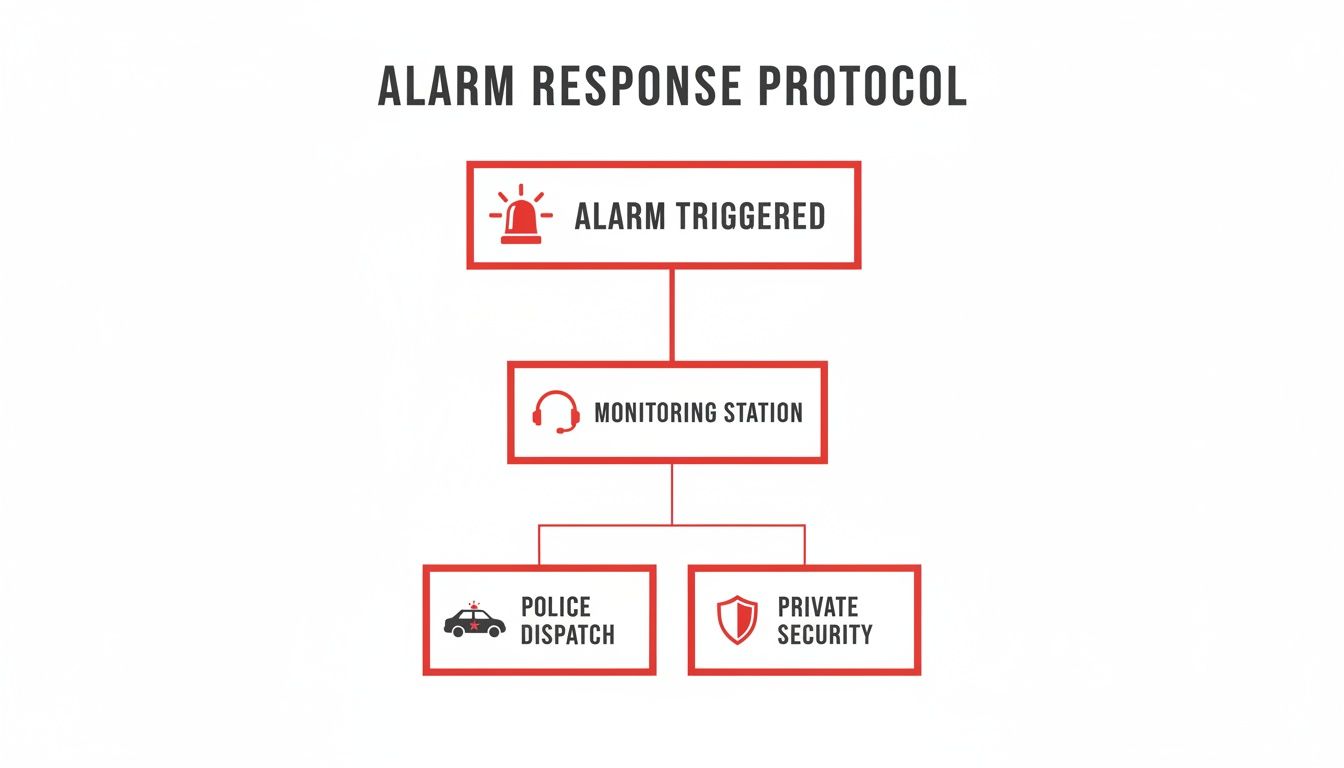
As you can see, every alarm event is channelled through a professional monitoring centre. This guarantees a verified and appropriate emergency dispatch, which is what separates professional monitoring from just getting a simple alert on your phone.
It's a growing field, too. The Australian Investigation and Security Services industry, which covers alarm system monitoring, is set to become a $13.9 billion industry by 2025. This growth is directly tied to rising crime rates, making professional monitoring a vital investment for anyone needing a guaranteed, rapid response. You can dig deeper into these security industry trends over at IBISWorld.com.
Mobile Monitoring: Putting Security in Your Pocket
For managers who need to stay in control while on the move, Mobile and Cloud-Based Monitoring is a game-changer. This approach uses smartphone apps to deliver real-time alerts and system control directly to you and your designated staff.
Practical Example: You're a project manager overseeing a large construction site with several entry points. With mobile monitoring, you get an instant notification on your phone when a sensor is tripped after hours. From there, you can view live camera feeds, arm or disarm specific zones remotely, and even grant temporary access to a contractor—all without having to set foot on-site.
This technology empowers you to manage your security proactively from anywhere. It's an ideal solution for businesses with multiple locations or for managers who need operational flexibility without compromising on security oversight.
How Video Verification Reduces False Alarms
One of the biggest headaches in security is the sheer number of false alarms. They can lead to hefty fines and, worse, make emergency services hesitant to respond quickly. Video Verification tackles this problem head-on by adding a crucial layer of visual confirmation to the alarm system monitoring process.
When an alarm is triggered, the system immediately sends a short video clip or grants live camera access to the monitoring station operator. The operator can then see exactly what caused the alarm in seconds.
- A burglar breaking a window? The operator dispatches police immediately with verified, actionable information.
- A staff member entering the wrong code? The situation is sorted out with a quick phone call, avoiding an unnecessary emergency dispatch.
- Just a stray cat or a falling box? The alarm is noted and disregarded, saving everyone time, money, and hassle.
This simple step drastically cuts down on false alarms, with some systems seeing an 80% or more reduction in unnecessary call-outs. For a busy pub manager, it means instantly knowing the difference between a genuine late-night threat and a cleaner accidentally setting off a sensor, ensuring police are only ever called when they are truly needed.
How Alarm System Monitoring Supercharges Your On-Site Security
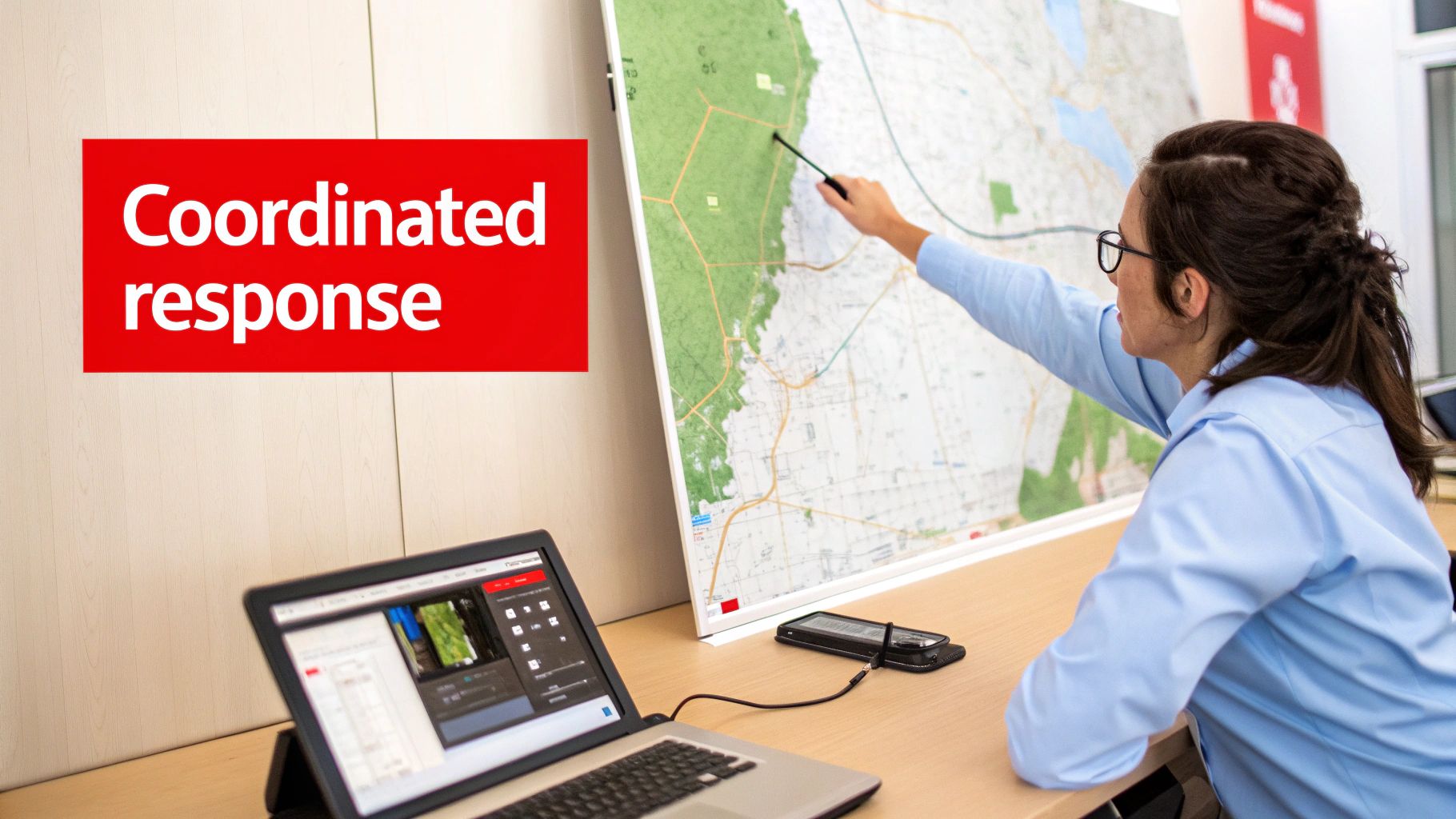
Think of your alarm system monitoring as the brain of your security operation. It’s the crucial link that turns a simple digital alert into a decisive, real-world response. On the other side, you have your on-site guards and mobile patrols—they're the muscle, ready to act on that information with speed and precision. When these two elements work in perfect harmony, you don’t just have security; you have a formidable, multi-layered defence.
This integration is what shifts your security from being reactive to truly proactive. A triggered sensor is no longer just a loud siren. Instead, it becomes the first step in a coordinated, intelligent action plan designed to protect your assets and minimise risk the moment a threat appears.
The Synergy Between Digital Alerts and Physical Response
The real strength of modern security is found in this seamless partnership. When an alarm goes off, the signal doesn't just ping an operator in a distant control room. It kicks off a clear, efficient communication chain that gets your security personnel on the ground involved immediately.
Your monitoring centre essentially acts as a force multiplier for your guards. They can provide critical intelligence—like an intruder's exact location, what they look like, or where they're heading—long before your team even arrives on the scene. This gives your guards a massive advantage, allowing them to respond more safely and effectively because they know what they’re walking into.
This constant back-and-forth communication ensures there are no gaps in your coverage. The monitoring team provides the high-level oversight and verification, while your physical security team delivers the immediate, on-the-ground intervention.
This synergy is what creates a truly robust security posture. It’s the difference between having guards who simply walk a set route and having a response team guided by live intelligence, making sure every action is purposeful and effective.
Fusing technology with trained manpower delivers a level of protection that neither could ever achieve alone. It's a strategic approach that is absolutely essential for complex environments like sprawling construction sites or large event venues, where just having eyes on everything can be a real challenge.
Real-World Scenarios for Venues and Construction Sites
To see how this works in practice, let’s walk through a couple of real-world examples. Each one shows how combining alarm system monitoring with a physical security presence leads to a much better outcome.
Scenario 1: The Remote Construction Site
It’s 2 AM, and a motion sensor picks up a perimeter breach at a large construction site. The monitoring centre operator immediately pulls up the live camera feeds, confirming two intruders are trying to steal copper wiring. Instead of just calling the police (who might be minutes away), the operator dispatches a GM GROUP Services mobile patrol unit, feeding them real-time updates on the suspects' location. The patrol arrives swiftly, apprehends the individuals, and prevents thousands of dollars in losses and project delays.Scenario 2: The Bustling Pub
On a packed Saturday night, a bartender discreetly hits a duress button behind the bar as a situation with an aggressive patron starts to escalate. The signal is received instantly at the monitoring centre. The operator calmly communicates directly with the on-site security guards via their earpieces, giving a clear description of the individual and the incident's location. This allows the guards to step in professionally and de-escalate the situation before it turns violent, keeping everyone safe.
In both of these cases, the alarm system monitoring service was the 'digital brain' directing the 'physical muscle' for a swift, successful resolution. This coordinated approach is fundamental to protecting people and property.
Smart Strategies for Managing False Alarms
A great alarm system isn't just about catching intruders; it's also about not crying wolf. When your system triggers for no good reason, it becomes a massive headache. It wastes the time of police and security patrols, can rack up hefty council fines, and, worst of all, makes everyone complacent. If your alarm goes off constantly, how will anyone know when the threat is real?
False alarms are a much bigger issue than most people realise. In fact, some studies show that a staggering 94% to 98% of all alarm calls are non-emergencies. This puts a huge strain on public resources and can seriously damage your security system's credibility. Getting a handle on these false triggers is absolutely essential to keeping your security effective and reliable.
The Real Price of a False Alarm
The fallout from a false alarm goes way beyond a minor inconvenience. For a business in Australia, local councils don't hesitate to issue steep fines for repeated call-outs, and those fees only get bigger with each offence. Suddenly, your security system has become an unexpected drain on your budget.
Then there's the very real problem of "alarm fatigue." If your staff and local authorities get used to your system going off for no reason, their response time will naturally slow down. That hesitation could be disastrous in a genuine emergency, completely undermining the protection you're paying for.
Finally, your insurance provider is paying attention. Most policies have clauses about maintaining your security system in good working order. A track record of false alarms could be seen as a failure on your part, potentially impacting your premiums or even your ability to make a claim. Managing these triggers isn't just about saving money on fines; it's a core part of your risk management strategy.
Practical Steps to Cut Down on False Triggers
The good news is that most false alarms are preventable. With some clear procedures and regular upkeep, you can stop the most common culprits in their tracks and dramatically reduce unnecessary call-outs.
Here are a few straightforward, actionable insights you can implement right away:
- Train Your Team Properly: Human error is a huge contributor. Actionable Insight: Create a simple, one-page cheat sheet with arming/disarming codes and procedures. Keep it in a secure but accessible location for new staff. Make sure every single person who uses the alarm system knows exactly how to use it.
- Schedule Regular Maintenance: Don't wait for something to break. Have your security provider do routine checks on the system. Simple things like low batteries, dusty sensors, or loose wiring are often behind false alarms.
- Look at Environmental Triggers: What's happening in the space? A spider building a web over a motion sensor, a banner swaying in the breeze from an air vent, or even a roaming pet can all set off an alarm. Take a walk around and see what could be causing issues.
The most powerful weapon against false alarms is video verification. This allows the monitoring centre to immediately see what triggered the sensor. Is it a burglar or just a stack of boxes that fell over? This visual confirmation stops accidental triggers from becoming costly call-outs.
Staying on the Right Side of Insurance and Compliance
Keeping false alarms to a minimum is also key to fulfilling your contractual and legal responsibilities. Many commercial insurance policies give you a discount for having a professionally monitored alarm, but they expect you to manage it properly in return.
If you have to make a claim after a break-in, a history of frequent false alarms could be used by the insurer to argue that you were negligent. By actively managing your system and keeping a clean record, you’re showing due diligence and protecting the value of your security investment. It ensures your alarm system monitoring is always ready to do its job when it matters most.
Choosing the Right Alarm Monitoring Partner
Picking a provider for your alarm system monitoring is one of the biggest security decisions you’ll make. This isn't just about hiring another contractor; it’s about finding a partner you can genuinely trust to protect your people, your assets, and your reputation, 24/7. The right partner brings more than just tech to the table—they deliver reliability, transparency, and a real commitment to your specific security needs.
Let's be blunt: the cheapest option is almost never the best. A quality monitoring service is an investment in peace of mind. It's the assurance that when an alarm triggers, the response will be fast, professional, and exactly what the situation calls for. Getting that right means taking a hard look at a provider’s credentials, their processes, and their ability to actually deliver on what they promise.

Critical Questions to Ask a Potential Provider
Before you even think about signing a contract, you need to ask some tough questions. Think of it as a job interview for one of the most critical roles in your business. Any reputable company will welcome this scrutiny and give you clear, straight answers.
Use this checklist to get the conversation started:
- Licensing and Certification: Are you fully licensed to operate in my state (e.g., NSW, VIC, QLD, ACT)? Can you show me your licence numbers?
- Control Room Grading: What grade is your monitoring centre? You’re looking for a Grade A1 certification. It's the highest standard in Australia, guaranteeing top-tier security and redundancy.
- Response Time Statistics: What are your average and guaranteed maximum response times? A provider who is open about their performance metrics is one you can trust.
- Operator Training: Tell me about the training and background checks your monitoring operators go through.
- False Alarm Protocol: How do you manage potential false alarms? Do you use things like video verification to confirm a real threat before dispatching a response?
These questions cut straight through the marketing fluff and get to what really matters: performance and accountability.
Decoding Contracts, Costs, and Service Levels
Security contracts can be a minefield of jargon and hidden costs. It’s absolutely vital that you understand exactly what you're paying for and what’s expected of you. Don't let anyone rush you through this part; comb through every detail of the service level agreement (SLA) before you commit.
Pay close attention to the contract length, cancellation policies, and any extra fees for call-outs or tech support. A trustworthy partner will be completely upfront about all costs, so there are no nasty surprises down the track.
Look for flexibility. If a provider is trying to lock you into a rigid, long-term contract without first understanding your unique needs, that’s a major red flag. A true security partner, like GM GROUP Services, works with you to find a service level that fits your budget and your operations, not the other way around.
Why a Tailored Response Plan Matters
A one-size-fits-all approach to alarm system monitoring is a recipe for disaster. The security challenges at a multi-day music festival are worlds apart from those at a high-end jewellery store. Your monitoring partner must have the expertise to build a custom response plan that makes sense for your specific environment.
For instance, the plan for a construction site might prioritise dispatching a mobile patrol to catch intruders in the act. For a busy pub, the focus would be on discreet communication with on-site guards to de-escalate a situation without causing a scene. This tailored approach is what makes the response effective, not just fast.
The Australian electronic security market is moving quickly, with new trends like AI-driven surveillance changing the game. Modern systems can now use video analytics to predict trouble, leading to smarter, more precise responses. As you can read on H3C Plus, this is making it even more critical to choose a forward-thinking partner who keeps up with technology.
Ultimately, you’re looking for a provider who acts like an extension of your own team—someone who gets your risks and has the tools and expertise to manage them properly.
Frequently Asked Questions About Alarm System Monitoring
When you start looking into professional alarm system monitoring, a few key questions always come up. It's only natural—you want to know exactly what you're investing in and how it will protect your business when it matters most. Let's walk through some of the most common queries we hear from business owners.
Q1: What is a Grade A1 monitoring centre?
A Grade A1 rating is the highest certification a monitoring centre can achieve in Australia. It means the facility has met incredibly strict standards for its physical construction, equipment redundancy (like backup power and comms), and security. In short, it’s built to stay online and operational, even during a major crisis.
Q2: Should I prioritise a local or national monitoring provider?
While national providers offer a wide reach, a company with a strong local presence often has better relationships with local police and faster access to mobile patrol teams in your area. The ideal choice is often a company like GM GROUP Services that gives you the best of both worlds: a wide operational footprint combined with deep local knowledge.
Q3: How much should alarm system monitoring cost?
Costs can vary quite a bit, depending on the type of monitoring (back-to-base, video verification), how many areas you're protecting, and the response plan you agree on. Be very wary of rock-bottom prices—they often mean corners are being cut somewhere, or you'll be hit with hidden fees later. Focus on getting the best value and reliability, not just the lowest monthly bill.
Q4: What happens if my internet or phone line fails?
This is probably the most critical question of all, and it’s something professional monitoring services are designed to handle. A modern back-to-base system doesn't just rely on one connection. It uses what's called dual-path communication, which is a fancy way of saying it has a backup. Typically, it uses your main NBN connection and has a secure 4G or 5G mobile network ready to go. If an intruder cuts the line or your internet simply drops out, the system automatically flips over to the mobile network. This fail-safe means the signal always gets through, keeping you connected to the monitoring centre no matter what.
Q5: How quickly do monitoring centres actually respond?
Speed is everything in an emergency. For any reputable monitoring provider, response time is a make-or-break metric. A high-quality, Grade A1 monitoring centre will typically process an alarm signal in under 60 seconds. The moment the signal hits, an operator is on it. Their first job is to follow the action plan we’ve already agreed on with you—this might be calling your key contacts to check in or using video verification to see what's happening. Once they confirm it's a real threat, they dispatch the right people immediately.
Q6: Can I connect my existing CCTV cameras to the service?
Good news here: in most cases, yes. If you have a modern, IP-based CCTV system, integrating it with a professional alarm system monitoring service is usually straightforward. This is exactly how powerful tools like video verification are made possible. A good security partner can take a look at your current camera setup and confirm its compatibility. It’s a smart, cost-effective way to get a major security upgrade.
Q7: Is professional monitoring really better than a DIY app?
Getting an alert on your smartphone is handy, but it's a world away from the reliability of professional 24/7 alarm system monitoring. What happens if an alert comes through while you’re asleep, driving, or in a meeting with your phone on silent? It's easy to miss. A professional monitoring service means a trained expert is always watching. They are paid to be ready to respond, verify what’s happening, and get help on the way. For a business that needs to protect its assets, staff, and customers, that level of guaranteed response is something a simple app just can’t deliver.
Ready to secure your venue with reliable, professional oversight? The team at GM GROUP Services provides expert back-to-base alarm monitoring and tailored response plans to protect your business around the clock. Contact us today to discuss your security needs at https://www.gmgroupservices.com.au.
Discover more from GM Group Services
Subscribe to get the latest posts sent to your email.