
An alarm monitoring system is the ultimate guardian for your business, providing a dedicated, 24/7 watch over your premises. It acts as the critical link between your on-site security sensors and a professional monitoring station, where trained experts are poised to act the moment an alarm is triggered. Their job is to verify any threat and dispatch the appropriate emergency response, protecting your assets, staff, and reputation around the clock. This guide offers actionable insights into making this technology work for you.
What Is an Alarm Monitoring System?
At its core, an alarm monitoring system is your business’s first line of defence. It’s a smart network of sensors and devices placed strategically across your property, all feeding back to a central monitoring centre. Here, real people—trained security professionals—are on standby, ready to respond the moment an alert comes through. This provides a crucial layer of verification that separates a genuine emergency from a false alarm.
For managers running construction sites, busy hospitality venues, or large-scale events, this system is about much more than just catching intruders. It delivers a rapid, verified response to any potential threat. That could be a break-in, a fire, a medical emergency, or even a duress signal from a staff member in trouble.
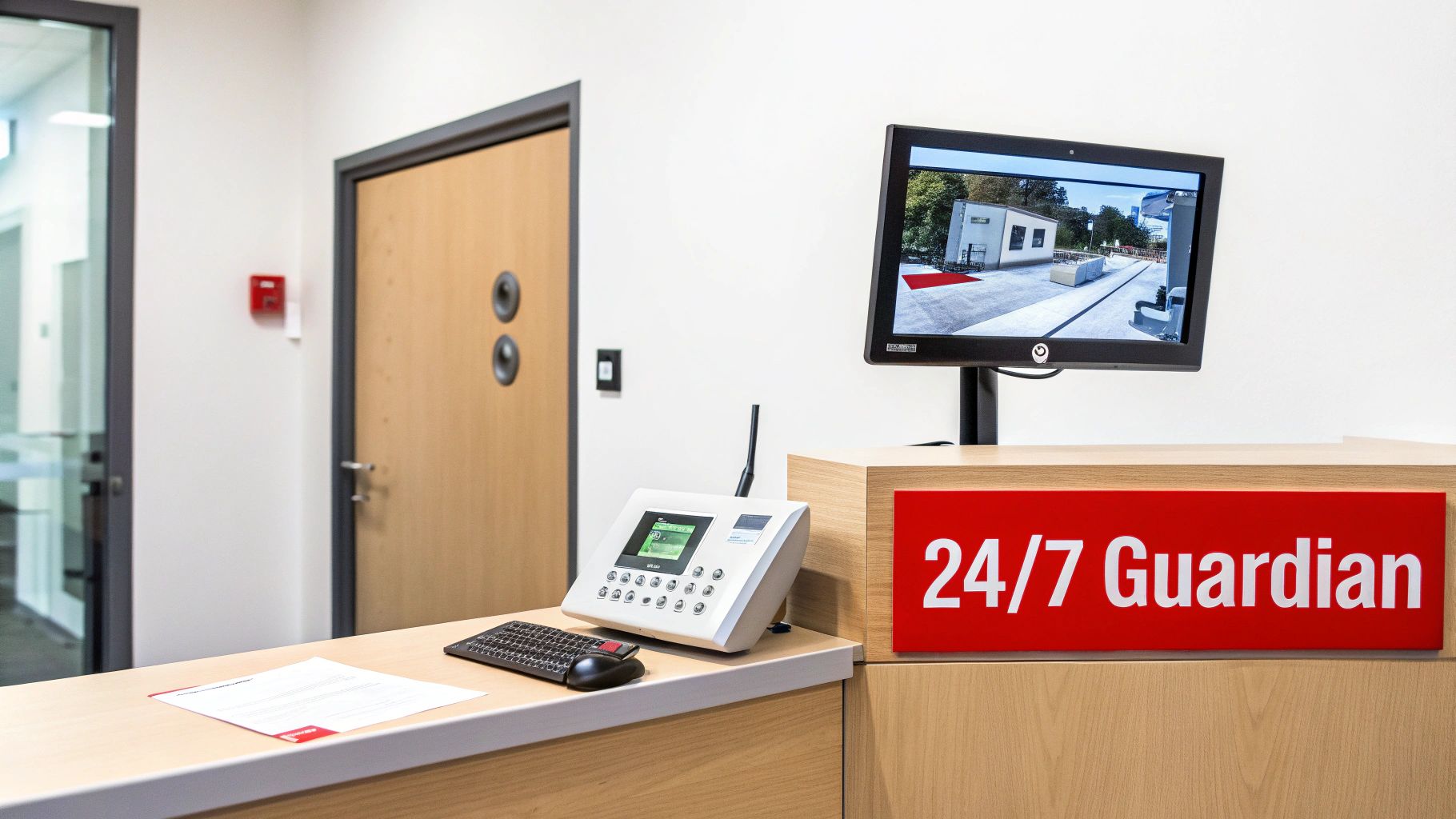
Core Components of an Alarm Monitoring System
Imagine a security team that never sleeps, blinks, or takes a break. That’s what a monitored system provides. It instantly verifies alerts, filters out the costly false alarms that can lead to council fines, and dispatches the right help—whether that’s the police, fire brigade, or a mobile security patrol. This immediate, expert verification is what truly safeguards your operations.
To really get a feel for how it works, let's break down the key parts:
- Sensors and Detectors: These are the eyes and ears on the ground. They include things like motion detectors, door and window contacts, glass-break sensors, smoke detectors, and duress buttons, all designed to pick up on unauthorised entry, fire, or personal threats. Practical Example: A motion sensor on a construction site detects movement at 2 AM, instantly triggering the system.
- Control Panel: This is the 'brain' of the operation. It gathers signals from all the sensors, makes sense of the information, and shoots the alert over to the off-site monitoring centre.
- Monitoring Centre: A 24/7 command hub staffed by security professionals. Their job is to receive alerts, follow strict protocols to verify what’s happening, and coordinate the dispatch of emergency services or security guards.
- Response Protocol: This is your customised game plan. It’s a pre-agreed set of actions that ensures any confirmed incident is handled swiftly and effectively, from calling keyholders to sending a mobile patrol to the site. Actionable Insight: Work with your provider to create a detailed protocol, including a list of keyholders with their contact numbers and a 'safe word' to cancel false alarms.
To give you a clearer picture, here’s a quick summary of how these components work together to protect your business.
Alarm Monitoring System at a Glance
| Component | Function | Benefit for Your Business |
|---|---|---|
| Sensors & Detectors | The 'eyes and ears' that detect specific threats like motion, smoke, or broken glass. | Provides immediate detection of potential security breaches or safety hazards on-site. |
| Control Panel | The 'brain' that processes signals from sensors and communicates with the monitoring centre. | Ensures alerts are reliably transmitted for a fast and coordinated response. |
| Monitoring Centre | A 24/7 hub of trained professionals who verify alerts and dispatch help. | Eliminates false alarms and guarantees an expert is always watching over your property. |
| Response Protocol | Your customised plan of action for verified incidents, such as contacting keyholders or police. | Delivers a consistent, rapid, and effective response tailored to your specific needs. |
This professional oversight is a significant part of Australia's commercial security landscape. In fact, the fire and security alarm services industry in Australia, which underpins every professional alarm monitoring system, has seen revenues reach an estimated $5.1 billion. This figure highlights just how many businesses across New South Wales, Victoria, Queensland, and the ACT rely on this technology to stay protected.
How an Alarm Monitoring System Actually Works
Think of an alarm monitoring system as a silent, digital watchman. It’s always on guard, keeping an eye on your premises with unwavering focus. The action starts the second a sensor—like a door contact, motion detector, or smoke alarm—is tripped. That sensor fires off an immediate, coded signal to your on-site control panel.
The control panel is the brains of the operation. It instantly processes the signal and shoots the alert over to a remote, highly secure monitoring centre. This is where the real magic happens, as trained security professionals, on duty 24/7, are ready to jump into action.
The Critical Verification Process
As soon as an alert hits the screen, the monitoring team follows a strict, well-rehearsed plan. Their first job is usually to call you or another designated keyholder to check if the alarm is real. This quick phone call is absolutely essential for weeding out false alarms, which can be easily triggered by a staff member's mistake or even a strong gust of wind.
Actionable Insight: A verified alarm is the key to a prioritised emergency response. Police are far more likely to respond quickly to a visually confirmed threat from a monitoring station than to an unverified local alarm bell.
This verification step is what makes monitored security so powerful. It cuts down on the hassle and potential fines from unnecessary call-outs and makes sure that when a genuine emergency unfolds, it gets the urgent attention it needs.
The Role of Video Verification
These days, modern systems take this a step further with video verification. If your setup includes integrated CCTV, the monitoring professional can pull up live or event-triggered video to see exactly what’s happening on your property in real-time.
- Practical Example 1: A motion sensor trips on a construction site at 2 AM. The operator immediately accesses the camera feed and sees two people cutting locks on a shipping container. That’s a confirmed intrusion. Police are dispatched instantly with a description of the suspects and their location.
- Practical Example 2: A door sensor goes off at a restaurant after closing. The operator pulls up the footage and sees the head chef, who forgot his wallet and used his key to get back inside. The operator logs it as a false alarm, and no further action is needed.
The command centre behind any serious alarm monitoring system is often a Security Operations Center (SOC). Having that 'eye on the prize' through visual confirmation all but eliminates time-wasting false alarms and guarantees a priority police or guard response for genuine threats. It all boils down to getting faster, more accurate help when it counts, protecting your assets and your people.
Comparing the Different Types of Alarm Monitoring
Choosing an alarm monitoring system isn't a one-size-fits-all decision. The right setup for your business hinges entirely on your specific risks, how you operate day-to-day, and your budget. Getting this choice right means understanding what's actually out there.
Let's break down the four main ways you can monitor your property. By getting a feel for the pros and cons of each, you can pick the system that gives you the best protection, whether you're running a busy pub, a large construction site, or a corporate head office.
Back-to-Base Alarm Monitoring
Think of this as the gold standard in professional security. When your alarm goes off, the signal doesn't just make a noise—it goes straight to a dedicated 24/7 monitoring centre. There, trained security professionals jump into action. They verify the threat and immediately dispatch either the police or a mobile patrol guard to your premises.
- Best For: High-risk or high-value environments like licensed venues, retail stores holding valuable stock, and sprawling construction sites.
- Key Advantage: It guarantees a professional response, even if you’re asleep, on holiday, or can't get to your phone. This is the most reliable way to get boots on the ground, fast.
- Consideration: This level of service comes with an ongoing monthly subscription fee to keep that 24/7 watch.
This professional-grade approach is a huge part of Australia’s security industry. The market, which stood at USD 2.03 billion, is predicted to hit USD 5.16 billion by 2033, growing at a solid 9.80% each year. This isn't just a number; it shows how much businesses rely on this kind of real-time protection.
Self-Monitoring Systems
With a self-monitoring system, you're in the driver's seat. When a sensor is triggered, the system pings your smartphone with a push notification or sends a text to a list of contacts you've chosen. From that point on, it’s up to you to figure out what’s happening and call the authorities if necessary.
Actionable Insight: Self-monitoring gives you complete control and avoids monthly fees, but the responsibility is entirely on you. If you miss that alert at 3 AM, the incident goes unchecked.
CCTV Integration and Video Verification
This is where your cameras become more than just recording devices. CCTV Integration simply means your alarm system is linked to your cameras. After a break-in, you can go back and review the footage to see what happened and gather evidence for the police. It’s a reactive tool.
Video Verification, on the other hand, is a proactive game-changer. The moment your alarm is triggered, it gives the monitoring centre a live look-in from your cameras. They can see exactly what's happening in real-time. This visual confirmation lets them verify a genuine threat in seconds, which often leads to a prioritised police response and helps you avoid costly false alarm fines.
This flowchart shows how that split-second decision-making works in a professionally monitored system.
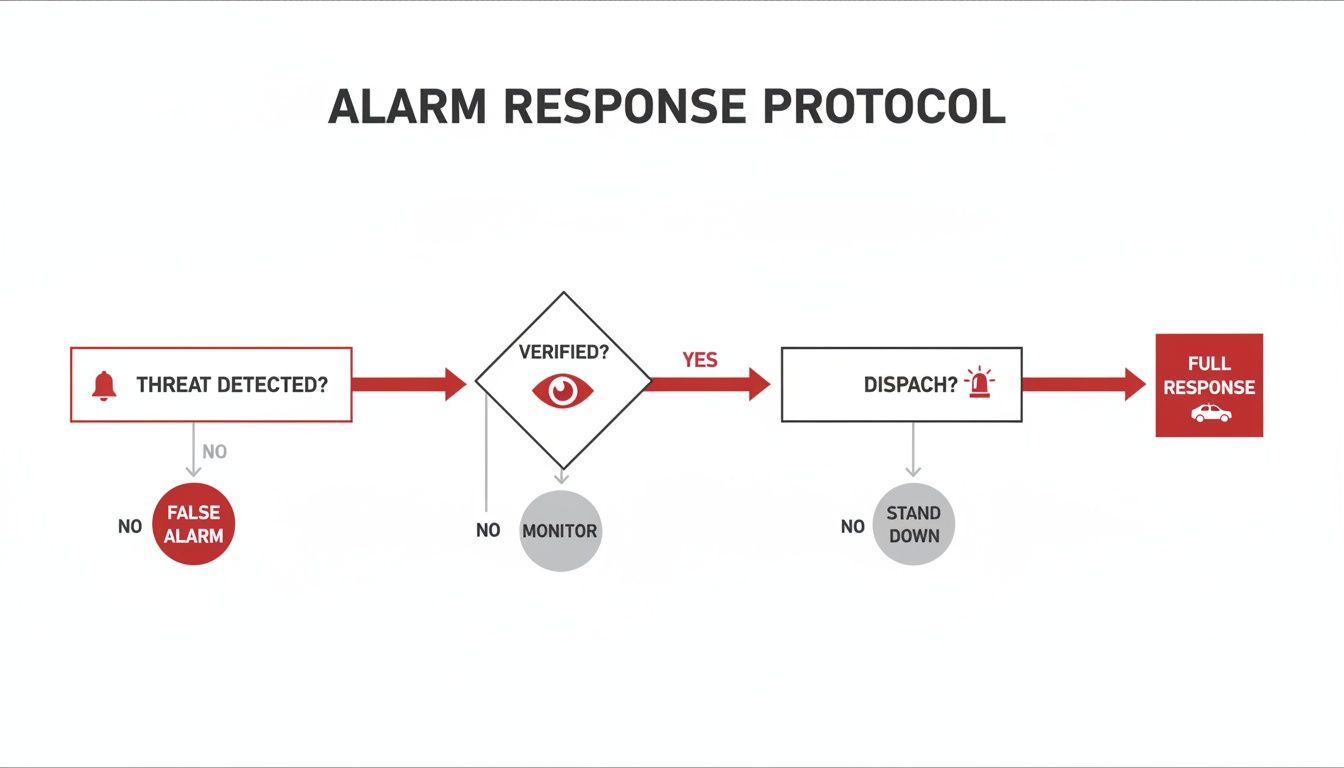
The key thing to notice is how verification acts as a filter. It ensures only real emergencies get an urgent dispatch, saving everyone time, money, and hassle.
Alarm Monitoring System Comparison
Choosing the right system depends on what you value most—response time, cost, or verification. This table breaks down the four main types to help you decide.
| Monitoring Type | Best For | Key Advantage | Consideration |
|---|---|---|---|
| Back-to-Base | High-risk businesses needing a guaranteed professional response. | A 24/7 security team dispatches help on your behalf. | Requires an ongoing monthly subscription fee. |
| Self-Monitoring | Small businesses or lower-risk sites where owners can respond personally. | No monitoring fees and direct control over the response. | The entire responsibility to respond falls on you. |
| CCTV Integration | Businesses wanting to gather video evidence after an incident occurs. | Provides a visual record of events for investigation. | It's a reactive tool, not a preventative one. |
| Video Verification | Any business wanting to eliminate false alarms and speed up police response. | Allows monitoring centres to visually confirm threats in real-time. | Can be more expensive upfront and requires compatible cameras. |
Ultimately, the best choice aligns with your security needs and your capacity to manage alerts. For many businesses, a hybrid approach, like back-to-base with video verification, offers the most robust protection. If you're still weighing your options, looking into the best home security systems can give you a good foundation of features and provider options.
The Real-World Payoff for Your Business
Thinking of an alarm monitoring system as just another security gadget is missing the point entirely. It's a strategic move, an investment that pays real dividends for your business. The biggest win? A genuinely faster, smarter emergency response. When a sensor is tripped, it's not just a loud siren scaring the neighbours—it’s a direct line to a team of trained professionals who know exactly what to do.
This immediate verification is a game-changer for any business, whether you're running a busy restaurant, managing a sprawling construction site, or securing a corporate office. It closes that critical gap between an alert and getting the right people on-site, fast.
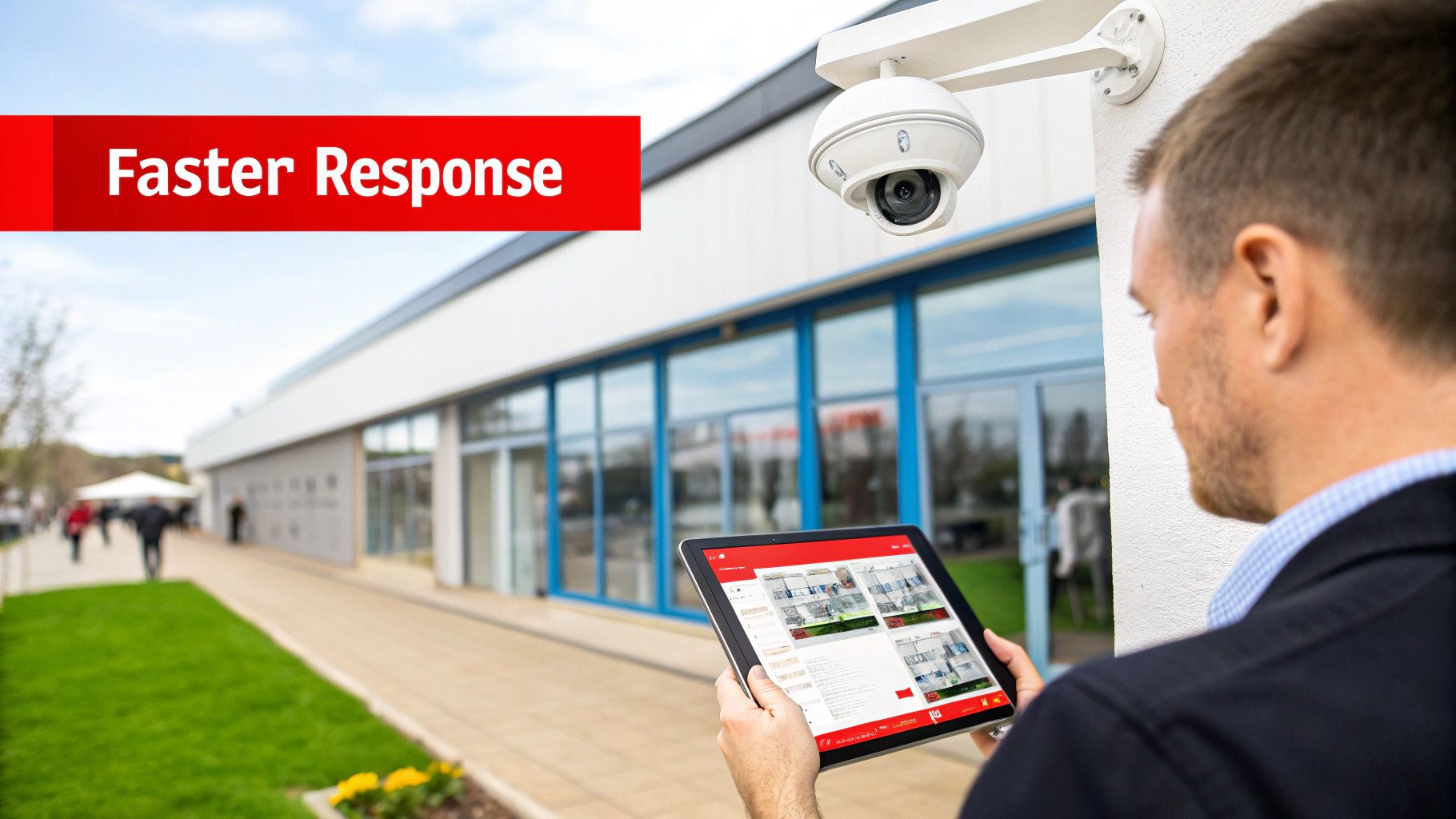
Faster Response When Every Second Counts
With a back-to-base monitoring system, real people are assessing potential threats the moment they happen. This verification process is crucial because it gives your alert priority status with police or fire services. They know it's a confirmed emergency, not just a system malfunction.
That speed can be the difference between a small hiccup and a complete disaster. Imagine a fire starting in your restaurant kitchen after hours. A monitored smoke detector doesn't just make a noise; it ensures the fire brigade is dispatched immediately, even if the building is empty. That's the kind of response that can save your entire business.
A professionally monitored system means help is always on the way, day or night, whether you’re there or not. It turns your security from a passive fence into an active shield.
Staying Compliant and Keeping Insurance Costs Down
In many sectors, like hospitality and construction, professional alarm monitoring isn't just a good idea—it's a requirement. Stricter compliance rules and insurance policies often mandate it. Getting this wrong can lead to serious fines or, even worse, a denied insurance claim when you need it most.
But here’s the upside: a compliant alarm monitoring system can actually save you money. Many insurance companies offer hefty discounts on premiums for businesses with professional monitoring because, from their perspective, you're a much lower risk. These savings alone can often cover the monthly monitoring fee, making it a very smart financial decision.
Building Confidence and Protecting Your Reputation
Let's not forget the human element. An effective security system creates a tangible feeling of safety. For a retail shop or an event, it helps customers feel relaxed and welcome, encouraging them to stick around. For your team, it shows you genuinely care about their safety, which is a powerful morale booster.
That sense of security also acts as a shield for your brand. A major security incident can cause lasting damage to your reputation. But a swift, professional response demonstrates you have your act together. It tells everyone—customers, staff, and the community—that you take the safety of your people and property seriously.
Integrating Your System With On-Site Security Guards
An alarm monitoring system is a brilliant piece of technology on its own, but its real strength is unleashed when it’s paired with boots on the ground. Think of it as creating a complete security ecosystem—one that bridges the critical gap between a digital alert and a decisive physical response. This combination turns your security from a passive watchdog into an active, responsive force.
When a professional monitoring centre gets a verified alarm from your site, their job doesn't end with a call to the police. With an integrated service like ours, they can immediately dispatch a licensed mobile patrol guard. This means a security professional is on their way within minutes, ready to take charge of the situation.
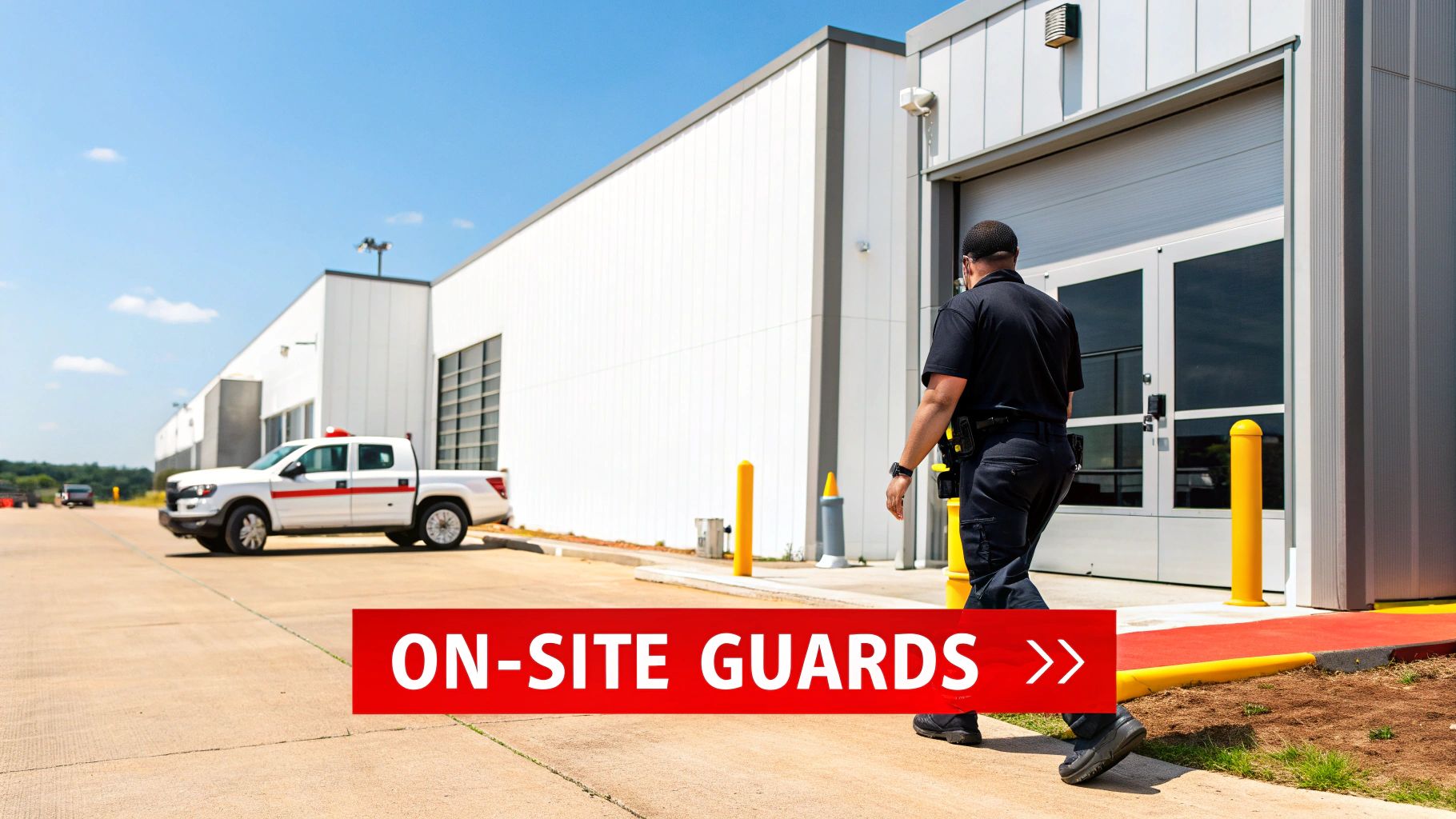
Why Add a Guard Response to Your Alarm Monitoring?
Coupling your alarm monitoring system with a guard response service is a game-changer for both deterrence and reaction. The sight of a uniformed guard arriving on-site is often all it takes for a potential criminal to reconsider and move on. It sends a clear message: your property isn't just being watched, it's actively protected.
For any business, this integration is invaluable. A mobile patrol guard can get to your site quickly, give you a real-world assessment of what’s happening, secure the perimeter, and coordinate with emergency services. They become your trusted eyes and ears on the ground, making sure any incident is handled professionally. This is especially vital for after-hours construction sites, where a fast guard response can be the difference between keeping your expensive equipment and losing it.
Directing On-Site Personnel for Faster Action
This kind of integration is absolutely essential for large-scale events or sprawling venues like hotels and shopping centres. When an alarm goes off in a specific area—say, a fire exit is forced open or a commotion starts in a hotel wing—the alert is relayed directly to your static guards already on patrol.
They get critical, real-time intelligence beamed straight to them. Instead of wandering around trying to find the source of the trouble, the alarm monitoring system points them to the exact location. The result? A much faster, more targeted, and more effective response.
- Practical Example 1 (Event Security): A staff member hits a duress alarm backstage at a concert. The monitoring centre instantly pings the on-site security supervisor with the precise location, and guards are there in moments to help.
- Practical Example 2 (Hospitality): A sensor flags an unauthorised entry into a hotel’s secure storeroom. The alert directs the closest guard right to the door, letting them intercept the person before anything can be taken.
This blend of smart technology and trained professionals ensures every alert gets a swift, appropriate response, seriously reducing risk and boosting safety across your property.
How to Choose the Right Alarm Monitoring Partner
Picking the right alarm monitoring partner is one of the most important security decisions you'll make. This isn't just about hiring another contractor; it's about finding a team you can trust to protect your people, property, and reputation. They need to be a true extension of your own operations.
First things first: check their credentials. Are they fully licensed to operate in NSW, VIC, QLD, or the ACT? This is the absolute baseline. Don't be shy about asking for proof of their licenses and insurance—any legitimate provider will have them ready.
Look for Specialised Industry Experience
Next, you need a provider who gets your world. The security challenges of a sprawling construction site at night are completely different from those of a high-traffic retail store during the day. A partner with genuine experience in your industry already knows the risks you face and can build a security plan that actually works.
A big part of this is their on-the-ground capability. Can they back up their monitoring with mobile patrols and physical guards?
Actionable Insight: A provider offering the full suite of security services—from the monitoring centre to the response team—creates a closed loop. It’s this tight-knit coordination that transforms a digital alert into a decisive, real-world action.
When your alarm monitoring system is directly linked to a patrol dispatch, there’s no lag time. You shrink the window between an incident being detected and a professional being there to handle it, which can make all the difference.
Evaluate the Monitoring Centre and Technology
You should always ask about their monitoring centre. Is it based here in Australia and graded to meet our national standards? A local centre means the operators know the lay of the land and can work seamlessly with local emergency services, which is a massive advantage when every second counts.
The tech they use is just as important. The market for smart security tech in Australia, which includes advanced alarm monitoring system features, pulled in over USD 809.6 million and is expected to hit USD 2,136.8 million by 2030. This growth isn't just about flashy gadgets; it’s about better, more reliable systems for businesses. You can get a deeper look into the trends shaping Australia's security market to see where things are headed. A good partner is already investing in this technology to give you better protection.
Finally, get a feel for their service and communication style. You want a partner who provides clear, honest reporting and is always easy to get in touch with. They should be working with you to design a setup that fits your needs, not just selling you an off-the-shelf package.
Frequently Asked Questions (FAQ)
What happens if the power or internet goes out?
A: Professional systems are built with backups in mind. Most will use a dual-path system, relying on your internet connection with a cellular (4G or 5G) backup. This means the signal will always get through to the monitoring centre, even if one connection fails.
Who responds to a verified alarm?
A: That depends entirely on your pre-agreed plan. The monitoring centre can dispatch the relevant service, whether that’s the local police, fire brigade, or a dedicated mobile security patrol from your provider.
Will an alarm monitoring system help cut down on false alarm fees?
A: Yes, and often by a lot. The human verification step is designed to weed out false alarms from things like employee mistakes or even a stray animal. By confirming there's a real threat before calling emergency services, the monitoring centre helps you avoid those frustrating and expensive council call-out fees.
How does monitoring help if a staff member is in trouble?
A: Monitored systems often include duress alarms or panic buttons. If an employee is facing a direct threat, they can silently trigger an alert. The monitoring centre will immediately dispatch help to their location, no phone call needed. It’s a discreet and incredibly effective safety net.
Can monitoring protect my assets after hours?
A: Absolutely—that’s one of its greatest strengths. Your alarm monitoring system provides 24/7 protection for your site, equipment, and stock. It guarantees a rapid response to any break-in, fire, or other emergency long after your last employee has headed home for the night.
What happens if an alarm is triggered by accident?
This is easily one of the most common worries. Don’t stress. Professional monitoring centres are built for this. When an alarm goes off, their first move is to follow a strict verification process, which almost always involves calling a designated contact on your list. You'll simply provide a pre-agreed safe word or PIN to let them know it's a false alarm. They’ll cancel the response on the spot.
How much does professional alarm monitoring cost?
The cost of an alarm monitoring system isn't one-size-fits-all. It depends on factors like the size of your site, the number of sensors, and the level of service. Generally, you'll have an upfront fee for equipment and installation, plus a regular monthly monitoring fee. It’s best to view it as an investment in risk management that can often lead to savings on insurance premiums.
Can a system work without a phone line?
Yes. Modern systems have moved past old landline technology. Today’s professional systems rely on more secure cellular (4G/5G) and internet (IP) communication. Many use dual-path technology, which combines both for a powerful backup. If one path fails, the other kicks in instantly.
This redundancy is what makes a modern alarm monitoring system so reliable. It gives you genuine peace of mind that no matter what happens, your alerts will get through and your property is protected.
Ready to secure your event, venue, or worksite with a professional security solution? The team at GM GROUP Services provides expert alarm monitoring integrated with on-site guards and mobile patrols across NSW, VIC, QLD, and the ACT. Secure your assets by contacting us today.
Discover more from GM Group Services
Subscribe to get the latest posts sent to your email.