
A monitored alarm system is your business's dedicated, 24/7 security team. It's an intelligent, ever-vigilant digital watchdog that protects your assets without ever taking a break. Unlike a standard, unmonitored alarm that just makes noise and hopes a neighbour notices, this advanced system directly connects your property to a professional control room staffed by trained experts.
This crucial connection ensures every single alert is immediately assessed and managed. For businesses, event sites, and high-value properties, it’s this immediate, professional response from a monitored alarm system that makes all the difference in preventing loss and ensuring safety.
What Is a Monitored Alarm System and How Does it Work?
At its heart, a monitored alarm system is a sophisticated network of sensors—motion detectors, door contacts, glass-break sensors—all reporting back to a professional monitoring centre. When a sensor is triggered, it does far more than set off a local siren. It sends an instant, secure signal straight to that off-site team of security experts.
Practical Example: Imagine a retail store after hours. A standard alarm might blare if a window is broken, but it relies on a random passerby to call the police. With a monitored alarm system, the glass-break sensor instantly alerts the monitoring centre. An operator can then access live camera feeds, confirm the break-in, and dispatch police with verified information, leading to a much faster response time.
The Core Difference: A Guaranteed Response
The real distinction comes down to what happens next. With an unmonitored system, the burden of responding falls on you or maybe a neighbour who happens to be home. That’s a big problem if you’re on a plane, in a meeting, or in an area with poor phone reception. Are you sure it's not a false alarm? Can you act fast enough?
Professional monitoring takes that guesswork and responsibility off your shoulders. Trained operators follow a strict, pre-agreed procedure for every alert. This process is brilliant at filtering out false alarms and ensures that when a genuine threat is detected, the right help is dispatched immediately. For businesses and event venues across NSW, VIC, QLD, or the ACT, this verification is crucial for meeting local compliance rules and avoiding hefty fines for false emergency call-outs.
Monitored vs. Unmonitored Alarms At a Glance
To really break down the differences, it helps to see them side-by-side. This table lays out the key operational distinctions and benefits of each alarm type for business and event security.
| Feature | Unmonitored Alarm (Self-Monitored) | Professionally Monitored Alarm System |
|---|---|---|
| Alert Response | Notifies you or a designated contact via a smartphone app. | Alerts a 24/7 professional monitoring centre with trained operators. |
| Emergency Dispatch | You are responsible for contacting police, fire, or ambulance services. | Operators verify the threat and can dispatch emergency services on your behalf. |
| Reliability | Depends on your phone's battery, internet connection, and availability. | Professional-grade systems often have backup cellular communication for reliability. |
| Insurance Premiums | May offer minimal or no discount. | Often qualifies for significant discounts on business or property insurance. |
| Best For | Low-risk residential settings or areas with close, reliable neighbours. | Businesses, event venues, high-value properties, and unoccupied sites. |
Ultimately, this comparison highlights why having that professional oversight is so critical for robust asset protection. It shifts the burden from your shoulders to a team of dedicated experts, delivering genuine peace of mind.
How a Monitored Alarm System Works: From Trigger to Resolution
So, what actually happens when a monitored alarm goes off? It’s not just about making a racket. A properly monitored system kicks off a swift, logical chain of events designed to verify a threat and get the right people responding in real-time.
Let’s use a practical example to walk through it: imagine an unauthorised entry at a fenced-off construction site late at night. The goal here isn't simply to scare someone off with a siren, but to launch a professional security protocol immediately.
The whole sequence, from the first flicker of movement to a security guard arriving on-site, is a structured process built for speed and precision. This ensures every genuine alert gets the attention it deserves.
This diagram shows the core difference between a lonely, unmonitored alarm and the structured response you get with a monitored system.
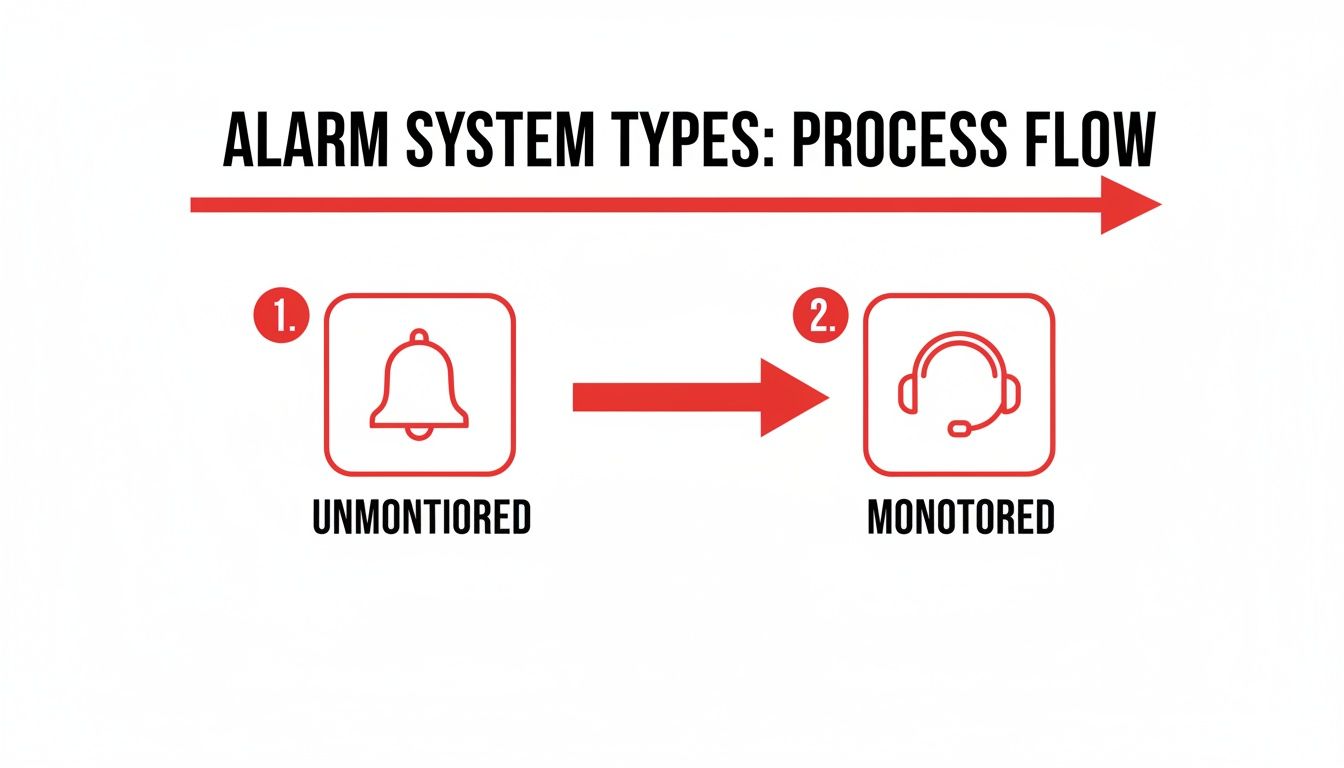
As you can see, the game-changer is the professional human element—the monitoring centre—that steps in to validate and act on the alert.
Step 1: The Sensor Is Triggered
It all starts with a sensor. On our construction site, an infrared motion detector near a container of valuable copper wiring picks up movement. It could just as easily be a magnetic contact sensor on a gate being forced open, or a glass-break sensor on a portable office window shattering.
Once a sensor is tripped, it doesn't just sit there. It instantly fires a signal to the central control panel, which is the brains of the entire monitored alarm system.
Actionable Insight: When setting up your system, place dual-technology sensors (combining passive infrared and microwave) at key entry points. This dramatically reduces false alarms from environmental factors like windblown debris, ensuring that alerts sent to the monitoring station are more likely to be genuine threats.
Step 2: The Alert Is Transmitted Securely
The moment the control panel gets the signal, it sends an encrypted alert to the off-site monitoring centre. This is a far cry from a simple text message; it's a secure data packet sent over a dedicated communication channel.
To guarantee the signal always gets through, high-quality systems use what's called dual-path communication. This means they rely on both your internet connection and a cellular backup. If the NBN drops out or an intruder is savvy enough to cut a phone line, the cellular signal takes over seamlessly. The alert is delivered, no matter what.
Step 3: The Monitoring Centre Verifies the Threat
This is where the real value of a monitored system kicks in. Within seconds, a trained operator at a 24/7 monitoring station—like the back-to-base centre used by GM GROUP Services—receives the alert. Their first and most important job is to figure out if the threat is real.
Verification is absolutely crucial for filtering out false alarms, which can unfortunately account for over 90% of all triggers in poorly managed systems. The operator has a few tools up their sleeve:
- Access live video feeds: If you have integrated cameras, the operator can immediately see what caused the trigger. Is it a person with a crowbar or just a tarp flapping in the wind?
- Use two-way audio: Some systems allow the operator to listen in or even speak through an on-site speaker. A simple, "You are being monitored by live security," is often enough to send an intruder running.
- Follow a call list: The operator will try to contact you or another designated keyholder to confirm if the activity is authorised.
This principle of constant observation and immediate notification isn't just for security. It's the same logic behind industrial systems that use condition monitoring for operational alerts, where any deviation from the norm triggers a response.
Step 4: The Pre-Agreed Response Is Executed
Once the threat is verified—or if the operator can't reach anyone on the call list—they immediately launch the pre-agreed emergency response protocol. This isn't a one-size-fits-all plan; it's a set of instructions you establish when setting up the service, customised to your site’s specific risks and needs.
For our construction site scenario, the protocol might look like this:
- Dispatch a mobile patrol: A security vehicle is sent directly to the site to investigate, confront any intruders, and secure the perimeter.
- Contact emergency services: The operator passes verified information straight to the police, which helps ensure a priority response.
- Notify site management: You're kept in the loop with real-time updates as the incident unfolds.
This structured, four-step process is what turns a simple electronic beep into a decisive security action. It provides a level of protection that an unmonitored, standalone system simply cannot match, building trust and delivering genuine peace of mind.
Key Benefits of a Professionally Monitored Alarm System
A monitored alarm system is so much more than just a loud siren. It’s a complete, professional response plan that fundamentally changes how your property is protected. Whether you're an event manager handling temporary crowds, a venue owner protecting permanent assets, or a site supervisor securing valuable equipment, professional monitoring offers real advantages that a self-monitored setup just can't compete with.
These benefits go well beyond simple detection. They build a powerful security posture that actively puts criminals off, guarantees a swift and verified response, and ultimately delivers something invaluable: genuine peace of mind.

Verified Emergency Response
Here’s the single most important benefit of a monitored alarm system: a verified emergency response. When an alarm goes off, it doesn't just make a noise. A trained operator in a 24/7 monitoring centre immediately jumps into action, assessing the situation using whatever data is available, like live video feeds or two-way audio. This human verification step is absolutely critical.
Why? Because police and emergency services prioritise calls that have been professionally verified. An alert from a monitoring centre carries a lot more weight than a panicked, unverified call from a property owner. This means you get a faster, more serious response when every second truly counts.
A Powerful Crime Deterrent
Never underestimate the psychological impact of a well-placed sign or decal. When potential intruders see that a property is protected by 24/7 professional monitoring, it sends a powerful message. Most criminals are opportunists—they’re looking for the easiest target with the lowest risk of getting caught.
A sign advertising a monitored alarm system tells them two things loud and clear:
- They are being watched: The chance of being caught on camera is extremely high.
- A response is guaranteed: This isn't just a noisy box. Professionals are on standby to dispatch help.
Often, that simple visual cue is enough to make a would-be burglar think twice and move on to a less protected property. It can stop an incident before it even starts.
Actionable Insight: Place stickers and yard signs advertising your monitored alarm system in highly visible locations like front windows, gates, and main entry points. This simple, low-cost action is one of the most effective deterrents available.
Reduced False Alarm Penalties
False alarms are a massive headache and a drain on emergency resources. As a result, many local councils across NSW, VIC, and QLD hit property owners with hefty fines for repeated false alarm call-outs. This is where professional monitoring can save you real money.
Because trained operators verify every single alert before contacting the authorities, they filter out the vast majority of false triggers. Things like user error, a pet wandering where it shouldn't, or even environmental factors get weeded out. This verification process not only ensures a priority response for genuine emergencies but also protects you from the frustration and expense of unnecessary call-out fees. The constant vigilance of a monitored system is a key advantage; similarly, a good guide to a trail camera with remote viewing for property protection can provide insights on expanding your oversight.
Potential Insurance Discounts and Market Growth
Insurers are all about managing risk, and they see a professionally monitored security system as a major plus. A property with a monitored alarm is less likely to be burgled, and if a fire or other emergency happens, the rapid response means the damage will likely be far less severe. Because of this, many insurance providers offer discounts of up to 20% on premiums.
The value of this technology is also being recognised in the market. The Australia home security systems market, where monitored alarms are a key feature, hit USD 2.03 billion in 2024 and is projected to skyrocket to USD 5.16 billion by 2033. This massive growth is great news for event organisers, hospitality venues, and construction managers in NSW, Victoria, Queensland, and the ACT, where GM GROUP Services provides expert back-to-base monitoring and emergency response. You can explore more data about Australian security market trends on imarcgroup.com.
Unmatched Peace of Mind
At the end of the day, the most valuable benefit isn't something you can put a price on—it's the peace of mind that comes from knowing your property is always protected. It doesn't matter if you're on-site, at home, or on holiday. You can relax, knowing a dedicated team of experts is watching over your assets.
This allows you to focus on what you do best—running your business, managing your event, or just enjoying your time off—without that nagging worry in the back of your mind. That level of assurance is something a standard, unmonitored system, which puts the entire burden of response on your shoulders, can simply never deliver.
Understanding the Costs of a Monitored Alarm System
When you're looking at a monitored alarm system, it's easy to see it as just another expense. But it’s really an investment in your peace of mind and the safety of your property. The price isn't just one lump sum; it's split into two clear parts: the initial gear and setup, and the ongoing monthly service that keeps a watchful eye on things 24/7.
Understanding how these costs break down helps you see the true value. It’s not just about buying a product; it’s about having a professional team ready to act the moment something goes wrong.
Upfront Hardware and Installation Costs
First up, you’ve got the one-time cost for the physical equipment and getting it all installed by a professional. This covers everything you need to secure your specific site, whether it's a huge outdoor event space or a small pop-up shop.
What you'll pay initially depends on a few things:
- Size and Layout: A sprawling construction site with lots of access points will naturally need more sensors than a small boutique. More equipment means a higher upfront cost.
- Wired vs. Wireless: Wireless systems are often quicker and cheaper to install since there's no need to run cables through walls. Hardwired systems, on the other hand, are incredibly reliable and great for new builds, but the installation is more labour-intensive.
- Your Choice of Components: The final price tag will be shaped by the mix of devices you choose—from standard motion detectors and door contacts to more advanced glass-break sensors and high-definition cameras.
Ongoing Professional Monitoring Fees
The second piece of the puzzle is the monthly fee for the back-to-base monitoring service. This is what keeps your monitored alarm system connected to a team of security professionals who are always on alert.
This isn't just a fee for an automated call. It covers the whole operation:
- 24/7 Staffing: You're paying for trained operators to be available every minute of every day, ready to respond.
- Secure Connection: The cost includes maintaining the dedicated cellular or dual-path line from your alarm panel to the monitoring centre.
- System Health Checks: It also covers the software updates and routine maintenance that keep your system in perfect working order.
Actionable Insight: When requesting a quote, ask for a detailed breakdown of both hardware and monthly monitoring fees. Also, inquire about contract lengths, as some providers offer a discount for a longer-term commitment, which can lower your overall costs.
In Australia, professional alarm monitoring is surprisingly affordable. Most businesses and even homeowners can expect to pay somewhere between $30 and $60 per month. For the initial setup, a wireless monitored alarm system usually costs between $500 and $1,000, while a hardwired installation typically lands in the $800 to $1,600 range.
This makes it a very accessible layer of security for venues and sites across NSW, VIC, QLD, and the ACT, where having a reliable provider like GM GROUP Services is crucial. If you want to dive deeper into the numbers, you can learn more about 2025 security monitoring costs at castlesecurity.com.au.
Ultimately, it’s all about the return on your investment. The cost of a monitored system is often dwarfed by the cost of just one break-in, an act of vandalism, or even the potential discount you could get on your insurance premium. It quickly stops feeling like an expense and starts feeling like one of the smartest decisions you can make for your business.
Integrating Monitoring with On-Site Security Teams
A monitored alarm system is like the central nervous system of your security plan. It’s the network of digital sensors that spots trouble. But its real power is unlocked when you pair it with an immediate, on-the-ground human response. When technology and trained personnel work in tandem, you get a complete, formidable security solution that’s far more effective than either could ever be alone.
Think of it this way: your monitored alarm system is the ‘early warning detector.’ It’s the highly sensitive, ever-watchful set of eyes and ears that never sleeps, blinks, or gets distracted. When it detects a potential threat, your on-site security team—whether they're mobile patrols or static guards—becomes the ‘rapid response unit,’ ready to act on that intelligence in an instant.
The Power of a Combined Response
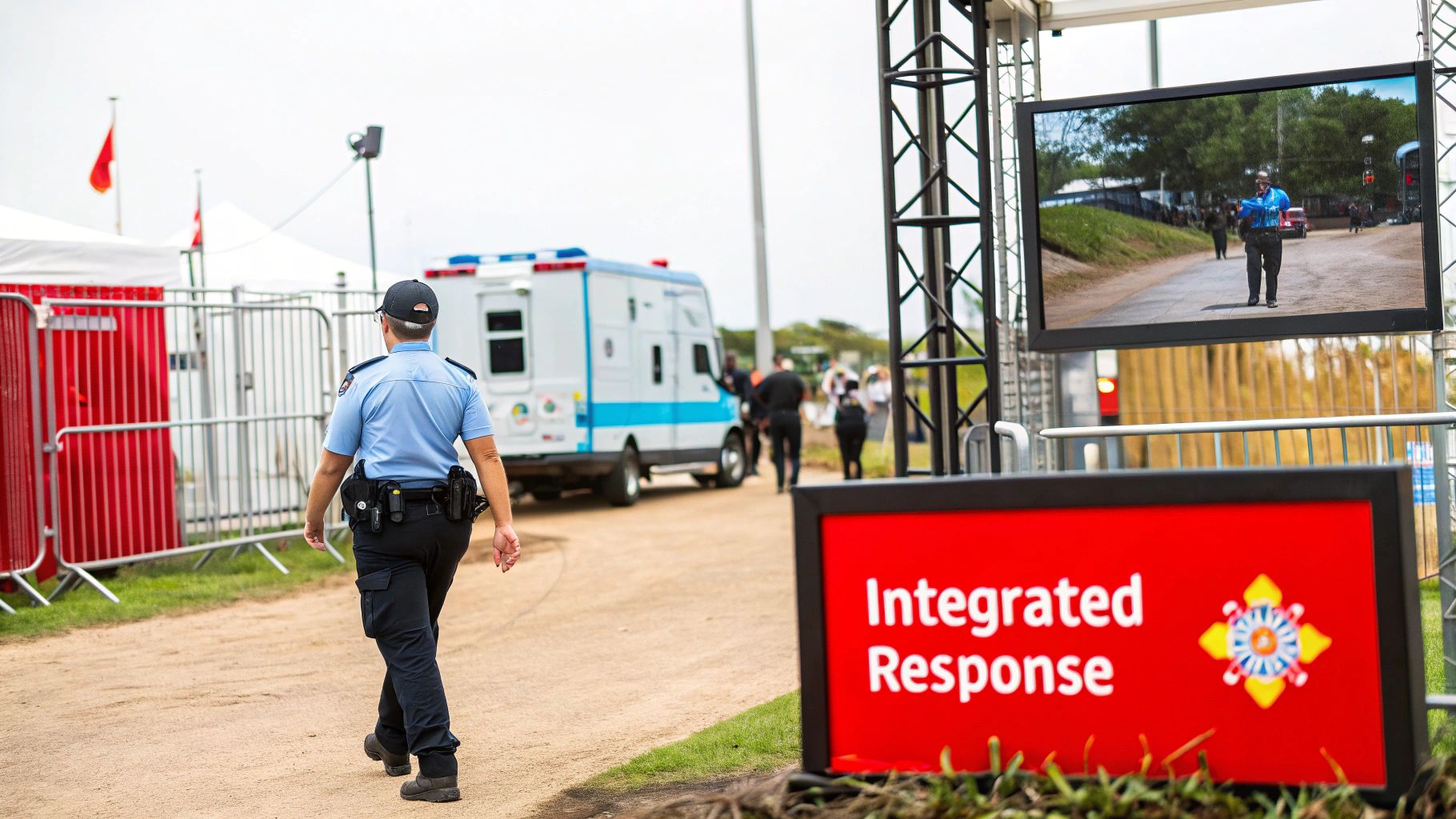
When an alarm triggers at a massive festival or a sprawling construction site, the alert doesn't just ping a remote operator in a control room miles away. It simultaneously kicks off a well-rehearsed protocol that brings your on-site assets straight into the action.
This integrated approach means threats aren’t just detected; they're addressed and neutralised swiftly by professionals who already have intimate knowledge of the grounds. That synergy transforms your security from a purely reactive model into a genuinely proactive one, protecting people and property far more effectively.
Why Integrating Your Monitored Alarm System is Crucial
Fusing technology with trained people creates a security ecosystem that is both intelligent and actionable. For any business, venue, or event manager, this approach offers some serious advantages.
Here’s a breakdown of how this powerful combination works in the real world:
- Instantaneous Information Relay: The moment a sensor is tripped, the monitoring centre gets the alert. They can immediately radio the on-site patrol with critical details—the exact breach location, the type of sensor triggered, and even live video footage if the system includes it.
- Faster, More Accurate Responses: A guard who knows the layout of your venue like the back of their hand can respond much faster and more effectively than external services ever could. They aren't just reacting to a siren; they’re moving with precise, real-time information from the monitoring team.
- Enhanced Deterrence: A visible security presence, backed by the clear knowledge that the entire site is under 24/7 electronic surveillance, is a powerful deterrent. Would-be intruders know they face both immediate detection and a rapid physical response.
This integrated model reflects the maturity of Australia's security industry. In 2025, the Fire and Security Alarm Installation Services market is valued at a robust $5.1 billion. While this figure shows a slight economic contraction, it underscores the sustained demand for professional back-to-base monitoring and rapid emergency response—services that are essential for safeguarding major events and venues. You can find more details in the Australian security installation market data on ibisworld.com.
A Real-World Festival Scenario
Let’s put this into practice. Imagine a perimeter fence is breached at a multi-day music festival late at night. Here’s how the integrated system plays out seamlessly:
- Detection: A vibration sensor attached to the fence instantly alerts the back-to-base monitoring centre.
- Verification: The operator immediately accesses a nearby camera feed, confirming two individuals are climbing the fence into a restricted backstage area.
- Dispatch: The operator gets on the radio to the on-site GM GROUP Services mobile patrol, giving them the exact location (e.g., "Zone 4, near the north gate") and a description of the intruders.
- Neutralisation: The patrol team, already familiar with the festival's maze-like layout, arrives within minutes. They intercept and escort the individuals off the property before any theft or damage can occur.
Without this tight integration, the alert might just trigger a local siren, leaving the response to chance or a delayed police callout. By combining a monitored alarm system with a dedicated on-site team, you close the loop and create a highly effective, airtight security operation.
Frequently Asked Questions About a Monitored Alarm System
Deciding on a monitored alarm system is a big step towards better security, but it’s normal to have questions. To provide clarity, here are straightforward answers to the most common queries we receive from business owners and event managers.
What happens if my internet or power goes out?
A professional monitored alarm system is designed with multiple fail-safes. High-quality systems use dual-path communication, meaning they have both an internet and a cellular connection. If your internet goes down, the system automatically switches to the cellular backup. Furthermore, the main control panel has a backup battery that keeps the system running during a power outage, ensuring you remain protected.
How does the system prevent false alarms?
Professional monitoring centres use a multi-step verification process to drastically reduce false alarms. When an alarm is triggered, operators can use video verification to see what's happening, two-way audio to listen in or make an announcement, and a pre-determined call list to contact you or a keyholder. This human-in-the-loop approach filters out non-emergencies, saving you from potential fines and ensuring a priority response for real threats.
Can I control my monitored alarm system remotely?
Absolutely. Modern systems almost always come with a secure smartphone app that gives you full remote control. From anywhere in the world, you can typically arm or disarm the system, check the status of sensors, view live camera feeds, and receive real-time notifications, putting complete control in the palm of your hand.
Is a monitored system worth the cost for a small business?
Yes. The return on investment for a monitored alarm system is significant, even for small businesses. The cost of a single break-in—including stolen assets, property damage, and operational downtime—can easily exceed several years' worth of monitoring fees. By preventing just one incident, the system pays for itself. It’s a smart investment in protecting your livelihood, not just another expense.
Ready to secure your event, venue, or business with a professional security solution? The team at GM GROUP Services provides expert back-to-base monitoring and emergency response tailored to your specific needs. Protect your assets and gain true peace of mind by partnering with a trusted leader. Learn more about our security services.
Discover more from GM Group Services
Subscribe to get the latest posts sent to your email.