
Professional guard security services are the ultimate proactive solution for safeguarding your business. While alarms and cameras are useful reactive tools that alert you after an incident has occurred, a trained security guard is the on-the-ground presence that can prevent a crisis from happening in the first place. This guide explores the essential services that protect your people, property, and reputation.
A skilled security guard is more than a uniform; they are a thinking, breathing asset trained to identify threats, deter criminal activity, and respond decisively when it counts. Their presence is a direct investment in your business's stability and success.
Understanding the Essential Role of Professional Guard Security Services
In a world of ever-changing risks, relying solely on CCTV is not enough. Professional guard security services bridge the gap between technology and reality, adding a critical layer of active defence. They serve as a visible deterrent that makes a potential criminal reconsider and a reassuring presence that makes staff and customers feel secure.
Think of it this way: an alarm system tells you a break-in has already happened. A security guard can stop it from ever happening. This fundamental shift from reactive to proactive is the core value a professional security team brings to your business, event, or venue.
More Than Just a Presence
The role of a modern security guard has evolved far beyond simply standing watch. They are skilled professionals trained to handle a variety of critical tasks that keep your operations running smoothly.
- Access Control: This involves managing entry points to ensure only authorised personnel gain access.
- Practical Example: At a busy Melbourne construction site, a guard checks credentials and logs all incoming and outgoing vehicles, preventing unauthorised entry and potential theft of materials.
- Asset Protection: This is about actively patrolling to prevent loss.
- Actionable Insight: Implement randomised patrol routes for your retail store's security. This unpredictability makes it harder for potential shoplifters to find an opportune moment to act.
- Conflict De-escalation: A trained guard can use specialised verbal and non-verbal techniques to calmly resolve disputes.
- Practical Example: In a crowded hospitality venue, a guard notices two patrons becoming agitated. They discreetly intervene, speaking calmly and separating the individuals before the situation escalates into a physical altercation, preserving the safety of other guests.
- Emergency Response: Guards are often the first on the scene, guiding people to safety and coordinating with emergency services during incidents like fires or medical emergencies.
A Powerful Force in Australian Safety
The demand for these skills has built a massive industry in Australia. The private security sector generates over $11 billion annually and employs more than 180,000 people. This includes over 153,000 licensed security personnel—a workforce larger than our police and defence forces combined.
This highlights the vital role companies like GM GROUP Services play in protecting businesses across NSW, VIC, QLD, and the ACT. For a deeper dive, ASIAL's Security 2025 report offers fascinating insights into the industry's scale.
Investing in professional security isn't just another business expense; it's a direct investment in your business's stability. A secure environment gives your employees confidence, builds trust with your customers, and ultimately protects your bottom line from the huge financial and reputational damage a security breach can cause. It’s the foundation of any safe and successful operation.
What Are Guard Security Services, Really? A Look at the Core Types
When you think of security, you probably picture a uniformed guard at a door. But that's just one piece of a much larger puzzle. Effective security isn't a one-size-fits-all product; it’s a strategic service tailored to your specific environment and its unique risks.
Understanding the different types of guard security services is the first step toward building a security plan that actually works. Think of it like a toolkit—each service is a specialised instrument, designed for a particular job to give your business, property, or event the right kind of protection.
This infographic breaks down how a proactive security strategy comes together to shield your business from all angles.
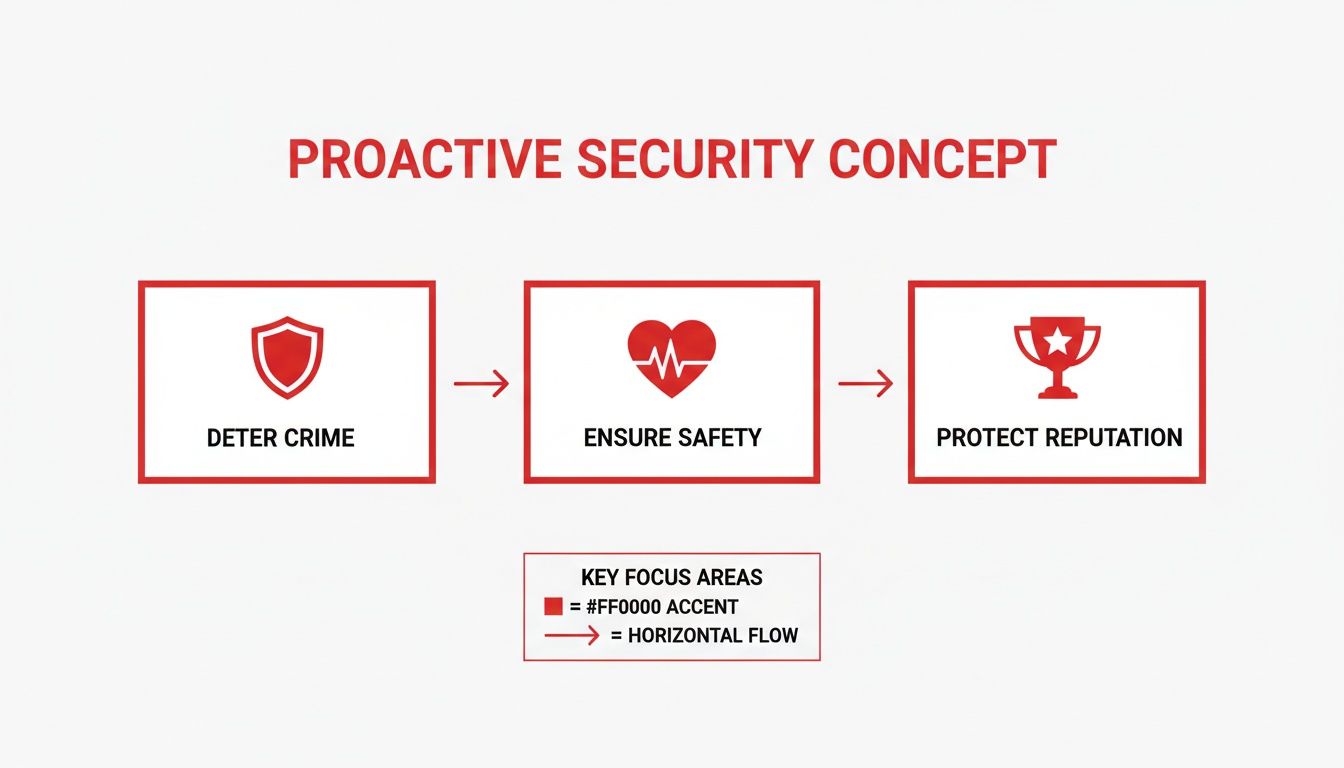
As you can see, professional security is about more than just reacting to problems. It starts with actively preventing crime and ultimately works to protect the one thing you can't put a price on: your brand's reputation. Let's dive into the core services that make this happen.
Static Security Guards: Your Constant Watch
When you absolutely need a fixed, visible security presence, static guards are the foundation of your defence. These are the highly trained professionals you see stationed at key points—entrances, reception desks, or access gates—acting as your first line of protection.
They’re the gatekeepers. Picture the guard in a high-rise lobby in Sydney, professionally greeting visitors while verifying IDs and managing access. Or the team at a sprawling construction site in Queensland, meticulously logging every vehicle and contractor to prevent theft or vandalism. Their constant presence is a powerful deterrent for anyone with bad intentions.
This continuous, watchful eye is essential for high-traffic areas or places with valuable assets, making sure nothing and no one gets in without authorisation.
Mobile Security Patrols: Dynamic and Visible Deterrence
What if you need to secure a large area, or even multiple properties, without stationing a guard at every corner? That’s where mobile patrols come in. These guard security services involve uniformed officers conducting regular—but deliberately randomised—patrols in clearly marked vehicles. This unpredictability creates a powerful sense of constant surveillance across a much wider area.
Mobile patrols are perfect for covering an industrial park in Victoria after hours or keeping an eye on a large shopping centre car park in the ACT. Because potential intruders can never guess when a security vehicle will round the corner, the entire area becomes a much harder target.
One of the biggest advantages of mobile patrols is the ground they can cover. A single patrol unit can secure several locations, check for signs of a break-in, handle lock-ups and unlocks, and respond instantly to alarm activations. It’s a smart, efficient way to protect widespread assets.
Specialised Guard Security Services
Sometimes, a standard approach isn't enough. Certain situations involve higher risks or require a unique skill set, calling for specialised security services. These are the elite options, deployed when the stakes are particularly high.
K9 Security Units: A trained handler paired with a highly skilled canine is an unbeatable combination. With a sense of smell far superior to any human's, these K9 teams are invaluable for screening large crowds for narcotics at a music festival or securing critical infrastructure from hidden threats.
Covert Operatives (Loss Prevention): In retail, a visible uniform isn't always the best tool to stop theft. Covert operatives, or loss prevention officers, blend in seamlessly with shoppers. They can spot professional shoplifters and dishonest employees without raising any alarms, tackling both internal and external theft head-on.
VIP Protection (Bodyguards): For high-profile individuals like executives, celebrities, or dignitaries, personal safety is non-negotiable. Bodyguards provide discreet, close-proximity security. They handle everything from travel logistics and threat assessments to ensuring their client is safe at a major corporate event or during a public appearance.
Tailoring Security for Your Specific Industry
When it comes to guard security services, there's no such thing as a one-size-fits-all solution. Think about it: a security guard's role at a roaring music festival is worlds apart from their duties at a quiet corporate head office or a sprawling construction site. Real security expertise isn't about just putting a uniform on-site; it’s about deeply understanding the unique risks, rhythm, and language of your specific industry.
This is where a specialised approach really shines. Security shouldn't feel like an add-on. It needs to integrate seamlessly into your environment, tackling the distinct challenges you face every day—whether that’s managing crowd dynamics, stopping asset theft, or simply maintaining the right kind of atmosphere.
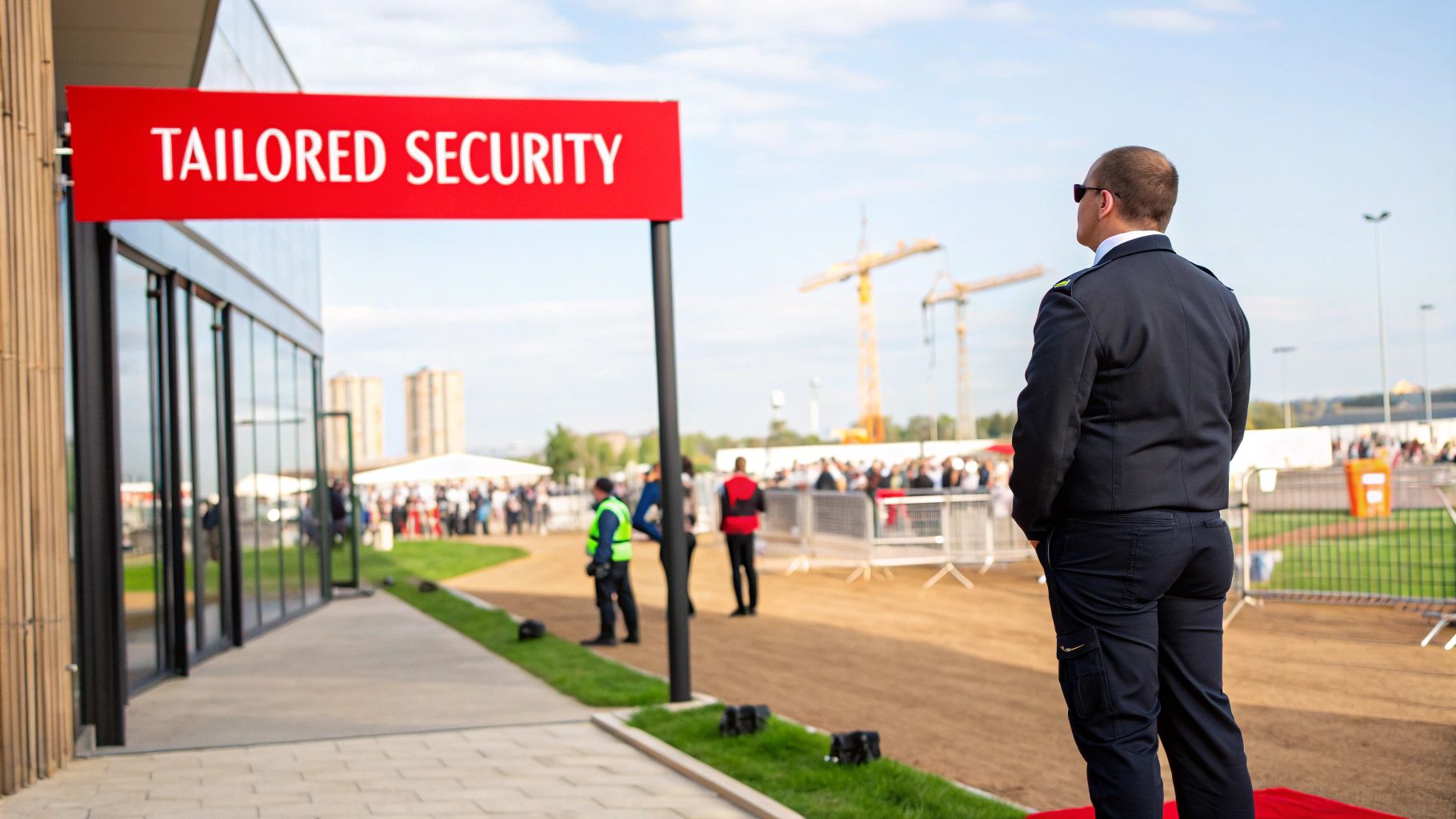
Event and Festival Security
For anyone organising an event in Sydney or Melbourne, security is all about managing people and energy. The number one goal is making sure thousands of attendees have a safe, enjoyable experience. That calls for a dynamic and highly visible team.
The focus here isn't on static posts. It’s about fluid crowd management, quick response times, and proactive de-escalation. Guards need to be approachable but also carry an air of authority, ready to handle everything from gate access control to settling minor disputes before they bubble over.
- Practical Example: Picture a huge music festival. The security teams are doing bag checks, keeping an eye on crowd density near the stage to prevent crushes, and patrolling the perimeter to stop people from sneaking in. Their presence is a massive part of what makes the event run smoothly.
Hospitality and Venue Guard Security Services
Step into the hospitality world—from packed bars in Queensland to upscale restaurants in the ACT—and you’ll see security playing a dual role. On one hand, guards have to enforce compliance, especially Responsible Service of Alcohol (RSA). On the other, they must help create a welcoming, positive vibe.
The most crucial skill for a hospitality guard? Deft conflict de-escalation. They need a knack for spotting potential trouble early and stepping in discreetly, protecting the venue's reputation while keeping every patron safe. It’s as much about customer service as it is about enforcement.
Construction Site Security
Construction sites are magnets for after-hours theft and vandalism. Losing heavy machinery or a pallet of expensive materials can bring a project to a grinding halt, costing a fortune. Here, the focus of guard security services pivots entirely to asset protection and iron-clad access control.
A guard's duties on a construction site look very different:
- Manning a gatehouse to log every vehicle and person coming in or out.
- Conducting regular mobile patrols around the site perimeter, especially at night.
- Keeping a close watch on CCTV feeds for any unusual activity.
Key Takeaway: The main objective on a construction site is to create an impenetrable perimeter once the crew clocks off. This proactive defence is the single most effective way to prevent the crippling losses that come from theft and damage.
Retail and Corporate Environments
Retail and corporate settings require a much softer touch. In a luxury retail store, the game is loss prevention. This often means using plain-clothes operatives who can spot shoplifters without alarming genuine customers or ruining the shopping experience.
In a corporate office, security is all about creating a safe and secure workplace. This could mean managing visitor access at reception, monitoring the building's security systems, or being the first responders for any internal emergencies. For high-profile conferences, it might even involve discreet executive protection for key speakers.
This need for specialisation reflects a wider trend. Australia's Investigation and Security Services industry has seen solid growth, expanding at a compound annual rate of 1.6% over the past five years and is tipped to become a $13.9 billion industry by 2025. As crime rates ebb and flow, businesses are wisely investing more in professional security patrols and monitoring—the bread and butter of any serious security provider.
Of course, a modern security plan goes beyond just physical guards. Businesses also have to think about their broader security requirements, including digital considerations. A truly comprehensive strategy blends on-the-ground personnel with strong digital safeguards. Ultimately, choosing the right guard security services comes down to finding a partner who genuinely gets your industry's specific threats and can build a defence that actually works for you.
How to Choose the Right Security Partner
Picking a professional guard security services provider is a huge decision. It's about much more than just comparing hourly rates; it's about entrusting the safety of your people and assets to a team you can rely on. Get it right, and you have a true partner who integrates seamlessly into your operations. Get it wrong, and you've just hired a potential liability.
Let's walk through what really matters when you're vetting a security company, so you can find a partner that delivers genuine peace of mind, not just a person in a uniform.

Licensing and Compliance as Your First Checkpoint
Before you dive into the details of their services, start with the fundamentals: are they fully licensed and compliant in your state? Security regulations aren't the same across the board—they vary between NSW, VIC, QLD, and the ACT—so their credentials must be valid where you operate.
This is your first, non-negotiable hurdle. Partnering with an unlicensed or non-compliant provider opens your business up to serious legal and financial trouble. Don’t just take their word for it; ask to see their master licence and proof of public liability insurance. Make sure it’s current and provides enough cover for your specific needs.
It's also worth looking into their commitment to their own internal safety standards. For instance, understanding the value of ISO 45001 certification shows they have a robust occupational health and safety system in place for their own team, which speaks volumes about their professionalism.
Evaluating Their Training and Development Protocols
A security licence is just the starting line. What truly sets a professional partner apart from a basic vendor is their ongoing investment in their people. Don't be shy about digging into their training programs.
Ask them directly:
- What training do your guards receive beyond the basic licence? You want to hear about modules on conflict de-escalation, customer service skills, and specific emergency response drills.
- How often do you run training? The best companies provide regular refresher courses and professional development to keep skills sharp and relevant.
- Is training tailored to different environments? A guard protecting a high-end retail boutique requires a completely different skill set from one on a construction site.
A provider that invests heavily in training is investing in your security. It signals a commitment to quality and a recognition that a guard’s most valuable tool is their ability to think critically and de-escalate situations effectively, not just their physical presence.
Assessing Reputation and Communication Systems
A company’s reputation is earned through experience. Look for real-world client testimonials and case studies, especially from businesses or events that are similar to yours. A provider with a deep well of experience in your industry will already understand its unique challenges.
Just as important is how they communicate. How will they keep you in the loop? A modern guard security services partner should have clear, timely, and accessible reporting systems. This could be anything from digital logs and daily incident reports to a dedicated 24/7 contact person. That level of transparency is essential for accountability and for making smart, informed decisions about your security strategy going forward.
The need for reliable physical security is on the rise. Valued at USD 2,632 million in 2024, the Australian market is expected to surge to USD 4,316.30 million by 2033. This growth underscores why businesses need to partner with professional, tech-savvy security providers who offer both operational excellence and efficient monitoring. Finding a partner who can meet these rising expectations has never been more critical.
The True Value of a Security Guard: More Than Just a Line Item on Your Budget
It's easy to look at security services as just another expense, a necessary cost of doing business. But how do you put a price on a crisis that never happened? The real conversation isn't about cost; it's about investment and return. The true value of professional security goes way beyond stopping a theft in progress.
Think of it this way: a one-size-fits-all security quote is a major red flag. The price you pay is a direct reflection of the real-world risks you face and the level of protection needed to counter them. A good provider doesn't just pull a number out of thin air; they build a solution based on a proper risk assessment of your site and situation.
What Goes Into the Cost of Guard Security Services?
The price tag for professional guard security services is directly linked to the risk involved and the resources needed to manage it. There are a few core elements that will always shape the final figure:
- Skills and Specialisation: A guard with advanced first aid, conflict de-escalation training, or an RSA certification for a licensed venue brings more to the table than a basic patrol officer. Specialised roles require specialised skills, and that’s reflected in the rate.
- The Risk Factor: Let's be honest, a busy construction site with millions of dollars in gear is a much juicier target than a quiet corporate office after hours. The higher the risk, the more robust your security posture needs to be.
- Location and Time: A prime CBD spot in Sydney or Melbourne has a different cost base than a regional site. It’s also simple logistics: overnight shifts, weekends, and public holidays will naturally cost more due to standard penalty rates.
- The Job Itself: What are you actually asking the guard to do? There's a world of difference between someone monitoring a single door and an officer conducting active mobile patrols, keeping an eye on CCTV, and writing detailed incident reports.
The Real Pay-Off: The Value You Don’t Immediately See
Sure, preventing theft and vandalism is a clear, measurable win. But the true ROI of professional guard security services is found in the positive ripple effects across your entire business. A visible, professional security presence is a powerful asset that creates a stable, productive environment.
The biggest return on your security investment isn't just stopping bad things from happening. It’s about creating an environment where good things—like employee productivity, customer loyalty, and brand trust—can thrive.
Think about the atmosphere in a truly secure workplace. When your team feels safe, their morale climbs and so does their productivity. They can focus on their work without a second thought about personal safety or the security of the building. That feeling of safety is a cornerstone of a healthy and efficient company culture.
It's the same for any business that deals with the public, like a retail shop or a hotel. A security guard's presence sends a powerful message: we care about your wellbeing. Customers feel more comfortable, they trust you more, and they’re far more likely to come back. On the flip side, a single security breach can cause catastrophic damage to your reputation—damage that can cost infinitely more than years of proactive security.
A Real-World Example
Let's put this into perspective. Picture a large construction site somewhere in NSW, loaded with valuable machinery and materials. The cost of having a guard on-site every night might seem like a hefty bill when you add it all up.
But what happens if you don't? A single major theft could easily see you down $100,000+ in stolen equipment. Then come the project delays, which can cost tens of thousands per day, not to mention the inevitable hike in your insurance premiums.
Suddenly, the annual cost of that security guard looks like a bargain. It's not just an expense; it’s an insurance policy that protects your assets, your project timeline, and your entire bottom line.
FAQs on Choosing the Right Guard Security Services
If you're considering professional guard security services, it's natural to have questions. Here are clear answers to some of the most common queries business owners and event managers have when hiring security in Australia.
What qualifications should a security guard in Australia have?
At a minimum, every guard must hold a valid security licence for the state they operate in, such as a Class 1A Licence in NSW. However, that's just the baseline. A truly professional guard will also have current First Aid and CPR certifications. For roles in licensed venues, a Responsible Service of Alcohol (RSA) certificate is essential. The best security companies provide continuous training in skills like conflict de-escalation and emergency response to prepare their team for real-world challenges.
How do I figure out how many guards I need?
There is no single formula; the correct number of guards is determined by a professional risk assessment. Key factors include:
- Venue Size and Crowd Numbers: The physical space and expected attendance are primary considerations.
- Event Type: A corporate conference has a lower risk profile than a large music festival with alcohol service, which will require a higher guard-to-guest ratio.
- Assets at Risk: High-value assets, like on a construction site, demand a stronger security presence.
- Local Environment: A provider with local knowledge can account for specific area-related risks.
Actionable Insight: Request a site walk-through with a potential security provider. This allows them to assess the layout, identify vulnerabilities, and recommend an appropriate staffing level tailored to your specific needs.
Can I hire security guards for a short-term job?
Absolutely. A key indicator of a quality provider is their flexibility. Professional guard security services can be arranged for any duration, from a single four-hour corporate event to a multi-year construction project. Whether you need a full team for a weekend festival or rotating mobile patrols for a building site, a reliable partner can create a customised solution.
What’s the difference between armed and unarmed guards?
The primary difference is that one is legally authorised and trained to carry a firearm, while the other is not. In Australia, the vast majority of security roles are performed by unarmed guards. Unarmed security focuses on visible deterrence, observation, communication, and de-escalation. Armed guards are reserved for specific, high-risk situations, such as cash-in-transit or protecting other high-value assets where a greater level of force may be necessary.
Ready to secure your event, venue, or business with a team you can trust? The experts at GM GROUP Services deliver professional, reliable guard security services across NSW, VIC, QLD, and the ACT. Contact us today for a comprehensive risk assessment and a security plan that fits your needs. Learn more about our security services.
Discover more from GM Group Services
Subscribe to get the latest posts sent to your email.