


Venue liability insurance becomes urgent when a booking is already underway. The date is set, suppliers are lined up and the venue appears ready, until the council or venue owner asks for a current certificate of currency. Then someone discovers the policy has lapsed, the limit doesn't meet the venue's requirement, or the certificate doesn't describe the activity being proposed.
That failure can stop an approval, delay a booking or leave an organiser exposed to claims involving injury and property damage. In Australian venue operations, insurance is part of the operating infrastructure. It belongs in the same early planning conversation as the site, crowd controls, contractors and emergency arrangements. For broader event preparation, an event planning guide from WipesBlog.com can help organisers build the wider planning schedule around those compliance tasks.
Why Venue Liability Insurance Can Make or Break Your Event Approval
A venue manager once receives a polished booking request for a public function. The organiser has supplied a run sheet, supplier contacts and a proposed layout, so the booking looks straightforward. The final request is simple: provide the certificate of currency. The document arrives, but its currency period has ended and the listed activity describes office administration rather than an event with patrons, temporary staging and contracted security.
The event hasn't become safer because the paperwork was prepared late. It has become harder to approve. The venue can't confidently demonstrate that the organiser has the required protection, and a council may refuse to progress the application until the evidence is corrected.
Operational rule: Treat the certificate of currency as a booking prerequisite, not an attachment to chase during the final week.
What a failed approval can affect
An inadequate policy can create several problems at once:
- Permit timing: A council may not approve an event application without evidence of the required cover.
- Venue access: A venue owner can withhold access or decline the booking if the organiser's policy doesn't satisfy the agreement.
- Contract exposure: The organiser may still owe suppliers or deposits even if the event can't proceed.
- Personal exposure: If a claim falls outside the available cover, the responsible organisation or individual may face the financial consequences.
Australian liability cover is widespread. The Insurance Council of Australia reported 17.6 million public and product liability policies in its 2023 annual report, as recorded in the APRA National Claims and Policies Database analysis. That scale supports a practical conclusion for venue teams: public liability is foundational risk-transfer infrastructure, not an optional extra.
The same APRA material shows that total premium volumes in public and product liability insurance grew slowly from 2009 to 2016, averaging 1.5% per year. The market is mature, but maturity doesn't remove the need to check the exact wording, limit, activity description and evidence requested for each booking.
Understanding Venue Liability Insurance Coverage and Boundaries
Venue liability insurance works like a safety net with defined edges. It can respond to covered claims against the venue or organiser, but it doesn't automatically catch every loss connected with an event. The policy wording, endorsements, exclusions, insured parties and declared activities determine where the net is open and where the holes are.

Start with the claim type
Public liability generally addresses third-party allegations involving personal injury or property damage arising from the insured operations, subject to the policy terms. At a venue, that might involve a patron falling in a public area, a contractor damaging venue property while installing equipment, or an allegation connected with crowd-control operations.
Legal defence and claim investigation may also form part of the response, but the insurer controls how the claim is handled under the policy. Don't promise a claimant payment, admit fault or assume that a verbal assurance from a supplier determines coverage.
Read the boundary conditions
Check the following before relying on the policy:
- Who is insured: Confirm the venue, organiser, suppliers or contractors have the status required by the contract.
- What activity is covered: A policy for ordinary venue operations may not automatically describe a festival, concert, fireworks display, temporary structure or licensed service.
- Where the policy applies: The certificate should show the relevant geographical scope for the event.
- What is excluded: Cancellation, insolvency, poor ticket sales, liquor-related exposures and unlisted activities may require separate treatment or endorsements.
For a useful explanation of the distinction between public liability and professional indemnity, review this business insurance advice from NW Claims Management. The practical lesson is to match the policy to the activity and the party carrying the responsibility, rather than buying a generic product and assuming it follows the event.
The $20 Million Benchmark and When You Need Higher Limits
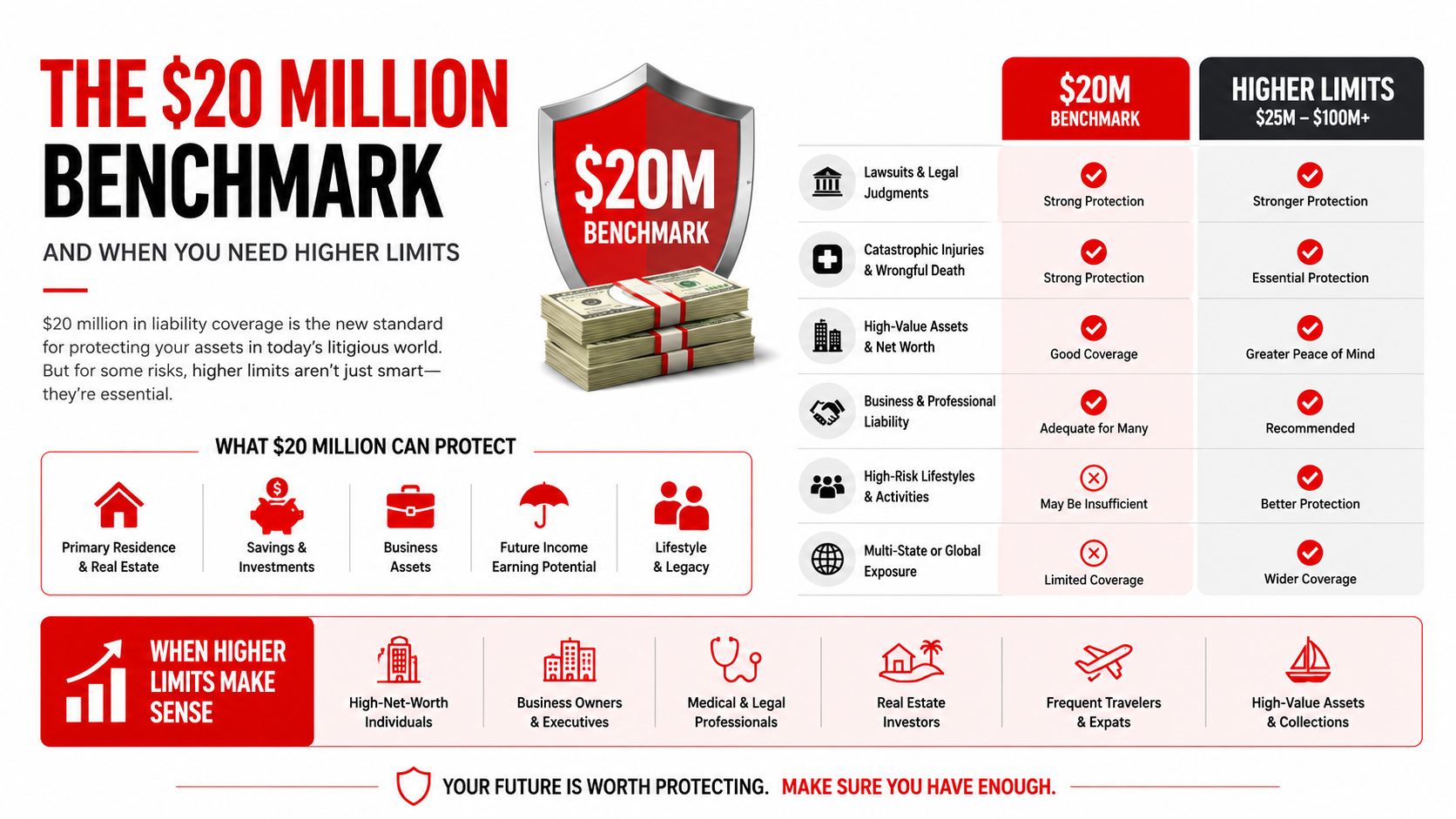
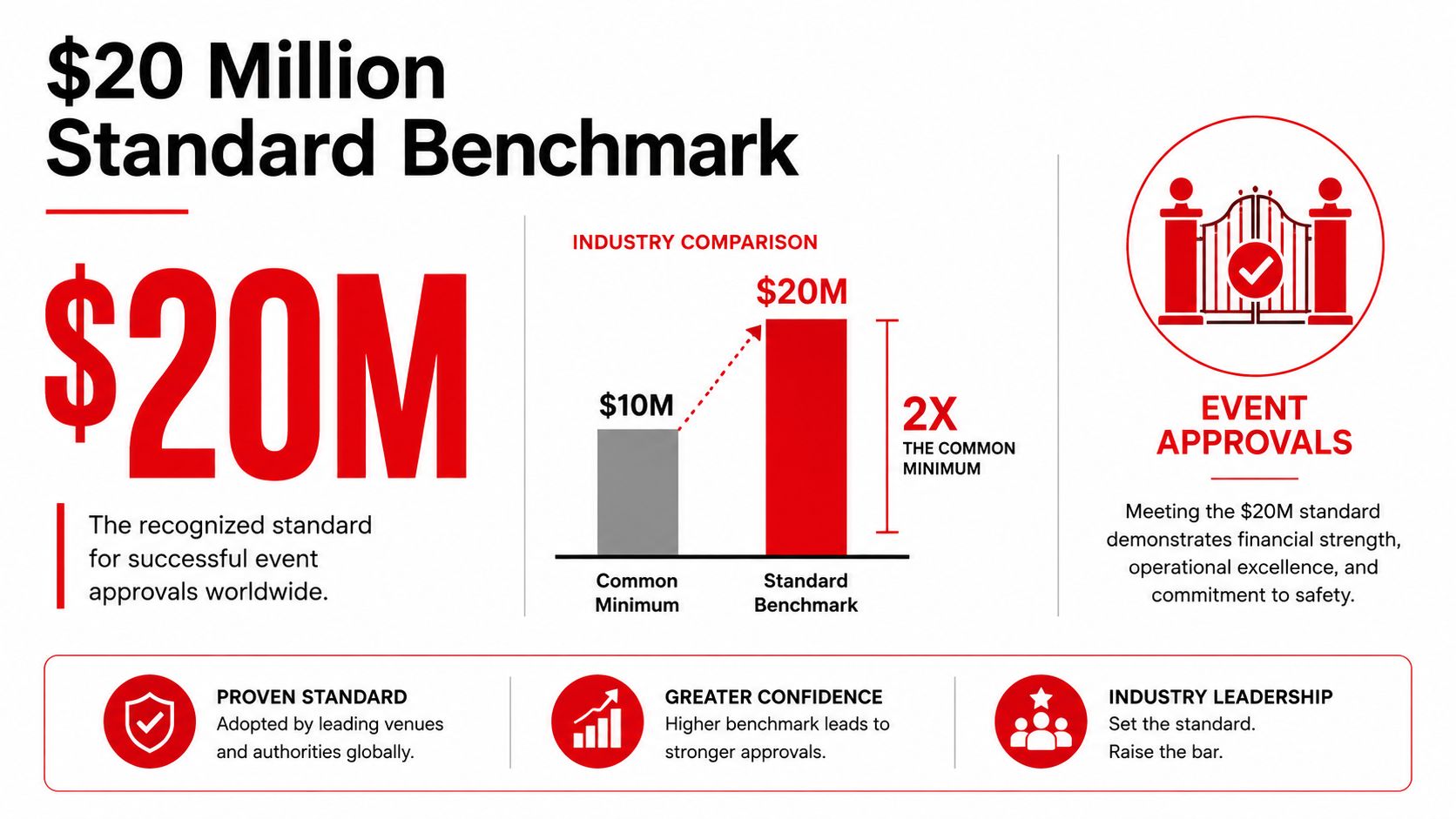
Across Australian venue bookings and event approvals, $20 million is a common public liability benchmark. Council applications may require at least that amount before assessment proceeds, while venue guidance often lists it as the standard for licensed venues, as outlined in Australian event insurance guidance. The figure on the certificate, however, is only one part of the approval check. Missing wording, an outdated certificate or an insured name that does not match the booking can still delay or reject an application.
Requirements vary by activity and location. Some regulated activities use $10 million, while some Queensland venues and event locations require $20 million per incident. Treat the limit as a contractual and risk-based requirement, not a universal legal answer for every venue.
Why the benchmark can still be inadequate
A high limit does not remove the underlying exposure. One incident may generate claims from several third parties. Serious injury, property damage, legal costs and allegations involving multiple organisations can use policy capacity faster than a single-claim scenario suggests. The approval file should therefore record the event layout, suppliers and activities used to justify the selected limit.
Australian guidance for security and event work treats $50 million as a benchmark for higher-risk operations, and APRA has identified national liability claims and affordability pressures as an active issue, as discussed in security and event insurance guidance. This does not set a limit for every busy venue, but it supports a documented review where crowd density, security operations or temporary infrastructure increase exposure.
A practical limit review
Ask these questions before accepting the standard:
- How dense is the environment? A club, festival or public event can create more simultaneous third-party exposure than a private booking.
- What physical elements are involved? Stages, marquees, structures, generators and restricted access routes add operational dependencies.
- Who controls the risk? Multiple suppliers, contractors and security teams can leave responsibility disputed after an incident.
- What does the contract demand? The venue owner, council or land manager may specify a limit, policy wording or interested-party notation.
The practical response is to compare the event plan with the booking conditions, then ask an insurance adviser whether the limit, wording and endorsements remain defensible. Keep that advice with the approval records.
State-by-State Compliance Requirements for Venues and Events
Australian venue requirements differ by jurisdiction, site and event type. A policy accepted at one venue may fail another approval check because councils, land managers, venue owners and regulators ask for different limits, insured names or supporting records.
| State/Territory | Typical Minimum Limit | Key Regulatory Bodies | Additional Documentation |
|---|---|---|---|
| NSW | $20 million is required by the Centennial Parklands outdoor public event licence agreement | NSW Office of Liquor Gaming and Racing, NSW Police, EPA and local council, depending on the activity | Current workers' compensation certificates for organisers, suppliers and contractors, plus relevant parallel approvals |
| VIC | Requirements vary by venue and council policy | Local councils and relevant activity regulators | Certificate of currency, event risk and safety documents where requested |
| QLD | Some venues and event locations require $20 million per incident, while some regulated activities use $10 million | Local councils and relevant Queensland regulators | Certificate of currency and activity-specific approvals |
| ACT | Requirements vary by venue, land manager and event type | Local authorities and relevant activity regulators | Current insurance evidence and event documentation required by the booking or approval process |
NSW
Use the NSW table above as the starting point, then check the specific land manager and council conditions. The approval file may also need workers' compensation certificates for organisers, suppliers and contractors, together with approvals connected to liquor, police, environmental or local government requirements.
The practical gap is responsibility. A venue's policy does not automatically confirm cover for every organiser, supplier or contractor. Each party may need to provide current evidence, and the booking file should show that the documents match the approved activities.
VIC, QLD and ACT
Victoria and the ACT require site-specific checking because venue and council conditions can change between bookings. Obtain the booking terms before appointing suppliers. Compare the required limit, insured names, activity description, event dates and any requested risk or safety documents with the evidence on file.
Queensland shows why a state-level assumption can create an approval problem. Some venues and event locations require $20 million per incident, while certain regulated activities use $10 million. Request the requirement in writing and retain the response with the application. A certificate from a previous event may show the wrong limit, entity or activity, even when the organiser and venue appear unchanged.
Across all jurisdictions, approval failures often come from mismatched paperwork rather than an inactive policy. Check the venue agreement, council application and supplier documents together before submission.
Documentation Checklist for Venue Bookings and Event Approvals
A policy can be active and still fail an approval check if the evidence doesn't match the booking. Venue owners and councils commonly ask for a valid certificate of currency showing the policy's geographical scope, covered activities, insured names and currency period. An expired certificate won't prove current cover.
Use this pre-approval check
- Confirm the limit: Match the policy limit to the venue agreement and council application.
- Check the dates: Make sure the currency period covers bump-in, the event itself and bump-out where those activities are part of the declared operation.
- Match the activity: The certificate should reflect what will happen, including public attendance, entertainment, temporary equipment or other material activities.
- Verify the names: Check the legal name of the organiser and any venue or council entity that must be recorded.
- Review the territory: Confirm the geographical scope covers the event location.
- List interested parties: Some councils ask to be listed as an interested party on the certificate.
- Collect contractor evidence: Request current liability and workers' compensation certificates from suppliers where the venue agreement requires them.
- Set renewal reminders: Recurring events need fresh evidence, not an old certificate reused indefinitely.
Consider a monthly function at a council-owned hall. The organiser may purchase an annual policy, but the hall can still request a current certificate at each renewal cycle. If the document has expired or the activity has changed, the booking can be held even though the organiser believes the policy exists.
A risk assessment should sit beside the insurance file. Organisers can adapt this free event risk assessment template to record hazards, controls, responsible people and escalation actions. Submit the complete pack early enough to correct discrepancies before the council lodgement deadline.
Common Exclusions and Coverage Gaps That Catch Venues Off Guard
The most expensive assumption is that venue liability insurance covers the financial consequences of cancelling an event. It doesn't automatically do so. Liability cover responds to covered third-party injury or property damage claims, while cancellation cover addresses a different class of loss and only for the reasons the policy accepts.
Australian event cancellation guidance identifies exclusions such as lack of ticket sales and insolvency. A Federal Court decision also upheld denial of a cancelled festival claim because the policy wording didn't respond in the way the organiser expected, as detailed in Australian event cancellation insurance guidance.
Gaps that deserve a written answer
Unlisted activities create a common documentation failure. If the certificate describes ordinary venue operations but the event adds temporary structures, unusual entertainment, liquor service or specialist equipment, ask the broker or insurer whether an endorsement or revised declaration is needed.
Subcontractor responsibility can also be misunderstood. A venue may be named in a claim even when a caterer, security provider or production contractor caused the immediate problem. The venue's policy position and the supplier's own policy then need to be examined together.
Liquor-related incidents require particular care. The fact that alcohol is served on site doesn't prove the relevant exposure is covered. Check who supplies it, who controls service, whether a licence applies and whether the policy contains conditions or exclusions affecting the activity.
Coverage test: Ask what event, person, action and loss the policy actually describes. If one of those elements is missing, don't assume the insurer will fill the gap.
Cancellation insurance may be appropriate alongside liability cover, but it isn't a substitute for it. The two policies solve different problems, and both depend on precise wording.
How Security Providers and Contractors Affect Your Insurance Position
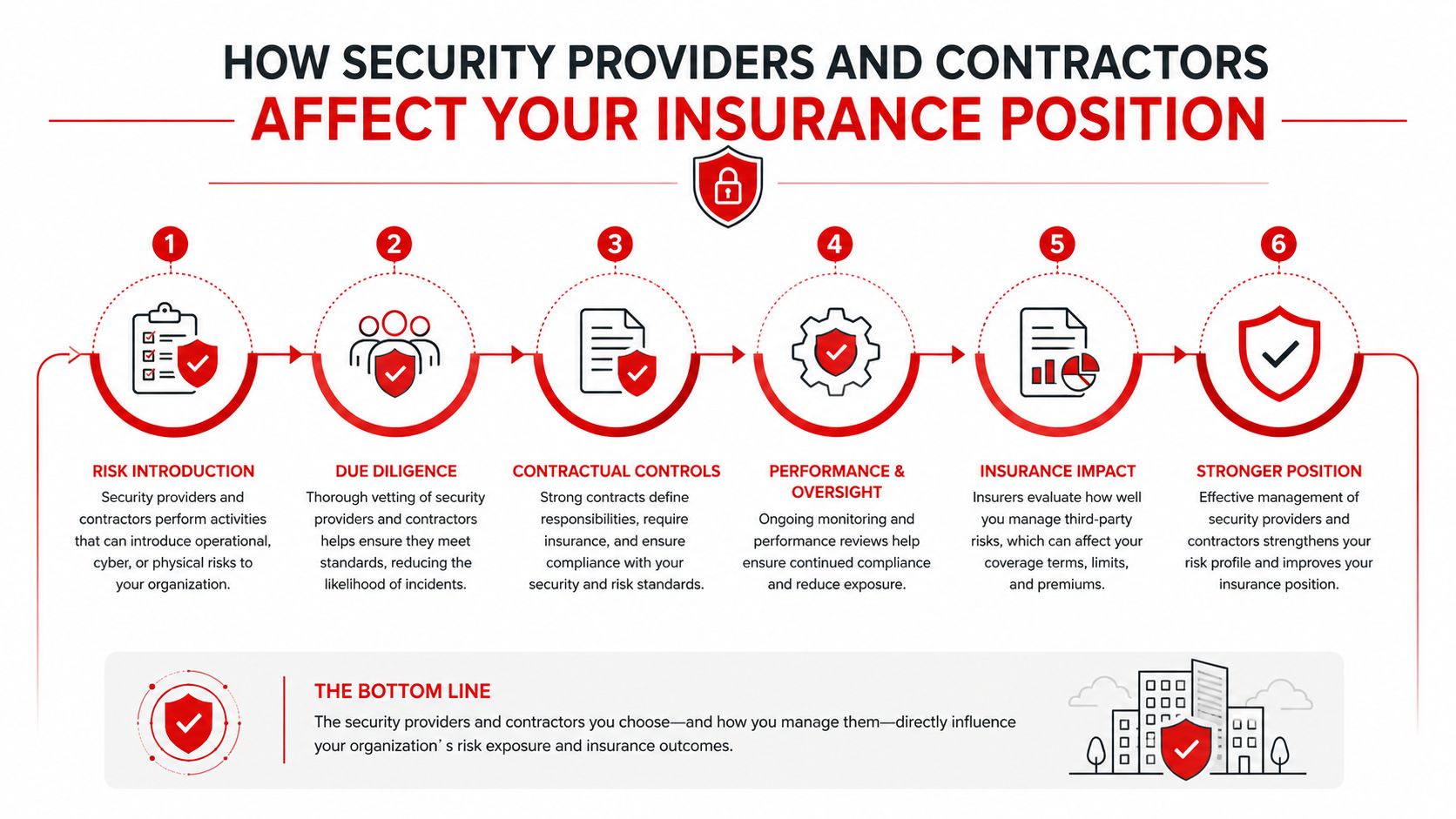
The venue's insurance position changes when outside parties enter the operation. Security teams manage access and behaviour, caterers handle food and equipment, production crews install structures and entertainment providers bring specialist activities. Each contractor introduces another set of people, procedures and documents that must fit the event plan.
Make insurance obligations contractual
A supplier agreement should identify the required cover, evidence, renewal responsibility and the activities the supplier must insure. Don't rely on a supplier's statement that it is covered. Request a current certificate of currency and check that the business name, activity and currency period are relevant.
The Centennial Parklands venue licence is a useful practical example because it requires cover from organisers, suppliers and contractors, not only from the person who submits the event application. It also requires current workers' compensation certificates for those parties.
Verify before the site opens
Use a controlled register for every external party:
- Record the supplier's legal entity and contact.
- Collect the certificate before access or site induction.
- Check public liability and workers' compensation evidence where applicable.
- Compare the declared activity with the work being performed.
- Escalate missing or inconsistent documents to the venue manager.
- Keep incident reports aligned across the venue and contractor systems.
If an altercation involves a contracted security provider, the venue shouldn't decide liability at the scene. Preserve the venue's records, obtain the provider's report and notify the relevant insurers according to the policies. A provider such as GM GROUP Services can supply licensed event security, site supervision, incident reporting and risk assessment support, but the venue should still verify the provider's current documentation and define responsibilities in writing.
Navigating the Claims Process After a Venue Incident
The first response should protect people, preserve evidence and create an accurate record. Arrange medical assistance or emergency support where needed, make the site safe and separate involved parties. Don't speculate about fault or promise compensation while the facts are still developing.
Record before memories change
Create an incident file containing:
- Immediate account: Date, time, location, activity and people involved.
- Witness details: Names and contact information for people who saw what happened.
- Physical evidence: Photographs of the area, equipment, signage and relevant damage.
- Staff records: Names of responding staff, security personnel and supervisors.
- Documents: CCTV references, contractor reports, permits, induction records and risk controls.
- Follow-up actions: Cleaning, repairs, medical assistance and notifications made.
Notify the insurer or broker promptly under the policy's claims conditions, even if the claim initially appears minor. Delayed notification can complicate the insurer's investigation and may affect the venue's position.
Coordinate with contractors rather than allowing multiple informal versions of events to circulate. Ask the security provider or supplier to preserve its own incident report, identify witnesses and retain relevant footage. Send factual material through the agreed reporting channel, and keep copies of every notification.
The insurer may appoint an assessor, request records, interview witnesses and inspect the site. Cooperate fully, but distinguish facts from assumptions. A clear, contemporaneous report is more useful than a polished account written after memories have shifted.
GM GROUP Services supports Australian venues and event organisers with licensed security, risk assessments, site supervision and incident reporting across NSW, VIC, QLD and the ACT. If you need to align crowd-control operations with your venue liability insurance and approval documentation, visit GM GROUP Services to discuss the requirements for your site or event.