


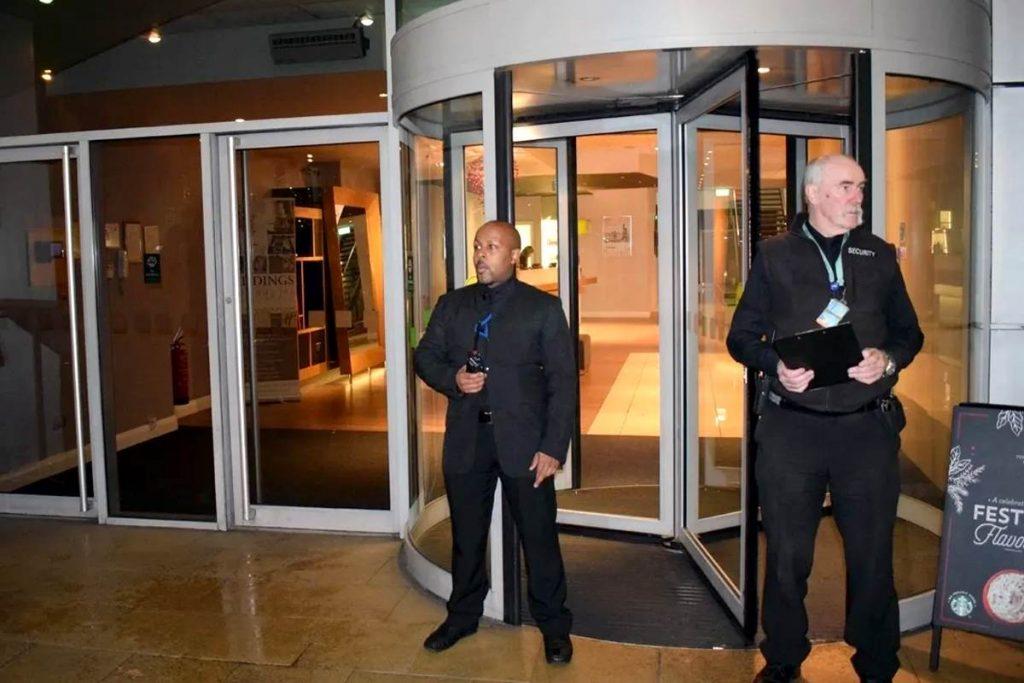
When we talk about security in retail, we’re not just talking about stopping shoplifters anymore. It’s now a core part of running a successful business—essential for protecting your profits, keeping your team safe, and making sure your customers feel secure enough to keep coming back. A solid plan isn’t about reacting when something goes wrong; it’s about creating an environment where crime is less likely to happen in the first place.
The Reality of Modern Retail Security
Let’s be blunt: retail crime in Australia is a serious, growing problem that eats into your bottom line and affects your staff’s morale. The game has changed. We’re seeing everything from opportunistic grabs to highly organised retail crime, and it’s all getting more sophisticated. This shift means that thinking about security as a ‘nice-to-have’ is a fast track to becoming a target. It has to be a central part of your daily operations.
Relying on a single security guard at the door or a few old CCTV cameras just doesn’t cut it. Today’s threats come from all angles—classic shoplifting and internal theft, sure, but also complex return fraud schemes and even digital attacks. Understanding the full scope of these threats, like the rising threat of infostealer malware and card data leaks, is critical to building a defence that protects both your stock and your customers’ sensitive data.
The Soaring Cost of Retail Crime
The latest figures paint a pretty stark picture. This isn’t just about a few missing items; it’s a nationwide issue with alarming statistics that demand attention.
Data from the Australian Bureau of Statistics (ABS) shows retail theft hit a 21-year high in 2024, with a staggering 595,660 recorded incidents. That’s a 6% jump from the previous year and the highest it’s been since 2003. Think about that for a moment. More importantly, retail locations now account for 45.1% of all recorded thefts, a massive increase from 31.6% back in 2010. Nearly half of all theft is now happening in our stores and shopping centres. You can dig into the specifics yourself on the ABS data on rising theft.
And this isn’t happening evenly across the country. Victoria, for example, saw a massive 29% spike in theft victims year-on-year, showing just how quickly a localised crime wave can hit.
Actionable Insight: Don’t wait for something to happen. A proactive, multi-layered security strategy is essential. Start by reviewing your store’s incident logs from the last 12 months. Do you see patterns? Certain days, times, or product types being targeted? This data is the first step to building a smarter defence.
This guide is designed to give you the practical, actionable steps to build that defence. To get started, it helps to understand the core components of a truly effective security plan.
Core Pillars of a Modern Retail Security Strategy
A strong security strategy is built on several key pillars working together. Below is a quick overview of the essential areas we’ll be diving into throughout this guide. Think of it as your roadmap to creating a safer, more secure retail environment.
| Security Pillar | Primary Focus | Key Actions |
|---|---|---|
| Risk Assessment | Identifying the unique weak spots in your specific store or venue. | Walk-through audits, reviewing internal processes, analysing local crime trends. |
| Layered Defence | Creating multiple barriers to deter, detect, and delay criminal activity. | Staff training, mixing visible and hidden security, smart customer service. |
| Technology Integration | Using modern tools to boost surveillance, response, and overall security. | AI-powered analytics, EAS tags, access control systems, robust cybersecurity. |
| Incident Response | Handling security events professionally to minimise harm, loss, and disruption. | De-escalation training, preserving evidence correctly, post-incident reviews. |
By focusing on these four areas, you can move from a reactive stance to a truly proactive one, putting you back in control of your store’s safety and profitability.
How to Conduct a Practical Security Risk Assessment
Before you spend a single dollar on new cameras or security guards, you need to know exactly where you’re vulnerable. Solid retail security isn’t about guesswork; it’s about systematically identifying your weak spots. A hands-on risk assessment is the essential first step, giving you the real-world data you need to build a security plan that actually works.
Think of it less as a box-ticking exercise and more as an investigation. You’re digging into the physical layout of your store, the daily habits of your staff, and the specific threats tied to your location and the products you sell. For example, a high-street jeweller faces entirely different risks from a big-box electronics store in the suburbs, and your assessment has to reflect that reality.
This infographic lays out the escalating cycle that makes getting proactive so crucial for retailers today.

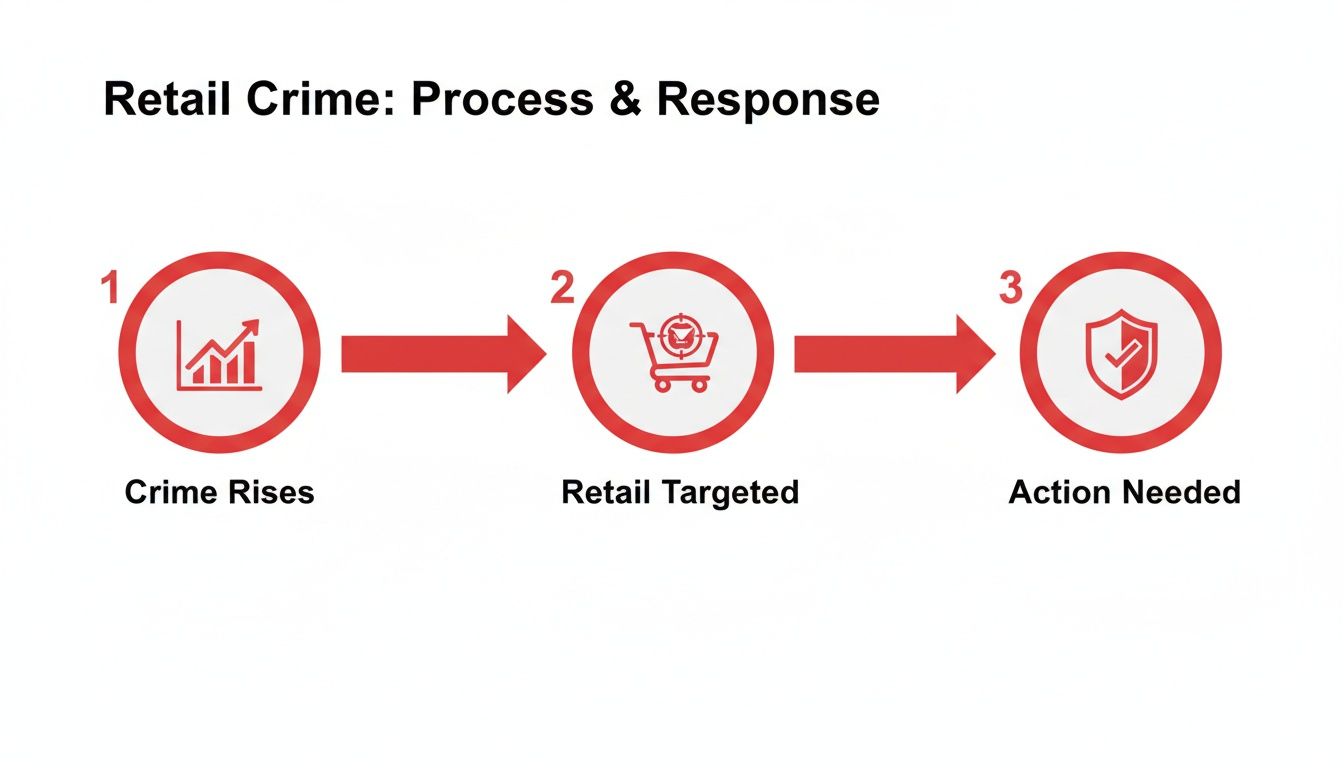
It highlights a critical loop: as crime rates climb, retail becomes a prime target, forcing businesses like yours to take decisive action to break the cycle before losses mount.
Performing a Physical Walk-Through
The best place to start is to walk through your store as if you were planning to steal from it. Seriously. Ditch your usual manager or owner mindset and start looking for opportunities. Grab a notepad and document everything you find.
Your goal here is to see your own space with fresh, critical eyes. This hands-on approach always uncovers weaknesses that you’d never spot on paper or from behind a desk.
Key areas to audit during your walk-through:
- Entrances and Exits: Are all exits properly monitored? Are high-value goods like designer handbags or premium spirits sitting right by the door, just begging for a grab-and-run? Practical example: Many stores leave baskets near the entrance; these can be used to quickly scoop up items and flee. Consider moving basket stacks to the middle of the store.
- CCTV Blind Spots: Walk every inch of your sales floor and stockroom, looking up at the cameras. Pinpoint any aisles, corners, or high-shelving areas where the view is partially or completely blocked.
- Lighting and Visibility: Check for shadows and poorly lit spots, both inside and out. Pay special attention to loading docks, car parks, and staff entrances. Good lighting is one of the simplest and most effective deterrents you have.
- High-Risk Product Placement: Are small, expensive items like cosmetics or electronics properly secured? They should either be in locked cabinets or placed in high-traffic, well-staffed areas of the store.
Actionable Insight: The stockroom is a major blind spot. Retailers pour resources into protecting the sales floor but forget that stockrooms, loading bays, and staff corridors are prime targets for both internal and external theft. Ensure these areas have controlled access and camera coverage.
Identifying Internal and Procedural Risks
Not all threats walk in through the front door. Weak internal processes can open the door to employee theft and fraud, which often make up a massive chunk of a retailer’s total losses. Your assessment has to look inward at your day-to-day operations.
This means observing daily routines and asking some tough questions about how things are actually done, not just how the manual says they should be done. For example, a lax refund policy that doesn’t require a manager’s sign-off for big-ticket returns is easily exploited. Likewise, if there’s no formal process for checking staff bags on exit, you’re creating an unnecessary temptation.
Actionable questions to guide your internal assessment:
- Cash Handling: Where is cash counted? It needs to be in a secure, private area, away from public view. Are cash drops done regularly throughout the day to keep the amount in the till to a minimum?
- Stock Management: How are deliveries received and checked off? Is there a clear, consistent process for documenting damaged or written-off stock so items don’t just “disappear”?
- Access Control: Who has keys or codes to the store, the stockroom, and the office? Critically, when an employee leaves the business, is their access revoked immediately?
By methodically analysing both your physical space and your internal procedures, you shift from just reacting to incidents to actively preventing them. This detailed assessment is the bedrock of your entire security strategy, ensuring every dollar you spend is targeted, effective, and perfectly suited to your business.
Building a Layered Defence for Your Retail Space

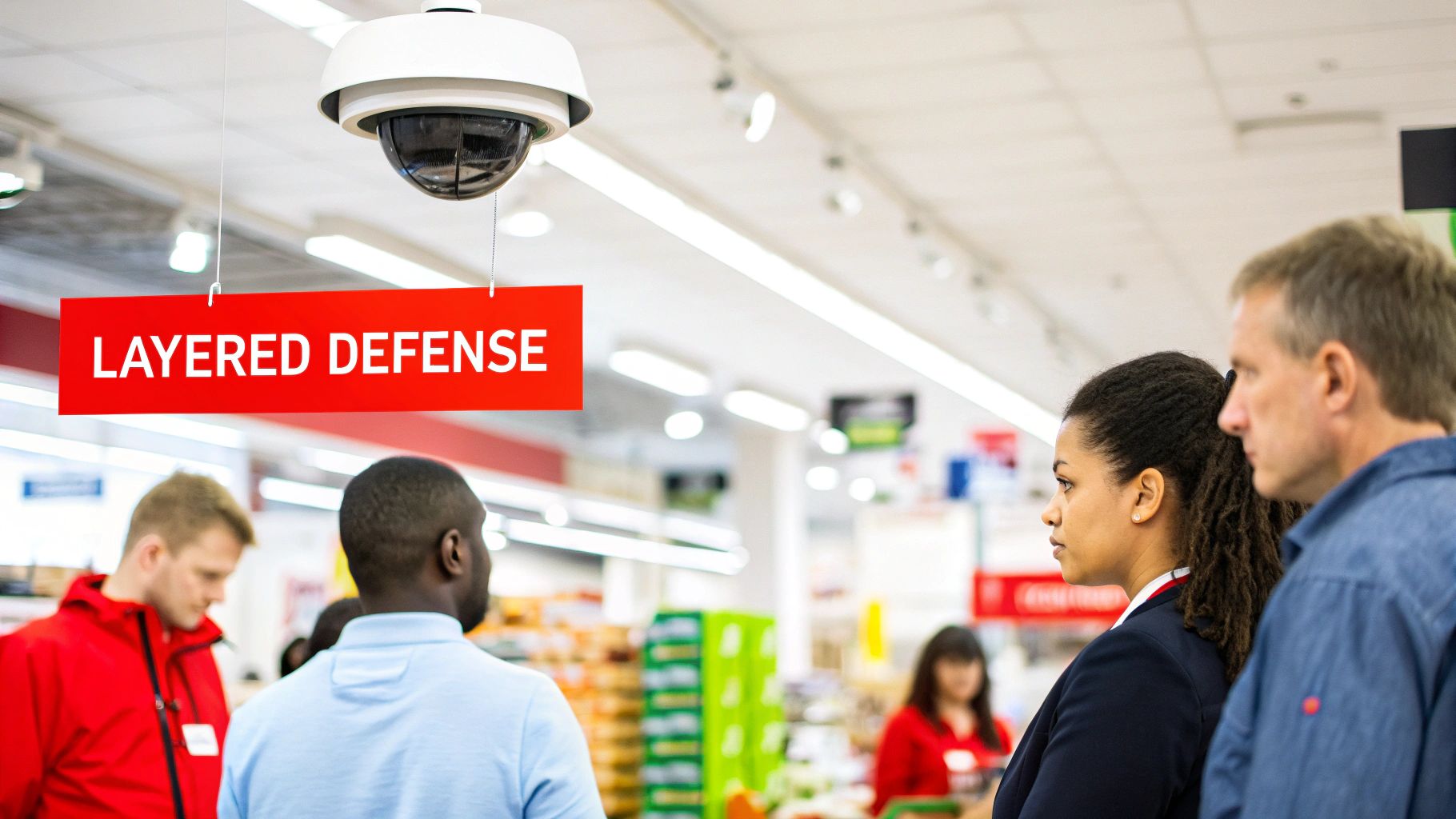
Effective retail security is never about finding one magic bullet. A top-of-the-line camera system is just expensive wall art without trained staff to monitor it, and even the best team can’t be everywhere at once without the right tools. The only truly robust strategy is a layered defence, where multiple physical, technological, and human elements work in concert to create a formidable barrier against crime.
Think of it like securing a medieval castle. You don’t rely solely on a tall wall. You have a moat, a drawbridge, guards on the battlements, and patrols inside the keep. Each layer makes the next one stronger, and the combination makes the entire fortress far harder to breach than any single element on its own. For example, a shoplifter might manage to slip off a security tag, but they’ll find it exponentially harder to get past that tag, a very obvious camera, and an attentive staff member all at the same time.
Your Team: The Human Firewall
Technology is a fantastic tool, but your staff are your most dynamic and adaptable security asset. A well-trained, engaged team acts as a human firewall, actively deterring theft through their presence and customer service long before an incident can even kick off.
Believe it or not, the most powerful, non-confrontational tool they have is simply great customer service. This isn’t just about being friendly; it’s a proven loss prevention strategy.
Actionable Customer Service Techniques:
- The 10-Foot Rule: Train your team to greet and make eye contact with every single customer who comes within 10 feet. That simple acknowledgement tells a potential thief, “I see you,” instantly shattering their sense of anonymity.
- Proactive, Open-Ended Questions: Forget asking, “Can I help you?” which almost always gets a simple “no.” Instead, teach staff to ask questions that require a real answer, like, “What brings you in today?” or “Are you looking for a gift or something for yourself?” This forces engagement and makes it much harder for someone to quietly case the store.
- Show Off Your Product Knowledge: When a team member can confidently discuss the features of a high-value item with a customer, it sends a clear signal that the product is being watched. It becomes a much less appealing target for theft.
Of course, deterrence is only one part of the job. Equipping your team with solid de-escalation skills is non-negotiable, especially with the alarming rise in aggression towards retail workers. The absolute priority must always be their safety—stock can be replaced, but people can’t.
Overt and Covert Security: A Balanced Approach
Beyond your team, your physical security measures also need to be layered. This means using a smart mix of visible (overt) and hidden (covert) tactics. Overt measures are designed to be seen, acting as a powerful psychological deterrent. Covert measures are your secret weapon, there to catch those who weren’t put off by the visible defences.
This blend is critical for comprehensive security in retail. Your visible deterrents will stop most opportunistic thieves in their tracks, while the hidden tactics are essential for identifying organised retail crime or determined individuals.
Recent data paints a grim picture of why this is so important. The National Retail Association reported around 800,000 retail crime incidents across Australia in a single 12-month period. Even more concerning, 87% of retail workers report verbal abuse, and a staggering 51% experience physical abuse monthly or more often. These numbers highlight the urgent need for a robust security posture that protects both your inventory and, more importantly, your people. You can read more about the national response to rising retail crime.
Actionable Insight: Data shows the most harmful 10% of offenders are responsible for roughly 60% of the total harm to retailers. This proves your security strategy must be tough enough to handle determined, repeat offenders, not just casual shoplifters. A good mix of overt and covert security is key.
This is where finding the right security mix for your specific environment is vital. A high-end boutique might lean towards subtle, covert security to maintain an exclusive atmosphere, whereas a large discount department store will benefit from highly visible, in-your-face deterrents.
To help you decide on the right balance, it’s useful to see how these two approaches stack up.
Overt vs. Covert Security Measures Comparison
A thoughtful mix of both visible and hidden security tactics is the hallmark of a mature security plan. This table breaks down the roles each type plays.
| Measure Type | Examples | Primary Goal | Best Suited For |
|---|---|---|---|
| Overt (Visible) | Uniformed security guards, prominent CCTV domes, public view monitors, EAS gates at exits, anti-theft signage. | Deterrence: To make potential offenders feel watched and convince them that the risk of being caught is too high. | High-traffic environments, stores with high-value items near entrances, deterring opportunistic theft. |
| Covert (Hidden) | Plainclothes loss prevention officers, discreet pinhole cameras, GPS trackers on high-value goods, RFID inventory systems. | Detection & Apprehension: To identify and catch offenders who are not deterred by visible measures, especially internal or organised threats. | Investigating specific shrinkage issues, monitoring staff areas, high-end retail where visible security might harm the brand image. |
Ultimately, a good plan using both overt and covert measures ensures you are not just reacting to threats, but actively preventing them while still being prepared to catch those who try their luck.
At the end of the day, building a layered defence is all about making your retail space a hard target. By combining a well-trained, engaged team with a smart mix of visible and hidden security measures, you create a dynamic and resilient system. Each layer supports the others, turning your store from a potential target into a secure and welcoming environment for your genuine customers.
Using Technology for Smarter Retail Security
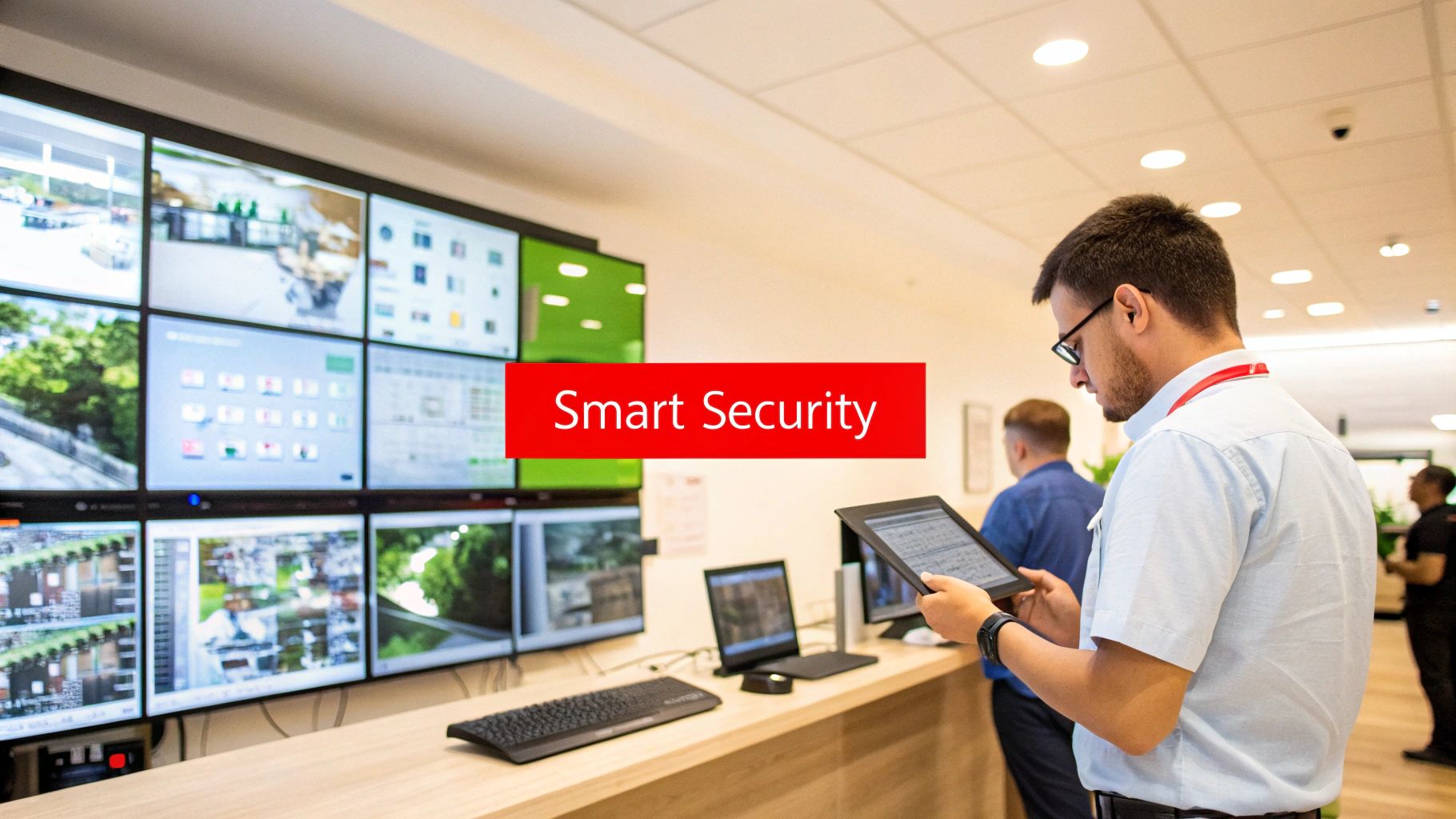
While a well-trained team is your absolute foundation, technology is the force multiplier that takes a good security plan and makes it great. When we talk about modern tech for security in retail, we’ve moved far beyond grainy, after-the-fact CCTV footage. It’s now about intelligent systems working proactively to flag risks, protect stock, and even streamline your operations—often before a staff member even knows there’s a problem.
Investing in the right tech isn’t just another expense on the balance sheet; it’s a strategic move that delivers a real return. By automating detection and sharpening response times, these tools free up your staff to focus on what they do best: serving customers and fostering a positive, welcoming environment. The trick is to choose tech that integrates smoothly and gives you actionable insights, not just more data to sift through.
Beyond the Basic CCTV Camera
Your standard security cameras are essential for reviewing incidents, but their true power is unlocked when you pair them with AI-powered video analytics. These smart systems actively watch your feeds in real-time, alerting your team to specific, pre-defined behaviours that signal a potential threat.
For example, a system can automatically detect a person loitering near a high-value display for too long. Or one that flags when a large, boisterous group enters at once—a classic tactic for distraction theft.
Key capabilities of modern video analytics include:
- Behavioural Analysis: The system learns what “normal” looks like in your store. It can then flag anomalies like someone moving erratically, trying to hide their face, or acting suspiciously near an exit.
- Heat Mapping: This goes beyond pure security. It can show you the busiest areas of your store, helping you optimise layouts and product placement. At the same time, it pinpoints potential hotspots for theft.
- Facial Recognition: When used carefully and in line with Australian privacy laws, this can identify known offenders the moment they walk in, allowing for a swift, non-confrontational response from your team.
Actionable Insight: This isn’t some far-off fantasy. It’s about turning your passive camera network into an active, intelligent lookout that gives your team the heads-up they need to prevent incidents before they happen. Start small by upgrading cameras covering your highest-risk areas first.
Tackling Modern Retail Challenges
The rise of self-checkouts has been a game-changer for convenience, but it has also opened up a massive new vulnerability for retailers. These systems run on an honour system, a weakness that is frequently exploited.
This is where the digital and physical sides of security really start to overlap. It’s not just organised criminals, either. A significant consumer survey found that 32% of Australian shoppers admitted to not scanning some items at self-checkout. What’s more, 36% confessed to deliberately scanning items using a cheaper product’s barcode. These are everyday shoppers making a calculated decision to steal. You can read more about these findings on consumer behaviour and retail risk.
To fight back, new tech is emerging specifically for these self-service areas. For example, AI-powered cameras can now cross-reference the item a customer scans with what the camera actually “sees” in their cart. If a pricey bottle of champagne gets scanned as a carrot, the system instantly flags it for staff intervention.
Integrating Your Security Systems
The most robust tech defences don’t work in isolation. A truly smart security setup gets your different systems “talking” to each other, creating an automated and cohesive response network.
Here’s how that looks in practice:
- Electronic Article Surveillance (EAS): These are your classic security tags. When integrated properly, an EAS alarm at the exit can automatically trigger the nearest CCTV camera to zoom in and capture a high-resolution shot of the person and the event.
- Smart Access Control: For stockrooms and back offices, keycards or biometric scanners are worlds better than old-school keys. They create a digital audit trail of who entered, where, and when, giving you undeniable data if you ever need to investigate an internal theft.
- Unified Alarm Systems: Modern platforms can link your intruder alarms, fire alarms, and CCTV into a single, easy-to-use interface. If an alarm is triggered, the system can automatically lock designated doors, send live video feeds to your phone, and notify the authorities.
By connecting these dots, you move from having a collection of separate security gadgets to having a single, intelligent ecosystem. This network provides a much deeper level of security, cuts down on human error, and gives you a complete, 360-degree view of your business’s safety.
Mastering Incident Response and Fostering a Safe Culture
Even the most sophisticated security plan is just a document until it’s tested in a real-world incident. The real measure of your strategy is how your team performs in the heat of the moment. A clear, well-rehearsed plan is what separates a controlled response from a chaotic one, protecting your people and your business when it matters most.
Ultimately, the goal is to build a culture where security is everyone’s business. It’s not about turning your sales staff into security guards, but about fostering a shared sense of awareness and responsibility. When your whole team is on the same page, your security posture becomes infinitely stronger.
Executing a Calm and Effective Incident Response
When an incident kicks off—be it a grab-and-run, an aggressive customer, or a medical issue—the number one priority is always human safety. Stock can be replaced; people can’t. Your response plan needs to be brutally simple, focused entirely on de-escalation and keeping everyone safe.
We train our teams to be good witnesses, not heroes. Their job is to observe, report, and stay out of harm’s way. Trying to physically intervene is a recipe for disaster.
Immediate Actions for Staff:
- Safety First, Always: The first move is to ensure everyone is safe. This could mean creating distance, ensuring an offender has a clear exit path (never block them in!), or calmly guiding uninvolved customers away.
- Stay Calm, De-escalate: A panicked reaction is like fuel on a fire. We drill our teams to use a calm, non-confrontational tone. A steady voice can bring a volatile situation down a notch.
- Observe and Remember: Train your staff to mentally clock the important details: What were they wearing? Height, build, any distinguishing marks? Which way did they go? This is gold for the police.
- Notify Management Immediately: There needs to be a clear, discreet protocol. Whether it’s a code word over the headset or a quick call, everyone needs to know who to contact and how, without causing a panic.
Actionable Insight: Don’t create overly complex response plans. In a high-stress situation, people don’t remember a 10-step process. Keep it simple: Safety, Observation, Notification. Drill this three-step sequence with your team in every new staff induction and quarterly refresher.
From Incident to Improvement: The Post-Event Review
Once the dust has settled, the real work begins. Every incident, no matter how small, is a free lesson in how to improve. A thorough post-incident review is how you find the gaps in your armour and fix them before they can be exploited again.
This process is what stops you from making the same mistakes twice. It’s how you turn a negative event into a positive change that strengthens your overall approach to security in retail.
The review isn’t about pointing fingers. It’s a constructive debrief focused on what worked, what didn’t, and what we can do better. It’s crucial to involve the staff who were there—their perspective is invaluable.
Key Questions for Your Post-Incident Debrief:
- Could better staff positioning or training have prevented this?
- Did our tech, like CCTV or security tags, do its job? Were the camera angles right?
- Were there any procedural blind spots that the offender took advantage of?
- How can we tighten up our communication and response for next time?
Documenting Incidents for Police and Insurance
If it isn’t written down, it didn’t happen. Solid documentation is non-negotiable. Without a clear, detailed incident report, police investigations can go nowhere, and insurance claims can be flat-out denied. Reports need to be factual, objective, and written immediately after the event while memories are still sharp.
Create a standardised incident report template and make sure everyone knows how to use it. Consistency is key. It ensures all the critical information is captured every single time, making the process quick and reliable for your team.
Your Incident Report Must Include:
- Date, Time, and Location: Be specific.
- Summary of Events: A simple, chronological rundown of what happened.
- Persons Involved: Names and contact details for witnesses, staff, and any victims.
- Detailed Descriptions: Note everything about suspects—height, build, clothing, tattoos, accent, anything.
- Actions Taken: Document what your team did during and after the incident.
- Evidence: Reference any CCTV footage (include timestamps!), witness statements, or physical evidence.
This report is your official record. It’s the key to holding offenders accountable and recovering your losses, and it’s a cornerstone of any professional security operation.
Frequently Asked Questions about Security in Retail
Here are answers to some of the most common queries we hear from Australian business owners looking to improve their retail security.
What is the single most effective way to reduce shoplifting?
The most consistently effective tool is refreshingly low-tech: proactive and visible customer service. While technology is a vital layer, training your team to simply greet every person who enters, make friendly eye contact, and offer genuine help is a powerful, non-confrontational deterrent. It makes legitimate customers feel valued and removes the anonymity that potential thieves rely on. A shoplifter is far less likely to target a store where they’ve been personally acknowledged by staff.
Are security cameras worth it if no one is watching them live?
Absolutely. It’s a common myth that cameras are only useful with constant live monitoring. High-quality, visible cameras deliver a huge return in two ways. First, their presence alone is a massive psychological deterrent that makes your store a harder target. Second, the recorded footage is invaluable evidence for police and insurance claims after an incident, often being the key to identifying a suspect or proving a loss. Modern smart cameras can also send alerts for specific activities, giving you the benefit of monitoring without the constant overhead.
How should staff handle an aggressive or violent shoplifter?
The number one rule is that the safety of people always comes first. Stock is replaceable. Your policy must be built around de-escalation, not confrontation.
- Do not engage physically. Never try to block or touch the person.
- Create distance. Ensure the person has a clear path to the exit.
- Use a calm tone. Avoid shouting or making accusations.
- Observe and report. Your team’s job is to be an excellent witness, noting details like appearance and direction of travel for the police.
This approach protects your staff from harm and your business from liability.
How can I stop employee theft?
Internal theft requires a multi-faceted approach. Start with strong pre-employment screening. Implement clear and consistent procedures for cash handling, returns, and inventory management. Use access control systems to track who enters secure areas like stockrooms. Most importantly, foster a positive work culture where employees feel valued. When staff are engaged and respected, they are far less likely to steal.
What’s the first step I should take to improve my store’s security?
The best first step is to conduct a thorough security risk assessment. Before buying any new equipment, you need to understand your specific vulnerabilities. Walk through your store from a thief’s perspective, review your past incident reports for patterns, and analyse your internal procedures for loopholes. This assessment will give you a clear roadmap, ensuring you invest your time and money where it will have the most impact on improving your security in retail.
Ready to build a security plan that protects your people, profits, and peace of mind? The expert team at GM GROUP Services delivers professional, reliable security solutions tailored for Australian retailers. From highly-trained loss prevention officers to comprehensive risk assessments, we provide the support you need to create a safe and secure environment. Get in touch with our security specialists.