


Security guard requirements for events usually get treated like a numbers problem until the week before opening night, when the core issue shows up. A promoter has the roster filled, the radios ordered, and the entry lanes mapped, then someone asks which guards are properly licensed for this venue, this state, and this task. That's the moment the job stops being about headcount and starts being about compliance.
A well-run event in Australia depends on licensed security personnel, matched to the event type, the venue zone, and the state or territory rules that apply. If you're coordinating a concert, festival, club night, corporate function, or a mixed-use venue, the first question isn't “how many guards do I need?” It's “what kind of security work is this, and who is legally allowed to do it?”
Why Event Security Starts With Licensing, Not Headcount
A festival coordinator once calls on a Wednesday afternoon, worried because the crowd plan looks fine on paper but the back-of-house crew can't cover the gate, the VIP lane, and the perimeter at the same time. The roster has enough bodies. The problem is that not every person on that list is licensed for the work they've been assigned, and that's where a tidy schedule turns into a compliance headache.
In Australia, licensing is state-based, and event organisers must use guards who meet the relevant jurisdiction's security licensing rules because NSW, Victoria, Queensland and the ACT regulate security work separately government guidance on event security suppliers. That matters because event security usually includes guarding people or property, controlling access, and preventing disorder, which are the kinds of activities that security licensing regimes treat as regulated work.
If the event is at a licensed venue, or alcohol is part of the night, the compliance burden gets heavier fast. A general labour hire worker in a hi-vis vest isn't a substitute for a properly licensed security guard, and informal crowd staff can't magically become lawful security just because the roster is short. The organiser's duty is to ensure the guard is licensed for the task, whether that's access control, crowd control, or close protection, depending on the jurisdiction and venue conditions.
Practical rule: if the assignment sounds like security work, assume it needs a licensed security person until the state rules confirm otherwise.
For planners juggling suppliers, it helps to start with the event ecosystem, not the guard count. If you're still lining up vendors, it's worth using a practical directory such as find top festival vendors to keep the security conversation tied to the rest of the production plan rather than treated as an afterthought.
State-by-State Licensing You Cannot Afford to Get Wrong
Treat security licensing like a layered compliance stack. The event sits in one state or territory, the venue might have liquor conditions, and the security task itself can change by zone. A guard who is fine for one assignment can be the wrong fit for another if the licence class or endorsement doesn't align with the actual work.
Check the state first
The safest workflow is simple. Identify the event location, confirm the state or territory regulator, then verify the exact licence class that matches the duty. Don't rely on a supplier saying “they're licensed” without checking what that licence covers in the relevant jurisdiction.
Cross-border mistakes happen when organisers assume a licence works everywhere or assume the same job title means the same thing in every state. A guard booked for a festival in Victoria may not be correctly aligned for the same type of work in NSW if the local licensing framework treats the task differently. The same caution applies to ACT events, where the regulatory environment sits in its own lane rather than following a national template.
Match licence type to venue task
A common trap is confusing crowd work with other functions. Security at a bar, club, concert, or festival can involve access control, disorder prevention, and managing patrons around alcohol service, but that doesn't mean every guard automatically covers every duty. Close protection is its own discipline, and a guard who can manage a public entry line may not be the right person for a VIP escort route or a backstage transfer.
| State/Territory | Crowd Control Licence | Licensed Premises / RSA Linkage | Close Protection |
|---|---|---|---|
| NSW | Verify against the NSW security licensing framework before assignment | Check whether the venue's liquor and security conditions require additional role coverage | Confirm the licence class is appropriate for VIP or escort work |
| Victoria | Verify against the Victorian security licensing framework before assignment | Confirm whether the assignment includes licensed-premises duties or venue-linked alcohol controls | Confirm the licence class is appropriate for VIP or escort work |
| Queensland | Verify against the Queensland security licensing framework before assignment | Check whether the task intersects with venue alcohol or entry-control conditions | Confirm the licence class is appropriate for VIP or escort work |
| ACT | Verify against the ACT security licensing framework before assignment | Check whether the task intersects with venue alcohol or entry-control conditions | Confirm the licence class is appropriate for VIP or escort work |
What to verify before the first shift
- Licence class: Confirm the person is licensed for the specific security task, not just “security” in general.
- Jurisdiction: Confirm the licence is valid in the state or territory where the event is held.
- Venue context: Check whether the assignment includes licensed premises, crowd control, or close protection work.
- Role boundaries: Make sure the guard isn't being asked to work outside their licence class once the event starts.
- Supplier records: Keep a copy of the licence check in your event file.
A licence check takes minutes. A compliance problem can follow you for weeks.
Staffing Levels Built Around Risk Function
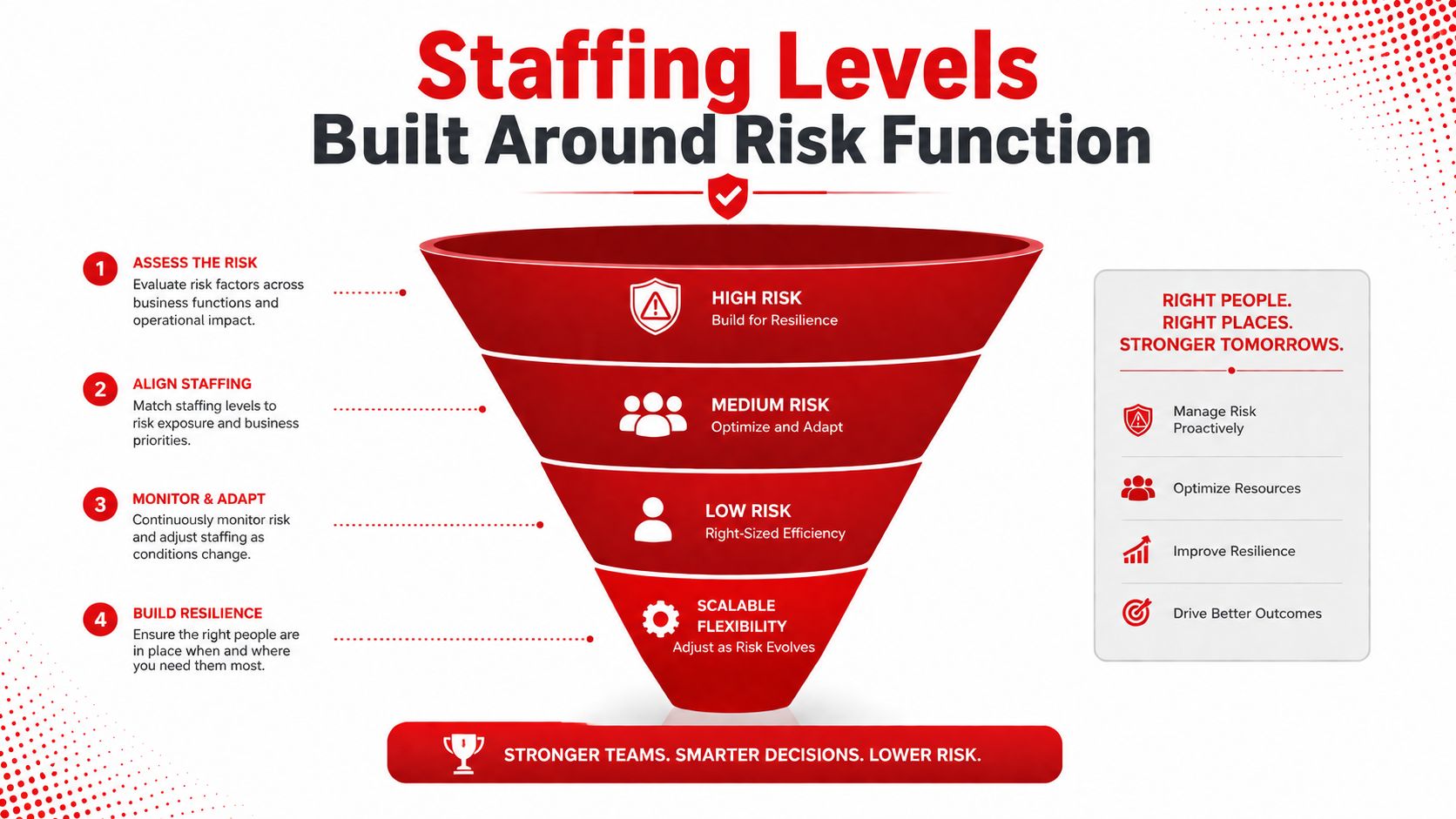

The wrong way to roster event security is to divide the attendance number by a nice round figure and call it done. That tells you nothing about where the pressure will hit, or which guard is carrying too many jobs at once. A gate officer screening bags, monitoring IDs, answering guest questions, and watching for disorder is already split across too many priorities.
Staff the function, not the crowd
International event-security guidance used as a practical benchmark says event security staff should be at least 18, have no materially interfering duties, be clearly identifiable, carry and know their equipment, and be trained for the specific event task ANSI ES1.40-2023. That benchmark points to the right planning logic for Australian events too. If a single guard is expected to watch access, respond to incidents, and manage equipment checks, response latency rises because observation time gets eaten by task stacking.
That's why the better roster question is not “how many guards?” It's “what job is each guard doing, where, and for how long?” Entry screening, perimeter control, floor response, VIP protection, and bump-in or bump-out guarding all create different workloads and failure modes. A guard on the perimeter can't also be your quickest responder on the floor if they're too far away or stuck handling a queue issue.
Separate seated areas from open-floor areas
A useful benchmark from event-security standards in Ireland sets 1 security staff per 250 persons in permanent seats, stands or terraces, and 1 per 100 persons in all other areas, and the note says those numbers are mandatory PSA event-promoters note. I'm not saying Australia copies that rule, but the operational logic is sound. Standing areas move faster, compress harder, and leave less room for recovery when a queue, a surge, or a dispute starts.
For practical rostering, treat these as different micro-environments:
- Seated zones: fewer interventions, but still need visibility and access to exits.
- Open-floor zones: tighter observation, faster intervention, and more active spacing.
- Entry and bag-check lanes: the slowest point in the system, so they need dedicated staff.
- Back-of-house and bump-in areas: access control, asset protection, and movement discipline.
- VIP areas: separate control, secure escort routes, and fewer distractions.
The best event rosters are boring in the right way. Every post has one job, and no one is improvising across three zones at once.
Training, Certification and the RSA Question
Licensing gets a person through the door. Training decides whether they can handle the night. A cheap guard who knows the badge process but doesn't know the venue's alcohol policy, radio procedure, or entry escalation path can cost more once the crowd starts moving and the supervisor has to clean up avoidable mistakes.
Separate mandatory from value-adding training
For event security, RSA knowledge matters wherever alcohol is served or patrons are moving between bar service and crowd space. Guards working in licensed venues should understand how alcohol changes patron behaviour, how to escalate refusals, and when to involve the venue manager. On top of that, first aid, conflict de-escalation, crowd-dynamics training, and venue-specific induction all raise the quality of the deployment.
If you're vetting a provider, ask for the training matrix, not just the licence copy. A good file should show who has first aid, who has crowd-control experience, who has radio training, and who has been briefed on site-specific issues such as loading docks, guest-list lanes, or the production compound. For background screening and worker due diligence, the Digital Footprint Check employer guide is a useful reference point for employers building a defensible hiring process.
What the guards actually need to know
- RSA procedures: how to support venue staff around alcohol service and refusals.
- First aid basics: how to secure a scene and summon help fast.
- Conflict de-escalation: how to slow a confrontation before it spreads.
- Crowd movement awareness: how to read queue pressure, congestion, and blocking behaviour.
- Venue induction: where exits, toilets, med points, radios, and staff-only routes are located.
The most expensive mistake on event night is paying for a guard who needs constant correction.
If a role includes alcohol service, the guard also needs to understand the boundary between security action and venue authority. They can support the process, observe behaviour, and escalate concerns, but they can't substitute for venue policies or licensing obligations. The event coordinator who gets this right usually writes a cleaner roster and gets fewer surprises from the floor.
Equipment, Uniforms and Identification Standards
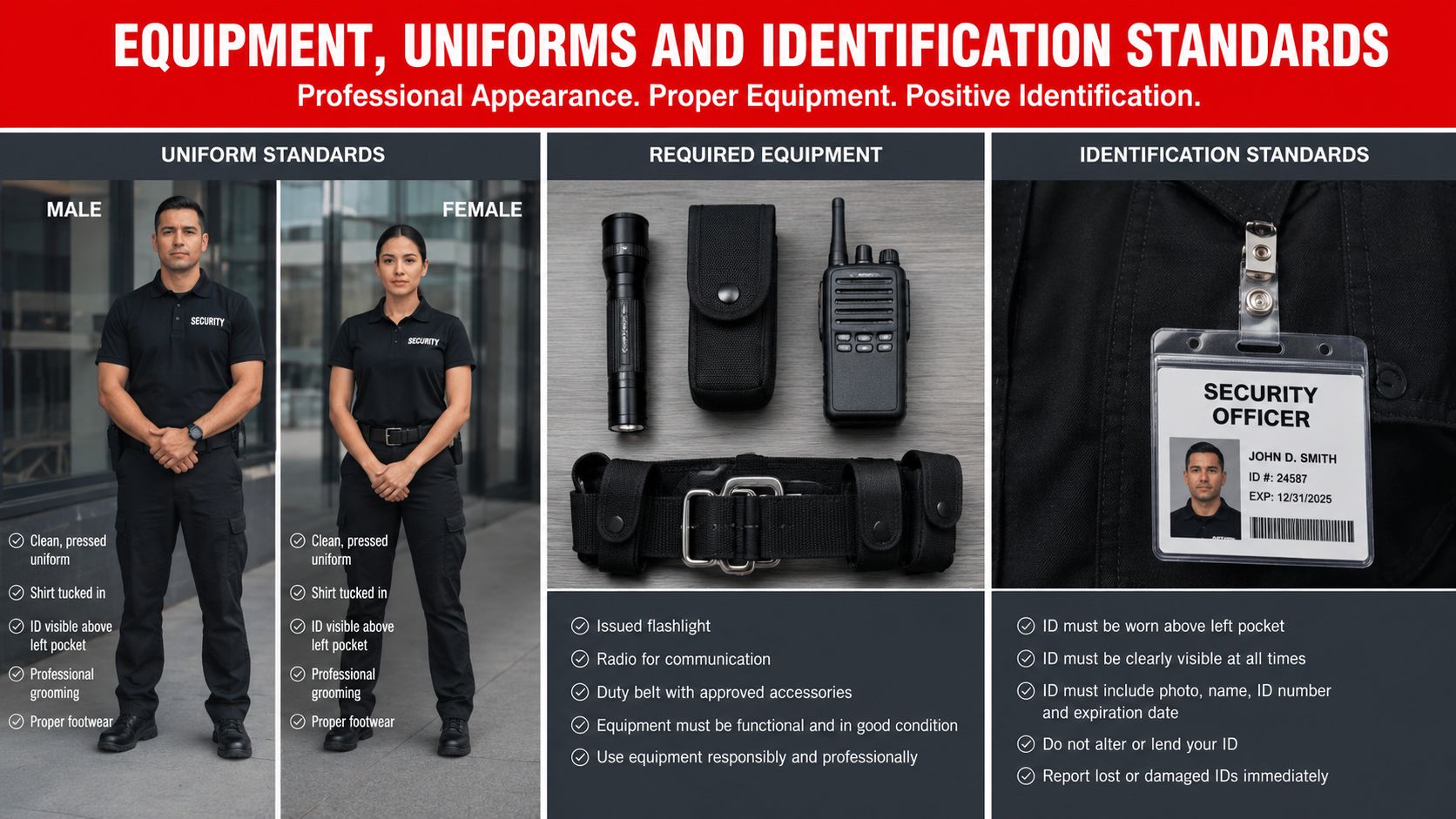
A guard who looks uncertain is often read that way by the crowd. Clear uniforms, visible ID, and the right kit do more than tick a compliance box, they signal authority before anyone speaks. At an event gate, mixed clothing or inconsistent branding weakens deterrence fast.
Match the kit to the role
A static gatehouse guard needs a different loadout from a roaming floor officer or a close-protection escort. Static posts usually need visible identification, weather protection, torch, logbook, and a reliable radio. They also need the basics for a long shift, because a wet, cold, or sun-exposed post drains attention faster than most organisers expect.
A floor response officer needs mobility and communication first. Radios, earpieces where appropriate, and equipment that won't snag or slow movement matter more than bulky gear. If body-worn camera use is part of the venue's policy, that needs to be documented and consistent, not ad hoc.
A VIP close-protection officer may need plain-clothes presentation, secure communications, and a compact medical kit, because visibility is not always the point. Their job is to move with the client, keep routes clear, and reduce attention without creating confusion about authority.
What to require in writing
- Uniform standard: colour, branding, and visibility rules for each role.
- Identification: badge or credential format that attendees can recognise quickly.
- Communication gear: radio model, spare battery plan, and earpiece rules.
- Post kit: logbook, torch, weather gear, and incident notes for static positions.
- Movement kit: hands-free communication and restraint-compliant equipment for active response roles.
Visibility works at the gate because people can identify who has authority without stopping to ask.
If your supplier can't describe the kit by role, they probably haven't thought hard enough about deployment. That's a problem at a festival entrance, but it's worse at a VIP arrival or a back-of-house access point where uncertainty turns into delay.
Crowd Management and Emergency Procedures in Practice
Crowd management is where the security plan meets the physical layout. If your access lanes, exits, and holding areas aren't thought through, security staff end up reacting to problems they could have prevented with better positioning. The first job is to keep movement predictable.
What good movement control looks like
Before doors open, guards should know where ingress lines form, where people can be held if entry slows, and which exits must stay clear. That includes the path from the gate to the floor, the route for staff movement, and the areas that need to stay sterile so queues don't bleed into public walkways. If alcohol is being served, the escalation path for disorder should be clear before the first drink is poured.
When a medical issue happens, the guard's first action is to secure the space and summon the right help. They don't become the medic. They hold the crowd back, clear access, and make sure the message reaches the supervisor and the venue team fast.
What a real evacuation response involves
An evacuation only works if the team already knows who opens exits, who sweeps each zone, and who talks to guests. The first 60 seconds matter most. Someone calls the trigger, supervisors pass the message, guards move people away from the hazard, and staff direct flow toward pre-agreed assembly areas.
A practical sequence looks like this:
- Trigger is identified: smoke, threat, structural issue, or another life-safety event.
- Control is informed: the supervisor confirms the response and issues directions.
- Crowd movement is managed: guards point people away from congestion and keep exits open.
- Emergency services are supported: one person is assigned to meet them and give access.
The same discipline applies to fights, intoxication spikes, and welfare incidents. Separate the people involved, keep the route clear, and avoid letting the crowd gather around the problem.
Risk Assessment Checklist and Event-Ready Documentation
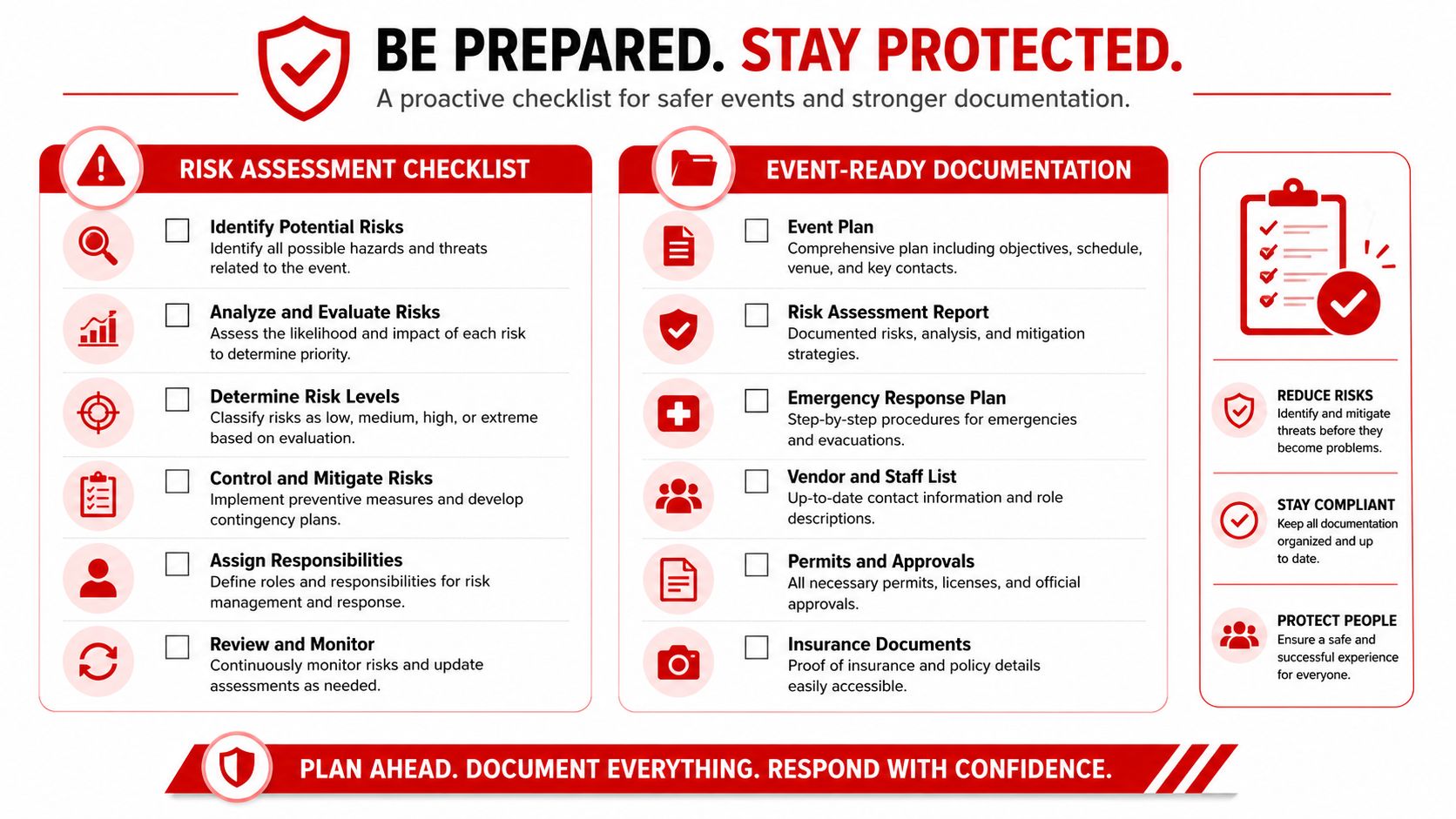
A risk register that sits in a folder and never comes out is dead weight. A usable one tells the supervisor what to watch, what to escalate, and what to write down if something goes wrong. Good event paperwork protects the organiser because it shows the decision trail, not just the final outcome.
Build the register in plain language
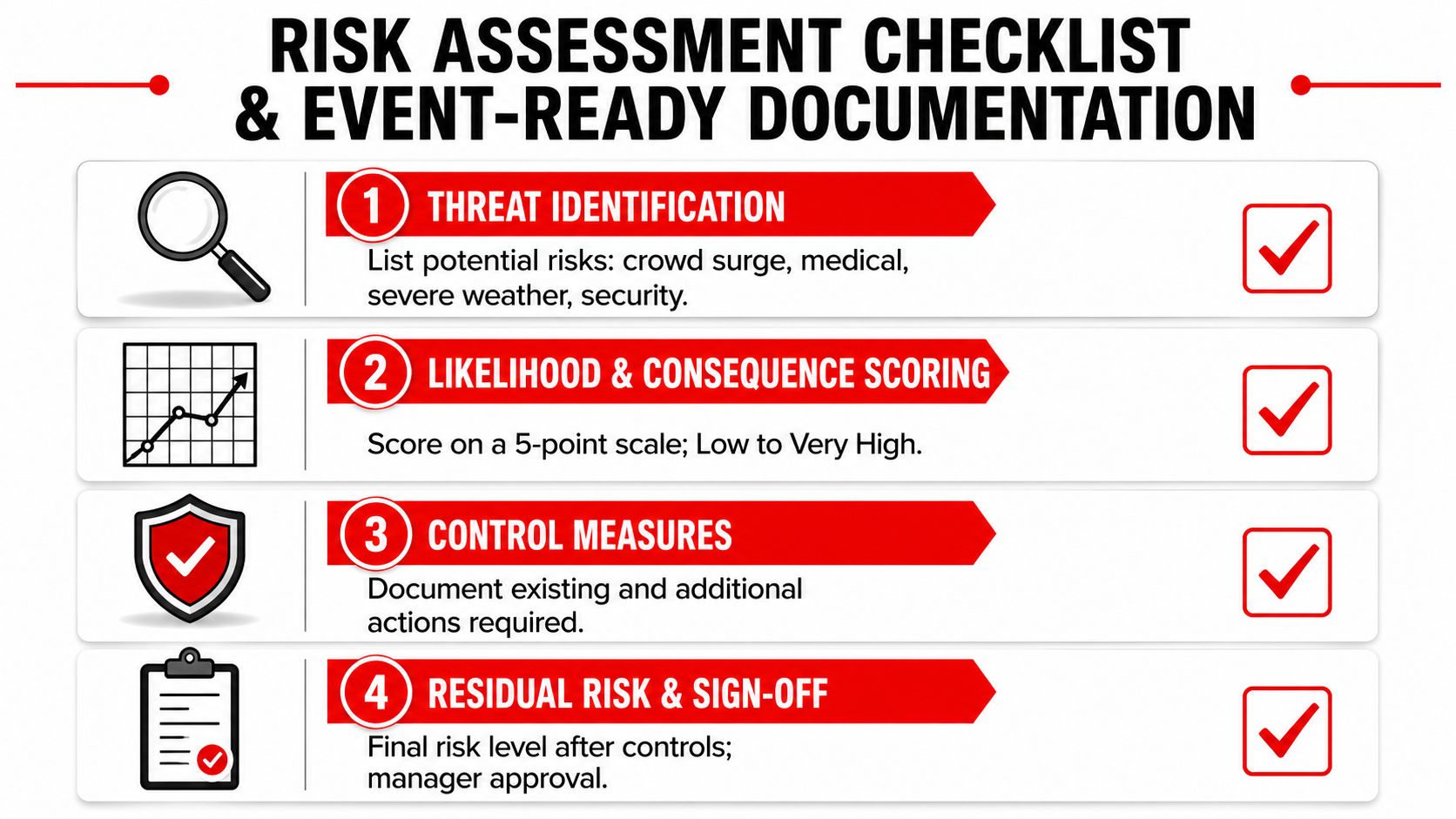
Start with the obvious threats. Crowd surge, medical issues, severe weather, disorder, access breaches, and equipment left in the wrong place are the kinds of things that show up in real events. Then score them by likelihood and consequence, list the controls already in place, and note the residual risk once those controls are applied.
Use clear wording. Don't hide behind jargon when the goal is a practical event file that a supervisor can use under pressure. If the control is a staffed entry lane, write that down. If the residual risk stays high because a zone is standing-room only, say so.
Keep the event-day pack tight
The documentation pack should include:
- Incident log: a factual record of what happened, who responded, and what was done.
- Refusal-of-entry register: a short record of why access was denied.
- RSA incident notes: any alcohol-related interventions or refusals handled through the venue process.
- Supervisor handover sheet: unresolved issues, watchpoints, and post changes.
- Post-event debrief template: what worked, what broke, and what needs fixing next time.
For teams building high-visibility compliance gear, the custom safety vest buyer's guide is a practical reference when you're choosing identification that fits the post and the environment.
If it isn't written down, you'll spend the next day reconstructing it from memory.
This is also where a strong provider earns its keep. GM GROUP Services, for example, works across event security, crowd control, VIP protection, and licensed venue support, so the documentation and deployment conversation can happen together instead of in separate silos.
Frequently Asked Questions From Event Organisers
Can volunteers fill guard gaps? Not if the job is regulated security work. Volunteers can help with wayfinding, guest services, and queue support, but they don't replace a licensed guard where the task falls within security licensing rules.
What happens if a guard cancels at short notice? The answer should be in your supplier agreement before event day. A reputable operator has a replacement pathway, and your roster should never rely on one person being irreplaceable.
Does under-staffing affect insurance? It can, because an incident file that shows weak planning is harder to defend than one that shows a documented staffing decision tied to risk. That's why the licence check, roster plan, and event notes need to sit together.
How do I verify a guard quickly on the day? Ask for the licence details, check them against the correct state or territory rules, and confirm the guard is assigned only to duties their licence and training cover. If there's any mismatch, fix it before doors open.
What matters more, the number of guards or the mix of roles? The mix. A roster with the wrong balance of entry staff, roving response, and supervisors can look full and still fail when the crowd starts moving.
If you want a security partner that understands licensed event work, zone-based rostering, and the practical realities of crowd control, speak with GM GROUP Services. They provide licensed event security across NSW, Victoria, Queensland and the ACT, and can help you match the right guards, equipment, and documentation to your venue before doors open.