

Protection dogs Australia: When it comes to securing a large-scale event or a high-value business site, you need more than just standard security. You need a solution that acts as a powerful deterrent and offers a rapid response that’s simply beyond human capability. This is where professional protection dogs are changing the game for Australian businesses, providing a level of security that is both intelligent and imposing.
Let's be clear: these aren't pets. They are highly disciplined K9 units, working in perfect sync with their handlers as a single, strategic team. To be effective—and legal—they need to be deployed by professionals who know exactly what they’re doing.
Why Businesses Are Turning to Protection Dogs in Australia
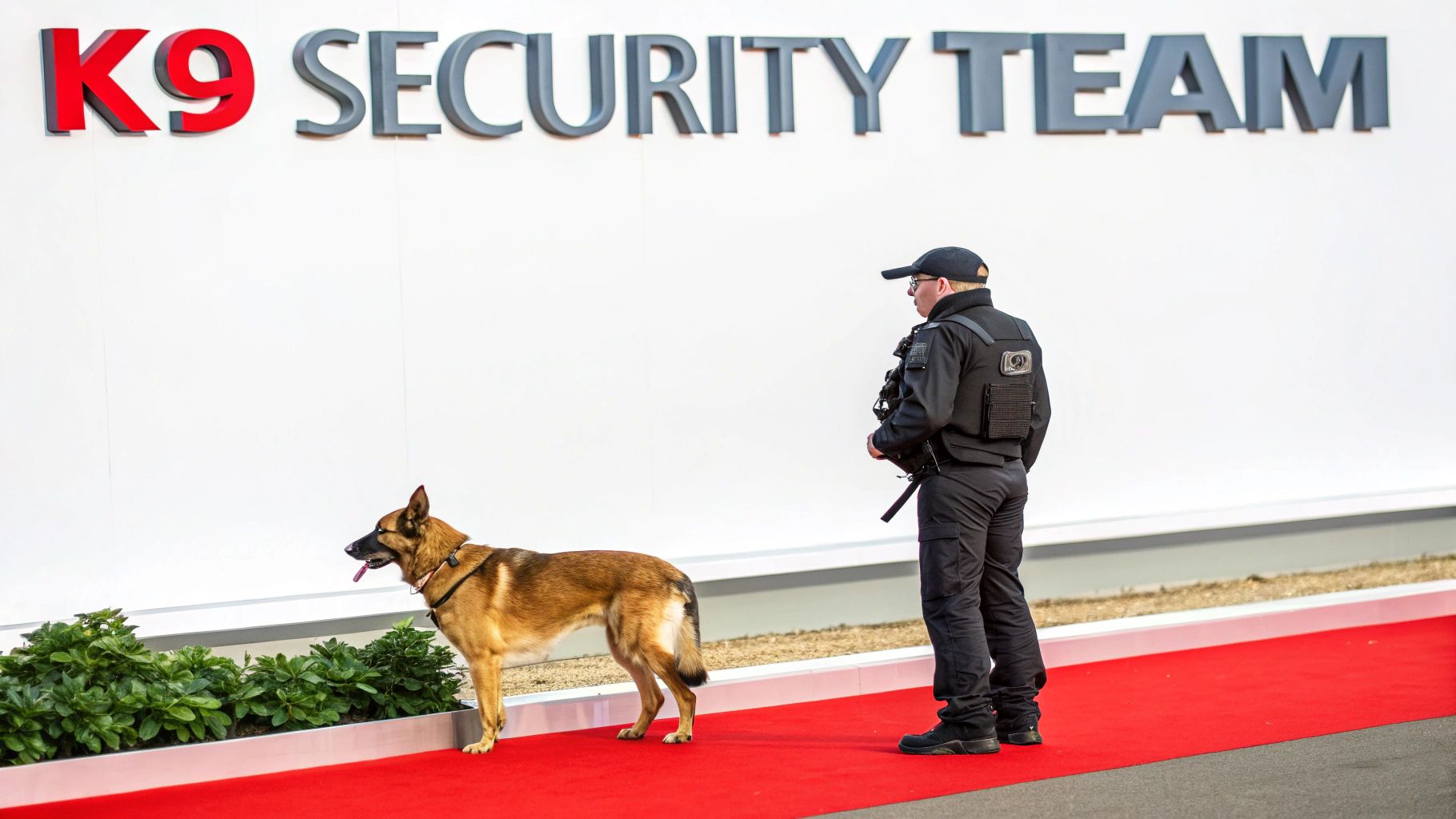

For anyone managing security in Australia, from music festival organisers to construction site managers, the need for smarter solutions is undeniable. Traditional security measures have their limits, and that’s the gap that professionally managed protection dogs are filling so effectively.
Think of a K9 unit as a cutting-edge sensory tool fused with an unmissable physical presence. A dog’s sense of smell is estimated to be 10,000 to 100,000 times sharper than ours, meaning they can detect an intruder or a hidden substance that a person would walk straight past. Their hearing is just as impressive, picking up subtle sounds from incredible distances.
A Strategic Security Investment
Bringing a K9 team on board isn’t just a reaction to a threat; it’s a proactive strategy to prevent one from ever happening. It sends a clear, powerful message that your site is protected, deterring would-be criminals before they even make a move. For an event, that means a safer atmosphere for everyone. For a business, it means your valuable assets are shielded from theft or vandalism.
What you're really investing in is a highly trained team—the dog and its licensed handler—operating as one. They’re a perfectly synchronised unit.
Here’s why they’re becoming such a vital part of modern security plans:
- Superior Deterrence: The sight of a professional K9 unit is often all it takes. Potential offenders see the dog and handler and decide to look for an easier target.
- Enhanced Detection: A dog's senses are a natural early-warning system. They can pick up on threats through scent, sight, and sound long before a human guard could.
- Rapid Response: In an emergency, a trained dog can cover ground astonishingly fast and control a situation on the handler’s command. It’s an invaluable asset when seconds count.
- Versatile Application: These teams are incredibly adaptable. They're just as effective managing crowds at a festival as they are conducting quiet, after-hours patrols of a warehouse or corporate HQ.
"A well-trained K9 team isn't just a security measure; it's a strategic asset. Their ability to deter, detect, and respond elevates a security plan from reactive to proactive, safeguarding people and property with unmatched efficiency."
This guide is designed to walk you through everything you need to know about legally and effectively deploying protection dogs in Australia, especially with leading providers like GM GROUP Services. We'll cover their roles, the strict legal requirements, and how to seamlessly integrate them into your security plan, so you can make the right call for your needs.
What Do K9 Security Teams Actually Do?
You might think a protection dog is just there to look tough, but there's a whole lot more to it. These are highly specialised teams, and understanding what they really do is key to seeing their true value for your business or event. We're moving way beyond the old-school "guard dog" idea here. Each role a K9 unit plays is a specific, strategic solution to a real-world security problem.
It's a common mistake to see a K9 team as simply an aggressive deterrent. The reality is their work is all about precision, control, and, surprisingly often, de-escalation. The handler and dog are a single, cohesive unit, trained to handle risks in a controlled, professional way—whether that’s in the middle of a packed festival or on a silent, empty construction site.
The K9 Role in Static Patrols
One of the most fundamental jobs for a K9 team is the static patrol. Picture a large construction site or a sprawling warehouse complex after dark. These places are magnets for theft and vandalism. A lone security guard can only be in one place at a time, but bringing in a K9 team completely changes the game.
The dog's incredible senses of hearing and smell create an invisible detection perimeter that stretches far beyond what any human can see or hear. As the team patrols the boundary, they aren't just looking for trouble; they're actively sensing it. Often, the mere presence of a marked K9 vehicle and the sound of an occasional bark is enough to make an intruder think twice before they even try to hop a fence.
- Practical Example: At a multi-million dollar residential development in Victoria, a K9 unit runs nightly patrols. The dog can pick up the scent of someone hiding behind building materials from over 50 metres away, alerting the handler long before a person would ever be spotted. This is proactive security that stops costly equipment theft before it happens.
Experts in Crowd Management
Big public gatherings, like music festivals or major sporting events, come with their own unique security headaches. Tensions can flare up in an instant, and trying to navigate a dense crowd is a nightmare for standard security staff. This is where a K9 team’s ability to create space and project a calm authority is invaluable.
A handler and dog team can carve a path through a crowd to escort medics, clear the way for emergency services, or help de-escalate a heated situation. Their presence commands a natural respect and encourages people to comply, often defusing a tense moment without anyone having to lay a hand on anyone else.
A K9 team isn’t just about reacting to problems; it's about presence. In a crowd, they create a bubble of order and safety, guiding behaviour and making sure everyone feels secure.
This forward-thinking approach is critical. With the boom in public events across states like NSW and QLD, the demand for security that can effectively manage large groups has skyrocketed. A professionally handled K9 unit is a standout solution.
Discreet VIP and Asset Protection
For corporate functions or when protecting high-profile individuals, security needs to be rock-solid but also low-key. A protection dog unit offers a powerful layer of close protection that doesn't feel intrusive. These dogs are trained to be calm and almost unnoticeable in social settings while remaining hyper-aware of everything going on around them.
The handler can position the dog to discreetly monitor entry points or maintain a tight, protective bubble around the person they're protecting. The dog's knack for sensing subtle shifts in behaviour or detecting a threat before it becomes obvious provides a level of security that technology or the human eye can easily miss.
In recent years, more and more Australians have been looking into security options due to rising safety concerns, especially in cities across New South Wales, Victoria, Queensland, and the ACT. While some people consider getting a personal protection dog, industry experts point out that very few owners have the time or resources for the intense, ongoing training required. This is why businesses turn to professional providers like GM GROUP Services. They get a reliable deterrent with professionally socialised and trained dogs—a standard that’s worlds away from what a typical pet owner can achieve. You can read more about this growing trend and its implications on Bonnie's.
Navigating Australian K9 Licensing and Legal Frameworks
Bringing a protection dogs Australia team onto your site isn't as simple as just hiring a security company. It means you’re stepping into a complex world of state-based laws and regulations. Getting this wrong isn’t just unprofessional—it's a massive risk that can land you in hot water with hefty fines, legal drama, and even operational shutdowns. The first step to a secure, compliant operation is understanding the rules of the game.
The legal landscape for security services, especially those using canines, is anything but uniform across Australia. Each state and territory has its own rulebook for licensing security providers, qualifying handlers, and even certifying the dogs themselves. This is why partnering with a provider who lives and breathes multi-state compliance is non-negotiable.
State-Specific Licensing Requirements
Here’s the biggest takeaway for any Australian business: a security licence from one state doesn't give a provider a free pass to operate in another. The regulations in New South Wales are a world away from Victoria's, and Queensland has its own unique framework. It’s a critical detail that many businesses miss.
A truly compliant K9 security provider must hold the correct master licence for every single state they work in. On top of that, each handler needs their own individual security licence with a specific canine handler endorsement. And yes, even the dogs often need to be officially registered or certified under state law, proving they’ve passed strict training and temperament tests.
The flowchart below gives you a glimpse into the core roles these professional teams handle, all of which are governed by these tight regulations.
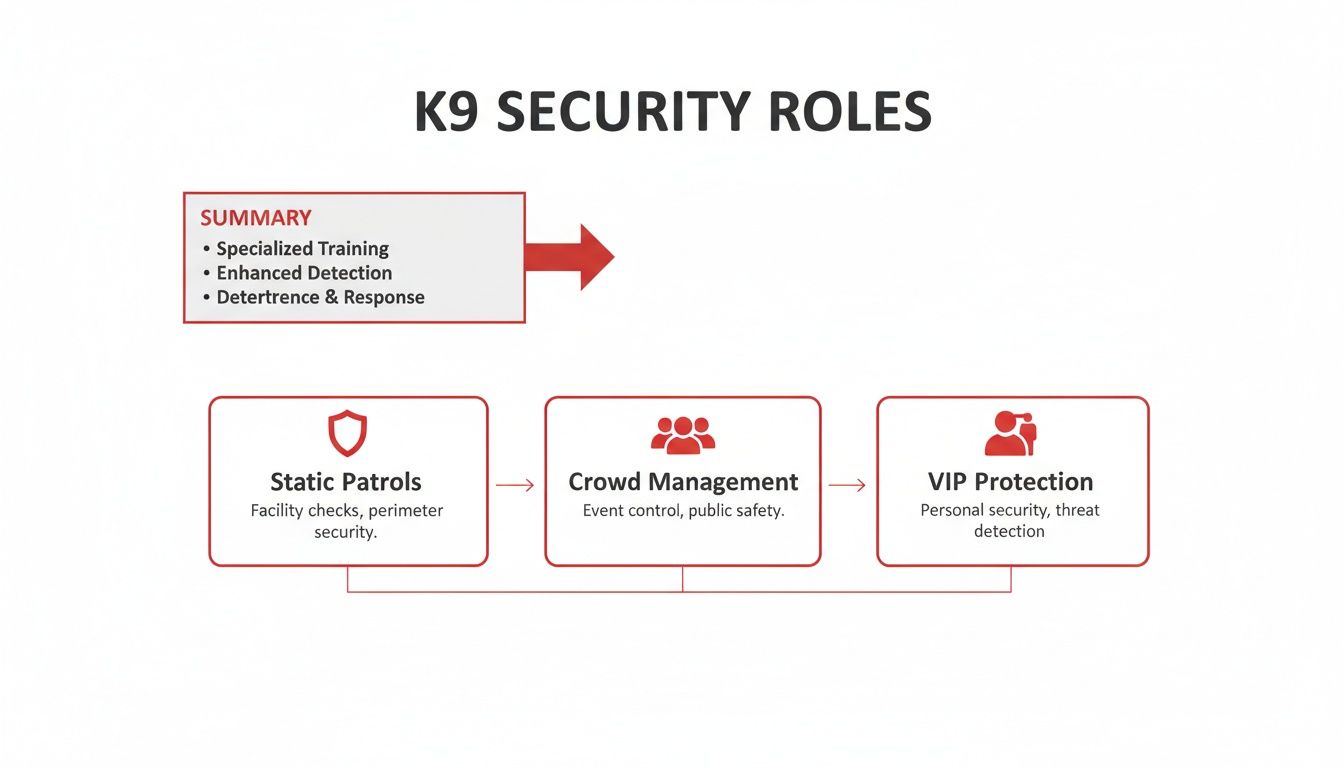

As you can see, everything from static patrols to high-level VIP protection is built on a foundation of specialised training, and every aspect has to tick the right legal boxes.
Key Legal Differences Between States
The differences in laws aren't just minor details; they're fundamental requirements that dictate how a K9 unit can be legally used. These rules typically revolve around public safety, professional accountability, and of course, animal welfare.
Let's break down some of the crucial distinctions you'll find between the major eastern states:
- Public Liability Insurance: The minimum coverage needed can vary wildly. One state might be happy with a $10 million policy, while another demands $20 million for any company deploying dogs.
- Mandatory Signage: Every state requires clear warning signs where security dogs are on duty. However, the exact wording, size, and placement of these signs can change depending on local rules.
- Dog Training and Assessment: While all states demand proper training, the official accreditation process isn't the same everywhere. Some jurisdictions require dogs to pass a state-approved assessment every year to stay certified.
- Handler Qualifications: The training needed to earn a canine handler endorsement on a security licence differs from state to state. A handler who is fully qualified in Queensland might need to complete extra training to work legally in NSW.
Choosing a K9 provider is an exercise in due diligence. You are not just hiring a service; you are entrusting a partner with your legal and reputational standing. A non-compliant provider exposes your business to immense liability.
To lay it all out clearly, the table below offers a quick comparison of some of the key requirements. Think of this as a starting point—you should always confirm that your provider, like GM GROUP Services, meets all current legislative demands in your specific state.
State-by-State K9 Security Regulations at a Glance
This table provides a snapshot of the primary legal and licensing requirements for using security dogs across NSW, VIC, QLD, and the ACT.
| Requirement | New South Wales (NSW) | Victoria (VIC) | Queensland (QLD) | Australian Capital Territory (ACT) |
|---|---|---|---|---|
| Provider Licence | Security Master Licence required. | Private Security Business Licence required. | Security Firm Licence required. | Security Master Licence required. |
| Handler Licence | Class 1D (Dog Handler) Licence. | Security Guard Licence with canine endorsement. | Class 1 Security Officer (Dog Handler) function. | Security Employee Licence with canine condition. |
| Dog Certification | Must be from an approved organisation. | Must meet specific training and temperament standards. | Must be a certified security dog under the Act. | Must be an approved animal under local regulations. |
| Insurance Minimums | $20 million public liability insurance typical. | Specifics set by the Licensing & Regulation Division. | Governed by the Security Providers Act 1993. | Varies based on operational risk profile. |
| On-Site Signage | Mandatory at all entrances. | Compulsory and must be clearly visible. | Required under legislation at all times. | Mandatory to warn public of dog presence. |
Navigating this legal maze is precisely why it pays to work with an established, proven provider. They handle the compliance headaches, letting you focus on the security benefits. This solid legal foundation is the bedrock upon which all effective and safe protection dogs Australia services are built.
The Elite Training Behind Reliable Protection Dogs Australia
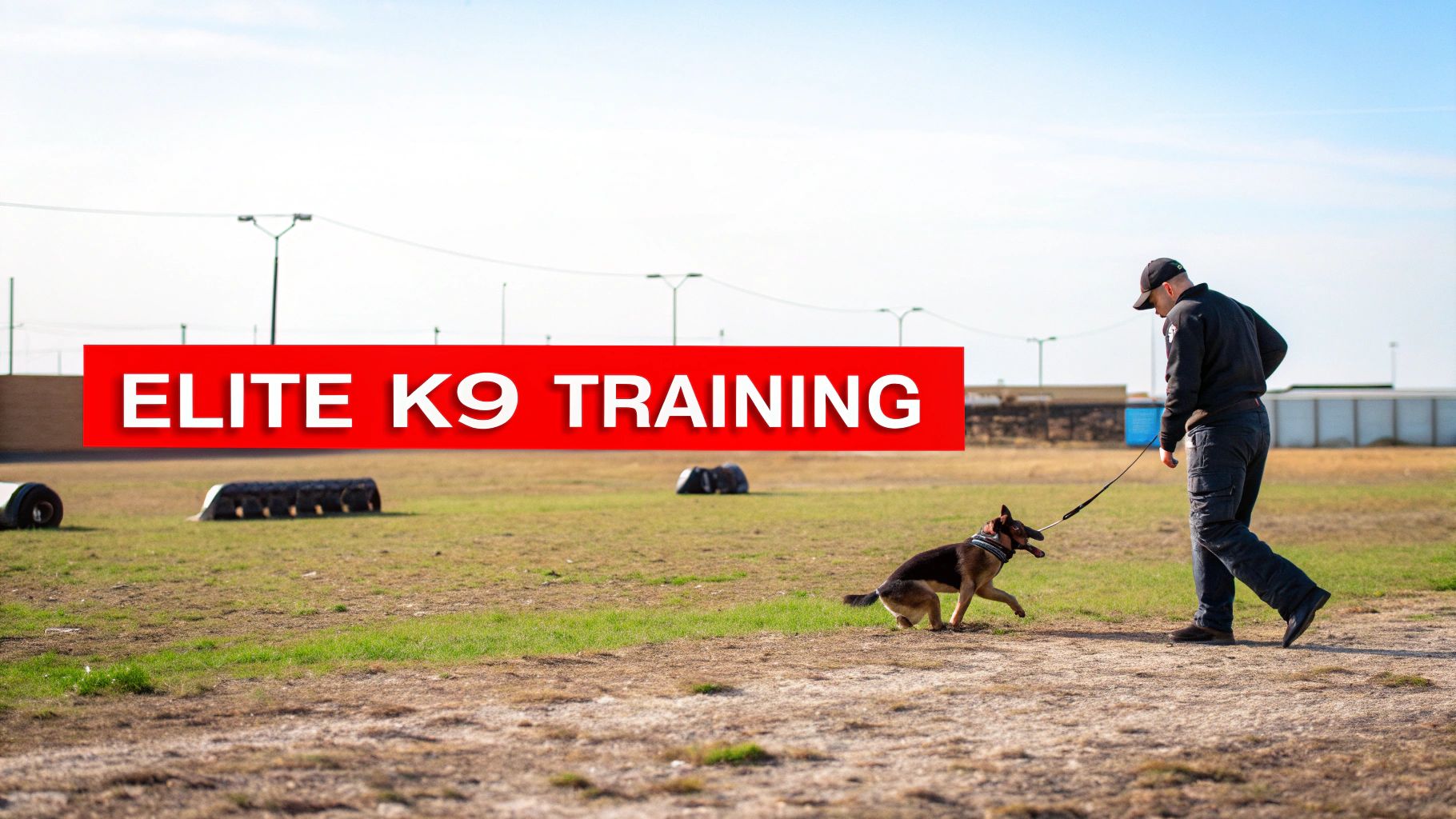
When you bring in a protection dogs Australia service, you’re placing your trust in a team where failure simply isn't an option. What really separates a top-tier security K9 from a potential liability is a massive, ongoing investment in elite training. It’s a rigorous process that melds both handler and dog into one seamless unit.
Think of it like a surgeon and their scalpel—two distinct parts that need to work in perfect harmony to be effective. This synergy doesn't just happen; it's forged through hundreds of hours of specialised training for both the human and the animal. It’s an unwavering commitment to excellence that makes sure every action is controlled, every response is measured, and every deployment is safe.
The Handler: A Foundation of Professionalism
Long before a handler ever teams up with their K9 partner, they need to have a rock-solid foundation in professional security. This isn't a job for just any dog lover. It demands a rare mix of security know-how, a calm and commanding presence, and a deep, intuitive understanding of animal behaviour.
The road to becoming a quality handler is tough. Holding the right state-specific security licences is just the ticket to get in the door—the real work starts from there.
Key areas of handler training include:
- Advanced First Aid: Handlers are often the first on the scene. They're trained not only in human first aid but also in specialised K9 first aid, ready to handle any injury their partner might sustain on the job.
- Canine Psychology and Behaviour: A handler has to be able to read their dog's slightest signal. This training dives deep into everything from recognising stress cues to reinforcing positive behaviours, keeping the dog confident and sharp.
- Conflict De-escalation: The primary goal is always to stop a situation from boiling over. Handlers are skilled communicators, trained to use their presence and voice to take control, with the K9 acting as a powerful, silent backup.
- Legal Frameworks: Handlers must have an expert-level grip on use-of-force laws and the immense legal responsibilities that come with deploying a security dog in public.
The handler is the brain of the operation. Their judgment, training, and control are what transform the dog's power into a precise security tool rather than a blunt instrument.
For anyone curious about the foundational skills behind this level of expertise, looking into how to become a dog trainer in Australia offers a great glimpse into the dedication required.
The Canine: A Disciplined and Controlled Athlete
The training a protection dog goes through is every bit as intense as their handler's. These dogs are hand-picked for their intelligence, stability, and drive, but it's the relentless, expert training that sharpens these raw traits into reliable skills.
Their education goes way beyond "sit" and "stay." The focus is on creating a canine that is completely under the handler's control, even in the most chaotic, high-stress environments. The training is structured, consistent, and built on positive reinforcement to build an unbreakable working bond.
The core pillars of a protection dog's training are:
- Flawless Obedience: The dog must respond instantly to commands—on or off the leash, and surrounded by distractions like loud noises or agitated crowds. This absolute obedience is the bedrock of safety and control.
- Controlled Defensive Response: A protection dog is trained to be defensive, not aggressive. They learn to engage a threat only on command or to protect their handler from an attack, and just as critically, to release immediately when told.
- Scent Work and Detection: Many dogs are also cross-trained to use their incredible sense of smell for detection, whether it's for specific substances or tracking people, adding a whole other layer of capability.
- Intense Scenario Drills: The team constantly rehearses realistic scenarios. This could be anything from simulating a break-in on a construction site to navigating a volatile crowd at an event, making sure their response is pure muscle memory.
This all-encompassing training ensures that when you hire a professional K9 unit, you're getting a team that is prepared, disciplined, and ready to protect your assets and people with absolute control.
Bringing a K9 Unit Into Your Security Plan
Protection dogs in Australia are a serious operational asset, but you can't just drop them into an existing security setup and hope for the best. To get real results, you need a clear, methodical approach. This is about more than just having a handler and dog show up; it’s about strategic planning that makes the K9 team a seamless, intelligent part of your overall security posture.
When you get this right, a K9 team doesn't just add a layer of security—it multiplies the effectiveness of your entire operation, keeps everyone safer, and delivers a clear return on investment.
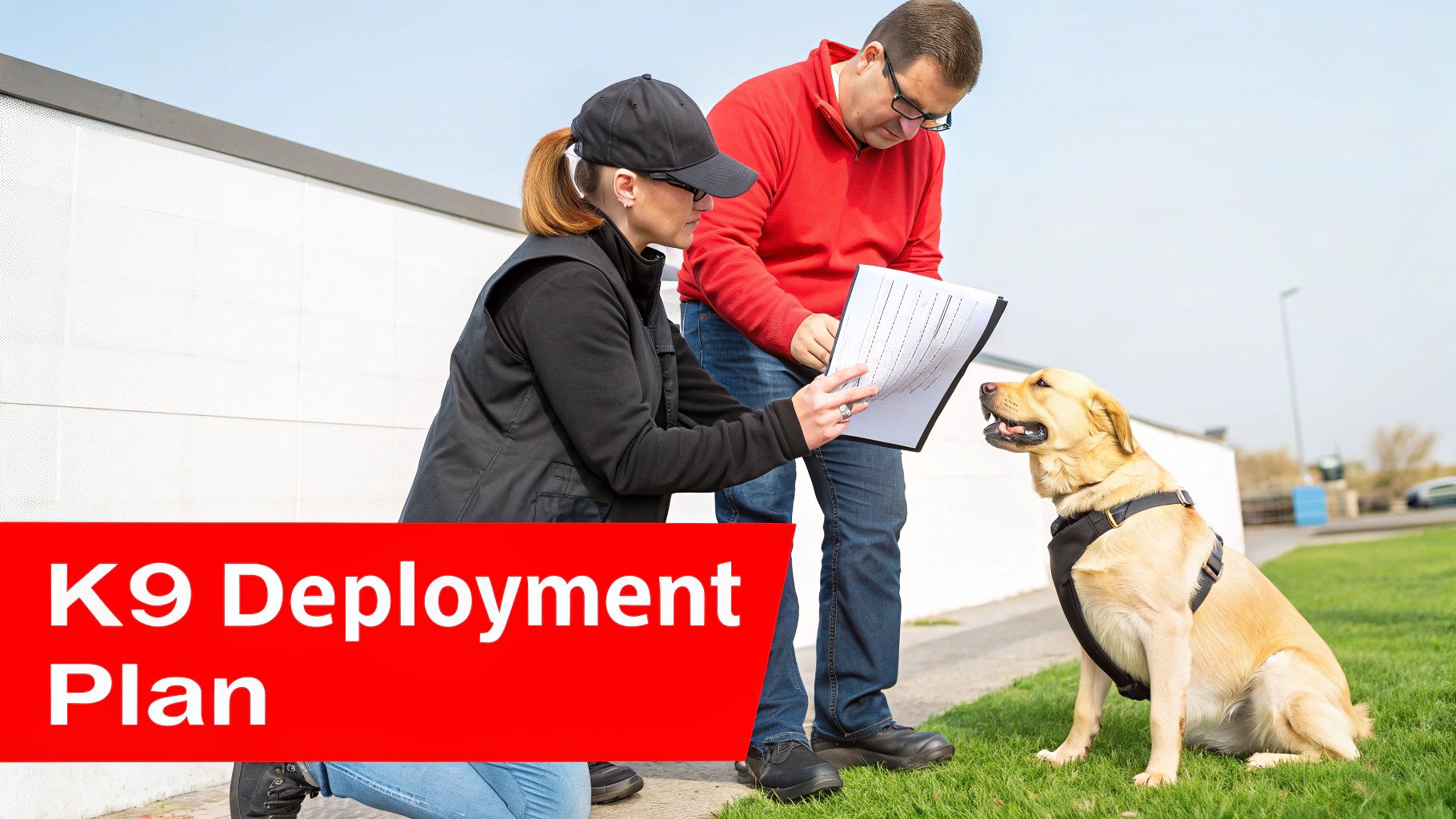
It all starts with collaboration. Your chosen security provider should sit down with you to really get under the hood of your site's unique weak spots and what you’re trying to achieve. This partnership is what turns a standard service into a security solution built specifically for your needs.
Starting with an On-Site Risk Assessment
Before a dog ever sets foot on your property, a proper on-site risk assessment is non-negotiable. This isn’t a quick ten-minute walkthrough. It’s a deep dive into your operational environment to figure out exactly what the K9 unit's mission will be. The goal is simple: find the high-risk areas, understand the potential threats, and pinpoint the specific security gaps the K9 team needs to plug.
During this phase, a security expert will be looking closely at:
- Vulnerable Points: Gaps in the fence, unmonitored back entrances, or poorly lit corners that are an open invitation for intruders.
- Operational Hours: Figuring out when you're most exposed. Is it overnight at a quiet construction site, or during the chaotic peak hours of a festival?
- Specific Threats: Getting crystal clear on what you're protecting against. Is it theft of valuable materials, stopping unauthorised entry, or managing public disturbances?
The answers to these questions directly shape the deployment strategy that comes next.
Creating a Clear Deployment Strategy
Once everyone understands the risks, the next job is to build an actionable deployment plan. Think of this document as the operational playbook for both the K9 team and your own staff, making sure everyone is on the same page. It’s the blueprint for how the protection dogs Australia unit will operate on the ground, day in and day out.
A solid deployment strategy always includes:
- Defined Patrol Routes: Mapping out specific routes that hit all the high-risk spots, but with enough variation to keep would-be criminals guessing. Predictable patterns are a security risk in themselves.
- Communication Protocols: Setting up clear channels between the K9 handler and your on-site team. This means established radio protocols and contact lists so that coordination is instant and seamless.
- Incident Response Procedures: Laying out step-by-step instructions for how the K9 team will react to different scenarios, from detecting an intruder to de-escalating a public safety issue.
"A deployment plan is the bridge between strategy and action. It ensures the K9 unit isn't just a presence, but a proactive tool that anticipates threats and responds with precision and control."
Upholding Animal Welfare and Verifying Insurance
Beyond the tactics and logistics, there are two elements you can never compromise on: animal welfare and insurance. Any professional K9 provider worth their salt puts the health and safety of their dogs first. That means mandatory rest periods, constant access to fresh water, proper shelter, and regular health checks. A dog that’s tired, stressed, or unwell is not just ineffective, it’s a liability.
Just as critical is checking your provider's insurance. Make sure they hold a current public liability policy that specifically covers K9 operations. In Australia, that coverage should be adequate for your state’s regulations, which often means $20 million or more. This is what protects your business from massive financial risk in the unlikely event something goes wrong.
Working with a reputable provider like GM GROUP Services means these critical welfare and compliance standards are already baked into their operations, giving you total peace of mind.
How to Budget for Professional K9 Security Services
When you start looking into professional protection dogs Australia services, you’ll quickly realise that budgeting for them goes way beyond a simple hourly rate. Think of it less as an expense and more as a high-value investment in proactive security. The cost directly reflects the years of expertise, the level of risk involved, and the incredibly specialised skills of both the dog and its handler.
The final figure isn't just pulled out of a hat. It's a carefully calculated number that covers the massive investment a provider makes in training, proper handler licensing, premium insurance, and the continuous welfare of their highly skilled canines. It’s what ensures you get a reliable, effective, and legally compliant security team on your site.
Key Factors Influencing K9 Service Costs
The price you’re quoted will always come down to the specific demands of your site or event. It makes sense, right? A short-term, low-risk job is naturally going to cost less than a long-term contract at a high-threat location. Once you know what to look for, the main cost drivers are actually quite clear.
Here are the key variables that directly shape the investment required:
- Handler Expertise and Dog Specialisation: A seasoned handler paired with a dog trained for a specific task, like sniffing out explosives, will command a higher rate than a team doing general patrol duties. You're paying for years of advanced, ongoing training and real-world experience.
- Contract Duration: Long-term contracts, like a year-long gig securing a major infrastructure project, will often attract a better daily or weekly rate. It's a different ball game compared to a one-off, eight-hour deployment for a music festival.
- Site Risk Profile: A high-risk environment changes everything. If your site has a history of break-ins or you're running a high-profile event needing VIP protection, it demands a much more intensive security plan, and the pricing will reflect that.
- Scope of Duties: The complexity of the job matters. A team conducting static perimeter patrols has a different role—and cost structure—to one performing dynamic crowd management or detailed site sweeps.
Comparing Deployment Scenarios
To make this a bit more concrete, let's look at two common scenarios. A single-night music festival is an intense, high-pressure environment. It needs a dynamic team skilled in crowd control and de-escalation for a solid 8-hour shift. That’s a short-term deployment demanding specialised, public-facing skills.
On the other hand, you might have a six-month contract for overnight patrols at a construction site. This job requires a completely different skillset, one focused on deterrence, early detection, and dealing with intruders in a static environment. While the total contract value is much higher, the per-shift rate can often be more economical because of the longer commitment and predictable routine.
"Viewing K9 security as a capital investment in risk mitigation, rather than a simple operational cost, is key. The ROI is measured in the incidents that never happen—the theft, vandalism, or disturbances prevented by their professional presence."
Ultimately, budgeting for a K9 unit is about investing in genuine peace of mind. By getting a handle on these cost factors, you can work with providers like GM GROUP Services to build a security plan that not only delivers maximum protection but also provides a clear return by stopping costly incidents before they even start.
Frequently Asked Questions About Protection Dogs Australia
Thinking about bringing a protection dog unit on board is a big step. It’s a serious investment in your security, so it’s only natural you’d have a few questions before you commit. To help clear things up, we’ve put together direct answers to the most common queries we hear from business and event managers.
Are Protection Dogs Safe Around My Customers and Staff?
Yes, absolutely. A professionally trained protection dog operates under the constant, strict control of a licensed handler. It's a partnership. Their temperament is carefully selected and then shaped through training to keep them calm and focused, even in the busiest environments like a crowded festival or a corporate lobby.
These dogs are trained to be defensive, not aggressive. They will only engage on a direct command from their handler or if that handler is physically attacked. Their very presence is the primary tool—a powerful deterrent. Every single aspect of their deployment is meticulously planned to make public safety the number one priority.
What’s the Real Difference Between a Guard Dog and a Protection Dog?
This is a critical distinction for both your security outcomes and legal compliance. A ‘guard dog’ is typically an untrained animal left alone on a property to bark at intruders. A professional protection dog, on the other hand, is a highly skilled canine athlete working as part of a licensed security team. It has gone through hundreds of hours of specialised training to respond to specific commands and threats in a controlled, predictable, and legally sound way.
The key distinction lies in control and training. A protection dog is an integrated part of a professional security unit, operating with precision under a handler's command.
Do I Legally Need Special Signage for a K9 Unit on Site?
Yes, you do. In every Australian state and territory, including NSW, VIC, QLD, and the ACT, you are legally required to display clear, prominent signage. These signs must be placed at all site entrances, making it obvious that security dogs are on duty. This is a non-negotiable legal requirement that also adds a powerful layer of deterrence. A professional provider will handle the installation of compliant signage as part of their service.
Ready to see how a professionally managed K9 unit can elevate your security? The experts at GM GROUP Services deliver fully licensed, trained, and effective protection dog teams across NSW, VIC, QLD, and the ACT. Secure your assets and ensure public safety with a team you can trust. Contact us today to arrange a comprehensive site assessment.