


Loss prevention services are no longer a narrow response to shoplifting. In Australia, 595,660 people were recorded as victims of theft in 2024, the highest level in 21 years, and 45.1% of theft incidents occurred in retail locations, up from 31.6% in 2010, according to the Australian Bureau of Statistics. That shift puts store-level visibility, staff safety, evidence capture and calm incident response directly on the profit-protection agenda.
A guard at the entrance or a bank of cameras may still have a place, but neither control works well in isolation. Retailers, hospitality operators, event organisers and construction managers need a service model that identifies vulnerabilities, discourages offending, protects people during confrontation and produces reliable information after an incident.
Why Loss Prevention Services Matter More Than Ever
The commercial case starts with margin. The Australian Institute of Criminology documented a major retail example where theft equivalent to about 1% of turnover represented A$120 million in losses, exceeding half of that business's after-tax profit. The same Australian retail crime research records National Retail Association loss prevention expenditure of A$214.6 million in 2014/15, equal to 35% of total retail crime costs.
Those figures show why loss prevention shouldn't sit in a purely reactive security budget. Missing stock, damaged property, interrupted trading, staff distress and weak evidence all affect the operating result. A well-designed programme treats prevention as a control over avoidable margin leakage.
Retail exposure is becoming more concentrated
The ABS trend matters operationally, not just statistically. When retail becomes the most frequent location for theft, the response needs to move closer to the sales floor, stockroom, loading area and customer interface. Staff positioning, sightlines, product placement, CCTV coverage and clear escalation procedures become part of the same operating system.
The pressure is also visible at state level. Victoria recorded 99,114 retail crime offences in the year to June 2025, up 20% year-on-year, while thefts from stores rose 26% to 36,254 incidents, as reported by Monash Lens. In NSW, retail theft reached 29,552 incidents after rising 5.1% over two years, according to the same source.
The audience is broader than retail
A licensed venue manages alcohol, queues, intoxication risks and staff exposure to conflict. An event organiser manages access points, crowd movement, restricted areas and lost property. A construction manager protects equipment, materials and perimeter access after hours.
Operational rule: If a service only counts incidents after they happen, it's reporting loss, not preventing it.
The effective approach combines visible deterrence with detection, trained intervention, evidence capture and continuous review. The following strategies show how operators can build that protection without defaulting to a generic guard-and-camera package.
Understanding Loss Prevention Services and Layered Controls
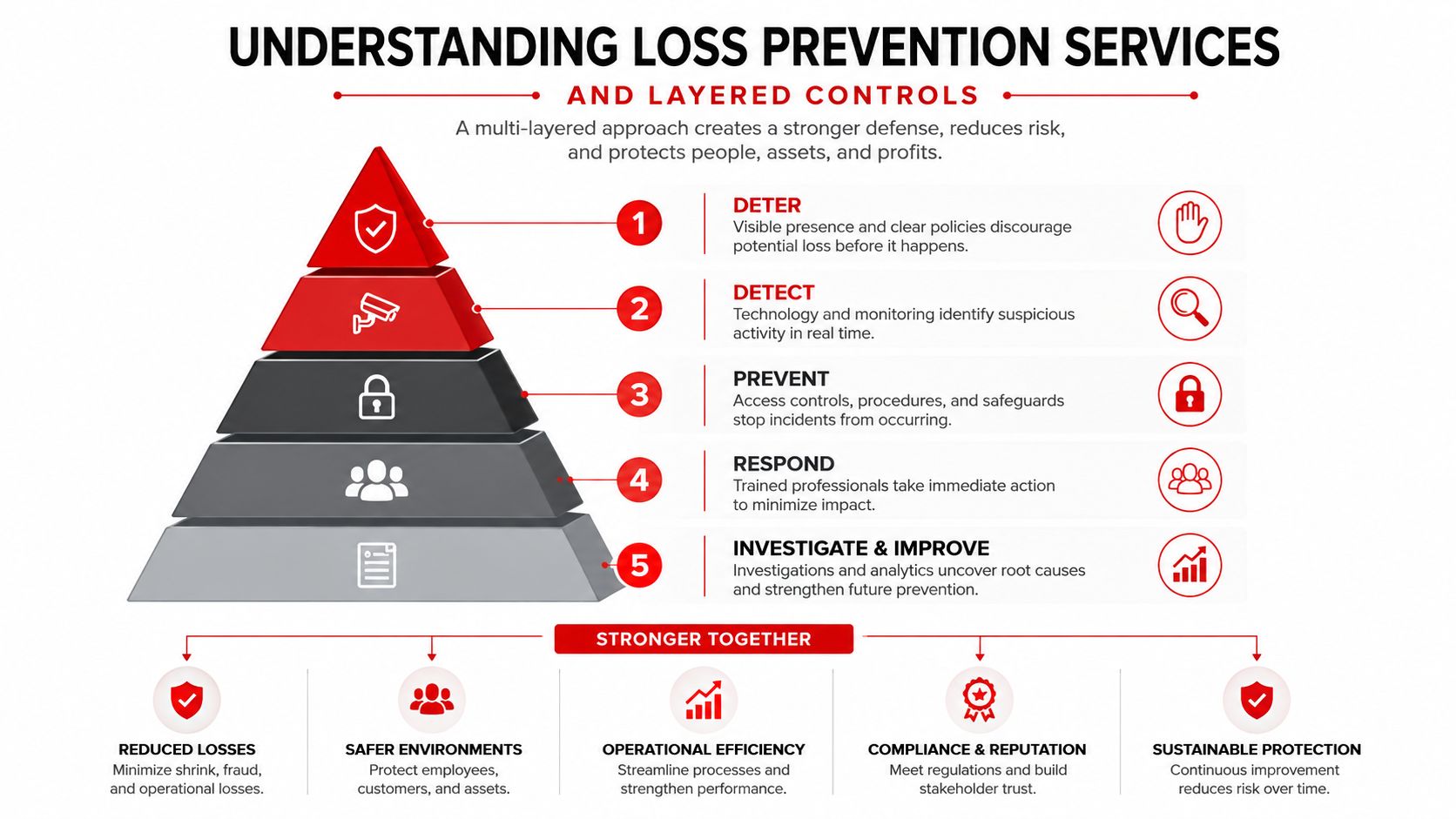
Loss prevention services combine people, procedures, technology and review. The practical question isn't whether a business has a guard or CCTV. It's whether each control performs a distinct job and whether information moves quickly between them.
A useful layered model begins with deterrence. Uniformed officers, controlled entry points, visible patrols and a well-managed shop floor tell a potential offender that the site is observed. Detection follows through CCTV monitoring, staff awareness, stock controls and access alerts. Prevention closes the gaps that detection exposes, such as poor sightlines, unsecured stock or inconsistent receiving procedures.
Response must then be specific. Staff need to know who calls a supervisor, who preserves footage, who manages the customer area and when police or emergency services are contacted. Improvement completes the cycle through incident reviews, trend analysis and changes to deployment.

Why isolated controls underperform
A static guard can deter activity at a doorway but may miss concealment on a crowded floor. CCTV can show what happened, yet a camera operator may not have anyone available to intervene. Covert officers can identify patterns, but they need a safe escalation pathway and lawful evidence-handling process.
The layers should therefore work together:
- Visible presence: Discourages opportunistic offending and gives customers a clear point of assistance.
- Active observation: Identifies behaviour, access anomalies and developing incidents rather than waiting for a complaint.
- Procedural controls: Standardises receiving, refunds, stock movement, key handling and incident escalation.
- Response capability: Puts trained personnel in the right place without encouraging unsafe confrontation.
- Evidence and review: Creates usable reports, footage references and corrective actions.
For complex sites, a reliable map of entrances, restricted zones, blind spots, evacuation routes and high-value areas helps supervisors brief personnel consistently. A digital resource such as venue mapping for operations can support that planning, particularly where a venue changes layout for events, trading periods or temporary access arrangements.
Core Loss Prevention Service Models Explained
Each model solves a different operational problem. Choosing one because it's familiar often creates expensive gaps.
Static guards provide a visible, immediate presence at entrances, exits, service counters, loading docks or restricted areas. They suit high-traffic retail, shopping centres, hotels and event access points where customer service and observation matter. Their limitation is fixed coverage. A guard cannot watch every aisle or perimeter at once, so positioning and handover discipline are critical.
Mobile patrols extend coverage across shopping centres, construction compounds, warehouses and surrounding car parks. Randomised checks are harder to predict than a fixed routine, while scheduled inspections support accountability. Patrols offer breadth rather than continuous observation, so they work best with alarm verification, site instructions and clear reporting.
CCTV monitoring gives supervisors a wider view and preserves evidence. It's valuable for reviewing incidents, monitoring entrances, protecting high-shrink areas and supporting after-hours response. It won't replace a trained person on the ground, particularly when an event involves conflict, vulnerable staff or an immediate safety decision.
Covert operations focus on concealment, repeat offending, internal collusion and process abuse. They can reveal behaviour that a highly visible officer may never see. The trade-off is that covert work requires careful briefing, lawful procedures, strong supervision and a plan for safe intervention.
K9 units offer a specialised deterrent and search capability for selected environments, including large venues, events, warehouses and perimeter-sensitive sites. They're not a universal retail solution. Their value depends on the threat profile, handler competence, site rules and how the unit integrates with other personnel.
| Service Model | Best For | Key Advantage | Typical Deployment |
|---|---|---|---|
| Static guards | Entrances, high-traffic retail, venues | Immediate visibility and response | Fixed post during trading or event periods |
| Mobile patrols | Large sites and dispersed assets | Broad physical coverage | Scheduled and variable perimeter checks |
| CCTV monitoring | Sites with camera infrastructure | Observation and evidence continuity | Remote or on-site monitoring of priority zones |
| Covert operations | Concealment and repeat offending | Detects behaviour visible controls may miss | Targeted floor activity and internal review |
| K9 units | Events, warehouses and sensitive perimeters | Specialised deterrence and search support | Planned deployments with trained handlers |
The strongest deployment is often blended. A retailer might use visible personnel at the front, covert coverage on the floor and camera review around stock movement. A venue may combine access control, mobile response and CCTV oversight. The right question is not “Which service is cheapest?” It's “Which combination closes the actual gap?”
Implementing Loss Prevention Services Step by Step
Start with a site-specific risk assessment, not a provider's standard package. Walk the premises at different operating periods and document entrances, exits, blind spots, high-value stock, staff-only areas, delivery routes, cash points, queue locations and places where people can leave without passing a staffed position.
1. Define the loss problem
Separate external theft from internal process failures, access issues, damage, aggressive behaviour and evidence gaps. A store with frequent low-value concealment needs a different deployment from a construction site with perimeter breaches. A licensed venue may need more attention on queue management, alcohol control and de-escalation.
2. Set measurable objectives
Choose measures that managers can act on. These might include documented patrol completion, response quality, footage availability, staff training completion, incident-report accuracy, stock variance and safety outcomes. Avoid targets that encourage unsafe apprehension or pressure officers to prioritise merchandise over people.
3. Design the deployment
Match the officer's role to the environment. Specify post locations, patrol routes, handover requirements, radio procedures, escalation thresholds and reporting templates. For an event, brief the team on accreditation areas, emergency exits, artist or VIP movements and the difference between refusing entry and managing a developing conflict.
4. Integrate employees
Retail staff should know how to request support without chasing a suspected offender. Venue staff need a shared language for intoxication, refusal of service and escalation. Construction teams need a process for securing plant, recording visitors and reporting damaged fencing or forced access.
5. Review the service
Hold regular operational reviews using incident reports, supervisor observations and management feedback. Change posts when offenders adapt, alter camera views when stock moves and revise briefings after every serious event.
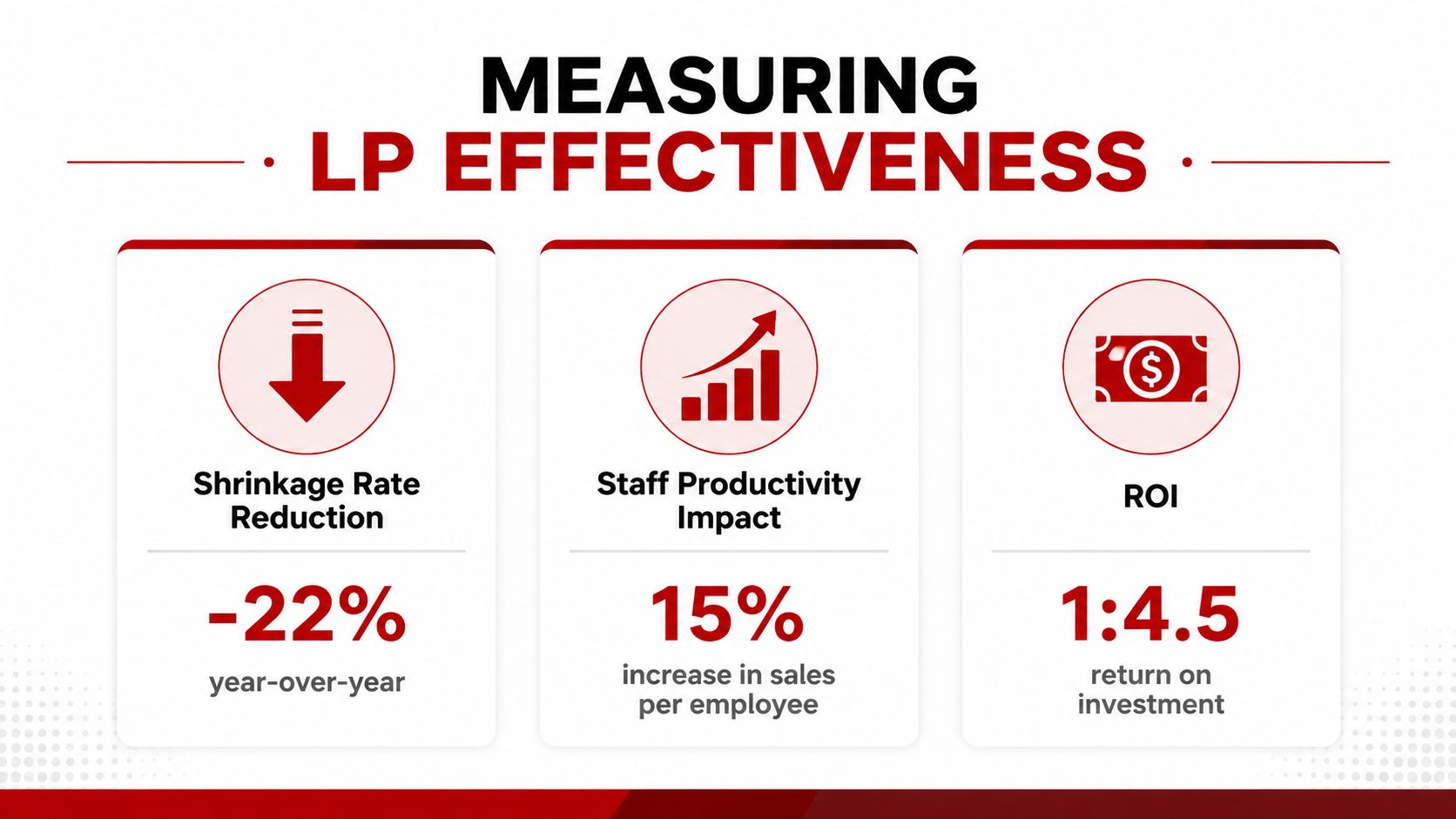
A service provider should supply evidence of delivery, not just a roster. Ask for time-stamped reports, supervisor checks, incident escalation records and documented corrective actions. If the provider can't show how its work changes site behaviour, the contract has become a presence purchase rather than a prevention programme.
Measuring ROI and Loss Prevention Effectiveness
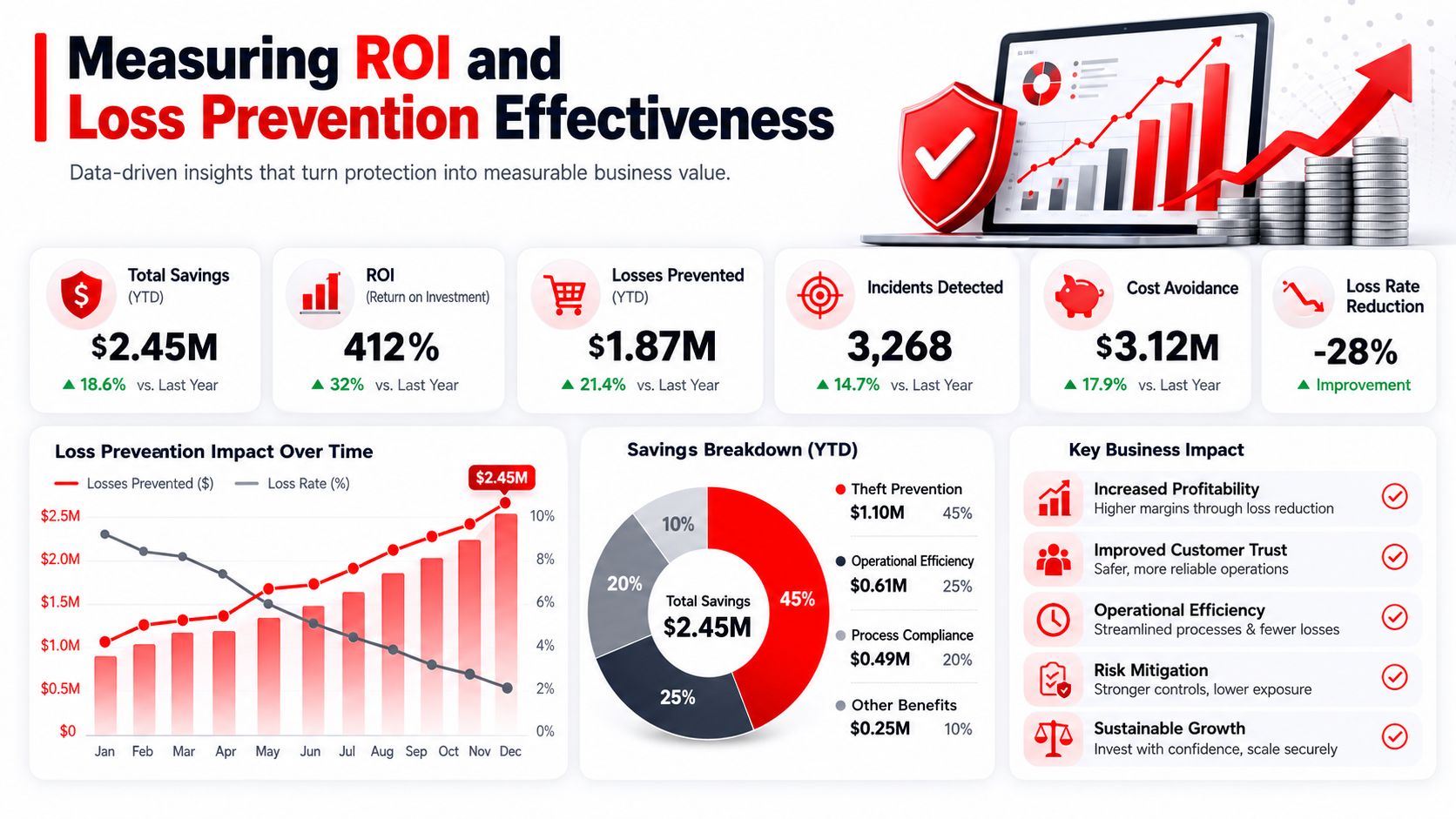
A lower incident count doesn't automatically mean better loss prevention. Reports may fall because staff stopped recording events, customers stopped reporting them or officers weren't positioned where incidents occurred. Effective measurement connects prevention activity with financial, operational and safety outcomes.
The Australian retail data provides useful context. The National Retail Association recorded A$4.298 billion in total crime-related loss during 2021–22, including A$2.904 billion in external loss and A$2.292 billion from external theft, according to its retail crime trends analysis. The same source says an average external theft incident involved 2–5 items worth about A$415.
That pattern points to a measurement problem. High-frequency, lower-value concealment and walkout theft can evade occasional checks, while a single high-value event can distort a monthly result. Operators need both trend measures and incident-level detail.
Build a balanced scorecard
Track these measures together:
- Shrinkage and variance: Compare expected stock, recorded sales, transfers, receiving records and physical counts.
- Incident quality: Review whether reports include times, locations, descriptions, witnesses, actions and preserved footage references.
- Loss per incident: Identify whether controls are reducing repeat patterns or only addressing isolated events.
- Coverage delivery: Confirm that posts, patrols, camera checks and briefings happened as agreed.
- Staff safety: Record threats, assaults, near misses, injuries, de-escalation use and escalation decisions.
- Customer experience: Watch complaints, queue disruption, inappropriate challenges and the effect of security presence on the trading environment.
ROI should compare the cost of the service with prevented or reduced loss, avoided damage, recovered operational time and measurable process improvements. Don't count every missing item as a prevented loss. Use conservative assumptions, document the calculation and separate verified savings from reasonable estimates.
For technology-led programmes, a calculator such as Purple's wireless ROI tool can help structure an investment discussion, provided the inputs reflect the site's actual costs and operating conditions.
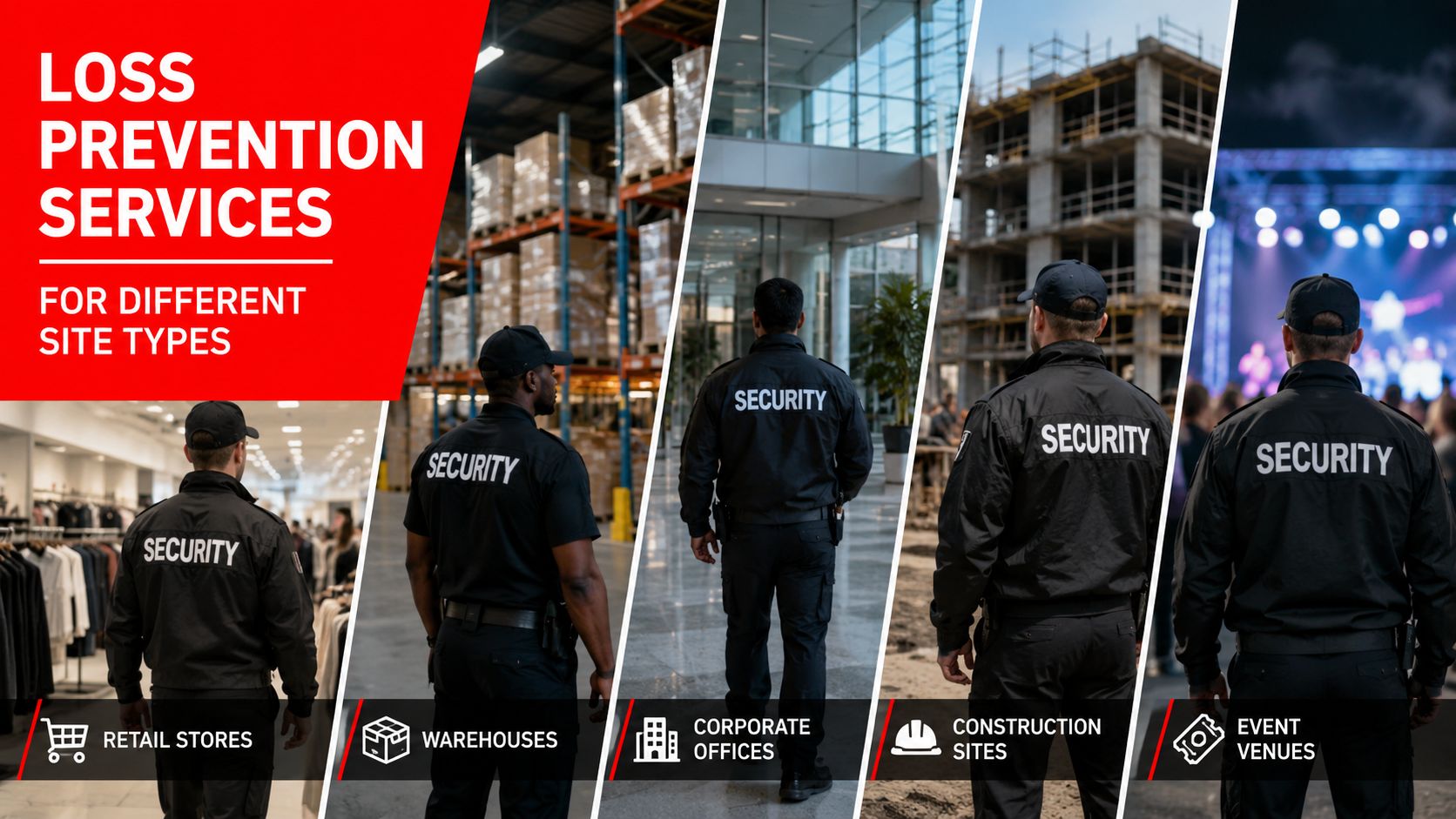
Loss Prevention Services for Different Site Types
A retail floor, a licensed venue and a construction compound may all use loss prevention services, but they don't need the same deployment.
A retailer dealing with repeated concealment should start with visibility and movement. Position officers where they can observe entrances, exits and vulnerable aisles without blocking customers. Add covert coverage when patterns suggest repeat offending, and use CCTV review to connect floor activity with stockroom or exit movements. The emphasis is high-frequency observation, not a dramatic response to every low-value incident.
Hospitality and licensed premises
NSW data shows licensed premises were the most common retail theft target, accounting for 21% of incidents, while liquor represented 40% of recorded retail theft items. The NSW Bureau of Crime Statistics and Research update also records rises in theft of liquor and clothing or footwear, highlighting the need for category-specific controls.
A pub or club might combine door supervision, internal floor coverage, CCTV monitoring and a mobile response option. Staff should know who handles suspected theft, who manages an intoxicated or hostile person, how to preserve evidence and when the matter becomes a police or emergency response. A security officer who escalates an argument over a bottle can create more risk than the original loss.
Events and festivals
Event organisers need security to protect access, people and the experience at the same time. Deployment should cover accreditation checks, gates, backstage boundaries, crowd pressure points, cash or merchandise areas and emergency routes. Supervisors should run a pre-event briefing with the organiser, venue management, medical team and responsible service personnel so that everyone understands escalation and radio protocols.
Construction and industrial sites
A construction site benefits from layered perimeter control. Gatehouse officers verify access, mobile patrols inspect less visible boundaries and CCTV supports after-hours review. The brief should identify plant, tools, fuel, materials, delivery schedules and areas where lighting or fencing is weak. Incident reporting must capture damage and attempted access, not only confirmed theft, because repeated attempts reveal where controls are being tested.
Compliance Requirements and Common Misconceptions
Australian security work is regulated at state and territory level, so operators should verify licensing requirements for the jurisdiction, role and activity. A provider should be able to explain how it checks licences, supervises officers, records training and manages subcontractors. Hospitality operators also need to align security activity with RSA obligations, venue policies and lawful refusal-of-service procedures.
Incident reporting needs the same discipline. Reports should be factual, time-stamped and proportionate. They should distinguish observation from assumption, record who was notified and preserve relevant footage or other evidence through the organisation's approved process.
More visibility isn't always better
A uniformed officer can discourage opportunistic offending, but excessive visibility can make a retail environment feel hostile or push offenders towards less observable areas. In a venue, an unnecessarily forceful approach can inflame a dispute. The deployment should be visible where deterrence matters and discreet where observation, customer comfort or evidence gathering matters more.
CCTV doesn't solve a response gap
Cameras record. They don't speak to an upset customer, protect a staff member during a confrontation or safely manage a crowd. Operators need camera placement, retention procedures, monitoring responsibilities and a response pathway that works in real time.
Loss prevention includes people
Recent Victorian data shows the pressure is not limited to stock. Retail theft rose 11.7% in the year to 31 March 2026, reaching 20,998 alleged offender incidents, while the broader theft category rose 6.3% to 44,257 incidents, according to Ragtrader's report on Victorian retail theft. Service design must therefore include de-escalation, staff protection, confrontation management and post-incident support.
Digital exposure also deserves attention where payment systems and customer data connect to physical operations. For organisations assessing card-data controls, guidance on penetration testing for PCI DSS can sit alongside the physical loss prevention review. It doesn't replace licensed security operations, but it helps prevent a narrow definition of loss.
Choosing the Right Loss Prevention Partner
A suitable partner starts with questions, not a sales package. Ask the provider to describe the risks it sees at your site, where it would place personnel, what it would leave uncovered and how it would adjust the deployment after incidents. A credible proposal should explain the operational logic behind every post, patrol, camera task and reporting requirement.
Check the operating model
Review:
- Licensing and compliance: Confirm the provider can meet applicable state requirements and venue obligations.
- Supervision: Ask who visits the site, how often supervisors review performance and who handles urgent issues.
- Training: Check for de-escalation, incident reporting, customer interaction, emergency response and environment-specific briefings.
- Reporting: Require clear records with times, locations, actions, notifications and supporting evidence.
- Service flexibility: Make sure coverage can change for trading periods, events, incidents, construction stages or emerging patterns.
- Performance reviews: Establish a cycle for examining shrinkage, safety, response quality, customer impact and corrective actions.
The service level agreement should define response expectations, escalation authority, replacement arrangements, reporting standards, privacy responsibilities and review dates. Avoid vague promises such as “maximum protection”. Specify what the provider will do, when it will do it and how you'll verify delivery.
GM GROUP Services is one Australian option that lists loss prevention, covert operations, static guards, K9 units, vehicle patrols, monitoring and risk assessments among its security services across NSW, Victoria, Queensland and the ACT. Operators should still compare its proposal with other providers against the same site-specific criteria.
Australian government on-page SEO guidance recommends unique titles, early keyword placement and titles below 70 characters, principles that also reflect a useful discipline for service briefs: make the requirement clear, specific and easy to verify. The Australian Government SEO guidance supports that approach for digital content, while a security contract needs the same clarity in its operational language.
Start with a site walk, document the loss patterns, set objectives and request customized proposals. Then review performance as an evolving profitability protection programme, not a static guard contract.
Talk with GM GROUP Services about a fit-for-purpose loss prevention plan for your retail site, venue, event or construction operation. Request a site risk assessment and a proposal covering visibility, response, de-escalation, evidence capture and ongoing supervision.