

An event security company is your most critical partner in managing risk and ensuring a flawless guest experience. Their role extends far beyond placing guards at doors; a professional team are specialists in creating a safe, controlled environment that protects your guests, assets, and brand reputation. They exist to ensure your event is a resounding success from the moment the first guest arrives until the last one leaves.
Why a Professional Event Security Company Is Essential for Success
Hiring a professional event security company isn't just a good idea—it's one of the most critical investments you can make as an organiser. It’s the difference between hoping for a smooth event and actively engineering one. A truly professional team doesn't just react to problems; they proactively prevent them through meticulous planning and expert execution.
This proactive mindset is vital. Today's events, regardless of size, face a spectrum of risks, from crowd surges and gatecrashers to medical emergencies. An experienced event security company has seen it all and knows how to anticipate these challenges, building a robust plan to neutralise them before they can disrupt your event.
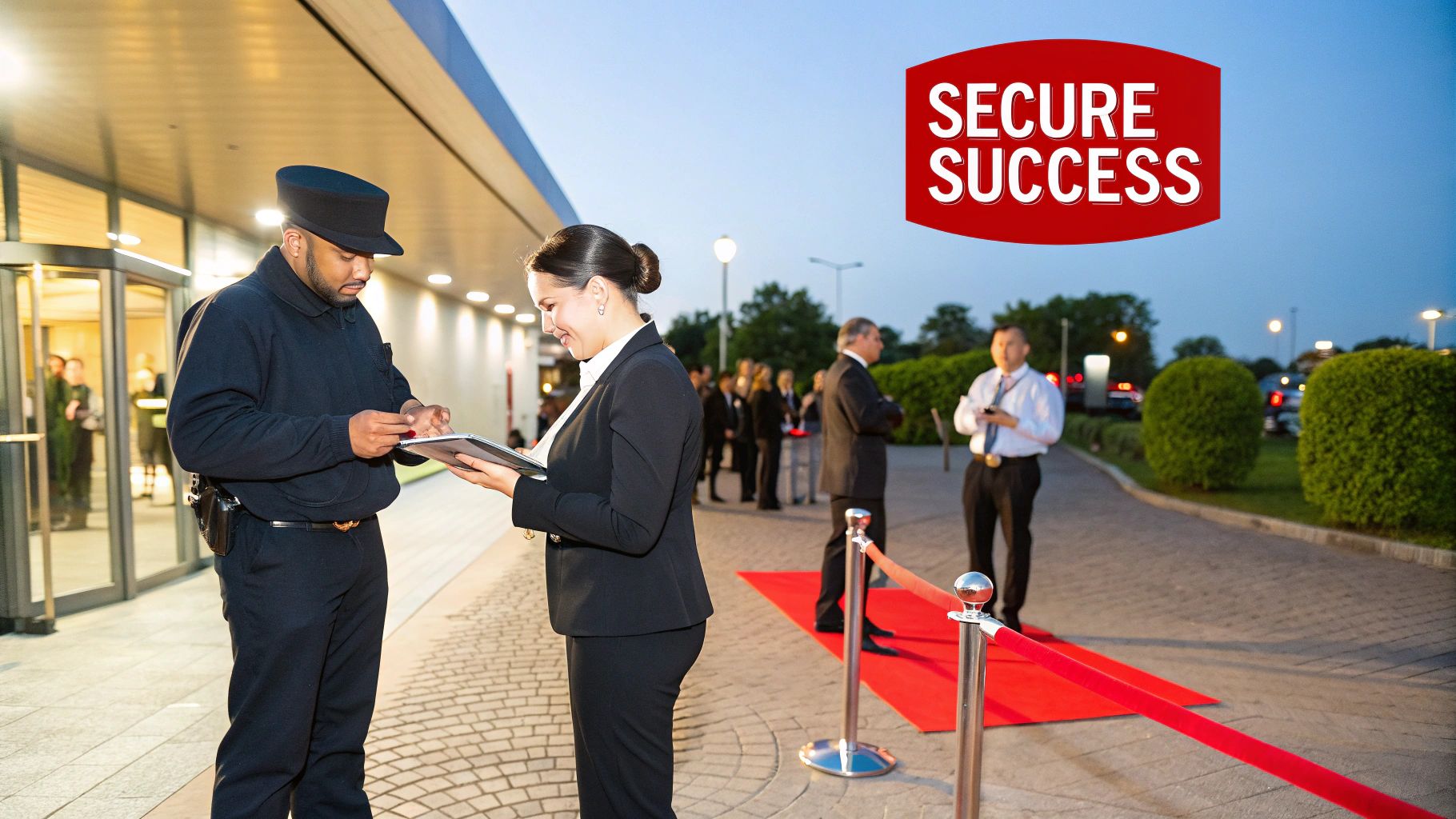

More Than Just Guards at the Gate
One of the biggest mistakes is treating security as a simple line item on a budget. It's a core component of the guest experience. When attendees feel safe and well-cared-for, they can relax and enjoy themselves, which reflects positively on your brand.
A professional event security company delivers tangible value:
- Peace of Mind: Knowing a trained team is handling every safety detail frees you up to focus on running a brilliant event. For example, instead of you worrying about a bottleneck at the main entrance, your security lead has already deployed two extra guards to manage the flow, keeping everyone moving smoothly.
- Proactive Risk Mitigation: They don't just show up on the day. An actionable insight is their pre-event risk assessment, where they might identify an unlit car park as a potential hazard and recommend portable lighting towers to prevent trips and deter theft.
- Brand Protection: A safe, professionally managed event boosts your reputation and encourages repeat attendance.
The private security sector in Australia is a serious industry, pulling in over $11 billion in revenue annually and employing more than 180,000 people—a workforce larger than the Australian police and defence forces combined. With a projected annual growth of 3%, this expansion is fuelled by the increasing need for expert crowd management at events across NSW, Victoria, and Queensland. You can read the full research about the Australian security industry to see the data for yourself.
Here's a quick breakdown of a professional security partner's responsibilities.
Core Responsibilities of an Event Security Company
This table summarises the primary functions a professional event security company performs to ensure event safety and success.
| Responsibility Area | Key Actions and Outcomes |
|---|---|
| Risk Assessment & Planning | Identify potential threats (e.g., crowd control, theft, medical issues). Develop a customised security plan and emergency response procedures. |
| Access Control & Screening | Manage entry/exit points, verify tickets/credentials, and conduct bag checks or screenings to prevent prohibited items from entering. |
| Crowd Management | Monitor crowd flow, prevent overcrowding, de-escalate tensions, and guide attendees safely during normal operations and emergencies. |
| Asset Protection | Safeguard valuable equipment, merchandise, and infrastructure from theft or damage through static guards and patrols. |
| Incident Response | Provide a rapid, trained response to any security incidents, medical emergencies, or disturbances to resolve them quickly and discreetly. |
| Liaison with Authorities | Act as the primary point of contact with local police, fire, and medical services, ensuring a coordinated response when needed. |
In short, their role is comprehensive. By choosing the right event security company, you’re not just hiring guards; you are investing in a seamless, secure, and successful experience for everyone involved.
Building a Complete Event Security Plan
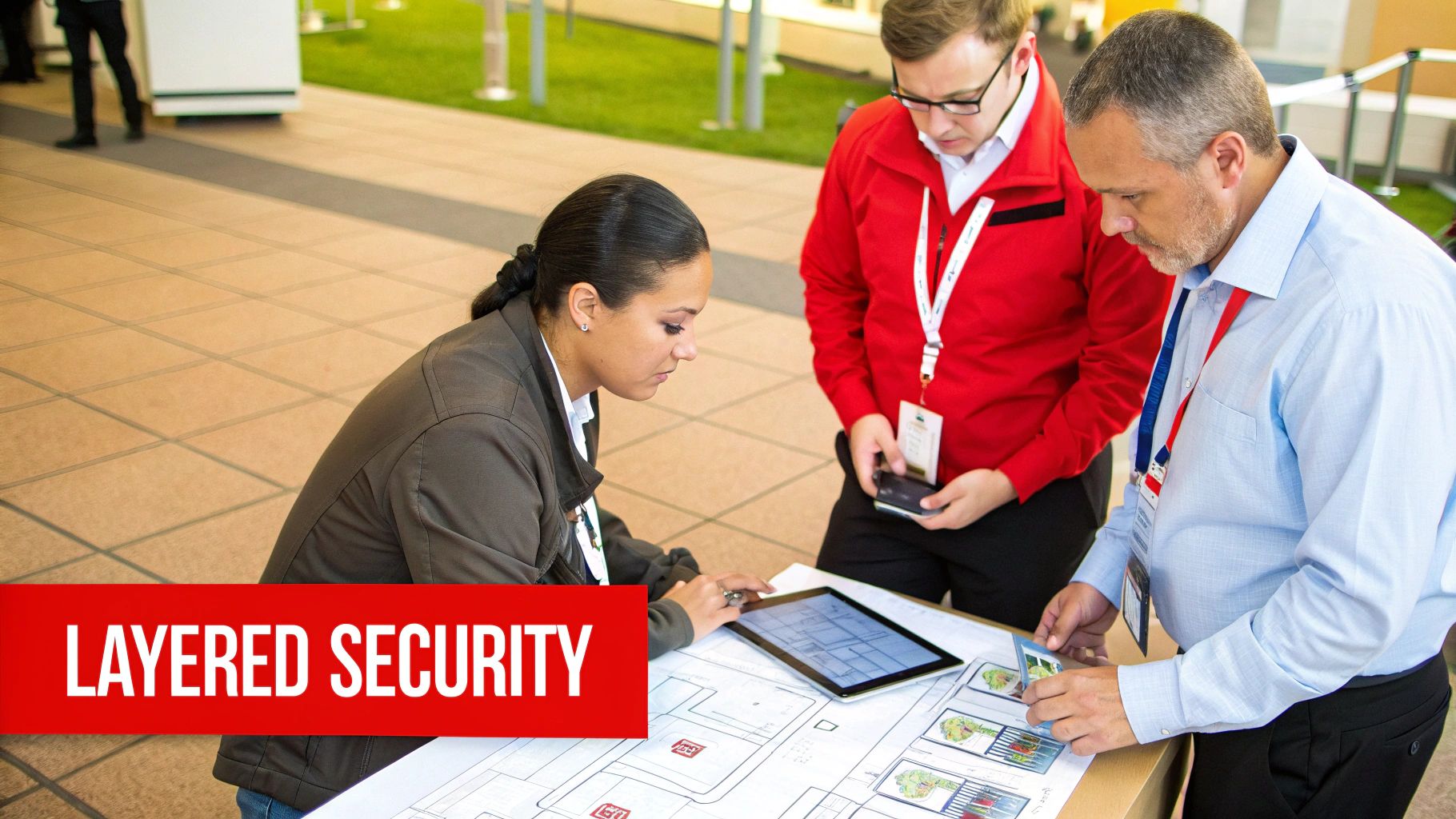
A professional event security company does so much more than just supply a few guards for the door. They build a multi-layered strategy, where each service is a vital piece of a complete safety puzzle. Think of it less as a show of force and more as a smart, integrated approach. Every element is chosen and placed with purpose, creating a secure environment that feels completely natural, not intrusive.
This strategic layering ensures every potential vulnerability is covered, from the front gate to backstage areas. It's about combining visible deterrents with discreet monitoring to create a safety net that protects your guests, staff, and assets from every conceivable angle.
Static Guards: The Foundation of Your Security
Your static guards are the most visible part of your security plan and the foundation it’s built on. We strategically position them at key points like entrances, exits, VIP areas, and stages, where they act as a constant, reassuring presence. Their main job is access control—making sure only authorised people get into restricted areas.
For a corporate gala, this might be a guard with top-notch customer service skills politely checking invitations. At a huge trade show, it’s the team preventing unauthorised access to storage areas and protecting valuable exhibitor property. These pros are also your guests' first point of contact for assistance or emergencies, providing a crucial human element that technology alone just can't replicate.
K9 Units: A Powerful Deterrent and Detection Tool
When you need to step up your threat detection, K9 units are an incredibly effective tool. A dog’s sense of smell is thousands of times more powerful than ours, making them simply unmatched for screening large crowds or venues for things like explosives or narcotics.
Picture a big music festival. A friendly-looking K9 team calmly walking the entry queue is a powerful visual deterrent that makes people think twice about bringing in illegal substances. It’s a proactive measure that helps keep the atmosphere safe for everyone.
The mere presence of a K9 unit can dramatically reduce security incidents. Their ability to quickly and non-intrusively screen areas makes them an indispensable asset for any high-profile or large-scale event where safety is the top priority.
Covert Operatives: The Unseen Protectors
While uniformed guards are a great visible deterrent, some threats need a more discreet touch. This is where covert operatives, or plainclothes security, come in. They blend seamlessly into the crowd, trained to spot suspicious behaviour and identify potential issues before they can escalate. We’re talking about anything from petty theft in a busy marketplace to more organised attempts to disrupt an event.
At a product launch with valuable prototypes on display, for instance, a covert operative might pose as a guest, watching for anyone showing a little too much interest in security weak points. This allows for quiet, professional intervention that protects your brand's image without causing a scene. It's a specialised service that only a professional event security company can deliver effectively.
VIP Protection: Ensuring Key People Are Secure
High-profile events often mean keynote speakers, celebrities, or executives who need personal protection. VIP protection, often called bodyguard services, is a specialised field that involves far more than just a physical presence. It’s about meticulous planning, from checking routes in advance to arranging secure transport.
The whole point is to allow the VIP to focus on the event without ever having to worry about their safety. A skilled protection officer is discreet, professional, and can de-escalate situations before they even become a threat, making sure the spotlight stays where it belongs—on the event itself.
Mobile Patrols and Monitoring: Extending Your Reach
For sprawling venues like festivals or outdoor expos, static guards alone can't be everywhere at once. This is where mobile vehicle patrols become essential. They create a visible security presence across vast car parks, perimeters, and camping areas, deterring criminal activity and giving you a rapid response capability across the entire site.
These patrols are typically linked to a central command post via back-to-base monitoring. This system acts as the central nervous system of your entire security operation, providing a 24/7 connection to a team that can dispatch support, coordinate with emergency services, and manage incidents in real-time. Each of these components, from a single guard to a comprehensive monitoring system, works together to fortify your event’s safety.
How Technology Shapes Modern Event Security
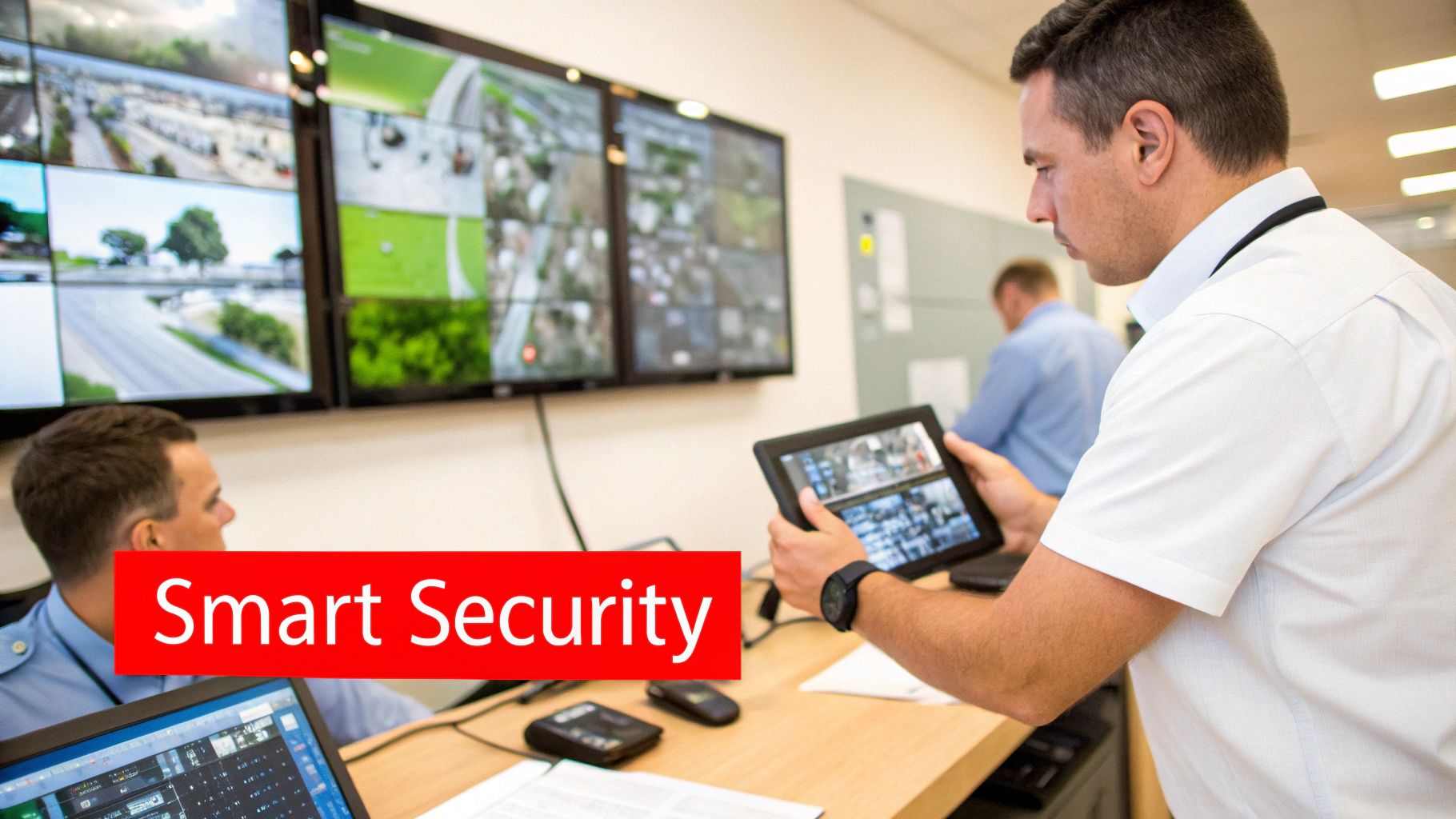
When you think of event security, you might picture guards in high-vis vests. While that's part of it, the reality is that a top-tier event security company now operates more like a high-tech command centre. It’s no longer just about having people on the ground; it’s about equipping those people with powerful technology to create a smarter, more responsive safety net.
This blend of human expertise and smart tools completely changes the game. It allows us to move from being purely reactive—responding after something has happened—to being predictive. We can use real-time data and live monitoring to spot potential trouble spots and sort them out before they escalate. That foresight is what truly sets a professional security partner apart from a basic guard service.
Smart Surveillance and Crowd Analytics
Advanced CCTV systems are the eyes and ears of any modern security operation. But it’s the intelligence behind the cameras that makes all the difference. AI-powered analytics can scan hundreds of video feeds at once—a task impossible for the human eye—and flag unusual activity the moment it happens.
Think about a massive concert. AI can instantly detect abnormal crowd densities, identifying a potential crush or dangerous surge before it even begins. The command post gets an alert, dispatches a mobile team to redirect foot traffic, and the problem is solved quietly and efficiently. It’s not about replacing guards; it’s about giving them the crucial intel they need to act decisively.
This technological shift is a major reason why Australia’s private security industry is now worth $11 billion and seeing 3% annual growth. Event organisers in NSW, Victoria, and Queensland are under more pressure than ever to manage large crowds safely, and tech is the answer. You can discover more insights about the security industry's growth and see how it's being driven by these innovations.
Integrated Communication and Response Systems
When an incident kicks off, clear and instant communication is everything. Forget crackly old walkie-talkies. Modern security teams operate on integrated systems that link every guard, supervisor, and the central command post on a single, encrypted network. This ensures everyone is on the same page, getting real-time updates and instructions.
Technology acts as a force multiplier for a skilled security team. It enhances their situational awareness, streamlines communication, and allows for a faster, more coordinated response to any incident, big or small.
This connected network typically includes:
- Digital Radios: For crystal-clear, secure channels that can't be easily scanned.
- Mobile Apps: Allowing guards to report incidents with photos, get alerts, and log events right from their phones.
- GPS Tracking: Showing the real-time location of every team member, so we can dispatch the closest person immediately.
What this means in practice is that if an issue arises in one corner of a sprawling festival, the entire team knows about it in seconds. The nearest personnel can be on the scene before the situation gets out of hand. This rapid, coordinated response is the hallmark of a leading event security company.
Access Control and Biometric Technology
Keeping VIP areas, backstage zones, or high-value exhibitor stands secure requires more than a simple wristband. Advanced access control technology provides a robust, trackable way to manage who goes where. For instance, biometric scanners can use a fingerprint or facial recognition to grant access, which completely eliminates the risk of lost or stolen passes.
Similarly, RFID-enabled wristbands or lanyards can track movement, providing valuable data for crowd management while ensuring only authorised people enter restricted zones. By layering these high-tech solutions with professional guards on the ground, we create a multi-layered defence that is both incredibly secure and efficient. It’s the new standard for giving organisers, VIPs, and guests total peace of mind.
Your Checklist for Choosing the Right Event Security Company
Picking the right event security company is hands down one of the most critical decisions an organiser can make. This isn't just about ticking a box; it's a choice that directly shapes your guests' safety, protects your brand, and ultimately defines whether your event is a roaring success or a cautionary tale.
To help you look past the price tag and find a partner you can truly rely on, here’s a practical checklist. It's designed to help you ask the tough questions and spot a company that brings genuine expertise to the table, not just bodies in uniforms. A professional team will be transparent and ready to answer everything you throw at them, proving they're a true extension of your own crew.

Licensing and Compliance Verification
First things first, let's talk about the non-negotiables. Security is a heavily regulated industry in Australia, and if a company isn't 100% compliant, you need to walk away immediately.
- State-Specific Licensing: Every state has its own rules. Make sure the company holds a master licence for the state your event is in (e.g., NSW, VIC, QLD, ACT). Just as important, every single guard on your site must hold their own individual licence for that state. No exceptions.
- Comprehensive Insurance: Ask to see their current certificates for Public Liability and Professional Indemnity insurance. A minimum of $20 million in public liability is the industry standard for any serious provider. This isn't just paperwork; it’s what protects you from massive financial risk if something goes wrong.
- RSA Certification: If you’re serving alcohol, this is a legal must-have. A good portion of the security team must hold a current Responsible Service of Alcohol (RSA) certification to legally and effectively manage patrons in licensed areas.
Assessing Experience and Reputation
A company’s history tells you a lot about its future performance. You're not looking for a jack-of-all-trades; you need a team that gets the specific vibe and challenges of your type of event.
Drill down into their track record with these questions:
- Relevant Case Studies: Ask them to share examples of events they've secured that are similar to yours in size, audience, and style. The skills needed for a black-tie corporate gala are worlds apart from what's required for a three-day music festival.
- Client References: A confident security partner will have no problem connecting you with past clients. Speaking to other organisers who have been in your shoes is one of the best ways to verify their professionalism and on-the-ground performance.
- Online Reviews and Reputation: Do your own homework. A quick search for online reviews and industry chatter can paint a pretty clear picture of who you’re dealing with.
Choosing a security partner is about trust. You need to be completely confident in their ability to handle not just the routine, but the unexpected. Their experience with events like yours is the best evidence of that capability.
Evaluating Training and Emergency Protocols
The real difference between a great security team and a liability comes down to training. Well-trained guards are proactive, professional, and know how to de-escalate a tense situation before it explodes. A suspiciously cheap quote often means they've skimped on investing in their people.
Here’s what you need to check:
- Ongoing Training Programs: What kind of training do their guards get beyond the basic licence? Look for proof of regular upskilling in things like first aid, conflict resolution, crowd dynamics, and emergency evacuation drills.
- Emergency Response Plan: Ask them to talk you through their response to a medical emergency, a fire, or a security breach. You want to hear a clear, logical plan that shows they know how to coordinate a response without panicking.
- Communication Systems: How do they talk to each other on site? Reliable digital radios and a crystal-clear command structure are vital. A communication breakdown can turn a small hiccup into a full-blown crisis in a matter of seconds.
Navigating this process can feel overwhelming, but it's the best way to separate the pros from the pretenders. A good security provider is an investment, not an expense. To make it even easier, we've put together a simple table you can use to compare potential partners side-by-side.
Event Security Provider Vetting Checklist
| Criteria | What to Look For | Red Flags to Avoid |
|---|---|---|
| Licensing & Insurance | Current state-specific master and individual licences. Public Liability insurance of at least $20 million. | Vague answers, expired documents, or an unwillingness to provide certificates. |
| Relevant Experience | A strong portfolio of events similar to yours in size, scope, and audience. | A generic list of clients with no relevance to your event type. |
| Client References | Eager to provide contact details for multiple recent and relevant clients. | Hesitation to provide references or offering only one or two "hand-picked" contacts. |
| Staff Training | Regular, ongoing training in first aid, de-escalation, RSA, and emergency procedures. | Only meets the bare minimum licensing requirements with no further professional development. |
| Emergency Protocols | Clear, well-documented, and logical plans for various emergency scenarios. | Generic, one-size-fits-all plans that don’t seem tailored to an event environment. |
| Communication | Professional-grade digital radios, clear command structure, and backup communication plans. | Reliance on personal mobile phones, disorganised communication, or no clear leader on-site. |
| Professionalism & Vibe | The team acts as a helpful, approachable extension of your brand while maintaining authority. | Guards seem disengaged, unprofessional, or have an overly aggressive "bouncer" mentality. |
| Transparency & Quotes | A detailed, itemised quote explaining all costs. Openness about their operational approach. | A single lump-sum price with no breakdown. Vague or evasive answers to direct questions. |
By working through this checklist, you’ll be in a much stronger position to find more than just a security vendor. You’ll find a genuine partner committed to making your event safe, memorable, and successful for all the right reasons.
Seeing Security in Action: How Plans Adapt to Different Events
There's no such thing as a "one-size-fits-all" security plan in the events world. The real expertise of an event security company comes from its ability to design a strategy that perfectly matches the vibe, crowd, and specific risks of any given gathering. To really understand what this means, let's walk through a few real-world scenarios.
These examples show how we move from theory to practice, tailoring our approach to keep everyone safe without killing the mood. Whether it's a massive music festival or an exclusive corporate dinner, the core principles of safety stay the same, but how we deliver it changes completely.
Scenario 1: The High-Energy Music Festival
Let's start with a big one: a single-day music festival for 5,000 people in an open field. The atmosphere is electric, the crowd is young, and the main risks are things like crowd surges, over-intoxication, and people trying to sneak in. For this, you need a plan built around a strong perimeter and highly visible, approachable crowd management.
Our deployment would be a multi-layered defence:
- Perimeter Control: We’d start with a team of 20 static guards covering every single entry and exit point, handling bag checks and verifying tickets. At the same time, mobile patrols would constantly circle the outer fence line to deter anyone thinking of jumping it.
- Crowd Management: Inside, 15 rover guards would move through the crowd, focusing on high-density areas like the main stage and mosh pit. Their job isn't just to spot trouble, but to be a friendly face for anyone needing help or first aid.
- Specialised Units: To send a clear message, two K9 units would patrol the gates during peak arrival times, acting as a powerful deterrent for prohibited items. The headline act would get their own dedicated four-person VIP protection team to ensure they get from backstage to the stage without a hitch.
Everything would be coordinated from a central command post, ensuring we can respond to any incident in seconds. The goal here is to be a visible, reassuring presence that keeps the energy positive and safe.
Scenario 2: The Polished Corporate Gala
Now, let's switch gears. Picture an exclusive, black-tie corporate gala for 500 guests in a five-star hotel ballroom. The risks here are completely different—we’re worried about uninvited guests, protecting high-value auction items, and maintaining the privacy of high-profile attendees. The security has to be flawless but almost invisible.
At a corporate event, the best security is the kind you never even notice. It's less about overt crowd control and more about subtle monitoring and seamless access management, all to preserve that polished, exclusive atmosphere.
Here’s how the plan shifts:
- Access Control: Instead of a big team at the door, we’d have four impeccably dressed static guards managing the guest list on tablets at the ballroom entrance. Here, their customer service skills are just as crucial as their security training.
- Discreet Monitoring: Three covert operatives, dressed as guests, would mingle throughout the event. They're our eyes on the inside, spotting suspicious behaviour without raising any alarms.
- Asset Protection: We’d position two static guards near any high-value displays or silent auction tables. A single rover guard would patrol the pre-function areas and hallways, maintaining overall situational awareness.
This smaller, more specialised team ensures the event runs like clockwork, projecting an image of quiet confidence. Every interaction is polite and professional, adding to the premium feel of the night. Of course, before you hire any security provider, you need to do your homework.
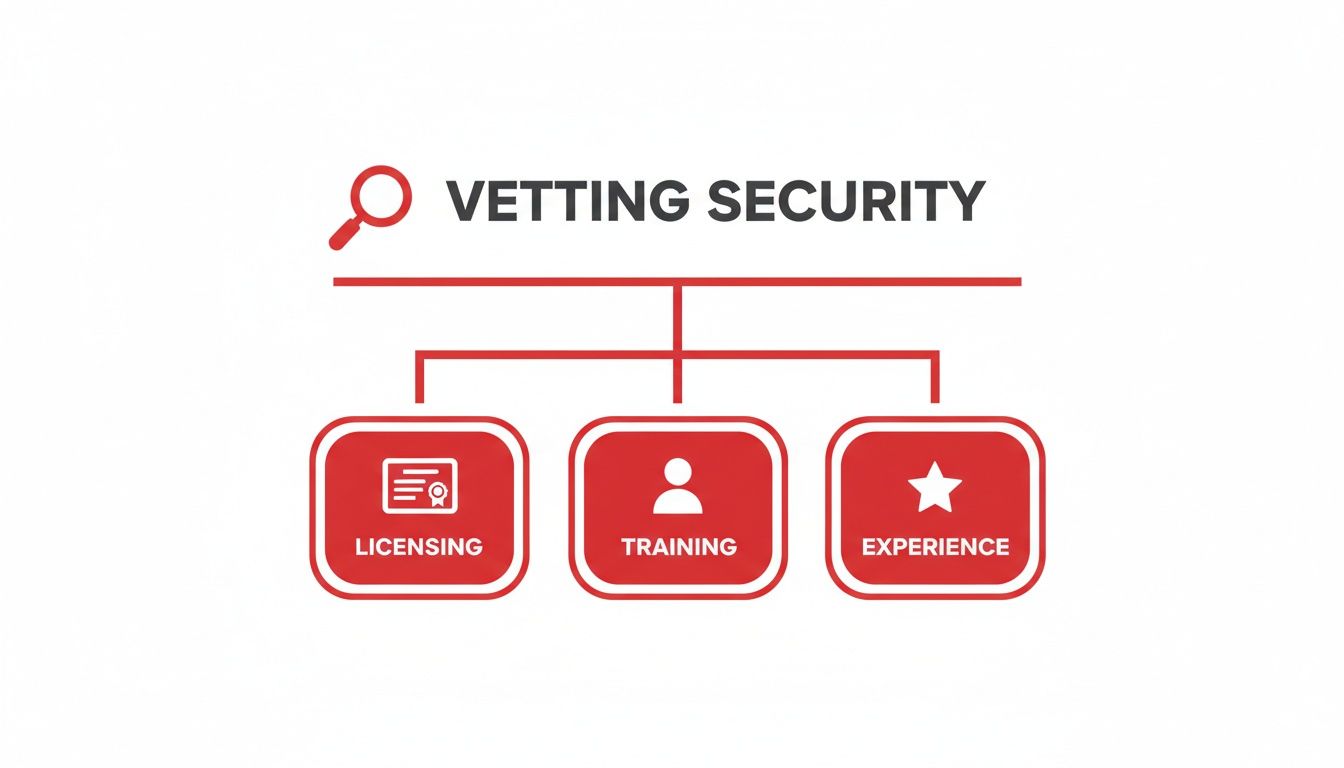
This chart breaks down the three essential pillars for vetting any potential security partner.
As you can see, a truly reliable company is built on a solid foundation of proper licensing, comprehensive training, and a track record of real-world experience.
Scenario 3: The Sprawling Trade Show
Finally, imagine a multi-day trade show at a massive convention centre. Thousands of attendees, millions of dollars in exhibitor equipment, and dozens of doors create a complex challenge. The plan needs to cover the venue during opening hours and, just as importantly, protect everything overnight.
Our strategy here would be all about zoning and consistent patrols:
- Gatehouse and Access Control: A team of 12 guards would manage the main entrances, scanning badges and helping people find their way. They become the public face of the event's security.
- Floor Patrols: We'd assign 10 rover guards to specific zones within the exhibition hall. They'd constantly patrol the aisles, assist exhibitors, and act as a visible deterrent against theft of laptops and merchandise.
- Overnight Security: Once the show closes for the day, a lean crew of six guards and one mobile patrol would lock the venue down. Their sole focus is loss prevention, making sure every exhibitor’s property is untouched and ready for the morning.
- Command and Control: A dedicated on-site supervisor serves as the single point of contact for the event organiser, coordinating the entire team and providing daily updates.
Each of these scenarios requires a completely different blend of people, tactics, and tone. A top-tier event security company shines in this kind of customisation, delivering a plan that doesn't just protect your event but actually enhances it.
Think of an event security company less as a vendor and more as a crucial partner in making your event a success. The right team doesn't just show up; they blend in, becoming a seamless extension of your own crew to protect your guests, your assets, and ultimately, your reputation. This kind of partnership is built on trust, genuine expertise, and a shared goal of creating a safe and welcoming space for everyone.
Why Partnering with an Expert Matters
Choosing your security provider is one of the most critical decisions you'll make during the planning process. Get it right, and you elevate the entire guest experience. Get it wrong, and you're opening the door to unnecessary risk. A real partnership goes far beyond a simple transaction; it's about crafting a security solution that’s truly fit for purpose, where every single guard has the right skills and temperament for your event's specific vibe.
This is a fundamental shift in thinking. Security isn't just about stopping bad things from happening; it's about actively helping good things happen. An expert event security company like GM GROUP Services gets in the trenches with you, taking the time to understand your vision. From there, they build a security presence that feels supportive and professional—never overbearing.
Credibility and Trust Built on Experience
You can tell a true expert by their track record. When a company can point to glowing client testimonials and successful case studies from major festivals, high-profile corporate gigs, and top-tier hospitality venues, you know they can deliver under pressure. It's this history of success across NSW, VIC, QLD, and the ACT that builds the kind of credibility and trust you need.
Let's not forget the bigger picture. Australia's event security market is a major player within the broader $13.9 billion investigation and security industry. With the live entertainment scene roaring back to life, organisers are facing more pressure than ever to provide sophisticated safety solutions.
"A true security partnership is proactive, not reactive. It involves collaborative planning, clear communication, and a deep understanding of the client's brand, ensuring the security team enhances the event experience rather than detracting from it."
Great events depend on a holistic approach where security works in harmony with every other service. Understanding what every event planner needs to know about all the moving parts is key to a flawless guest experience. This is the real difference between just hiring guards and bringing on a professional security partner.
The right event security company doesn't just protect your event—it strengthens your brand. For organisers who are looking for that level of commitment, the first step is always a thorough risk assessment. It's time to discover what a true security partnership can do for your next event.
FAQs: Your Event Security Company Questions Answered
Hiring a professional security team for your event is a big decision, and naturally, you'll have questions. Let's walk through some of the most common ones we hear from organisers to give you the clarity you need to make the right call.
How far in advance should I book an event security company?
The sooner, the better. For large events like a music festival or a major corporate conference, you should aim to lock in your event security company 6-12 months in advance. This gives them ample time to conduct proper risk assessments, create a solid operational plan, and schedule their best team for your date. For smaller events, a 2-3 month lead time can work, but booking early always reduces stress and ensures availability.
What’s the difference between event security and venue security?
It’s a common point of confusion. Venue security are the permanent staff responsible for the day-to-day safety of the physical building itself. An event security company provides a specialised team focused entirely on the unique dynamics of your event. Their job is to manage your specific crowd, protect your assets, and handle incidents related to your guests. They are dedicated to your function, not just the building it’s in.
How do I determine the right number of security guards for my event?
There’s no magic formula; it all comes down to a professional risk assessment. A reputable provider will never give you a number without understanding the specifics of your event. Key factors include the venue's size and layout, expected attendee numbers, whether alcohol will be served, and the nature of the event itself. A high-energy concert has a vastly different risk profile to a seated corporate dinner, and the staffing level must reflect that.
Are your security guards licensed and insured?
Absolutely. Any professional event security company must ensure that every guard holds a current, valid security licence for the state they are working in—be it NSW, VIC, QLD, or the ACT. Furthermore, they must carry comprehensive Public Liability insurance (a minimum of $20 million is standard). Don't just take their word for it; ask to see copies of their master license and certificate of currency for their insurance.
What training do your guards receive beyond basic licensing?
This is a critical question that separates the best from the rest. While basic licensing is the legal minimum, a top-tier event security company invests heavily in ongoing professional development. This includes regular training in first aid and CPR, advanced conflict resolution and de-escalation techniques, customer service skills, and emergency response drills. This additional training ensures they are prepared to handle any situation professionally and effectively.
Ready to secure your next event with a team you can trust? The experts at GM GROUP Services are here to build a security plan that protects your guests, assets, and reputation. Get in touch with us today for a comprehensive risk assessment.