


SEO Title: 7 Costly Crowd Control Management Mistakes to Avoid for Safer Events
URL: /crowd-control-management-mistakes
SEO Meta Description: Crowd control management starts long before gates open. Learn 7 costly mistakes event organisers must avoid to run safer, smoother events across Australian venues.
Image: 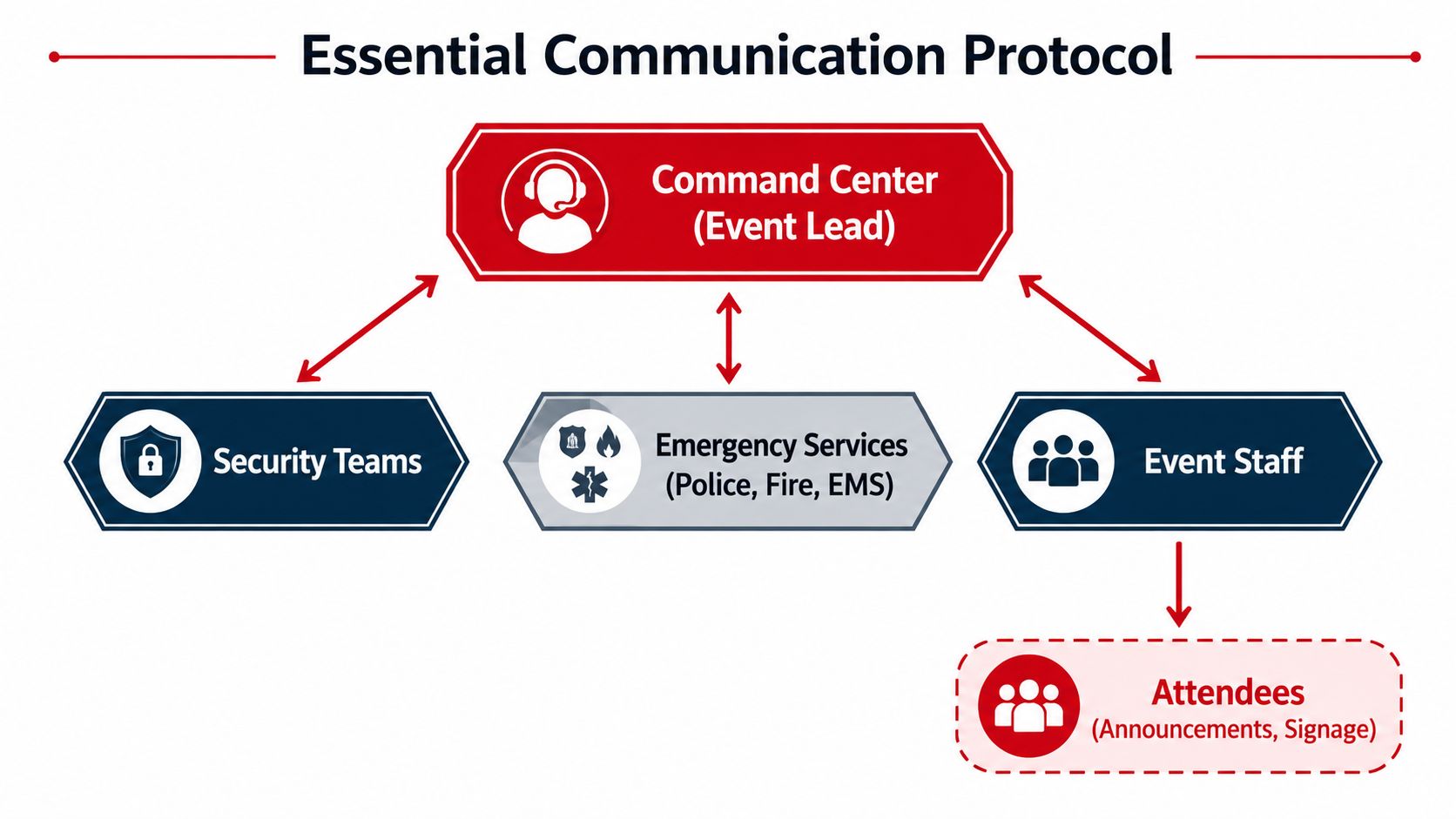

Crowd control management usually gets judged in the last ten minutes of an event, but the main effort happens long before that. You're likely reading this while juggling a run sheet, supplier calls, staffing gaps, venue questions, and the quiet worry that one small issue could turn into a very public problem.
That worry is justified.
A blocked exit, a poorly managed queue, a patron who's had too much to drink, or a delay at the gate can change the mood of a crowd fast. Once frustration spreads, staff are forced to react under pressure. That's when organisers lose control of the event experience, and sometimes much more than that.
From an operations standpoint, smooth events rarely happen by luck. They happen because someone identified pressure points early, staffed properly, briefed the team clearly, and made decisions that prevented avoidable mistakes. The public usually notices the stage, the lighting, the brand activation, or the headline act. Security notices the choke points, the blind spots, the confused radio traffic, and the gap between the written plan and what's happening on the ground.
Introduction The Unseen Work Behind a Flawless Event
The best-run event often looks easy from the outside. Gates open, patrons move, bars trade, queues stay controlled, incidents stay contained, and the crowd leaves without friction. That's not accidental. It's what effective crowd control management looks like when it's done well.
Most failures start small. A queue lane is too narrow. Signage sends people the wrong way. A team member doesn't know who to call. An intoxicated patron gets managed too late instead of early. None of those problems sounds dramatic on its own, but several together can overwhelm a venue quickly.
Practical rule: If your plan only works when everything goes right, you don't have a working plan.
Organisers under pressure often search for a checklist. Checklists help, but they don't always stick when the site gets busy. Mistakes are easier to remember. They're also easier to spot before gates open. That's why the smarter way to approach crowd control management is to ask a harder question. What are the failures most likely to hurt this event, and what will stop them before they start?
A good starting point is this comprehensive guide for event crowd management, especially if you're comparing planning methods across different event formats. On the ground, though, theory only matters if it changes deployment, communication, and site flow.
The seven mistakes below are the ones that repeatedly create unnecessary pressure for organisers, venue operators, and security teams. Avoid them, and you put yourself in a far better position to protect patrons, staff, brand reputation, and operational control.
Mistake 1 Underestimating the Risk Assessment Phase
Gates can open on time, ticketing can work, and the site can still drift into trouble within the first hour. I have seen that happen when the written plan looked tidy but missed the way people would move, wait, drink, argue, and bunch up once the crowd hit the ground.
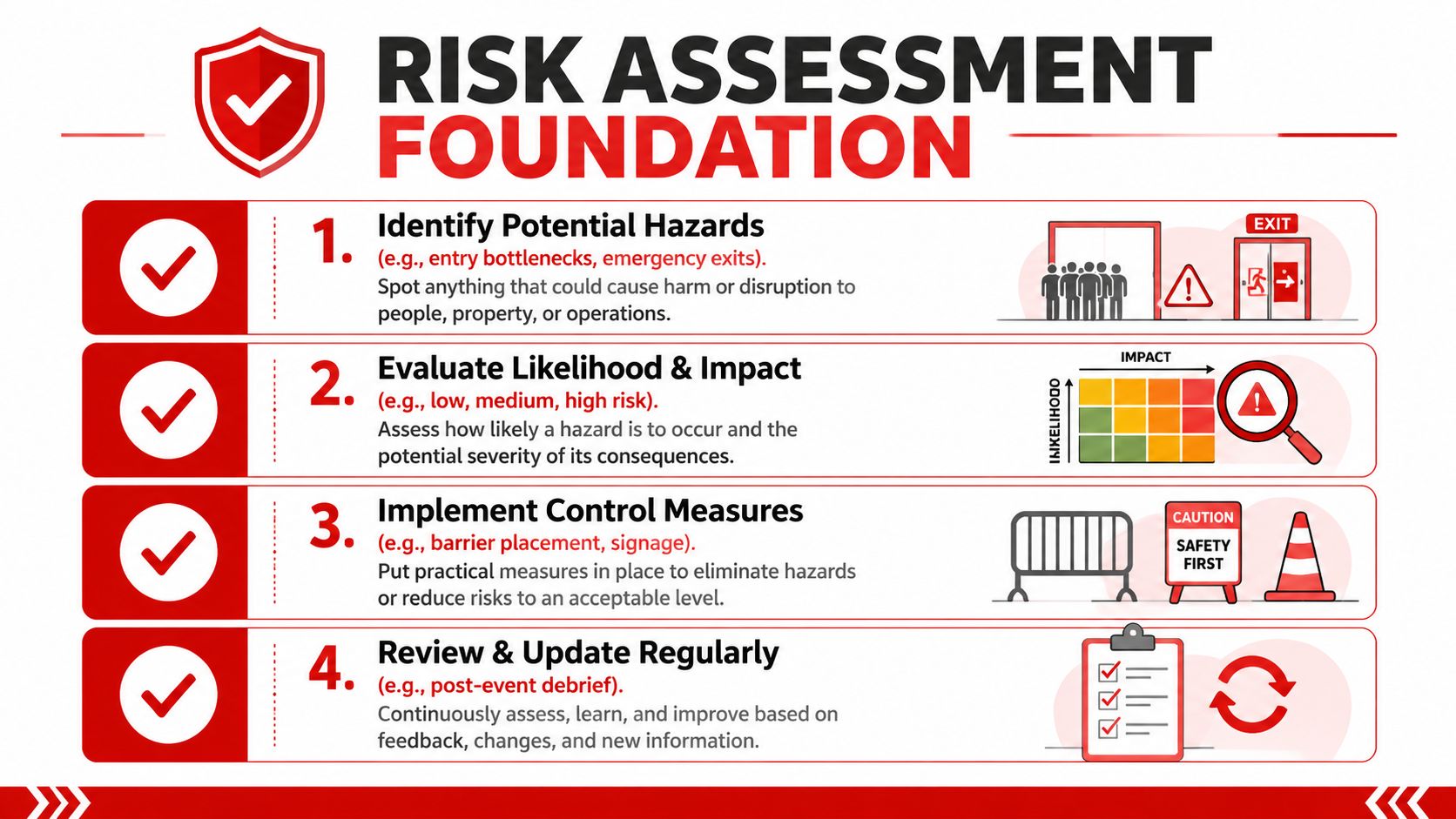
That is the first mistake to avoid. Treating risk assessment as a compliance document instead of an operating tool leaves organisers blind to the pressure points that drive incidents.
A proper assessment is specific to the event in front of you. It accounts for the venue, the crowd profile, the run sheet, weather exposure, alcohol service, line of sight, and the points where patience usually wears thin. A family community event in daylight creates one set of issues. A licensed music event with multiple bars, peak entry surges, and a headline act creates another.
What a real risk assessment looks at
The job is to find where ordinary crowd behaviour turns into operational pressure.
That usually means looking past the perimeter and examining the points where people stop, merge, queue, get refused, or lose visibility of staff. At GM GROUP Services, that is where we see preventable problems build. The issue is rarely the existence of a crowd on its own. The issue is what happens when movement slows and frustration rises.
A useful assessment should test at least these areas:
- Entry pressure: Ticket scanning delays, bag checks, ID checks, secondary screening, and late arrivals just before a key performance or match start.
- Internal hotspots: Bars, toilets, food outlets, merch lines, smoking areas, pedestrian crossings, and stage-front compression points.
- Exit patterns: Patrons do not leave as one calm wave. They leave in pockets, often tired, intoxicated, distracted, and looking for transport at the same time.
- Environmental conditions: Heat, rain, poor lighting, slippery ground, noise, glare, and any section of the site that becomes harder to supervise after dark.
The trade-off is straightforward. The more honest you are at this stage, the easier the event is to run later. If planners gloss over likely friction points because they want a cleaner document, the team pays for it on event day with longer queues, slower responses, and more reactive decisions.
The difference between a template and a working document
Templates have their place. They save time and help teams cover the basics. They fail when they are copied across from another event without testing what is different about this one.
A working risk assessment gets used in site walks, pre-start briefings, deployment maps, and control room decisions. Staff should be able to read it and answer practical questions immediately. Where will lines cross over? Which zone loses visibility after sunset? What happens if one intoxication issue at the bar draws in friends and bystanders? Which exit route looks fine on paper but narrows once bollards, fencing, and rides are in place?
This is a simple on-site check:
| Checkpoint | What to ask on site |
|---|---|
| Crowd type | Who is attending, and how are their behaviours likely to change across the event? |
| Friction points | Where will queues build, merge, or block through-movement? |
| Visibility | Which positions leave staff with poor sightlines or delayed response access? |
| Escalation risk | Where could one minor issue attract a crowd or spill into another zone? |
Good crowd control management starts before patrons arrive. It starts with an honest reading of where pressure will build and what will contain it.
If the assessment cannot guide barrier placement, screening setup, patrol routes, and supervisor attention, it is incomplete. The point is not to produce more paperwork. The point is to prevent the avoidable mistakes that create crowd problems later.
Mistake 2 Miscalculating Staffing Needs and Roles
The staffing mistake usually shows up an hour after gates open. One team is stuck on bag checks, a queue starts pushing sideways, a refusal at entry pulls a supervisor in, and nobody is free to deal with the first problem building near the bar. On paper, the event had enough people. On the ground, it did not have enough coverage.
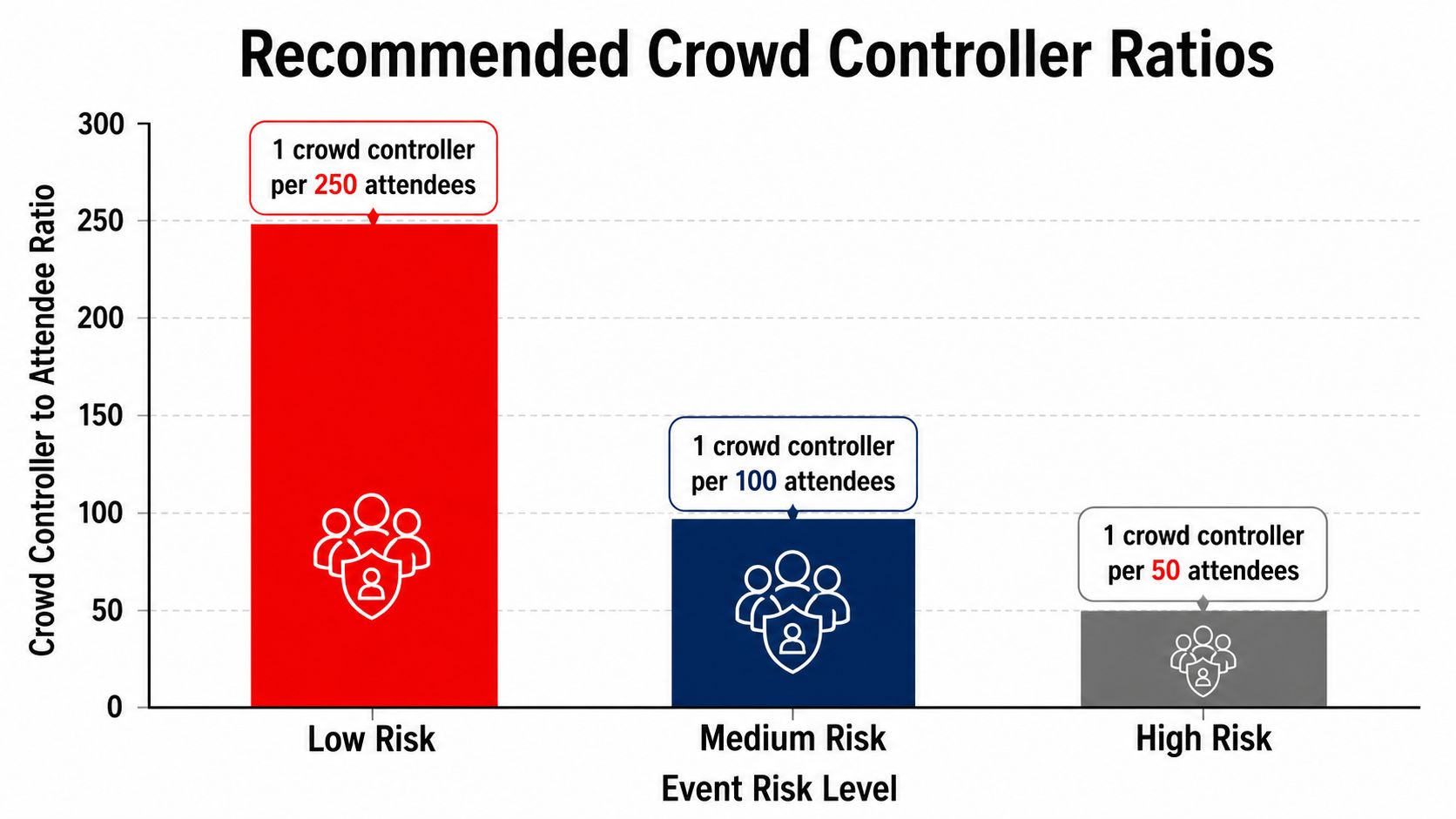
Organisers get into trouble when they treat staffing as a quota instead of a deployment plan. Minimum ratios matter for compliance. They do not tell you who is handling entry pressure, who is roaming, who is managing ejections, who is covering breaks, and who is free to respond when two incidents happen at once.
I have seen this at festivals and licensed venues across Australia. A roster can look acceptable in a spreadsheet and still fail in the first busy period because too many people are tied to static posts.
Where staffing plans break down
The weak point is rarely total headcount alone. It is the gap between the roles the event needs and the roles the roster covers.
Common failures look like this:
- Too many static posts: doors are covered, but issues between zones build without early intervention.
- No floating response unit: every incident strips someone from another position and creates a second gap.
- Thin supervision: instructions go out over radio, but nobody is checking whether positions are holding or pressure is shifting.
- No relief plan: meal breaks, toilet breaks, and fatigue reduce your real coverage during the hours that matter most.
- Poor role matching: experienced communicators get parked in low-contact areas while junior staff are left to manage the hardest patron interactions.
The result is predictable. Small issues sit longer than they should, queues lose shape, and staff start reacting late.
Roles need to be assigned deliberately
A capable crowd control team is built around function. Licensed personnel should not all be used the same way.
| Role | What they actually handle |
|---|---|
| Entry staff | Screening, queue control, refusals, first contact with patron issues |
| Roaming patrols | Behaviour monitoring, early intervention, welfare checks |
| Stage or pit team | Pressure points, barrier observation, fast escalation reporting |
| Supervisor | Radio coordination, redeployment, incident oversight |
That mix changes by event. A concert with a front-of-stage crush risk needs different coverage from a food and wine event with long trading lines and multiple service points. An expo fit-out managed by an exhibit builder can also introduce temporary walls, narrowed walkways, and blind corners that change where staff are needed. The count alone does not solve any of that.
What works better on site
Start with functions, then fill the roster around them.
- Map the pressure points by time of day. Gate open, peak service periods, headline acts, service cut-off, and exit all need different coverage.
- Assign people by temperament and experience. Put calm, credible communicators where refusals, complaints, and intoxication issues are most likely.
- Keep a mobile response capacity. If every person is fixed to a post, the first incident will pull the whole plan out of shape.
- Roster relief properly. Break coverage should be visible in the deployment plan, not left to be worked out on shift.
- Give one supervisor room to supervise. A supervisor who is constantly filling posts is not supervising the operation.
For organisers comparing providers, the useful question is simple. Can the team supply licensed personnel who fit specific event functions, and can they supervise those roles properly once the crowd starts behaving differently from the plan? GM GROUP Services is often brought into that discussion for exactly that reason.
Body-count staffing satisfies a line in a budget. Role-based staffing prevents avoidable gaps before they turn into incidents.
Mistake 3 Designing a Poor Venue Layout
A bad layout creates problems that no radio call can fix quickly. Once patrons are already packed into the wrong space, every correction becomes slower, louder, and more visible.
One event layout puts people into conflict. Another helps them move naturally. That's the difference between stress and flow.
When the site works against you
At a poorly planned venue, the issues show up fast. Guests arrive to a narrow gate approach with no proper lane discipline. The bag check line crosses with ticket scanning. Late arrivals stop dead to work out where they're meant to go. A bar queue spills into a main pedestrian path. Security can't see the full line because signage, fencing, or temporary infrastructure blocks sightlines.
None of this looks dramatic on a site map. On event day, it creates friction in layers.
Patrons don't experience your layout as a drawing. They experience it as delay, confusion, and obstruction.
What a better layout does
A well-designed site guides movement without making people feel pushed around. Entry is obvious. Queues have room to breathe. Barriers channel traffic instead of trapping it. Exits stay legible when the event finishes and patrons are tired, distracted, or in a hurry.
The strongest layouts usually get four things right:
- Ingress and egress are separated where possible, so arriving and departing patrons don't collide.
- Queue space is planned for actual behaviour, including bunching, stopping, and people joining friends.
- Sightlines stay open so supervisors and controllers can read crowd mood early.
- Pressure zones have relief space where patrons can step away from noise, density, or confrontation.
If barriers only block people, they're doing half the job. Good barriers guide decisions before staff need to intervene.
For exhibition, conference, and trade environments, infrastructure design matters as much as staffing. If you're working with a custom floor plan or temporary structures, an experienced exhibit builder can help solve practical movement issues before bump-in is complete.
A quick layout test for crowd control management
Walk the site and answer these questions before opening:
- Where will people hesitate? That spot needs clearer direction.
- Where will lines overflow? That zone needs more space or a different orientation.
- Where can staff lose visual control? Remove the blind spot or reposition the post.
- Where would an argument block movement? Widen the path or move the service point.
Poor layouts force your team into constant correction. Good layouts reduce the number of corrections needed at all.
Mistake 4 Operating Without a Communication Protocol
Events don't fall apart because people stop working. They fall apart because information stops moving. A team without a communication protocol is just a group of individuals wearing the same uniform.
That problem usually appears during moments that should be manageable. A patron is refused entry. A queue begins backing up. Someone reports a welfare concern. A supervisor needs one extra pair of hands. If staff don't know who to call, what channel to use, and what information matters, small issues stay small for less time than you think.
The three layers that need to work
A useful communication structure covers more than radios. It connects internal operations, external coordination, and public messaging.
Internal team communication
Security staff need clear radio discipline. That means designated channels, concise reporting, known call signs, and a chain of command that staff can follow under pressure.
At minimum, every staff member should know:
- Who they report to
- Which channel is primary
- What triggers escalation
- How to request support without creating confusion
External operational communication
Event command must be able to communicate cleanly with organisers, venue management, medical, and emergency services where required. Delays often happen because frontline staff report correctly, but command passes incomplete information upward.
A simple format helps: location, issue type, current risk, action taken, support required.
Patron-facing communication
Most crowds respond better to calm, clear direction than to forceful instruction. Patrons need simple language, visible staff, and consistent messages. Mixed instructions from different workers create resistance fast.
| Situation | Weak message | Better message |
|---|---|---|
| Queue delay | “Wait there.” | “This line will move through the next lane. Please stay to your left.” |
| Area closure | “You can't go here.” | “This section is closed. Entry is through the main path on your right.” |
| Exit management | “Move out.” | “Please continue toward the lit exit path. Staff will guide you from there.” |
Calm words travel further in a crowd than aggressive ones.
What effective crowd control management communication looks like
The best communication plans are brief enough to remember and specific enough to use. Before opening, test whether each team member can answer these questions without hesitation:
- Who is in charge on shift?
- What channel carries incidents?
- Who contacts medical support?
- How are patrons informed during a change or disruption?
If those answers vary across the team, your protocol isn't ready.
Mistake 5 Deploying Untrained or Unbriefed Teams
A uniform doesn't create competence. A licence doesn't replace a briefing. You can have enough people on site and still run a weak operation if the team hasn't been aligned before gates open.
The pre-event briefing is where crowd control management becomes real. It's where the written plan turns into assigned responsibility. Staff find out where they're standing, who they answer to, what behaviours matter, and how incidents should be escalated. Without that briefing, teams improvise. Improvisation is expensive.
What must be covered before opening
The strongest briefings are practical and site-specific, not generic speeches. Staff need the details that affect their post.
A useful briefing should cover:
- Role confirmation: Exact position, boundaries, start time, relief plan, and reporting line.
- Behavioural expectations: De-escalation first, professional language, when to observe versus intervene.
- Critical contacts: Supervisors, organisers, first aid, medical, and venue representatives.
- Response triggers: Refusals, aggression, welfare concerns, lost persons, and evacuation instructions.
For larger events, trained crowd management personnel also matter in a formal sense. For outdoor events in Australia with more than 250 persons, the law requires a minimum of two trained crowd managers, plus one additional trained manager for every subsequent 250 occupants, with similar rules for indoor venues, according to the crowd control regulations reference provided here.
Why the briefing is where operations are won
A short, vague briefing creates long, messy shifts. A detailed briefing prevents duplicated effort, conflicting decisions, and avoidable radio traffic.
A team that starts the shift with the same picture usually makes the same decisions under pressure.
Good briefings also surface problems early. Someone flags a blocked sightline. Another notices a gap in relief coverage. A supervisor identifies a mismatch between a post and a staff member's experience. Those corrections are easy before opening and much harder once patrons are moving.
Mistake 6 Lacking a Clear Incident Response Plan
Every event says it takes safety seriously. The true test comes when something goes wrong and the team has to act without hesitation.
Hope isn't a response plan. Neither is telling staff to use common sense. Under pressure, people need a sequence they can follow. That sequence should be simple enough to recall and specific enough to direct action.
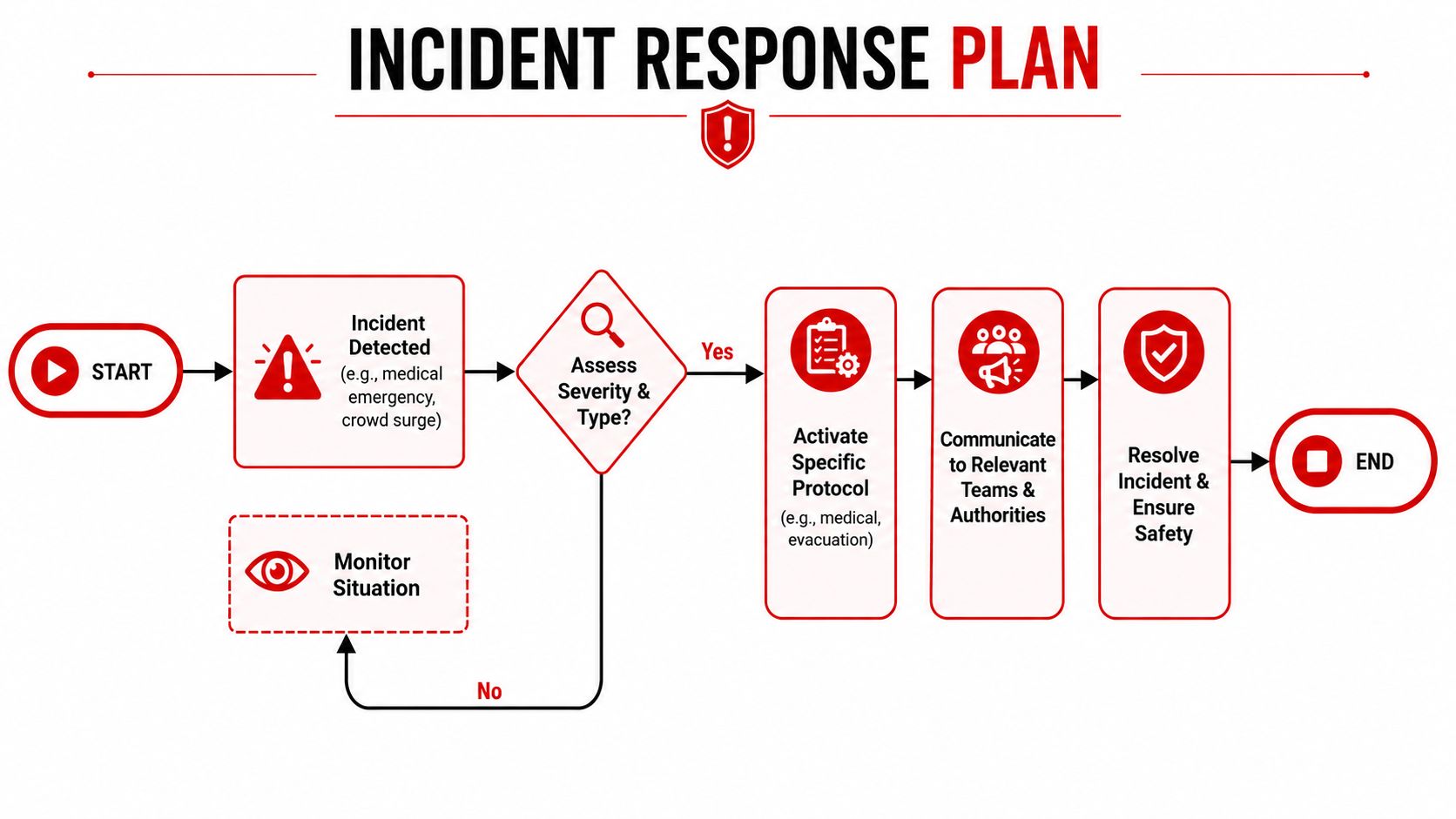
Use a repeatable response sequence
For most incidents, a practical operating pattern is:
- Identify
- Isolate
- Communicate
- Resolve
That sequence works because it keeps the team from doing too much at once.
A medical incident example
A patron collapses near a busy service area. The wrong response is for several staff to rush in, block the path, speak over each other on radio, and leave the surrounding crowd unmanaged.
The better response looks like this:
| Step | Action on the ground |
|---|---|
| Identify | Confirm location, visible condition, immediate hazards |
| Isolate | Create working space, control bystanders, keep access clear |
| Communicate | Notify command and relevant support with concise details |
| Resolve | Support medical response, redirect traffic, record the incident |
Earlier decisions yield significant benefits. Risk assessment tells you whether the location was predictable. Staffing determines whether someone is free to isolate the scene. Communication protocol ensures the right people are notified quickly. Briefing makes sure nobody improvises beyond their role.
Build specific responses for common incidents
Your team should have predefined actions for at least these scenarios:
- Medical emergency
- Physical altercation
- Lost child or vulnerable person
- Fire or evacuation order
Each plan should answer four basic questions:
- Who takes lead?
- Who supports?
- How is the area controlled?
- Who records the outcome?
A response plan doesn't need to be complex. It needs to be usable. The most effective crowd control management systems rely on clear playbooks that staff can apply without debate in the moment.
Mistake 7 Skipping Post-Event Debriefs and Legal Checks
At 11:45 pm the gates are shut, the last patrons are leaving, and everyone wants to pack down and go home. That is the point where weak operations lose useful evidence.
The incidents that matter on the next event are rarely the dramatic ones. It is the near-miss at a choke point, the delayed response to a minor disturbance, the unclear handover between supervisors, or the gate that was staffed but not properly observed. If nobody captures those details while they are still fresh, the same faults show up again under a different name.
A post-event debrief needs to be quick, specific, and disciplined. In practice, that means pulling supervisors in first, confirming what happened against radio logs and incident reports, and separating facts from assumptions. I have seen teams call a night "busy but fine" until the review showed repeated queue pressure, missed patrol timings, and preventable confusion around access control.
Record the points that affect the next operation:
- Incident summary: what happened, where, who responded, and how it was closed
- Pressure points: queues, blind spots, delayed entry, crowd surges, blocked access routes
- Deployment issues: posts that were stretched, duplicated, unclear, or left exposed during incidents
- Documentation checks: rosters, briefing records, incident logs, supervisor notes, and any contractor records that need to be retained
Legal checks sit in the same close-out process. They are not separate admin for later. Confirm that the people deployed were authorised for the duties they performed, that records are complete, and that incident reporting matches what occurred on site. If a complaint, injury claim, or regulator enquiry lands days later, poor paperwork turns a manageable issue into a long argument.
Organisers get judged on what they can show, not what they intended. If there is no clear record of who worked, who was briefed, what happened, and what action was taken, the operation looks careless even when the team worked hard on the ground.
Professional crowd control management includes the close. The debrief is where recurring faults get fixed, and the legal check is where avoidable exposure gets cut before the next event.
If you need practical support with event security planning, staffing deployment, venue coverage, or licensed crowd control for Australian events and venues, GM GROUP Services can be part of that operational conversation. The key is getting a plan that matches the site, the crowd, and the actual risks before gates open.
FAQs
What is crowd control management?
A gate opens late, one entry lane backs up, people start pushing for space, and a minor delay turns into a crowd problem. Crowd control management is the work that stops that chain reaction early.
It covers how people enter, move, queue, wait, exit, and respond to direction on site. In practice, that means matching staffing, layout, briefings, communications, and incident actions to the actual crowd and venue, not just to a generic event template.
What is the legal crowd controller ratio for higher-risk licensed events in Australia?
The answer depends on the state, the licence conditions, the venue, and the event risk profile. Organisers should not rely on a single rule of thumb across every Australian event.
For higher-risk licensed environments, authorities and venue operators commonly apply baseline patron-to-controller ratios as part of the planning process, but those numbers are only a starting point. If alcohol service, multiple entry points, poor sightlines, hostile patron behaviour, or late-night egress are part of the job, the safer approach is to build staffing from the risk assessment and local requirements, then confirm it against the venue and regulator expectations.
Do crowd controllers in Australia need to be licensed?
Yes. Anyone performing crowd control duties in Australia needs to hold the licence or authority required in that jurisdiction for that role.
That sounds straightforward until contractors start blending roles on site. One of the more common mistakes is assuming a general security presence covers crowd control duties. It does not. Organisers should verify licence class, role scope, and site assignment before deployment, especially where teams are working across entry screening, licensed areas, and incident response.
What should a crowd management plan include?
A usable plan answers the questions supervisors get asked under pressure. Where will queues form? Which areas need active monitoring? Who owns each post? How does the team call for support? What triggers a hold, a diversion, or an escalation?
A good plan also reflects the site as it will operate on the day. Patron profile, alcohol service, ingress and egress routes, restricted zones, emergency access, communication channels, and supervisor decision points all need to be clear enough to use in real time.
Why do crowd problems escalate so quickly at events?
Crowd issues rarely come from one dramatic failure. They usually build from a series of small misses that stack up fast.
An entry delay creates frustration. Frustration spills into queue pressure. Queue pressure blocks access or pulls staff off other posts. Once sightlines, communications, and response times start slipping together, the team is reacting late instead of preventing the next problem. That is why experienced operators focus on early controls, not just incident response.
What is the most common mistake in crowd control management?
Treating the plan as paperwork instead of an operating tool.
I see this more often than organisers expect. The documents exist, the roster is filled, and the event still runs exposed because the staffing is in the wrong place, the brief was too vague, or the supervisors were left to solve predictable problems on the fly. The mistake is not a missing folder. The mistake is failing to turn planning decisions into live control on the ground.